
Side sleeping on a thin pad can turn a great trip into a stiff, sore morning. Your hips and shoulders dig into the ground, and your spine slowly tilts out of alignment. The right pad gives side sleepers enough depth to cushion pressure points while still fitting your pack or trunk.
Seven solid options sit on this list, from ultralight inflatables to multi-layer foam beds. Each one handles the side-sleeper challenge a little differently, so the right match comes down to how you camp and where you sleep.
A Snapshot Of The Selections
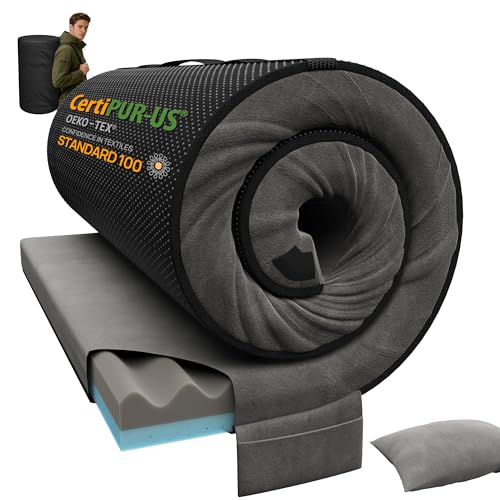
Releep 3-Inch Dual-Sided Memory Foam Camping Mattress

Therm-a-Rest Z Lite Original Sleeping Pad

Lost Horizon Self-Inflating Foam Mattress for Model Y

Exped Ultra Ultralight Inflatable Backpacking Pad

Lost Horizon Self-Inflating Foam Mattress, Single 3″

Lost Horizon Option3 Self-Inflating Mattress, Full 4.5″

Lost Horizon Option3 Self-Inflating Mattress, Slim Single 3″
A Breakdown Of The Leading Choices
The Releep brings genuine bed-like comfort into a camp setting, which matters when your shoulders and hips usually bear the brunt of a thin sleeping surface. It arrives as a roll-up foam pad with a carry bag and a small portable pillow, so the kit feels complete out of the box. The dual-sided build pairs a softer gel-infused memory foam top with a denser support layer underneath, helping your spine stay neutral through the night.
Side sleepers benefit most from the 3-inch stack because there is enough depth to keep a hip from bottoming out on rocky or uneven ground. It also doubles as a guest-bed mattress at home, which adds real-world flexibility beyond weekend trips.
A Few Strong Suits
- Gel-infused memory foam top helps regulate warmth on warmer nights
- Included pillow and carry bag simplify setup and transport
- 3-inch profile cushions shoulder and hip pressure points common in side sleeping
- Roll-up construction stores neatly in a car trunk or gear closet
Worth Noting
- Heavier than inflatable options, so backpackers may want a lighter choice
- Foam can hold moisture if stored damp, so owners commonly report airing it out before packing
Feature Snapshot
Who It Suits Best
Car campers and hosts needing a flexible guest bed who want real pressure-point relief without an inflatable setup.
Where Another Pick Suits Better
Backpackers counting every ounce should look at the Exped Ultra Ultralight Inflatable Backpacking Pad instead.
The Z Lite has earned its long-standing reputation on backcountry trails for one simple reason: it just works. Unlike the foam-heavy Releep that opened this list, the Z Lite uses closed-cell foam (a dense, non-inflating foam that resists water absorption) folded into a lightweight accordion shape. The dimpled surface traps warm air underneath you, which helps offset the thin profile on cold nights.
For side sleepers who carry their gear for miles, the trade-off is thickness for packability. You give up the deep cushioning of an inflatable or a memory foam pad, but you gain a reliable surface that never springs a leak and never needs blowing up.
Strengths Worth Knowing
- Closed-cell foam construction means no pump, no leaks, and no fuss
- Accordion fold stores compactly on the outside of a pack
- Trusted by thru-hikers and mountaineers across decades of use
Trade Offs
- Limited thickness means side sleepers on rocky ground may still feel pressure points
- Bulkier by volume than a rolled inflatable, even though it weighs less
Right Fit For
Backpackers and thru-hikers who value weight savings and durability over plush cushioning.
Consider Something Else When
Campers who primarily sleep in a tent or car and want deeper foam comfort will prefer the Releep 3-Inch Dual-Sided Memory Foam Camping Mattress.
The Lost Horizon Model Y mattress is built for one specific scenario: sleeping in a Tesla Model Y with the seats folded down. Unlike the Releep and the Z Lite, both of which assume a tent or a flat ground site, this pad fits the cargo area of the 2-row Model Y to give road-trippers a proper bed on the road.
The 4.5-inch depth and dense foam filling handle side-sleeper pressure points well, and the self-inflating design (open the valve and the foam expands to fill with air automatically) means setup takes only a few breaths of top-off. Depending on your camping style, this may either solve a unique problem or miss the mark entirely.
Reasons It Performs
- Custom dimensions match the 2-row Model Y cargo area
- 4.5-inch foam fill cushions hips and shoulders on hard vehicle floors
- Self-inflating valve simplifies setup after a long drive
- Higher weight capacity handles a range of body types comfortably
Room For Improvement
- Limited to Tesla Model Y 2-row fit, so it won’t suit other vehicles
- Bulky to store outside the car, limiting tent-camping versatility
Key Product Details
Best Suited To
Tesla Model Y owners planning road trips or car camping who want a tailored fit rather than a generic foam pad.
Skip It When
Tent campers without a Model Y will find the Lost Horizon Self-Inflating Foam Mattress, Single 3″ a more practical shape.
The Exped Ultra flips the script on backpacking pads. Where the Z Lite leans on dense foam for durability, the Ultra uses air-insulated chambers running head-to-toe to keep weight near zero while still delivering 3 inches of cushion. For side sleepers who count grams, that combination is hard to beat.
Summer trips and fast-and-light missions are the natural habitat here. The air chambers stabilize the sleep surface, so you don’t roll off when turning onto your side at 2 a.m. Setup takes a handful of breaths, and the packed size disappears into a pack’s brain or side pocket.
What Earns Its Place
- Air-insulated chambers provide stable side-sleeper support without bulk
- Sub-1-pound weight suits thru-hikers, bikepackers, and fast-pack trips
- Compact packed size frees up space in small packs
Honest Caveats
- Thinner than car-camp foam pads, so very bony side sleepers on sharp ground may want more depth
- Air construction means punctures are a real-world risk, and a patch kit is wise
Feature Rundown
Who Will Love This
Ultralight backpackers and bikepackers moving fast in warm conditions who still want real side-sleeper cushioning.
Look Elsewhere When
Cold-weather campers needing four-season insulation will get more from the thicker Lost Horizon Option3 Self-Inflating Mattress, Full 4.5″.
This single-size Lost Horizon pad slots into the middle of the line, offering more depth than the Exped Ultra without the bulk of the 4.5-inch full-size version. The self-inflating foam core expands as soon as you crack the valve, so tent setup stays quick even after a long drive to the trailhead.
For side sleepers who camp often but don’t need ultralight gear, this pad balances comfort, weight, and packability well. In most family camping scenarios, the 3-inch foam fill absorbs enough pressure to keep your shoulder from compressing fully against the ground.
The Upside
- 3-inch foam fill supports side sleepers without inflating by mouth
- 5.5-pound foam core indicates a stable, mid-weight build
- Solo dimensions fit standard one-person tents easily
Some Limits To Know
- Single-size layout limits couples or shared sleeping arrangements
- Heavier than the Exped Ultra, so long-distance hikers may want to look elsewhere
Built With In Mind
Solo tent campers who drive to their site and want straightforward comfort without a pump or extra setup steps.
Reach For A Different Pick When
Couples sharing a tent will get more from the wider Lost Horizon Option3 Self-Inflating Mattress, Full 4.5″.
At 4.5 inches thick with a 12-pound foam fill, this full-size Option3 is the thickest pad on the list. Compare that to the Exped Ultra’s air-insulated chambers: the Option3 uses volume and density rather than air pressure to keep side sleepers off the ground.
For couples sharing a tent, families car camping, or anyone who simply wants the most cushion possible, the depth and footprint deliver. The foam core still inflates on its own when the valve opens, so setup isn’t a chore despite the size.
Good Reasons To Consider
- 4.5-inch depth provides the deepest pressure-point relief on the list
- Full-size layout suits two sleepers or roomy solo setups
- Up to 440-pound capacity handles varied body types and combined loads
Practical Considerations
- Large packed size makes it a poor choice for backpacking trips
- Heavier than every other option here, so vehicle access matters
Quick Facts
Whose Shelf It Belongs On
Car campers and couples who prioritize deep cushioning over portability and want a bed-like sleep surface at camp.
Not Your Match When
Backpackers needing a packable pad will find the Therm-a-Rest Z Lite Original Sleeping Pad far easier to carry.
The Slim Single trims the Option3 down to 62 by 26 inches, making it the narrowest foam pad on the list. While the standard Lost Horizon Single 3″ uses a wider tent-friendly shape, this version targets tight spaces where every inch counts: small tents, vehicle interiors, or bunk setups.
For side sleepers in those scenarios, the narrow width keeps the foam under your hips and shoulders without forcing you into a spread-eagle position. Setup mirrors the other self-inflating pads: open the valve, let the foam expand, then top off with a few breaths.
A Favorable Mix
- 62 x 26-inch footprint fits narrow tent platforms and vehicle interiors
- 3-inch foam depth cushions side-sleeper pressure points in tight spaces
- Lighter than the full-size Option3 thanks to reduced dimensions
Details To Watch
- Narrow width can feel constrictive for restless sleepers or broad shoulders
- Less insulation than thicker pads, so cold nights may call for added layers below
Perfect Match For
Campers in small tents, vans, or vehicle sleep setups who need a narrow foam pad that still cushions side sleeping.
A Better Fit Elsewhere
Sleepers who toss and turn need more width, so the Lost Horizon Self-Inflating Foam Mattress, Single 3″ is the better tent-camping fit.
What Matters Most Before Choosing Camping Mattresses For Side Sleepers
Thickness And Pressure Relief
Side sleepers push weight into a smaller surface area than back or stomach sleepers, so pad thickness matters more than almost any other spec here. Three inches is the practical floor for most adults, and 4-plus inches helps when the ground beneath is rocky or root-strewn. The Releep and the Lost Horizon Option3 deliver in this range, while the Z Lite stays thinner to save weight.
Pad Type And Inflation Style
Closed-cell foam (the dense, non-inflating type used in the Z Lite) never leaks but feels firm under a shoulder. Self-inflating foam pads blend open-cell foam with an air valve, giving you more cushion without active pumping. Air-only inflatables like the Exped Ultra pack smallest and weigh least, but a puncture can ruin a night. Match the type to how you actually travel.
Size And Footprint
Standard sleeping pad widths around 20 to 25 inches suit most adults, but narrow vehicle or tent setups call for slim pads like the Slim Single. Couples or roomy campers gain comfort from full-size layouts, while backpackers prioritize trimmed dimensions and lower packed volume.
Weight And Packability
Backpackers should aim below two pounds and prioritize packed volume, with the Exped Ultra and the Z Lite leading that race. Car campers can ignore weight entirely and focus on comfort, which is where the 4.5-inch Option3 and the Releep shine.
Key Considerations Across These Picks
Where Shoppers Go Wrong
A common slip-up is choosing a pad by R-value alone (the warmth rating) without checking thickness for side sleeping. A warm, thin pad still leaves hips sore on cold ground. Another trap is assuming all self-inflating pads inflate fully on their own; most need a few breaths of top-off to firm up. Always check actual dimensions against your tent floor, not just advertised sizes.
What The Higher Tier Buys
Spending more on a thicker foam pad or a well-engineered air chamber buys deeper pressure relief, better materials, and often a more reliable valve system. The upgrade makes sense when you camp more than a handful of nights a year or sleep on rough terrain. For occasional fair-weather trips, a budget foam pad handles the job fine.
Frequently Asked Questions
What thickness pad do side sleepers need?
Most side sleepers need at least 3 inches of cushion to prevent hip and shoulder contact with the ground. On rocky terrain or for heavier sleepers, 4-plus inches like the Option3 provides better pressure relief.
Are self-inflating pads good for side sleeping?
Yes, self-inflating pads combine foam and air for stable support that holds up well under a shoulder or hip. The foam core prevents you from sinking to the ground even if the air softens overnight.
How do I keep an inflatable pad from getting cold?
In colder weather, choose a pad with a higher R-value and pair it with a closed-cell foam layer underneath. The Z Lite works well as an insulating base under a thicker inflatable.
Can I use a memory foam mattress for backpacking?
Memory foam pads like the Releep work for car camping but are too bulky and heavy for most backpacking trips. Backpackers should look at foam-and-air inflatables or closed-cell foam instead.
What size pad fits a Tesla Model Y?
The Lost Horizon Self-Inflating Foam Mattress for Model Y is custom-cut for the 2-row cargo area. Standard pads typically do not fit the Model Y’s specific folded-seat dimensions.
Final Verdict
The right camping mattress for side sleepers comes down to how you travel and where you sleep. Thicker foam options like the Releep and the Lost Horizon Option3 win on raw comfort, while the Exped Ultra and the Z Lite win on weight and packability. Match the pad to your trip, and your side-sleeping shoulders will thank you every morning.