
A good camping mat quietly decides whether you wake up rested or wrecked, and the gap between a forgettable foam square and a properly insulated pad shows up in your shoulders first. Whether you’re a backpacker counting grams or a car camper chasing couch-like comfort, the right mat matters more than the tent itself. This roundup covers self-inflating, closed-cell foam, and memory-foam options across different thicknesses and weights, so you can match the pad to your terrain, your climate, and how you actually sleep outside.
The Lineup, Simplified

Sea to Summit Camp Plus SI Sleeping Mat, Tapered Regular

Sea to Summit Camp Plus SI Sleeping Mat, Tapered/Large
Sea to Summit Camp Plus SI Sleeping Mat, Rectangular/Large
Releep 3 Inch Dual-Sided Memory Foam Camping Mattress

Therm-a-Rest Z Lite Original Sleeping Pad

Therm-a-Rest Z Seat Cushion Insulated Pad

Sea to Summit Camp Plus SI Mat, Rectangular/Regular

INVOKER Self-Inflating Sleeping Pad, Green

INVOKER Connectable Sleeping Pad, 4 in, Blue

INVOKER Connectable Sleeping Pad, 4 in, Green
More On The Choices That Made The List
The tapered shape saves pack weight without giving up much sleeping surface, which is exactly what you want on a shoulder-season trip when every gram matters. Inside the mat, open-cell foam expands on its own when you crack the valve, so setup mostly involves topping it off with a few breaths rather than wrestling a pump. For most three-season backpackers heading into alpine meadows or shoulder-month forests, the warmth-to-weight ratio lands in a useful middle ground.
Compared with the closed-cell Therm-a-Rest Z Lite in this list, this mat trades that no-fuss durability for genuine loft and much better insulation. You do pay a small weight penalty and need to baby the fabric a touch more around sharp rocks, but the comfort jump is hard to ignore.
A Strong Showing
- Self-inflating foam core cuts camp setup to under a minute.
- 2.6-inch thickness keeps hips and shoulders off rocky ground.
- Tapered cut trims pack volume for tight backpack loads.
- Reversible valve lets you fine-tune firmness without leaks.
- Warm enough for shoulder-season trips above the treeline.
Things To Consider
- Heavier and bulkier than the Therm-a-Rest Z Lite for true thru-hikers.
- Open-cell foam can take longer to dry if stored damp.
Who It Suits Best
Backpackers and weekend campers who want real insulation without hauling an inflatable.
A Better Fit Elsewhere
Count-every-ounce thru-hikers will prefer the Therm-a-Rest Z Lite Original for its indestructible foam and pack-stuffable size.
Long-limbed campers know the frustration of a pad that ends at mid-calf, and this larger tapered version solves that problem without ballooning the packed size. The same self-inflating foam and reversible valve carry over from the regular version, so setup feels familiar if you’ve used the brand before. In cold-weather camps where ground heat loss can ruin a night, the insulation here genuinely earns its keep.
It shares the family DNA with the rectangular Camp Plus below, but the tapered cut keeps it leaner for the trail. If you’re tall and tend to slide off shorter pads, this one’s worth a serious look.
Real-World Strengths
- Extra length fits campers over six feet without feet hanging off.
- Generous insulation handles cold ground and frosty nights.
- Self-inflating foam simplifies end-of-day tent routine.
- Tapered profile balances warmth with pack-friendly weight.
Worth Noting
- Packed size grows noticeably compared with the regular tapered mat.
- Premium price over closed-cell alternatives.
- Open-cell foam needs airflow when storing long-term.
Made For
Taller campers and cold-climate backpackers who want real loft and full-body coverage.
Skip It When
Anyone packing ultralight for summer trips should reach for the Therm-a-Rest Z Lite Original instead.
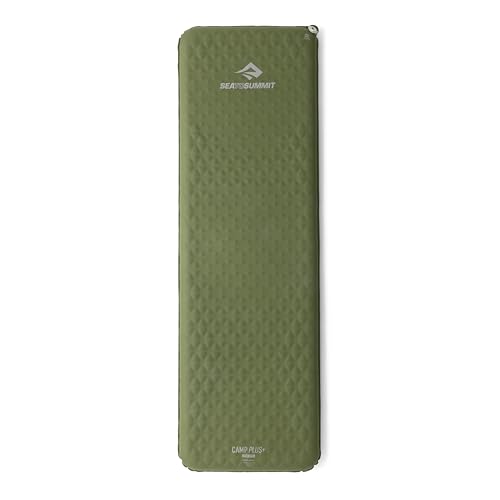
The rectangular shape trades a little pack efficiency for a flatter, more furniture-like sleeping platform, which car campers and basecampers tend to appreciate. Foam expands the bulk of the mat on its own, and a couple of breaths dial in the firmness you want for the night. On cold soil, the insulation rating is generous enough to handle late-frost shoulder seasons without a secondary layer underneath.
It’s the widest sibling in the Camp Plus family, so restless sleepers who roll around at night get more forgiveness than the tapered versions allow. The trade-off shows up in the trunk, not on the trail.
Why It Works Well
- Broad rectangular footprint suits restless sleepers.
- Thick foam core insulates well against cold ground.
- Self-inflating setup removes the need for a pump.
- Reversible valve makes pressure adjustments simple.
- Stable platform for reading or brewing coffee inside the tent.
Trade Offs
- Bulkiest of the three Camp Plus shapes in this roundup.
- Overkill for gram-counting backpackers.
Best Suited To
Car campers and basecampers who want wide, warm, comfortable sleep without hauling a giant inflatable.
Where Another Pick Suits Better
Long-distance hikers will find the Therm-a-Rest Z Lite Original much easier to live with on the trail.
Quick Facts
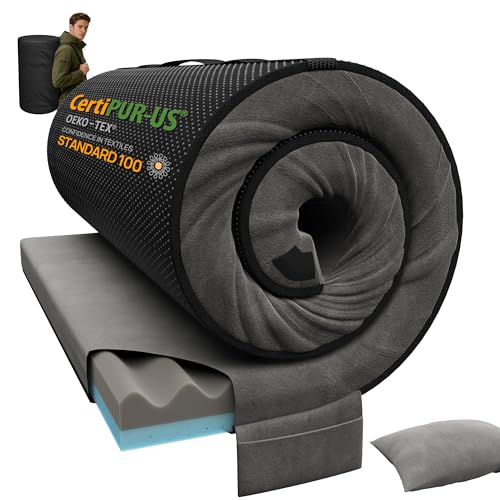
Memory foam isn’t typical camp gear, but Releep leans into that plush feel with a 3-inch dual-layer build that cradles pressure points instead of pushing back. A waterproof shell wraps the foam, and a portable pillow tucks into the carry bag so you don’t have to scrounge a stuff sack at camp. For car campers, surprise guests, or anyone whose back protests after one night on thin foam, this mat reads more like a guest bed than a backcountry tool.
Versus the self-inflating mats elsewhere in this roundup, the trade-off is bulk: rolled up, it’s substantially bigger and heavier than even the rectangular Camp Plus. Trail use is a stretch, but a backseat or SUV cargo area handles it without complaint.
Notable Gains
- Gel-infused memory foam eases shoulder and hip pressure.
- 3-inch thickness feels close to a home mattress.
- Waterproof shell resists damp ground and tent condensation.
- Includes a portable pillow and carry bag for one-piece packing.
Room For Improvement
- Too bulky and heavy for backpacking or long hikes.
- Memory foam holds moisture longer than open-cell foam if it gets wet.
- Less insulating than dedicated winter pads on frozen ground.
Right Fit For
Car campers, van-lifers, and hosts needing a roll-up guest bed that travels in a trunk.
Look Elsewhere When
Backpackers chasing lighter loads should look at the Sea to Summit Camp Plus SI Tapered Regular instead.
Feature Snapshot
The Z Lite has been on trails for decades because the formula is brutally simple: closed-cell foam, accordion folds, almost nothing that can break. You unfold it, lie down, and the dimpled pattern traps a layer of warm air beneath you. For thru-hikers and section hikers who measure comfort against ounces, this mat earns its reputation honestly.
Compared with the self-inflating options higher in this list, you give up real cushion and warmth for a slimmer pack profile. Side sleepers sometimes find the 0.75-inch loft thin on rocky nights, but the durability is unmatched.
What Earns Its Place
- Closed-cell foam resists punctures and rough ground.
- Accordion fold packs flat against a backpack.
- Trusted brand with a long track record on trails.
- Budget-friendly price for first-time buyers.
Points To Note
- Less cushioned than inflatable or self-inflating mats.
- Lower insulation rating for shoulder-season and winter use.
- Bulkier than inflatable pads of similar warmth.
Who Should Grab It
Backpackers, hikers, and emergency kits need a tough, no-fuss mat that won’t fail when conditions turn rough.
Consider Something Else When
Car campers wanting memory-foam comfort will be happier with the Releep 3 Inch Dual-Sided Memory Foam Camping Mattress.
Key Specs
The Z Seat isn’t a sleeping pad at all, but it belongs in any honest camping mat conversation because it solves a different problem brilliantly. Closed-cell foam folds into a small square that weighs barely anything and adds a warm, dry seat on cold rocks, wet bleachers, or soggy trail breaks. Hikers who already carry the larger Z Lite often tuck the Z Seat into their pack as an extra layer of insulation under their heels or as a rest-stop cushion.
Versus the Z Lite Original, this one is purely a sit-and-shield piece, so don’t expect to sleep on it. Where it earns its keep is versatility.
Reasons It Performs
- Superlight closed-cell foam adds almost no pack weight.
- Folds small enough for a jacket pocket or hip belt.
- Insulates against cold, wet seats on any surface.
- Durable foam resists wear from rocks and dirt.
Small Caveats
- Too small and thin for sleeping.
- Limited cushion compared with inflatable seat pads.
Perfect Match For
Hikers, spectators, and stadium sitters who want a portable cushion that handles any weather.
Another Choice May Suit
Anyone needing a full sleeping mat should look at the Sea to Summit Camp Plus SI Tapered Regular for serious insulation.
The rectangular regular hits a middle ground between the tapered versions and the larger rectangular option, which makes it a sensible default for campers of average build. Self-inflating foam handles the bulk of inflation, and the reversible valve lets you trim firmness without spraying foam dust everywhere. The insulation rating is in the same warm class as the rest of the Camp Plus family, so cold-soil comfort is a given.
Compared with the tapered regular at the top of this list, this one trades a slimmer pack profile for a wider sleeping platform. Side sleepers who shift positions during the night will appreciate the extra room.
What Pays Off
- Wide rectangular shape suits restless and side sleepers.
- Warm enough for shoulder-season ground temperatures.
- Self-inflating foam cuts setup time after a long day.
- Reversible valve for one-way deflation and quick pack-up.
Factors To Consider
- Packs larger than the tapered regular in a backpack.
- Not the lightest choice for long-distance hiking.
Whose Shelf It Belongs On
Average-build campers who want a roomier, insulated mat for car camping and short backpacking trips.
Swap It Out When
Pack-size-sensitive backpackers should choose the Sea to Summit Camp Plus SI Tapered Regular instead.
Feature Rundown
INVOKER’s standalone self-inflating mat is a friendly entry point for campers who want foam-core comfort without fussing over a pump or breath-inflating an air mat. Crack the double valve, give the foam a moment to expand, and top it off with a few breaths until the firmness feels right. The 30D knit outer fabric feels softer than typical 75D shells, which adds a touch of comfort for sleepers in lightweight clothing.
Versus the Sea to Summit Camp Plus lineup above, this mat trims price while still delivering a self-inflating experience. The trade-off shows up in brand longevity and refinement.
Where It Excels
- No pump or mouth-inflation required at camp.
- 3.15-inch thickness gives generous loft for side sleepers.
- Soft 30D knit fabric feels gentle against skin.
- Lower price than premium self-inflating brands.
Areas To Watch
- Knit fabric can snag on rough ground more easily than nylon shells.
- Insulation rating is modest for true winter camping.
- Packed size runs larger than comparable Therm-a-Rest pads.
Built With In Mind
First-time campers and casual weekend users who want an affordable, easy-to-use mat without inflating headaches.
Reach For A Different Pick When
Cold-weather backpackers will be better served by the Sea to Summit Camp Plus SI Tapered Regular for stronger insulation.
Connectable sides turn a single pad into a couples-sized sleep surface, which is the whole pitch for this 4-inch-thick INVOKER mat. A built-in foot pump inflates the pad without leaning over to blow air, and the integrated pillow keeps your head from sliding off the edge mid-sleep. Horizontal air chambers follow the contour of your body, so the cushioning feels more even than a basic foam slab.
Compared with the standalone green INVOKER earlier, this one prioritizes loft and modularity over pack compactness. Two snapped together is closer to a mattress than a sleeping pad.
Where It Helps
- Connectable sides let you build a wider sleep platform.
- 4-inch loft gives generous cushioning for side sleepers.
- Built-in foot pump avoids bending and mouth inflation.
- Integrated pillow adds head support without extras.
Honest Caveats
- Bulkier and heavier than a single self-inflating mat.
- Foot pump adds setup time versus true self-inflating foam.
- 40D nylon shell resists wear but isn’t fully puncture-proof.
The Right Fit
Couples and parents camping with older kids who want a single-piece sleeping platform in a family tent.
Where A Sibling Pick Shines
Solo backpackers chasing lower weight should choose the Sea to Summit Camp Plus SI Tapered Regular for better packability.
The green version of INVOKER’s connectable mat shares the same 4-inch build, integrated pillow, and foot-pump inflation as its blue sibling, with the color being the main practical difference for tent organization. Multiple units snap together to form a roomy platform, which is genuinely useful in family tents where everyone rolls toward the center. Parents juggling kids and gear will appreciate not having to wrestle a pump bag or mouth-inflate after dark.
Versus the blue INVOKER above, this one is the same mat with a different look, so your choice comes down to aesthetic preference and whether you plan to keep your pads color-coded by family member.
Useful Touches
- Connectable sides scale from solo to family setup.
- Foot-pump inflation avoids leaning and mouth strain.
- Built-in pillow saves packing space in the car.
- Generous 4-inch loft cushions kids and side sleepers.
Practical Considerations
- Buying multiple pads adds up fast for full family coverage.
- Storage bag size grows quickly when several pads are rolled together.
- Less insulating than premium foam-core mats in deep cold.
Who Will Love This
Families and group campers who want a flexible, modular sleep system that grows with their trip size.
Not Your Match When
Solo backpackers will find the Therm-a-Rest Z Lite Original far easier to carry on the trail.
Matching A Mat To The Way You Actually Camp
R-value is the single most important number on any camping mat, and it tells you how well the pad resists heat loss to cold ground. Higher numbers mean more insulation, with anything above roughly 4.0 rated for three-season and winter use. Thickness matters next, since 2.5 inches or more keeps hips and shoulders from bottoming out on side-sleepers, while thin 0.75-inch foam pads feel fine under a sleeping bag but punish restless sleepers.
Weight and packed size matter most for backpackers, and that is where the trade-off between foam and inflatable pads lives. Closed-cell foam like the Therm-a-Rest Z Lite Original weighs very little, packs flat against a pack, and never fails, but it sacrifices cushion and warmth. Self-inflating foam cores in the Sea to Summit Camp Plus family add real loft and insulation at the cost of bulk, which car campers tend to tolerate and thru-hikers do not.
Construction style changes how the pad feels at camp. Self-inflating mats combine foam with air for a balanced feel, while pure inflatable pads are lighter and more adjustable but require a pump or strong lungs. Closed-cell foam is bulletproof and cheap, which makes it a strong fit for first-time campers, kids, and emergency kits where reliability matters more than comfort. Match the mat to your trip, not the other way around.
Key Considerations Across These Picks
Pitfalls Shoppers Hit
Picking a pad based purely on thickness ignores ground insulation, and a thick summer-only mat will leave you shivering once frost shows up. Shoppers also tend to underestimate packed size, only to discover their chosen mat won’t fit inside a full backpack on a real trip.
Buying the cheapest option usually means trading durability for savings, and a punctured inflatable miles from the trailhead is no fun. Consider where you camp most, then choose a pad built for that terrain rather than the best price.
What The Higher Tier Buys
Premium mats invest in higher R-values, more durable face fabrics, and valves that actually seal without leaking overnight. Better materials also pack smaller for the same warmth, which is the difference between a comfortable backpack and an overstuffed one.
Spending up makes the most sense for cold-weather trips, multi-day backpacking, and anyone whose back punishes them on thin pads. For casual car camping in mild weather, mid-range picks handle the job without the extra cost.
Frequently Asked Questions
What R-value do I need for camping mats?
R-value measures insulation against cold ground, and most three-season campers do well with anything between 3.0 and 4.5. Winter and shoulder-season trips usually want 4.5 or higher, especially when frost is in the forecast.
Pair higher R-values with a proper sleeping bag for the temperature, since the mat handles ground insulation the bag cannot.
Are self-inflating mats better than closed-cell foam?
Self-inflating mats offer more cushion and warmth for the same footprint, but they weigh more and can puncture. Closed-cell foam is lighter, cheaper, and nearly indestructible, which makes it a favorite for thru-hikers and emergency kits.
Pick self-inflating for comfort-focused trips and closed-cell foam for ultralight or rough-use situations.
How thick should a camping mat be?
Side sleepers and restless sleepers generally want 2.5 inches or more to keep pressure points off the ground. Back sleepers can get away with thinner pads, especially when paired with a foam underlayer.
Thickness and R-value are independent, so check both numbers rather than assuming a thick pad is automatically warm.
How do I store a camping mat long-term?
Keep self-inflating mats unrolled or loosely folded in a dry place so the foam keeps its loft. Closed-cell foam can be stored any way that fits your closet, since the material has no memory to lose.
Avoid leaving any mat in a hot car, where adhesives and coatings can break down faster than expected.
Can I use a camping mat as a guest bed?
Memory foam camping mats like the Releep in this list double nicely as roll-up guest beds for short visits. Traditional foam and inflatable pads work in a pinch but rarely feel like a real mattress for taller or heavier sleepers.
Match the mat’s thickness and width to the guest, and add a fitted sheet over it for a more home-like feel.
Closing Remarks
The right camping mat comes down to how you sleep, where you go, and how much weight you can carry. Backpackers chasing low weight and trail-tough reliability will lean toward the Therm-a-Rest Z Lite Original, while comfort-first campers will find the Releep memory foam mat hard to beat. For something in between, the Sea to Summit Camp Plus family covers most three-season needs without forcing you to pick between warmth and packability. Match your mat to your trip, and you’ll stop noticing the ground beneath you.