
A dull blade in the backcountry turns dinner into a chore and safety into a gamble. Campers, hunters, and overlanders need a compact tool that resets an edge fast, without electricity, and without taking up valuable pack space. The picks below cover everything from pull-through field sharpeners to full honing kits, so you can match the tool to your trip style.
The Main Contenders
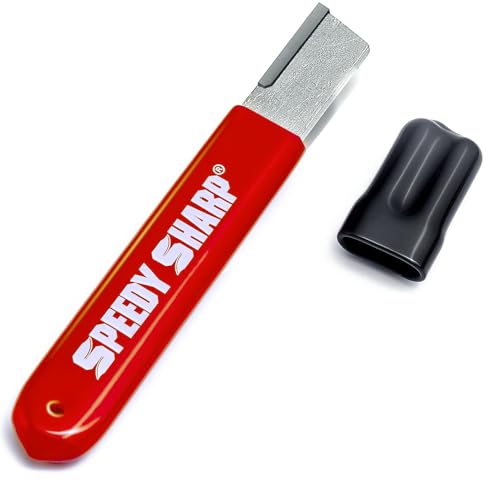
Speedy Sharp Carbide Knife Sharpening Tool (Red)

Azhou 12″ Professional Honing Rod

Monbalcon 10″ German High Carbon Honing Rod

Sharp Pebble Orange Ninja 4-Stage Sharpener
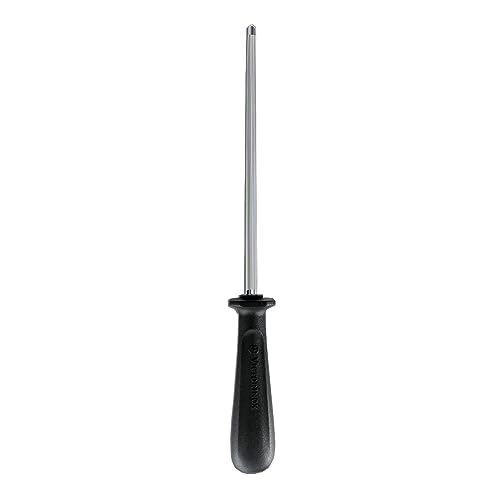
Victorinox Swiss Classic Fibrox Honing Steel 10″
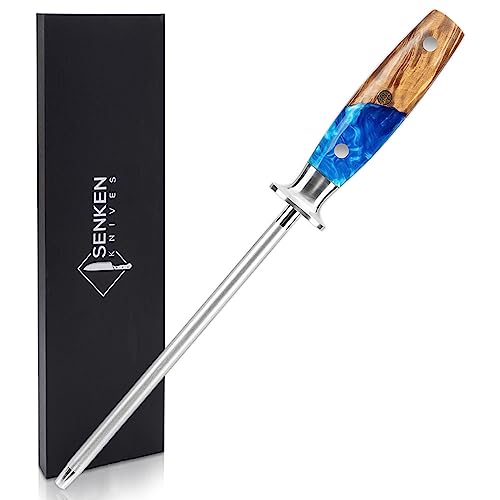
SENKEN Tsunami Emery Sharpening Steel

Sharp Pebble Orange Ninja Pocket Field Sharpener

Work Sharp Guided Field Sharpener
LEFUGO Cordless Electric Knife Sharpener
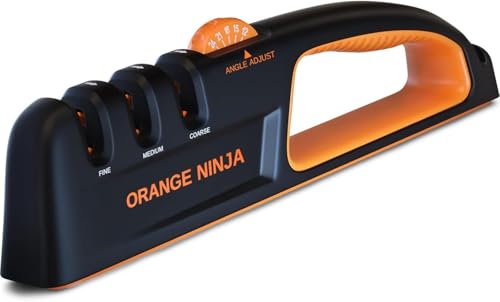
Sharp Pebble 5 Precision Adjust Sharpener
More On The Choices That Made The List
The Speedy Sharp earns its spot because it tackles more than kitchen blades. Built around a Micro 100 tungsten carbide insert (a metal widely used in machining for its extreme hardness), it pushes through kitchen knives, hatchets, garden pruners, and hedge shears with a few short pulls. For campers running a multi-blade kit, that versatility is hard to beat.
It pulls the blade through a fixed slot at a preset angle, so you don’t have to guess where to hold the steel. That simplicity helps beginners put a working edge back on a dulled blade within a minute. Compared to the guided picks later in this list, the Speedy Sharp trades precision for portability and sheer breadth of use.
Reasons It Performs
- Carbide insert handles a wide range of blades beyond kitchen knives
- Compact pull-through design fits inside a cook kit or tool drawer
- Fixed-angle slot removes guesswork for first-time sharpeners
- Fast touch-ups between heavy sharpening sessions
- Useful at camp for axes and pruners, not just food prep
Things To Consider
- Aggressive carbide can remove more steel than finer abrasives, so a light touch matters on premium knives
- No fine polishing slot, so it works best as a field reset rather than a finishing tool
- Owners commonly keep it dry; any trapped moisture against the carbide slot can shorten its life
Feature Snapshot
Made For
Campers and property owners who want one tool that resets edges on kitchen blades, axes, and garden cutters without swapping accessories.
Look Elsewhere When
Pack-light backpackers needing a featherweight field option should reach for the Sharp Pebble Orange Ninja Pocket Field Sharpener, which trims weight and adds serrated-blade support.
The Azhou 12-inch rod addresses one of the most common complaints about shorter sharpeners: blade clearance. Its extra length gives a comfortable stroke on long chef knives, slicing knives, and even camp machetes, so you don’t have to worry about your hand drifting past the tip.
The steel core runs to about HRC 63 (the Rockwell hardness scale, where higher numbers mean harder steel), letting the rod realign edges on most kitchen knives and many outdoor folders. It complements the Speedy Sharp from item 1: where that one aggressively resets dull blades, this one polishes and straightens edges between sessions.
Real-World Strengths
- 12-inch length clears long slicers and camp knives with room to spare
- Hardened steel core handles regular use without rapid wear
- Straightens edges quickly, extending time between full sharpenings
- Works on standard and serrated kitchen blades
Worth Noting
- Length makes it less pack-friendly than shorter rods like item 3’s 10-inch option
- Demands a steady hand; freehand technique is part of the learning curve
Best Suited To
Camp cooks working with full-size slicing knives who want a honing rod that doesn’t feel cramped during longer strokes.
A Better Fit Elsewhere
Backpackers counting every ounce should consider the Sharp Pebble Orange Ninja Pocket Field Sharpener, which is built for carry weight rather than stroke length.
Monbalcon’s 10-inch honing rod lands in the middle of the size sweet spot. Long enough for slicing knives, short enough to slide into a kitchen drawer, it carries a German high-carbon steel core paired with a natural wood handle. The presentation box makes it a natural gift for someone upgrading their first knife.
The fine-grit surface realigns edges without removing much steel, so it’s well-suited to weekly maintenance on blades you’ve already invested in. Where the Azhou from item 2 leans professional, this one trades a little length for a warmer, gift-friendly build.
Bright Spots
- German high-carbon steel core built for regular honing
- Natural wood handle feels balanced in the hand
- Comes in a gift box, so it’s ready to hand over
- Fine-grit surface preserves the original edge geometry
Small Caveats
- Wood handle benefits from an occasional dry wipe to avoid moisture issues over years of use
- Freehand technique required, similar to most honing rods
Technical Sheet
Right Fit For
Home cooks and gift shoppers wanting a presentable, well-built honing rod for someone who already owns a quality kitchen knife.
Consider Something Else When
Outdoor-first users who need a rod that survives drop bags and gear bins should look at the Work Sharp Guided Field Sharpener, which is built for rougher handling.
The Orange Ninja 4-Stage sits at a kitchen counter and handles four jobs in one body: coarse repair, medium sharpening, fine polishing, and a dedicated serrated slot. That last stage is what sets it apart from many entry-level pull-throughs, because serrated bread knives and steak knives often get ignored by basic tools.
You won’t carry this one on a backpacking trip, but it earns space in the camp kitchen at home or in a trailer. Compared to the Speedy Sharp from item 1, the Orange Ninja covers serrated blades and offers a polish stage, at the cost of a slightly larger countertop footprint.
Points In Its Favor
- Four slots cover repair, sharpening, polishing, and serrated edges
- Diamond-coated rods in the medium slot speed up edge setting
- Dedicated serrated slot revives bread and steak knives
- Guided angle slots reduce trial-and-error for beginners
Points To Keep In Mind
- Bulkier than pocket-style sharpeners, so it lives on a counter rather than in a pack
- Pull-through action is faster than honing rods, but removes more steel per pass
Quick Facts
Perfect Match For
Home chefs and RV travelers with a full knife block who want a single counter tool that handles standard and serrated blades alike.
Skip It When
Travelers needing a packable field option should pick the Sharp Pebble Orange Ninja Pocket Field Sharpener, which delivers similar slot logic in a far smaller body.
Victorinox built this 10-inch honing steel for restaurant kitchens, and the design carries that heritage. The brush chrome-plated rod resists staining and adds surface hardness, so the steel stays true even after years of daily strokes. The Fibrox handle is the same grippy, dishwasher-safe material used on Victorinox chef knives.
It’s a pure honing tool, meaning it realigns an existing edge rather than grinding a new one. Pair it with a coarser reset tool, and you have a complete kit. For campers who keep a quality kitchen knife at the cabin, this rod does the same job a line cook would expect during a dinner rush.
Where It Delivers
- Chrome-plated rod improves stain resistance and surface hardness
- Fibrox handle stays grippy wet or dry
- Restaurant-proven design supports daily heavy use
- 10-inch length handles most chef knives comfortably
Trade Offs
- Plated surface can show scratches over years of use, though this is cosmetic
- Won’t resharpen truly dull blades, it only realigns edges
Whose Shelf It Belongs On
Home cooks and cabin owners who treat their kitchen knives like tools and hone them after every session.
Another Choice May Suit
Anyone needing actual edge removal should reach for the LEFUGO Cordless Electric Knife Sharpener, which handles grinding work this rod doesn’t.
SENKEN’s Tsunami rod is built around an emery surface rated to handle steels up to HRC 63. That puts it in range of high-end kitchen blades and Damascus folders, where standard chromed rods can feel too soft. The blue resin and natural wood handle give it a presentation-worthy look that matches the premium blades it’s designed to maintain.
Emery cuts more aggressively than plain honing steel, so this tool can do real sharpening work instead of just alignment. For campers and home cooks who have invested in premium blades, it bridges the gap between a soft honing rod and a full stone setup.
Where It Helps
- Emery rod rated for steels up to HRC 63
- Works on Damascus and other premium blade materials
- Blue resin and wood handle feels balanced and stable
- Doubles as a sharpening and a honing tool
Honest Caveats
- Higher cost than basic chromed rods, so it makes sense mainly for premium blades
- Emery surface can clog over time and benefits from occasional cleaning
Who Should Grab It
Knife owners with Damascus blades or hardened chef knives who want one tool that both hones and lightly sharpens.
Reach For A Different Pick When
Budget-first campers maintaining everyday stainless knives will get more value from the Victorinox Swiss Classic Fibrox Honing Steel at a lower cost.
For backpackers and hunters, the Pocket Field sharpener is where camping knife sharpeners actually earn the name. It packs a 220-grit diamond plate for fast repairs, a 600-grit plate for finishing, plus a carbide slot and a guided system, fitting six sharpening modes into a pocketable case.
Diamond plates cut fast even on dirty field blades, and the tool handles straight edges, serrated knives, and gut hooks. Compared to the kitchen-focused Orange Ninja 4-Stage from item 4, this one trades countertop stability for outdoor survivability.
Practical Advantages
- Six sharpening modes in a pocketable case
- 220-grit diamond plate resets dull or dirty edges quickly
- 600-grit plate polishes for cleaner cutting
- Handles straight, serrated, and gut hook blades
Where It Is Less Suited
- Smaller abrasive area means more strokes per blade than bench sharpeners
- Diamond plates are aggressive on very thin, delicate blades
Feature Card
Who Will Love This
Backpackers, hunters, and EDC users who need a pocket-friendly sharpener that handles folding knives, fixed blades, and serrated tools.
Swap It Out When
Cooks focused only on kitchen blades will find the Speedy Sharp Carbide Knife Sharpening Tool better suited to food prep edges.
The Work Sharp Guided Field Sharpener is the most complete compact kit in this roundup. It bundles diamond plates, a ceramic rod with coarse and fine sides, a leather strop, and built-in angle guides into a slab that fits a pack pocket. The guides are the real story: they hold the blade at a consistent angle so your edges come back consistent.
Where the Sharp Pebble Orange Ninja Pocket Field from item 7 leans on plate surfaces alone, this one adds the leather strop for a final polish and a ceramic rod that pivots between grits. It weighs more, but you get a near-full sharpening system in one tool.
A Favorable Mix
- Built-in angle guides lock in consistent results
- Ceramic rod flips between coarse and fine surfaces
- Leather strop removes burr and polishes the edge
- Diamond plates remove to expose a broad head wrench for field adjustments
- Compact slab fits a pack side pocket
Possible Compromises
- Heavier than single-purpose pocket sharpeners
- Guided angles favor common outdoor profiles, so specialty grinds may need freehand work
Built With In Mind
Skill-focused outdoors people who want to learn controlled sharpening without investing in a full bench system.
A Better Fit Elsewhere
Absolute minimalist packers should pick the Sharp Pebble Orange Ninja Pocket Field Sharpener for its lighter weight.
The LEFUGO takes a different angle: it’s battery-powered and cordless, with three speeds topping out around 7000 RPM. The 2000mAh rechargeable battery frees it from outlets, which is a real perk in an RV, a camper van, or a remote cabin with limited power.
Its compact body, roughly 1.5 by 1.5 by 8.4 inches, fits in a kitchen drawer and travels in an RV overhead bin. Compared to every pull-through and rod on this list, the electric motor does the work; you guide the blade. That convenience comes with trade-offs in grit control.
Why It Works Well
- Cordless design works in RVs, vans, and remote kitchens
- Three speed settings match different blade conditions
- Compact footprint fits in a standard kitchen drawer
- 2000mAh rechargeable battery handles multiple sessions per charge
Factors To Consider
- Higher upfront cost than most manual sharpeners on this list
- Battery adds weight compared to plain rods and pull-throughs
- You may find motor-driven sharpening less satisfying than hands-on methods if you enjoy the process
Feature Rundown
The Right Fit
RV travelers and van lifers with access to a charging port who want a power-driven reset without hunting for an outlet at every campsite.
Where A Sibling Pick Shines
Purists who prefer a fully manual approach will find more satisfaction in the SENKEN Tsunami Emery Sharpening Steel, which keeps the experience tactile.
The 5 Precision Adjust sharpener gives you angle control that most pull-throughs skip. You can lock in 12, 15, 18, 21, or 24 degree edges, which covers everything from Japanese santoku profiles to sturdier outdoor knives. That adjustability makes it a versatile single tool for households with mixed blade types.
It only sharpens straight edges, so serrated blades need a separate tool like the Orange Ninja 4-Stage from item 4. For anyone learning angle geometry, having those settings labeled on the tool makes the lesson stick.
Everyday Wins
- Five preset angles match common kitchen and outdoor profiles
- Three-stage process covers repair through polish
- Ergonomic handle reduces fatigue during longer sessions
- Handheld design stores in a drawer or pack pocket
Room For Improvement
- Not designed for serrated or scissors, so it’s a straight-edge-only tool
- Angle switching takes a small adjustment step, which slows quick touch-ups
Who It Suits Best
Cooks and outdoors people with multiple blade types who want one tool that matches each knife’s factory angle.
Not Your Match When
Serrated-blade owners should reach for the Sharp Pebble Orange Ninja 4-Stage Sharpener, which handles serrations this model skips.
Picking The Right Tool For Your Trips
Matching The Sharpener To The Blade
Start with the blades you actually carry. A backpacker with one folding knife needs a pocket-friendly diamond or carbide tool, while a camp cook with a full knife roll benefits more from a honing rod and a coarser reset tool. The picks above split naturally into three groups: field tools for backpackers, rods for cooks, and counter sharpeners for the home kitchen.
Understanding Grit And Angle
Grit refers to how coarse the abrasive surface is: lower numbers cut faster but leave rougher edges, while higher numbers polish finer. Angle is the degree at which the blade meets the abrasive; 15 degrees suits Japanese-style edges, while 20 degrees and up handle heavier outdoor knives. Tools like the Sharp Pebble 5 Precision Adjust let you pick an angle explicitly, while pull-throughs set it for you.
Portability Vs. Power
Cordless electric sharpeners trade pack weight for convenience, and field sharpeners trade edge perfection for durability in a duffel bag. Honest read: most campers do best with a manual tool, then add an electric unit later if their cook setup demands it.
Maintenance In The Field
Wipe down abrasive surfaces after use, store tools dry, and check rods for bends before long trips. Diamond plates handle dirty blades but benefit from a quick brush to clear steel dust between sessions.
Things Worth Thinking About Before You Buy
Traps First Timers Fall Into
Buying a sharpener that only hones when your blade is too far gone for honing wastes time and steel. Check whether the tool actually removes material through a coarse stage, or only realigns what’s there. Also, don’t pick a tiny keychain sharpener as your only tool for a week-long hunt; backup matters when edges matter.
What Separates Premium From Basic
Higher-tier sharpeners earn their cost through harder abrasives that last longer, adjustable angles for multiple blade types, and added features like leather strops or ceramic rods. For casual cooks, the basic tier is plenty. For people maintaining premium Damascus or hard-end knives, the upgrade to a SENKEN or a guided Work Sharp pays off in edge control and tool life.
Frequently Asked Questions
How often should you sharpen a camping knife in the field?
A quick touch-up every couple of days of heavy use keeps the edge working, with a full sharpening session once you return home. Pocket tools like the Sharp Pebble Orange Ninja Pocket Field Sharpener are built for those mid-trip resets.
Can one sharpener handle both kitchen and outdoor knives?
Yes, if it covers multiple blade types and grit levels. Pull-throughs with coarse, medium, fine, and serrated slots, like the Sharp Pebble Orange Ninja 4-Stage, cover most household knives in a single tool.
What’s the difference between honing and sharpening?
Honing realigns an edge that is still sharp but slightly rolled, while sharpening removes steel to create a fresh edge. A honing steel like the Victorinox Swiss Classic Fibrox maintains edges between sharpening sessions done by coarser tools.
Are diamond plates safe for premium kitchen knives?
Diamond plates cut aggressively, so use light pressure and fewer strokes on thin Japanese-style blades. For those knives, a fine-grit finishing stage or a leather strop protects the edge geometry.
How do you clean a pocket field sharpener?
Brush off steel dust with a small nylon brush, wipe the housing with a dry cloth, and store the tool in a dry bag. Avoid water inside the slots, since trapped moisture can shorten abrasive life.
Wrap Up
The right camping knife sharpener depends on where you go and what you carry. Backpackers do well with a pocket diamond tool, camp cooks benefit from a real honing rod, and home kitchens gain the most from a multi-stage counter model. Match the tool to the trip, and a sharp edge stops being something you worry about and starts being something you just have.