
Morning coffee on a cold ridge, a quiet kettle steam rising against a pine line, the kind of ritual that turns a campsite into a home. A good camping kettle has to balance heat speed, pack-down size, and real durability against soot, soot, and surprise gusts. Solo backpackers care about weight; car campers care about volume and pour control; wood stove owners want something that handles radiant heat without warping. The eight kettles below cover that full spectrum, from ultralight titanium-friendly options to a hand-finished copper piece that doubles as a keepsake.
The Shortlist At A Glance

Outdoor Grandma’s Copper Kettle
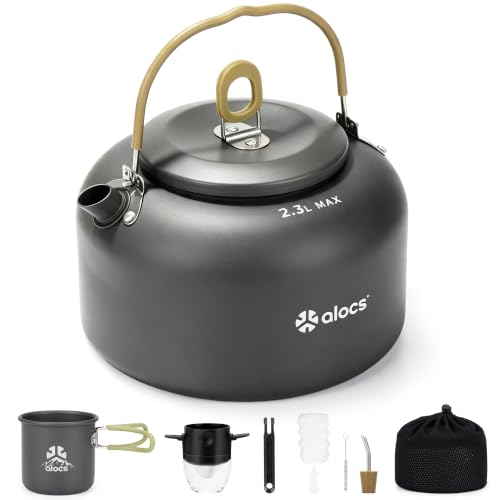
ALOCS 2.3L Portable Kettle with Pour Over Kit

Fire-Maple Antarcti Camping Kettle 1L

ALOCS 1.4L Hard-Anodized Camping Kettle
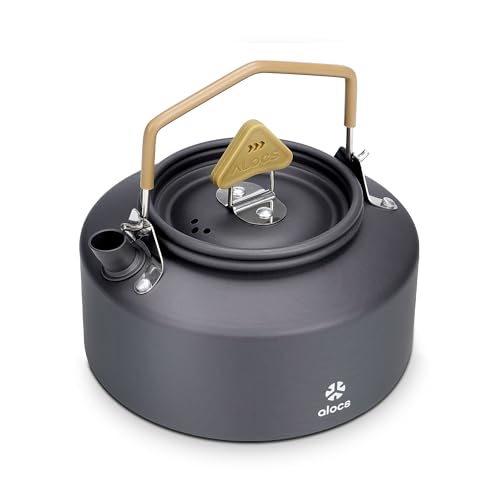
ALOCS Camping Kettle 1.1L Lightweight

GSI Outdoors Halulite Tea Kettle 1.8L

Petromax Stainless Steel Teakettle

Sea to Summit X-Pot Kettle Collapsible
Why These Options Stand Out
The Outdoor Grandma’s Copper Kettle leans into craft rather than ultralight gram-counting. Solid copper construction gives it real heft in hand, and the finish is designed to deepen in tone the more you fire it, so the kettle becomes a personal object over seasons rather than a generic piece of gear.
Built for wood stoves and radiant heat sources, it sits well on a flat stovetop or beside a fire pit. If your camp routine centers on a tent stove, canvas wall tent, or backyard fire ring, this kettle treats the ritual of heating water as something worth slowing down for.
Where It Excels
- Solid copper body handles direct wood stove heat without warping in normal use
- Living finish that develops a deeper patina with repeated firings
- Substantial feel makes pouring controlled and steady
- Doubles as a display piece at home between trips
Worth Noting
- Heavier than aluminum or titanium options, so it’s a poor match for backpacking
- Copper requires occasional polishing to stay bright if you prefer the original shine
- Not optimized for tiny camp stoves with small pot supports
Who It Suits Best
Wood stove enthusiasts, cabin campers, and anyone who treats the kettle as part of the ambiance rather than just a tool.
A Better Fit Elsewhere
For long-distance hiking where every ounce counts, the ALOCS Camping Kettle 1.1L Lightweight weighs a fraction of this copper piece and slips into a side pocket.
Where most kettles stop at boiling water, this ALOCS set bundles the full pour-over ritual into one pack. The 2.3L hard-anodized kettle anchors the kit, then adds a pour-over filter with a protective cage, a 12oz stainless mug, a precision extension spout, and cleaning brushes.
The extension spout is the kind of detail that matters when you actually brew in a breeze: a slow, controlled stream keeps the bloom even instead of washing grounds to one side. Hard-anodized aluminum (a process that builds a tougher oxide layer than bare metal) shrugs off scratches better than raw aluminum and keeps weight low. You get a complete station without a separate coffee kit.
Noteworthy Benefits
- Full pour-over station in one carry, including cleaning brushes
- Hard-anodized shell resists scuffs during rougher pack trips
- Precision spout slows the pour for a cleaner extraction
- 2.3L serves two campers comfortably without a refill
Trade Offs
- More parts to keep track of than a single-piece kettle
- Larger packed footprint than minimalist options like the Sea to Summit X-Pot Kettle
Made For
Backcountry coffee drinkers who want real pour-over flavor without packing a separate brewing kit.
Consider Something Else When
Thru-hikers focused on sub-pound pack weight will find the ALOCS Camping Kettle 1.1L Lightweight a more honest carry for daily mileage.
The Fire-Maple Antarcti keeps things plain and works because of it. 18-8 stainless steel (a common food-grade alloy with 18% chromium and 8% nickel for corrosion resistance) at a thicker gauge gives the body real structural feel without going heavy. At one liter, it pours two solid mugs and nothing more.
That restraint is the point: solo travelers who want clean water for coffee, tea, freeze-dried meals, or emergency purification don’t need bulk. Stainless also means no coating to worry about over open flame and no metallic taste bleeding into delicate teas.
What Earns Its Place
- Heavier-gauge stainless resists dents better than thin aluminum
- One-liter size suits solo routines without wasted water weight
- Compatible with open flame or backpacking stoves
- Neutral metal taste preserves the flavor of leaf teas
Points To Note
- Slower to boil than thinner aluminum equivalents
- Single-piece handle and lid design lacks the folding storage of collapsible picks
Best Suited To
Solo backpackers who want one durable kettle for years of trips and don’t mind a slightly longer boil time.
Look Elsewhere When
Campers who pack for two should look at the ALOCS 1.4L Hard-Anodized Camping Kettle, which adds capacity without much extra weight.
The 1.4L ALOCS kettle splits the difference between solo and small-group use. Hard-anodized aluminum again handles corrosion and rust resistance while staying light enough for short backpacking trips. The brand notes a safe fill line just under 1.2L, which gives you practical room for two mugs plus a small rinse.
It’s the kind of kettle you forget about in the best way: it boils, it pours, it packs flat. For weekend trips where the crew is one or two people, the capacity lands in a sweet spot that bigger 2L+ kettles overshoot and sub-1L picks can’t quite reach.
Useful Strengths
- Capacity matches the real appetite of two campers
- Hard-anodized shell resists corrosion across wet trips
- Light enough for short trail carries
Small Caveats
- Watch the fill line, since going past 1.2L risks boil-overs
- Lacks the integrated brewing extras of the larger ALOCS 2.3L set
Who Will Love This
Pair-campers and weekend backpackers who want a balance between weight and the ability to serve two without constant refills.
Reach For A Different Pick When
Solo long-distance hikers will shave meaningful weight by switching to the ALOCS Camping Kettle 1.1L Lightweight.
At roughly 6.7 ounces, this ALOCS kettle barely registers on a loaded pack. The hard-anodized aluminum body keeps the weight honest while improving heat conduction (the speed at which metal transfers flame energy into water) compared to stainless steel. It’s a one-liter-class kettle aimed at trail drinkers who chase low base weight.
The trade-off shows up in capacity: this is firmly a solo tool. Two cups of tea or a single freeze-dried meal is its ceiling. For section-hikers and weekend warriors counting ounces, that compromise is exactly the point.
Advantages To Know
- Sub-7oz carry weight for gram-conscious packs
- Faster boil times than heavier stainless equivalents
- Food-grade hard-anodized surface handles acidic drinks safely
Points To Keep In Mind
- Capacity tops out at one serving plus a partial refill
- Thin walls can dent if packed under heavy gear without protection
Perfect Match For
Thru-hikers and ultralight backpackers who prioritize weight savings over group capacity.
Swap It Out When
Car campers feeding two or more will appreciate the larger ALOCS 1.4L Hard-Anodized Camping Kettle for the extra cup.
The GSI Halulite kettle uses a proprietary aluminum alloy designed to conduct heat faster and more evenly than titanium. The brand claims around 30% faster boils with 30% less fuel, which matters on canister stoves where every gram of gas counts across a multi-day trip.
At 1.8 liters (roughly 7.6 cups), it serves a small group without forcing two rounds of boiling. The hard-anodized shell adds the usual scratch and corrosion resistance. It pours cleanly thanks to a shaped spout, and the lid fits tight enough to keep heat in during the climb to a boil.
Reasons It Performs
- Halulite alloy aims for noticeably faster boils on canister stoves
- 1.8L capacity fits small group breakfast routines
- Light enough for short-to-medium trail carries despite the size
A Few Limitations
- Larger packed size than solo-focused kettles
- Aluminum body, even anodized, still dents more easily than steel under rough treatment
The Right Fit
Small-group campers and fast-and-light backpackers who want fuel efficiency and decent volume in one package.
Not Your Match When
Solo long-distance trekkers will prefer the packability of the Sea to Summit X-Pot Kettle, which folds flat when empty.
The Petromax teakettle is built around heat source flexibility. The multi-layered base spreads flame energy across the bottom so it boils steadily over a campfire, on a gas range, or on induction. The threefold bent handle swings out of the way for hanging over a fire ring, then folds flat for stowing.
The long precision spout gives slow, controlled pours, which is useful when filling narrow coffee drippers or hot-water bottles without splashing. Available in four sizes, it’s less a backpacking tool and more a base-camp piece that can also live on a home stovetop between trips.
A Few Highlights
- Multi-layer base handles open fire, gas, and induction
- Folding handle works for hanging over a fire pit
- Long spout enables controlled pouring into narrow vessels
- Stainless build is easy to clean with standard methods
Honest Caveats
- Heavier than aluminum camping kettles of similar capacity
- Larger footprint than minimalist picks when packed
Built With In Mind
Open-fire cooks and base-camp campers who want one kettle that doubles as a kitchen piece at home.
Where Another Pick Suits Better
Backpackers chasing low weight will want the GSI Outdoors Halulite Tea Kettle, which trims ounces and still boils efficiently.
The X-Pot Kettle solves a specific problem: how to bring a kettle when your pack is already bursting at the seams. Food-grade, heat-resistant silicone walls collapse flat once the kettle is empty, and the hard-anodized aluminum base still spreads heat evenly over a small camp stove flame.
The translucent lid speeds boiling by trapping heat and lets you check progress without lifting. Nylon handles stay cool enough to grip without doubling as cookware mittens. It’s the right tool for ultralight packs, bikepacking, and anyone who counts interior pack volume as carefully as weight.
Where It Delivers
- Collapses flat for tight pack spaces and bikepacking bags
- Aluminum base keeps boil times reasonable on small stoves
- Translucent lid traps heat and lets you monitor progress
Things To Consider
- Silicone walls require careful cleaning to avoid residue at the folds
- Less rigid than all-metal kettles, so it doesn’t double as a cook pot the same way
Whose Shelf It Belongs On
Minimalist packers, bikepackers, and travelers who prize pack-down size over rigid metal durability.
Skip It When
Wood stove campers will get more from the Outdoor Grandma’s Copper Kettle, which thrives under radiant heat.
Matching Capacity, Material, and Heat Source to Your Trips
Camping kettles break into three practical decisions. The first is material: aluminum (often hard-anodized) is light and heats quickly, stainless steel is heavier but more durable and flavor-neutral, and copper sits at the heavy-and-beautiful end. Your heat source shapes the second choice: canister and liquid-fuel stoves reward thinner aluminum for fast boils, while wood stoves and open fires demand heavier bases that resist warping and hot spots. The third decision is capacity, where a solo hiker needs roughly 0.7 to 1.1 liters while a pair typically wants 1.4 to 2 liters.
Weight versus volume is the constant trade-off. Collapsible silicone kettles like the X-Pot shrink in your pack but trade some rigidity. Larger hard-anodized options like the GSI Halulite carry more capacity without piling on ounces, but they still take up room inside a pack. Match your kettle to your trip, not the other way around.
Buying Considerations Across This List
Where Shoppers Go Wrong
The most common slip-up is choosing capacity based on stove size rather than real appetite. Many weekend campers buy 2L+ kettles because the spec looks generous, then carry leftover water weight uphill. A more useful frame: count the mugs you actually pour per session, plus water for one freeze-dried meal if that applies. Another trap is treating all aluminum as equal; bare aluminum dents and scores faster than hard-anodized aluminum, which trades a small cost premium for noticeably better durability on rough trips.
What Separates Premium From Basic
The jump from budget to premium in this category usually shows up in three places: alloy quality, base construction, and spout design. Proprietary alloys like GSI’s Halulite target faster boils with less fuel. Multi-layered bases on stainless kettles like the Petromax spread heat across a wider surface, which helps on irregular fire rings. A precision spout turns pouring from a guessing game into a controlled stream, especially for pour-over brewing where stream speed changes extraction. None of these upgrades is essential, but each one pays off in daily use over years of trips.
Frequently Asked Questions
How big should a camping kettle be for two people?
A 1.4 to 1.8 liter kettle generally covers two campers for coffee, tea, and a single round of rehydrated meals without a refill. For a longer morning routine with multiple pours, leaning closer to 2L is honest.
Is hard-anodized aluminum safe for cooking and boiling water?
Hard-anodized aluminum builds a stable oxide layer on the surface that resists corrosion and keeps the aluminum from contacting food directly. It is widely used for backcountry cookware and is considered safe for boiling water and brewing acidic drinks like tea.
Can you use a camping kettle on a wood stove?
Kettles with heavier bases and thicker walls handle wood stove heat best. The Outdoor Grandma’s Copper Kettle and the Petromax Stainless Steel Teakettle are both designed for direct fire or radiant heat. Thin aluminum kettles can warp or discolor under sustained high heat.
How do you clean a camping kettle in the field?
A small bottle of biodegradable soap, a soft cloth, and a rinse of clean water covers most cases. Collapsible silicone kettles benefit from extra attention at the fold seams where residue can build. Stainless steel kettles can be spot-cleaned with a bit of ash on a damp cloth as a gentle abrasive.
Do collapsible kettles last as long as rigid ones?
Collapsible silicone kettles like the Sea to Summit X-Pot hold up well to normal use, but the silicone portion is more vulnerable to punctures and heat damage than a hard-anodized body. With reasonable care, they last for many seasons; rougher treatment shortens that lifespan.
Wrap Up
The right camping kettle depends less on specs on paper and more on how you actually camp. A thru-hiker needs featherweight; a base-camp wood stove cook wants heft and heat tolerance; a coffee ritualist wants a controlled spout and a brewing kit built in. Pick the use case first, then match the material, capacity, and weight to that profile. The eight kettles above cover the realistic range, from a 6.7-oz ultralight piece to a copper kettle that doubles as a keepsake. Your morning routine at the campsite will look a lot better with the right tool in hand.