
A bad night outside ruins a good day. Cold ground, saggy air, and a pump you forgot at home all stack up, and your back pays the price. This roundup covers eight camping inflatable mattresses built for car campers, backpackers, Tesla road-trippers, and parents setting up a backyard sleepover.
The Essentials At A Glance

LLUAII Self-Inflating Sleeping Pad with Electric Pump

Lost Horizon Self-Inflating Foam Camping Mattress for Model Y

Lost Horizon Self-Inflating Foam Camping Mattress, Single, 3″
QPAU Inflatable Kids Air Mattress with Tent and Pump

COMMOUDS Queen Air Mattress with Battery Pump, 13″
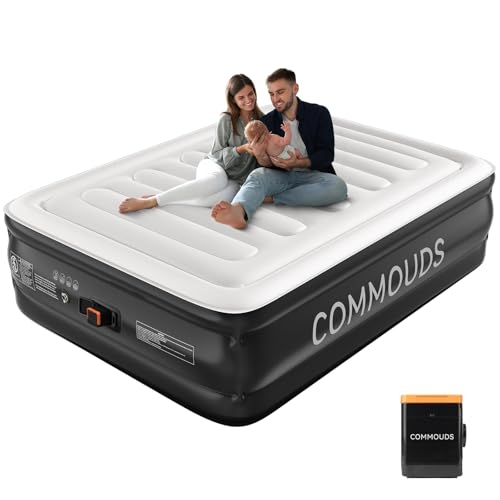
COMMOUDS Queen Air Mattress with Battery Pump, 18″

Lost Horizon Option3 Self-Inflating Foam Mattress, Full, 4.5″

Elegear 4″ Thick Sleeping Pad, 9 R-Value Insulated
Inside Each Recommended Option
The LLUAII self-inflating sleeping pad solves one of camping’s oldest headaches: the pump. A built-in electric pump inflates and deflates the pad with a single button, which means no huffing into a valve at the trailhead and no midnight wrestling match with a foot pump. Foam inside the 4-inch body adds real loft, so you sit up without bottoming out, and the integrated pillow keeps a stuff sack off your face.
For most weekend campers, this is the sweet spot. Truck-bed sleepers, SUV overlanders, and people who bounce between campsite and guest room all benefit from the four-season foam. Compared to the air-only picks later in this list, the foam core keeps you insulated when the temperature drops and stays firmer when you shift in your sleep.
What Earns Its Place
- One-touch electric pump cuts setup to roughly a minute
- 4-inch foam core cushions hips and shoulders on rocky ground
- Built-in pillow eliminates a forgotten item on the packing list
- Foam holds warmth longer than bare air chambers on cold nights
Trade-Offs To Consider
- Heavier and bulkier than a pad you’d backpack miles into the woods
- Vacuum packaging means a 30-minute rest after first inflation for full loft
Made For
Car campers, SUV sleepers, and anyone who wants tent-to-bed setup without manual pumping.
Skip It When
Backpackers counting every ounce should reach for the lighter Lost Horizon Self-Inflating Foam Camping Mattress, Single, 3″ instead.
Road-trippers with a Tesla Model Y know the cargo area is shaped like nothing else on the market. The Lost Horizon Self-Inflating Foam Camping Mattress for Model Y is built to that exact footprint for two-row versions, so you stop stacking sleeping pads and hoping nothing rolls. At 4.5 inches thick with 9 pounds of foam, the pad actually feels like a mattress instead of a foam tile.
It carries a 440-pound capacity, which matters when two adults plus a retriever are squeezing in after a long drive. The internal structure distributes foam and air evenly, so the middle doesn’t sag where you actually sleep. For Model Y owners, this lands in a niche no generic pad covers.
Points In Its Favor
- Custom dimensions match the two-row Model Y cargo floor
- 4.5-inch foam profile sits taller than most backseat pads
- 440-pound capacity handles two adults without bottoming out
- Self-inflating core means no pump gear to pack
Some Limits To Know
- Useful only in the specific Tesla configuration it was cut for
- Foam adds real weight, which limits portability outside the vehicle
Whose Shelf It Belongs On
Two-row Model Y owners who camp out of the cargo area on weekends and want a pad that fills the space cleanly.
Swap It Out When
Anyone without a two-row Model Y should pick the COMMOUDS Queen Air Mattress with Battery Pump, 13″, which works in any tent or guest room.
Solo backpackers tend to overthink weight and underthink sleep, and the Lost Horizon Self-Inflating Foam Camping Mattress, Single, 3″ corrects that ratio. Three inches of foam at 5.5 pounds total hits the middle ground between ultralight inflatables and the chunky 4.5-inch pads above. You can feel the ground less, but your pack doesn’t weigh much more.
Internal air channels distribute weight evenly, so a side sleeper’s hip stays supported through the night. The 220-pound capacity suits most solo hikers without flex. For three-season trips where you want foam comfort without a base-camp pad, this size hits the mark.
Practical Pluses
- Single-person cut fits small tents and hammock-friendly layouts
- Self-inflating core means no pump on the trail
- Lower weight than the 4.5-inch sibling pad
Honest Caveats
- Thinner profile lets you feel roots and rocks more than a 4-inch pad
- 220-pound capacity falls short for heavier sleepers or two people sharing
- Foam absorbs moisture, so storing it bone-dry takes discipline
Quick Facts
Built With In Mind
Solo backpackers and three-season campers who want foam comfort without hauling a full base-camp pad.
Not Your Match When
Couples or colder-weather campers should move up to the Lost Horizon Option3 Self-Inflating Foam Camping Mattress, Full, 4.5″ instead.
Backyard camping with kids falls apart when mosquitoes show up or the sun beats down on the tent. The QPAU Inflatable Kids Air Mattress with Tent and Fast Electric Pump, Ages 3+ answers both by attaching fine mesh netting and breathable sunshade fabric right onto the air bed. Setup stays one-step: blow up the mattress and the tent goes with it.
For parents hosting sleepovers, this turns a yard into a self-contained camp. The integrated design means nothing shifts around at bedtime. Compared to the larger queen pads on this list, this one targets a much smaller, much younger crowd, and that focus shows in the size and the safety framing.
What Stands Out
- All-in-one tent and mattress cuts setup to a single inflation
- Mosquito mesh keeps biting insects away from sleeping kids
- Sunshade fabric protects against afternoon heat and direct light
- Kid-sized footprint fits a backyard or living room comfortably
Things That May Matter
- Built for ages 3 and up, so teens and adults outgrow the dimensions fast
- Mesh tent needs careful drying before storage to prevent mildew on the fabric
The Right Fit
Parents putting together backyard sleepovers or first-time campers under age 10 who need a contained, bite-free setup.
Consider Something Else When
Anyone beyond the recommended age range or wanting a real backcountry pad should consider the LLUAII Self-Inflating Sleeping Pad with Electric Pump for a more grown-up sleep surface.
Air mattresses usually demand either a wall outlet or a heavy pump in your trunk. The COMMOUDS Queen Air Mattress with Battery Powered Removable Pump, 13″ High sidesteps both. A built-in battery pump inflates the queen in roughly three minutes, then detaches for charging. Forty-eight internal air coils, about 20% more than similar pads, spread weight so the middle doesn’t hammock under two sleepers.
The 650-pound load rating gives plenty of headroom for couples plus gear. The 13-inch height feels closer to a real bed than a ground-level pad, which older sleepers appreciate. You can host a guest one night and camp the next weekend without swapping gear.
A Favorable Mix
- Battery pump frees you from outlet hunting at camp
- 48 air coils resist sagging across the sleeping surface
- Queen footprint hosts two adults or a single sleeper with extra room
- Removable pump stores or charges separately
Potential Compromises
- Battery needs recharging between trips, and runtime depends on temperature
- Air-only construction loses warmth faster than the foam pads earlier on the list
- Air coils can develop slow leaks over years of heavy use
The Numbers That Matter
Best Suited To
Car campers and homeowners who split their use between guests and weekend trips and want one queen-sized bed that handles both.
A Better Fit Elsewhere
Backcountry hikers will find the 13-inch COMMOUDS too bulky and should look at the Lost Horizon Self-Inflating Foam Camping Mattress, Single, 3″ instead.
Tall sleepers hate sitting on the floor to get into bed, and 13 inches still feels low for some. The COMMOUDS Queen Air Mattress with 2000mAh Battery Powered Pump, 18″ Raised solves that with a full 18-inch ride height. The built-in 2000mAh lithium pump inflates and deflates without any power source, so you can set this up at a remote campsite or in a guest room with the same speed.
An eight I-beam structure runs the length of the bed, giving the mattress a flatter, more bed-like surface. Compared to the 13-inch sibling above, this version trades a smaller folded footprint for taller sitting height. For couples who want real-bed feel without real-bed weight, this lands well.
Useful Highlights
- 18-inch ride height matches a traditional bed frame for easier entry
- Rechargeable pump frees you from outlet dependence
- Eight I-beam structure adds lengthwise rigidity
- Queen size handles couples without the middle-sag feel
Things To Weigh
- Taller profile packs down larger than the 13-inch COMMOUDS
- Lithium battery loses capacity in freezing temperatures, which limits winter camping
- Air-only build needs a flat surface to feel stable
Who Should Grab It
Taller campers and anyone who struggles with low-profile air beds will appreciate the 18-inch ride height most.
Look Elsewhere When
Winter campers who need cold-tolerant insulation should reach for the Elegear 4″ Thick Sleeping Pad with 9 R-Value Insulated instead, since foam holds warmth longer than bare air.
Car camping with a partner changes the math on foam density. The Lost Horizon Option3 Self-Inflating Foam Camping Mattress, Full, 4.5″ ships with 12 pounds of foam filling, which makes a real difference when two adults share a surface. The internal structure distributes air and foam evenly, so neither sleeper ends up in a trough.
At 4.5 inches thick and rated to 440 pounds, this pad handles bigger sleepers without bottoming out. The full-size footprint fits standard family tents, and the self-inflating core means no pump to forget at home. For couples who want foam comfort without a queen air mattress, this is the cleaner option.
Positive Points
- 12-pound foam core delivers genuine couple-friendly support
- Full-size footprint fits standard family tents without overhang
- Self-inflating design needs no external pump or power source
- Even air-foam distribution prevents pressure points across the surface
A Few Limitations
- Heavier than a solo pad, which limits how far you can carry it from the car
- Full-size storage bag takes up real space in a sedan trunk
Core Details
Perfect Match For
Couples and base campers who want foam comfort and don’t want to inflate an air chamber each night.
Reach For A Different Pick When
Tesla Model Y owners will find the Lost Horizon Self-Inflating Foam Camping Mattress for Model Y fits their cargo area better than a generic full-size pad.
R-value tells you how well a pad blocks ground cold from stealing your body heat, and most summer pads land between 1 and 4. The Elegear 4″ Thick Sleeping Pad with 9 R-Value Insulated, Single sits at 9, which puts it firmly in four-season territory. The 9-layer insulation system inside the 4-inch body keeps frost at bay on cold alpine nights.
The independent SGS test result and ASTM F3340-22 certification give this pad a credibility check that many camping pads skip. In most shoulder-season trips, this is overkill; in a real winter camp, it’s the difference between sleeping and shivering. For mountaineers and shoulder-season hunters, that insulation justifies the extra weight.
The Upside
- 9 R-value insulation handles genuinely cold ground
- ASTM F3340-22 certification backs the insulation claim
- 4-inch profile balances cushion and pack-down size
- Solo footprint fits narrow winter tent layouts
Points To Keep In Mind
- Insulation layers add weight versus a basic 3-inch summer pad
- Single-person size won’t work for two sleepers sharing warmth
- Premium insulation costs more than three-season options
Feature Snapshot
Who Will Love This
Winter campers, alpine backpackers, and shoulder-season hunters who need real insulation under cold ground.
Consider Something Else When
Three-season family campers should pick the Lost Horizon Option3 Self-Inflating Foam Camping Mattress, Full, 4.5″ instead, which handles warmer trips and pairs better.
What Matters Most Before Choosing Camping Inflatable Mattresses
Match The Pad To The Trip
Think through how you actually camp before anything else. Car campers and SUV sleepers carry different loads than backpackers, so the weight-versus-comfort trade-off shifts. A 4-inch foam pad that feels great at a drive-in site becomes a burden after a six-mile hike. Solo travelers can lean toward streamlined single pads, while couples need the full-size or queen footprint to share sleep surface evenly.
Insulation Beats Thickness For Cold Nights
R-value is the single number that matters most in cold weather, since it tells you how well a pad blocks ground cold. An R-value below 2 suits summer only, while 4 to 6 covers shoulder seasons. Anything above 8 handles real winter and alpine trips. Thickness helps cushion but does not insulate on its own, so a thick air mattress can still feel brutally cold on frozen ground.
Pumps, Valves, And Setup Speed
Setup speed changes how a pad feels at the trailhead or campsite. Built-in electric pumps add weight but save lungs, while self-inflating foam cores need only a few breaths to top off. Battery-powered pumps free you from outlet hunting. The valve design matters too: wider valves dump air faster when you break camp in the morning, and a patch kit should live in your bag regardless of pad type.
Durability And Storage Habits
Pad lifespan depends on how you treat it between trips. Foam absorbs moisture, so storing a self-inflating pad bone-dry prevents mildew and slow foam breakdown. Air mattresses benefit from a ground cloth underneath and a tarp above to block UV, which degrades the outer fabric over time. Check seams and valves before each season, since a slow leak caught early beats a sleepless night halfway through a trip.
Key Considerations Across These Picks
Pitfalls Shoppers Hit
Picking by thickness alone leaves cold nights unsolved, since a thick air mattress with low R-value still pulls heat from your body. Skipping the pump question leads to frustration at the trailhead when a pad needs huffing into a tiny valve. Ignoring packed size ruins backpacking plans, since a 4.5-inch foam pad that fits a car trunk rarely fits a 65-liter pack.
Why Top Tier Costs More
Higher-tier camping inflatable mattresses charge more because the insulation, foam density, and valve systems cost more to build. A 9 R-value pad requires layered insulation that a summer pad skips, and 48 air coils cost more than 24. Removable battery pumps add electronics and a charger that basic pads avoid. The upgrade pays off when you camp in real cold or want one pad that handles both guests and weekend trips without compromise.
Frequently Asked Questions
How thick should a camping inflatable mattress be?
Two to three inches works for summer side sleepers on soft ground. Four inches or more helps side sleepers and anyone who wakes up sore on thinner pads. Cold-weather trips add insulation as the priority over thickness.
What is R-value and why does it matter?
R-value measures how well a sleeping pad resists heat loss to the ground. Higher numbers mean warmer sleep, so a 9 R-value pad handles frost while a 2 R-value pad tops out at summer nights. Pick R-value first for cold trips, then check thickness for comfort.
Can you use a camping inflatable mattress indoors?
Yes, most camping inflatable mattresses work fine as guest beds. Foam self-inflating pads feel firmer than air mattresses, while queen air beds with battery pumps inflate anywhere without an outlet. Add a top sheet and the sleeping surface feels close to a real bed.
How do you clean and store a camping inflatable mattress?
Wipe down the surface with a damp cloth and mild soap after each trip, and air-dry fully before rolling. Store loosely in a cool, dry place to keep foam from compressing and to prevent mildew on the fabric. A patch kit and valve tool stay in the storage bag year-round.
Are self-inflating pads better than air mattresses?
Self-inflating foam pads hold warmth better and need no pump, but they pack down larger and weigh more. Air mattresses store smaller and feel softer, but they lose heat faster and need a pump. Match the type to your trip style rather than picking one over the other.
Bottom Line
The right camping inflatable mattress turns restless nights into real recovery, whether you camp out of a Tesla, a tent, or a backyard. Start with where and how you camp, then narrow by R-value, thickness, and pump style. The right pick keeps you warm, supported, and packed down to a size your vehicle can handle.