
Cooking outdoors should feel straightforward, not like a compromise. A solid camping hot plate lets you simmer pasta at a backcountry site, boil water in a tailgating parking lot, or pull off a full breakfast inside a cramped RV kitchen without wrestling with gear that fights you. The picks below cover propane burners, induction units, ceramic infrared plates, and old-school coil stoves, each matched to a specific kind of trip and camper. Skim the table for a quick match, then read the closer look section to see how each one actually behaves in the field.
The Essentials At A Glance

Coleman Cascade 18 1-Burner Camping Stove
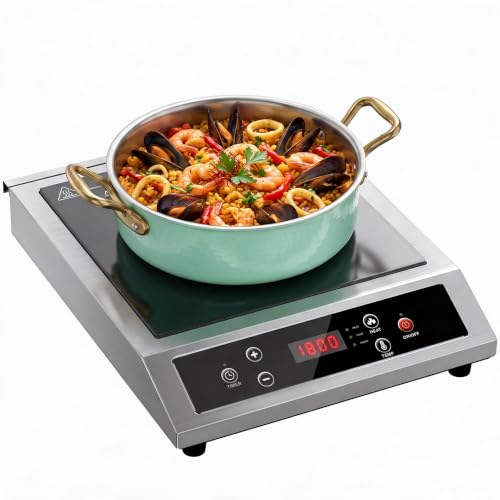
Stainless Steel Induction Cooktop 1800W

FOGATTI RV Induction Burner 1800W

Coleman Tabletop 2-in-1 Grill & Stove

KOCASO 2000W Electric Double Burner

WABK 12-Inch 2-Burner Infrared Cooktop

DRINTON 2200W Infrared Single Burner

Bonnlo 3-Burner Propane Stove

ANHANE 1800W Infrared Single Burner
A Closer Look At Each Pick
The Cascade 18 leans on Coleman’s long track record in camp stoves, and the design shows it. You get a single burner delivering 8,000 BTUs (British Thermal Units, a measure of how much heat a stove puts out), with an integrated rotary igniter so you don’t need matches in damp conditions. The cooktop accepts a 12-inch pan, which is generous for a portable unit and means most family-sized skillets fit without overhang.
Where this stove earns its reputation is real-world durability. The aluminized steel surface wipes clean after a sticky breakfast, the grate flips 180 degrees to lower the packed profile, and the regulator stows on top so you don’t lose parts in transit. For car campers and tailgaters who want a single burner that just shows up and works, the Cascade is a sensible anchor pick.
The Good Stuff
- 8,000 BTU burner handles boiling, simmering, and basic searing
- Matchless rotary ignition is reliable in cool, damp mornings
- 12-inch pan footprint fits most full-size skillets
- Aluminized steel cooktop wipes down fast after greasy meals
- Compact, regulator stows on top, grate flips for tighter packing
Worth Noting
- Single burner limits you to one pan at a time, a real constraint for group meals
- Wind can steal heat without a dedicated shield in open sites
- You still need a separate propane bottle, which adds packing weight
Who It Suits Best
Solo backpackers, couples, and tailgaters who want a trusted single burner and don’t mind cooking one pan at a time.
Swap It Out When
You cook for three or more people at once and need parallel burners, in which case the Coleman Tabletop 2-in-1 Grill & Stove is the better match.
Induction cooktops heat cookware directly through electromagnetic fields rather than warming a burner first, and that quirk is exactly why this stainless steel unit moves to the top of the efficiency charts. The 1800W dual-layer copper coil pushes more than 83 percent of its draw into the pan, which means a kettle boils faster and the surrounding air stays cooler. For tent campers with access to a generator or campground power, that speed change is noticeable.
Compared to the propane Cascade, this plate needs no open flame and no ventilation, so it works in enclosed spaces like pop-up campers or screened kitchens. The trade-off is the cookware: induction only pairs with magnetic pans, so any aluminum or copper pot without a steel base simply won’t heat. If your kit already leans cast iron or stainless, the performance jump over a coil burner is hard to ignore.
Where It Excels
- 1800W dual-layer copper coil delivers rapid, even heat to magnetic cookware
- More than 83 percent energy transfer efficiency speeds up boil times
- Stainless steel housing wipes down quickly after spills
- No open flame, making it usable inside enclosed campers with ventilation
Trade Offs
- Won’t heat aluminum, copper, or glass cookware without a magnetic base
- Requires steady 110V AC power, so it’s not useful off-grid without a generator or inverter
- Cooling fans run during use, adding a faint hum to quiet campsites
Made For
Campers with hookups or portable power stations, and anyone whose cookware kit is already cast iron or magnetic stainless.
Reach For A Different Pick When
You cook far from shore power and want fuel flexibility, in which case the Bonnlo 3-Burner Propane Stove handles the same big-pot jobs without needing electricity.
FOGATTI built this induction plate around the realities of RV galleys, and the dimensions tell the story. At roughly 15.35 inches wide by 11.81 inches deep, with a 14.96-by-11.42-inch cutout, it drops into a standard counter opening or sits on top as a portable. The 1800W output matches the larger induction units above, but the package is sized for the cramped shelves and tight counters of a Class C motorhome.
The control panel covers the practical side of camp cooking. LED touch sensors respond with a tap, pan detection shuts the burner off when no cookware sits on it, a built-in timer handles long simmers, auto shutoff adds a safety net, and a child lock prevents accidental changes during travel. For RV owners upgrading from a propane cooktop, this is a thoughtfully laid-out replacement.
Bright Spots
- Roughly 15.35 x 11.81-inch footprint fits standard RV cutouts
- LED touch controls, timer, and auto shutoff cover everyday cooking needs
- Pan detection stops wasted energy when you lift the pot
- Doubles as a standalone burner or a built-in unit
Honest Caveats
- Induction limits you to magnetic cookware, a real constraint if your RV pots are aluminum
- Touch controls can be finicky with wet or greasy fingers during meal prep
- Requires a dedicated 15-amp circuit in most RVs to run safely at full 1800W
The Right Fit
Full-time RVers and camper-van owners who want a flush, induction-ready galley upgrade with proper safety features.
Consider Something Else When
You want a simpler portable burner to move between sites, in which case the Stainless Steel Induction Cooktop 1800W gives you similar power without the cutout requirement.
Where the Cascade keeps things to one burner, this Coleman tabletop opens up. You get two independently controlled burners running at a combined 20,000 BTUs, plus a grilling surface beside them, all on the same propane feed. The push-button starter removes one more step from camp setup, and the wind guards keep the flame steady in breezy conditions. For families who cook real meals outside, that’s a meaningful step up.
The trade-off is footprint and packing weight. Two burners plus a grill grate add bulk, and the chrome-plated grate, while removable for cleaning, takes up real space in a car trunk. Within the roundup, the dual-burner layout handles the kind of breakfast-and-dinner-at-once cooking that one-burner setups simply can’t.
Everyday Perks
- 20,000 total BTUs across two adjustable burners and a grill
- Push-button ignition lights both sides quickly
- Wind guards help maintain flame in gusty conditions
- Removable chrome-plated grate simplifies cleanup after heavy meals
Points To Keep In Mind
- Larger and heavier than single-burner stoves like the Cascade 18
- Two-burner propane draws can shorten canister life on long weekends
- Best used on a stable table, not a flimsy camp stool
Best Suited To
Families and small groups cooking full breakfasts and dinners at the campsite, with table space to spare.
Look Elsewhere When
You travel light or hike to your site, in which case the Coleman Cascade 18 1-Burner Camping Stove is the easier carry.
The KOCASO double burner doesn’t pretend to be fancy. You get two 6-inch coil elements, five temperature settings, and a 2000W total draw on a metal body with rubber feet that grip a counter or RV table. Coils heat slowly compared to induction, but they accept any cookware you already own, which matters in a dorm, cabin, or rental where you can’t control what’s in the kitchen drawer.
The honest read is that this is a workhorse for low-cost setups rather than a high-performance piece. Coil burners take longer to boil, the surface stays hot after shutdown, and the temperature steps are broad rather than precise. Within this roundup, the KOCASO sits well below the induction plates on speed, but it covers the same use case as the WABK at a lower price point.
Notable Upsides
- 2000W across two 6-inch coil elements handles two pots at once
- Five temperature settings cover basic simmer-to-boil cooking
- Rubber feet prevent sliding on smooth countertops
- Works with any cookware material, including aluminum and copper
Some Limits To Know
- Coils heat slower than the induction or infrared plates in this list
- Residual heat lingers after the burner is switched off
- Broad temperature steps make low-heat simmering less precise
- Coil elements are harder to wipe clean than flat ceramic tops
Perfect Match For
Dorm dwellers, cabin renters, and budget-focused shoppers who need a functional two-burner setup without induction cookware restrictions.
Another Choice May Suit
You want faster heat and easier cleanup, in which case the WABK 12-Inch 2-Burner Infrared Cooktop offers ceramic-glass surfaces at a modest step up.
The WABK 12-inch infrared cooktop bridges a gap that pure induction and pure coil stoves both leave open. It uses infrared heating, which warms the ceramic glass surface directly and then transfers that heat to any pot or pan you place on top, including aluminum, copper, cast iron, and glass. The 2100W total draw is split across two burners with nine power levels, knob controls, a child lock, a timer, and a residual heat warning.
Compared to the KOCASO above, the WABK adds knob control, a flat ceramic surface that’s easier to wipe, and more granular power levels. Compared to induction plates, it accepts any cookware without the magnetic-base requirement, which is a quiet win if your kitchen is full of older aluminum pans. The 12-inch surface gives you real cooking space without dominating a small counter.
The Value In It
- 2100W across two burners with nine power levels
- Knob controls remain usable with wet or greasy hands
- Ceramic glass surface wipes clean in seconds
- Compatible with every common cookware material
- Built-in or countertop installation flexibility
Factors To Consider
- Infrared surfaces stay hot after shutdown, which takes getting used to
- 110V plug may share a circuit with other appliances on a 15-amp service
Key Advantages
Built With In Mind
Shoppers who cook with mixed cookware materials and want a flexible two-burner that installs either as a countertop unit or a built-in.
A Better Fit Elsewhere
You’re outfitting a true RV galley and want a flush-mount induction panel, in which case the FOGATTI RV Induction Burner is the cleaner fit.
The DRINTON single burner sticks to the simplest, most useful formula in this category: one ceramic infrared hot plate, 2200W of draw, a 2-hour timer, and adjustable temperature control. Because infrared heats through the ceramic glass, it accepts iron, stainless steel, aluminum, copper, glass, and ceramic pans alike, which is the main reason people reach for one of these over induction.
The 2200W rating is the highest single-burner draw in this roundup, so it covers real boiling and searing jobs from a standard 110V outlet. A small smell during first use is widely reported on similar infrared units as the manufacturing residue burns off. For cabin renters, short-term campers, and anyone who can’t be sure what cookware will be on hand, this is a quietly capable everyday pick.
Useful Strengths
- 2200W single burner is the highest output here for one pot
- Compatible with every common cookware material
- 2-hour timer handles long simmers and slow reductions
- Ceramic glass surface wipes down with a damp cloth
Smaller Caveats
- Single burner means one pan at a time
- Residual heat lingers on the ceramic glass after cooking
- First-use odor from manufacturing residue is commonly reported and temporary
Who Should Grab It
Cabin renters, short-stay campers, and cooks who want a single, high-output plate without worrying about cookware compatibility.
Not Your Match When
You cook for more than two people and need parallel burners, in which case the WABK 12-Inch 2-Burner Infrared Cooktop covers the same infrared cooking in a wider format.
The Bonnlo sits at the extreme end of this roundup, and that’s exactly the point. Three cast iron burners, each rated up to 75,000 BTUs, push the total output to 225,000 BTUs on the three-burner configuration, with a smaller one-burner 100,000 BTU option also available. The detachable stand legs lift the cooking surface to a comfortable working height, and the cast iron heads handle everything from a backyard crawfish boil to a deep-fry setup on a hunting camp.
This is not a backpacking stove or even a car-camping stove for one. It’s a patio and tailgate workhorse built around big pots and long days. Compared to the Coleman Tabletop 2-in-1 above, the Bonnlo trades cooking finesse for raw power and pot capacity, and you pay for that in weight and pack size.
A Strong Showing
- 225,000 BTU total across three cast iron burners
- Detachable stand legs raise the cooking surface to a comfortable height
- Burner bracket accepts large-diameter pots and stockpot work
- Adjustable flame control on each burner
Where It Is Less Suited
- Heavy and bulky compared to every other pick on this list
- Requires a high-BTU propane tank and appropriate regulator
- Open-flame design needs outdoor space with safe clearances
Whose Shelf It Belongs On
Backyard cooks, tailgate crews, and base-camp hunters running stockpot meals, crawfish boils, or large-volume frying.
Where Another Pick Suits Better
You’re after portability and a single burner for car camping, in which case the Coleman Cascade 18 1-Burner Camping Stove is dramatically lighter and easier to pack.
The ANHANE closes out the roundup with a focus on low-noise operation and refined control. The 1800W infrared burner runs through nine power levels and nine temperature steps, with a touch control panel, child lock, and a 4-hour timer. The unit is meant for 110V to 120V outlets, which covers most North American campground power posts and portable power stations.
What separates it from the DRINTON directly above is the longer 4-hour timer, slightly lower peak wattage, and a touch interface rather than knob control. For shared or quiet campsites where fan noise and click-clack knobs matter, those details add up. For a single-burner that quietly handles long simmers and gentle reductions, the ANHANE fits well.
The Case For It
- Nine power levels from 200W to 1800W cover simmer to sear
- Touch controls with child lock suit family kitchens
- 4-hour timer handles slow reductions and overnight warmers
- Low-noise operation works for shared and quiet campsites
Less Ideal Details
- Touch controls require dry hands for reliable input
- Single burner limits you to one pan at a time
- 1800W is lower than the DRINTON’s 2200W for rapid boiling
Who Will Love This
Quiet-camp cooks, family campers, and shared-space renters who value a quiet, touch-controlled single burner with a long timer.
A Better Fit Elsewhere
You want higher peak wattage on a single burner, in which case the DRINTON 2200W Infrared Single Burner offers more heat for fast boils.
What Matters Most When Picking A Camping Hot Plate
Fuel type sets the first fork in the road. Propane stoves like the Coleman Cascade 18 and Bonnlo work anywhere you can carry a tank, including deep backcountry, but they need ventilation and lose heat in wind. Electric induction units like the FOGATTI and OneSetNuf induction plate heat faster and cleaner, yet they require AC power and magnetic cookware. Infrared ceramic units from WABK, DRINTON, and ANHANE split the difference, accepting any pan and running off standard 110V outlets, though their residual heat takes adjustment.
Cooking style shapes the next decision. One-burner setups suit solo travelers and couples who don’t mind cooking in sequence, while two-burner propane or infrared options cover parallel cooking for family meals. If you regularly work with big stockpots or fryers, raw BTU output matters more than burner count, which is where the Bonnlo earns its place. For tight RV counters, flush-mount dimensions and dedicated cutouts matter as much as heat output, since a stove that doesn’t fit a galley is unusable regardless of how powerful it runs.
Build quality and safety details round out the real-world picture. Wind guards, push-button ignition, and stable rubber feet make a propane stove easier to live with in changeable weather. Touch locks, timers, pan detection, and residual heat warnings matter more for indoor or family use. Across this list, the trade-offs are rarely about cooking power alone, since fit, fuel, and the cookware you already own decide which plate actually earns its space in your kit.
Key Considerations Across These Picks
Pitfalls Shoppers Hit
A common trap is choosing a single-burner stove for a family, then realizing nobody can eat at the same time. Another is buying an induction plate without checking that your pots are magnetic, a magnet on the pan bottom is the quickest check. Skipping wind protection on a propane stove is a third common miss, especially at exposed sites where flame loss turns a quick boil into a frustrating wait.
Where The Extra Money Goes
Higher-tier models usually add better control hardware: nine power levels instead of five, longer timers, child locks, and pan detection on induction units. They also tend to use ceramic glass or stainless surfaces that wipe clean faster than exposed coils. For campers who cook most nights, that control and ease of cleaning tends to matter more than peak wattage, which is why mid-range picks like the WABK and DRINTON often outwork cheaper units over a season.
Frequently Asked Questions
What is the safest camping hot plate for families?
Look for child locks, auto shutoff, and timer functions, which the FOGATTI RV Induction Burner and DRINTON both include. Match the burner type to your cookware and power source.
Can induction plates work with regular pots?
No. Induction heating requires magnetic cookware like cast iron or magnetic stainless steel. Aluminum and copper pans need a steel base plate to heat up.
How much power do portable burners use?
Single induction and infrared units typically draw 1500W to 2200W on standard 110V outlets. Coil burners usually run 1000W to 2000W total. Confirm your campsite circuit can handle the load.
Are propane stoves safe in windy conditions?
Yes, with caveats. Models with built-in wind shields like the Coleman Tabletop 2-in-1 Grill & Stove hold flame better than bare burners. Even shielded stoves still struggle in strong gusts.
How do I clean a ceramic glass cooktop?
Let the surface cool, then wipe with a soft cloth and a non-abrasive cleaner designed for ceramic glass. Avoid steel wool and harsh scrubbers, since they scratch the surface.
Closing Remarks
The right camping hot plate depends less on wattage and more on how you actually cook outside. A solo traveler with a propane canister has different needs than a family feeding four off a portable power station, and the roundup above reflects that spread. Pick the fuel type that matches your site, confirm your cookware works with it, and the right plate usually becomes obvious.