
A good night’s sleep in the outdoors starts from the ground up. Cold earth, pointy roots, and rocky tent floors have ended more trips than bad weather ever has, and the right pad quietly fixes all of that. This roundup focuses on seven well-built options spanning self-inflating foam, ultralight closed-cell, and oversized roll-up designs, so you can match a pad to the way you actually camp rather than the way the marketing claims you do.
A Closer Look At The Lineup

Sea to Summit Camp Plus SI Sleeping Mat, Tapered Regular

Sea to Summit Camp Plus SI Sleeping Mat, Tapered Large
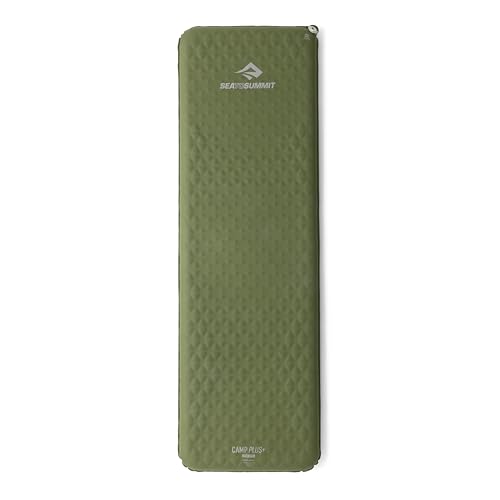
Sea to Summit Camp Plus SI Sleeping Mat, Rectangular Large

Sea to Summit Camp Plus SI Sleeping Mat, Rectangular Regular

Therm-a-Rest Z Lite Original Sleeping Pad

Therm-a-Rest Z Seat Insulated Sitting Pad

Teton Outfitter XXL Sleeping Pad for Cot
Meet The Standout Selections
The Camp Plus SI in its tapered regular shape is the kind of mat that disappears into your pack and reappears as a surprisingly comfortable bed. Its self-inflating foam core does the heavy lifting once you crack the valve, and the tapered cut trims weight where your feet don’t actually need a full mattress width. Compared with the bulkier rectangular picks later in this list, this one earns its place for backpackers who count grams.
For most three-season campers, the warmth profile covers spring forest trips, alpine summer nights, and the shoulder seasons in between without forcing you to layer quilts on top.
Key Advantages
- Self-inflating design removes most of the lung work at camp, leaving only a few breaths to top off the firmness.
- Multi-function reversible valve supports fast inflation, controlled deflation, and fine-tuning of pressure once you’re lying down.
- 2.6-inch foam depth gives side sleepers actual shoulder and hip support rather than a thin barrier to the ground.
- Tapered geometry shaves pack weight for backpackers who don’t want a full rectangular footprint.
- 4.3 R-value (a measure of insulation from the cold ground; higher means warmer) handles all but the deepest winter nights for most users.
Things To Consider
- Heavier than the closed-cell Z Lite Original, so ultralight thru-hikers may still want foam instead.
- Self-inflating foam can take a few minutes to fully expand, which matters on a late, dark arrival at camp.
Feature Snapshot
Who It Suits Best
Three-season backpackers who want one pad that handles warmth, comfort, and packability without babying delicate inflatable chambers.
Consider Something Else When
Thru-hikers counting every ounce will find the Therm-a-Rest Z Lite Original a lighter, tougher companion for trail life.
The tapered large version takes everything the regular size does and stretches it out for taller sleepers or anyone who rolls around at night. Self-inflating foam pads like this one rely on the open-cell foam inside to pull air in once the valve is opened, then you dial in the firmness with a few breaths. The 2.6-inch loft feels generous even for restless side sleepers, and the reversible valve keeps setup and teardown quick.
Where the regular tapered model fits a tighter pack, this one trades a little space for a more generous sleep platform.
The Case For It
- Extra length and shoulder room without going all-in on a full rectangular mat.
- Same 4.3 R-value insulation as the tapered regular, keeping cold-ground performance consistent.
- Reversible valve with one-way deflation streamlines morning pack-up.
- 2.6-inch foam absorbs the feel of small rocks and twigs better than thinner inflatables.
Trade Offs
- Larger packed size compared with the tapered regular, which can crowd small backpacks.
- Added length means more surface area to dry if you camp in damp conditions.
Made For
Tall campers and side sleepers who want tapered efficiency but need extra length and shoulder clearance for a real night’s sleep.
Look Elsewhere When
Backpackers packing tight volume will prefer the shorter tapered regular Sea to Summit mat.
This is the car-camping version of the Camp Plus family, trading the tapered cut for a flat rectangular footprint that mirrors the dimensions of a standard bed. Gear doesn’t slide off a flat edge in the middle of the night, and you can actually use the full surface rather than being funneled toward your feet. The same self-inflating foam core and 2.6-inch depth apply here, so the comfort story stays consistent across the line.
The trade-off shows up in the pack size, which is where the rectangular picks and the tapered picks diverge for backpackers.
Useful Highlights
- Rectangular shape delivers a true flat sleeping surface and predictable edges.
- Large format gives couples, kids, or dogs room to share a single pad.
- Self-inflating foam with reversible valve keeps setup low-effort after a long drive.
- 4.3 R-value holds warmth through chilly shoulder-season nights.
Honest Caveats
- Bulky when rolled, so it fits a car trunk better than a backpack.
- Foam core retains moisture if stored damp, so it needs to be aired out before packing away long-term.
Spec Overview
Best Suited To
Car campers and base-camp setups where pack size doesn’t matter but flat, roomy comfort does.
Swap It Out When
Backpackers should reach for the tapered Sea to Summit regular instead, since the rectangular shape costs too much pack volume.
Stepping down to the rectangular regular brings the flat surface of a rectangular pad into a more backpackable footprint. The 1.5-inch foam is the real story here, lighter than the 2.6-inch siblings while still insulating well above bare ground. Air Zone construction trims bulk from the edges while keeping the body-contact areas supported, which explains why this pad often shows up on scout and ultralighter checklists.
Versus the bulkier rectangular large earlier in this list, you give up some thickness for a noticeably tighter pack.
Advantages To Know
- Thinner foam profile reduces packed size for mobile campers and scouts.
- 4.2 R-value handles cold ground better than typical summer-only pads.
- Reversible valve with one-way deflation keeps morning breakdown quick.
- Rectangular geometry gives predictable edges for gear placement next to the pad.
Some Limits To Know
- 1.5-inch loft offers less cushioning for side sleepers than the 2.6-inch Sea to Summit options.
- Thinner foam lets more cold ground feel through on frigid nights without an additional insulating layer.
Perfect Match For
Backpackers, scouts, and anyone building a lighter kit who still wants a flat, predictable pad shape.
Another Choice May Suit
Side sleepers chasing plush shoulder support will appreciate the thicker Sea to Summit Camp Plus tapered regular more.
The Z Lite Original is the closest thing to a category classic in this roundup. Closed-cell foam, accordion-folded design, no moving parts to fail, and a price that lets you treat it almost like a consumable. Mountaineers and long-distance hikers have leaned on this pad for decades because it shrugs off sharp rocks, frozen ground, and packed-in mistakes without complaint.
You won’t mistake it for the plush 2.6-inch Sea to Summit mats, but you also won’t be patching it at the trailhead.
Positive Points
- Closed-cell foam construction is virtually puncture-proof in normal use.
- Accordion folds store compactly and unfurl in seconds at camp.
- Heat-trapping dimples in the surface add warmth without adding weight.
- Trusted by backpackers and scouts for generations, with a long track record on the trail.
Where It Is Less Suited
- Thinner profile delivers noticeably less cushioning than self-inflating foam pads.
- Bulkier packed shape than inflatable alternatives of similar warmth, so it can crowd smaller packs.
Quick Facts
Who Will Love This
Thru-hikers, scouts, and minimalist campers who prioritize durability and reliability over plush cushioning.
Skip It When
Campers focused on cushioned sleep should consider the thicker Sea to Summit Camp Plus SI options for more comfort.
The Z Seat isn’t a sleeping pad, and pretending otherwise would mislead you. It’s a closed-cell foam sitting pad that folds down small enough to live in a hip belt, weighing roughly two ounces, and gives trail-side breaks an actual cushion between you and wet or cold ground. Used alongside one of the sleeping pads in this roundup, it covers a niche the bigger mats leave open.
It’s the kind of item you forget you own until you’re perched on a wet log at lunch, grateful it’s there.
A Few Strong Suits
- Closed-cell foam blocks moisture from seeping up into your seat on damp ground.
- Accordion folding keeps it compact and ready to deploy mid-hike.
- Superlight construction (around 2 oz) adds minimal pack weight.
- Made in the USA with durable foam that holds up to repeated folding.
Practical Considerations
- Too small and thin to serve as a primary sleeping pad for most campers.
- Limited size means it works best as a sitting and layering accessory rather than a standalone sleep system.
Right Fit For
Day hikers and backpackers who want a featherweight seat cushion for breaks, lunches, and chilly bleacher moments at the trailhead.
Where A Sibling Pick Shines
Overnight campers need a full-size mat like the Therm-a-Rest Z Lite Original for actual sleep insulation.
The Teton Outfitter XXL is built for a totally different job than the rest of this list. Picture a self-inflating mat the size of a small mattress, with 2.5 inches of poly-canvas-covered foam designed to lay across a camp cot rather than inside a tent floor. Slip-resistant loops hold it in place overnight, and the generous footprint accommodates broad shoulders, restless kids, or a dog who thinks they own the sleeping arrangements.
For backpacking, it’s overkill. For car camping with a cot, it’s exactly the point.
Useful Strengths
- Oversized XXL surface gives broader sleepers room to stretch out fully.
- 2.5-inch foam provides real cushioning on top of a cot frame or hard ground.
- Poly-canvas cover adds durability against abrasion from cot edges and tent floors.
- Slip-resistant loops keep the pad anchored to a cot overnight so it doesn’t drift off-frame.
Points To Keep In Mind
- Large packed volume rules it out for backpackers counting pack space.
- Self-inflating foam takes longer to fully expand than thinner foam pads, so plan setup time accordingly.
The Main Details
Whose Shelf It Belongs On
Family campers and car campers using a cot who want mattress-level comfort without hauling an actual air mattress.
Not Your Match When
Backpackers will do better with the Therm-a-Rest Z Lite Original or a tapered Sea to Summit mat that fits inside a pack.
What To Weigh Before Picking A Ground Pad
The right pad lines up with how you actually camp, not the spec sheet. R-value (insulation against the cold ground; higher numbers mean warmer sleep) matters most if you camp outside of summer. Backpackers need to balance weight and packed size against comfort, while car campers can lean into plushness without consequence. Foam thickness drives cushioning for side sleepers, and shape, whether tapered or rectangular, affects how the pad fits a tent floor and how much it weighs.
Think about your typical trip: a single night at a developed campground rewards comfort, but a five-day backpacking loop punishes bulk. Match the pad to the trip you take most, not the dream trip you’ll book someday.
Common Slip Ups And Where The Extra Money Goes
Common Shopping Slip Ups
Shoppers often grab the thickest pad they see without checking the R-value, then shiver on a 40-degree night. Others buy ultralight inflatables for car camping where weight is irrelevant and durability becomes the actual concern. Reading the use case, not just the comfort claim, prevents most mismatches.
What The Higher Tier Buys
Spending up typically buys thicker foam, higher R-values, larger surface area, and more refined valves. Premium pads like the Sea to Summit Camp Plus line trade the budget price of closed-cell foam for self-inflating comfort and all-season insulation. The upgrade pays off when you camp across multiple seasons or value sleep quality over absolute weight.
Frequently Asked Questions
How thick should a camping ground pad be?
For most adults, two inches of foam or air gives enough cushioning for side sleepers, while thinner pads work for back sleepers in mild weather.
What does R-value mean on a sleeping pad?
R-value measures how well a pad insulates you from the cold ground, and higher numbers keep you warmer in colder conditions.
Are self-inflating pads better than closed-cell foam?
Self-inflating pads offer more comfort and warmth, while closed-cell foam is lighter, tougher, and cheaper for rugged trips.
Can I use a regular sleeping pad on a cot?
Standard tapered pads work but leave gaps, so wider rectangular or cot-specific pads like the Teton Outfitter XXL cover the frame better.
How do I store a sleeping pad long-term?
Keep it unrolled or loosely rolled, clean, and dry in a cool spot so foam and laminates don’t degrade from prolonged compression.
The Takeaway
The best camping ground pad is the one that matches your trip length, climate, and sleep style without forcing trade-offs you’ll regret at 2 a.m. Backpackers tend to land on closed-cell or tapered self-inflating designs, while car campers benefit from rectangular or cot-sized comfort. Use this roundup as a starting point, then choose based on where and how often you actually pitch a tent.