
A great camping trip runs on small comforts. The right pocket knife, a way to charge your phone at the fire ring, or a heavy pan press that flattens a sandwich over a camp stove all add up to a smoother night outside. This list rounds up ten camping gadgets that solve real problems at the campsite without weighing down your pack.
A Side-By-Side Look

Bosch Bottle Opener

Victorinox Classic SD Swiss Army Knife (Black)

Quatish Travel Utensils with Case

Firsgrill Cast Iron Grill Press with Wood Handle
Ecarke 220W Inverter for DeWALT 20V

Ecarke 220W Inverter for Milwaukee 18V

SOARAISE Solar Power Bank 48000mAh (Wireless)
SOARAISE Solar Power Bank 48000mAh (Wireless Pack)

SOARAISE Solar Power Bank 48000mAh (4 Cables)

Ecarke 220W Inverter for Makita 18V
A Closer Look At Each Pick
Even on a quiet weekend at the campsite, glass-bottle caps find a way to show up. The Bosch Bottle Opener leans into that small moment, offering a flat, screwdriver-style handle with wide soft-grip panels that sit comfortably in a full hand. Its 3mm metal lip catches the cap edge cleanly, so most lids lift with a short twist rather than a wrestling match.
Compared to the multi-tool versatility coming up later in this list, this pick is single-purpose by design. Campers who pack a full bar kit at the fire ring will appreciate the dedicated leverage, while ultralight packers may leave it behind.
Where It Excels
- Wide soft-grip handle reduces hand fatigue during repeated use at the cook station.
- 3mm metal lip lifts stubborn caps with minimal effort, even when fingers are cold or damp.
- Compact body slips into a camp kitchen bin or drawer without taking over the prep area.
- Sturdy build holds up to drops onto picnic tables or truck tailgates.
Small Caveats
- Single-function design means it adds weight for campers who already carry a Swiss Army-style tool like the Victorinox Classic SD reviewed below.
- Metal lip can scratch coated tabletops if slid across the surface during opening.
Quick Facts
Who It Suits Best
Campers and tailgaters who host group meals and need a comfortable, dedicated opener by the grill.
Skip It When
Backpackers counting every gram should reach for the Victorinox Classic SD Swiss Army Knife covered in pick 2, which folds a blade and opener into one pocket tool.
A classic pocket tool earns its reputation by disappearing in your hand and showing up when needed. The Victorinox Classic SD packs a small blade, a flat screwdriver, a key ring, and a few extras into a slim black scale that rides on a belt loop or jacket zipper without pulling fabric.
Where the Bosch opener above solves one problem, this Swiss-made classic aims at trail chores from cutting paracord to tightening a loose sunglass screw. It suits campers who want a single object to cover several small jobs.
Good Reasons To Consider
- Stainless steel tools resist corrosion from humid mornings and damp pockets at the campsite.
- Lightweight carry stays comfortable clipped to a backpack strap all day.
- Multiple functions replace several loose tools that tend to vanish in a gear bin.
Things To Consider
- The compact blade is short, so heavier food prep still calls for a separate camp knife.
- Small tools require steady hands for users with reduced grip strength.
Made For
Hikers and campers who want a trusted everyday tool that handles light cutting, screwdriving, and opening tasks in one slim package.
Look Elsewhere When
Cooks who want heavier food prep at the fire should consider the Quatish Travel Utensils in pick 3, which adds a fork and spoon with a travel-friendly case.
Lunch at a roadside pullout or a trailhead table deserves better than a flimsy plastic fork. The Quatish Travel Utensils set includes a fork and spoon in 18/8 stainless steel, housed in a slim zip case with an elastic strap that keeps everything from rattling around in your bag.
Unlike the Bosch opener in pick 1 or the folding knife in pick 2, this kit focuses on the meal itself. The waterproof lining inside the case catches residue so crumbs don’t end up on your jacket pocket, and the utensils are dishwasher-safe back at home.
Where It Delivers
- 18/8 stainless steel resists rust from damp coolers and morning dew.
- Elastic band keeps the fork and spoon from sliding, so the case opens quietly.
- Waterproof case lining protects adjacent gear from sauces and oils.
- Dishwasher-friendly design saves time after the trip is over.
Honest Caveats
- The set does not include a knife, so you still need a separate cutting tool for trail meals.
- Stainless steel adds a bit more weight than plastic sporks for ultralight packers.
Feature Snapshot
Right Fit For
Campers, office lunchers, and picnickers who want a tidy reusable silverware set that travels quietly and cleans easily.
Consider Something Else When
Backcountry chefs focused on searing steaks need the Firsgrill cast iron press in pick 4 for serious griddle work.
Pressing meat against a hot griddle is the difference between a pale burger and one with proper sear marks. The Firsgrill cast iron press measures about 8.3 by 4.3 inches, wide enough to flatten bacon strips or a panini, with a wooden handle that stays cooler than bare metal during longer cooking sessions.
Whereas the Quatish utensils in pick 3 handle the meal on the plate, this press handles the meal on the heat. Food-grade iron avoids the PTFE and PFOA coatings found on lighter presses, and the surface can be seasoned like a cast iron skillet for a more natural non-stick feel.
The Value In It
- Cast iron weight delivers even pressure across the contact surface for reliable grill marks.
- Wood handle stays comfortable through longer cooking sessions.
- Seasonable iron offers a chemical-free alternative to coated press surfaces.
- Rectangular shape handles multiple bacon strips or a full sandwich in one press.
- Sold as a two-pack, which gives a matched press for griddle and skillet use.
Things To Consider
- Cast iron requires seasoning and drying care to prevent rust after wet camping trips.
- Heavier than aluminum presses, so it adds real weight to a camp cook kit.
Best Suited To
Camp cooks who grill over a campfire flat-top, lodge griddle, or portable gas griddle and want serious sear without bending the tool.
Reach For A Different Pick When
Travelers focused on portability and quick meals might prefer the Ecarke inverter in pick 5 to power small appliances instead of pressing them.
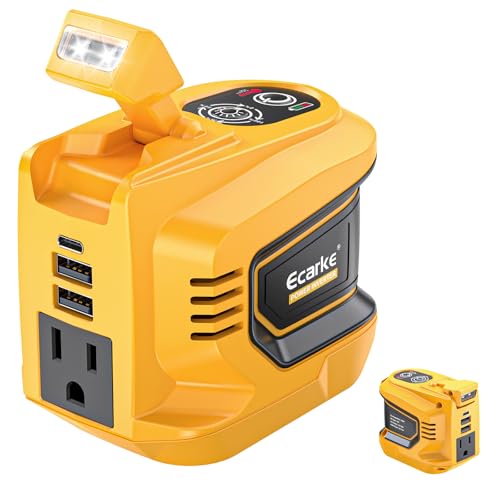
Power inverters turn a familiar tool battery into a quiet generator, and the Ecarke 220W model slides directly onto a DeWALT 20V pack. At roughly 0.68 pounds, it slips into a glove box or daypack pocket, giving you AC power for laptops, lights, or small fans without dragging a gas generator to the campsite.
Compared to the heavy griddle press in pick 4, this inverter is light enough to forget until you need it. Just note that the battery itself is sold separately, so the real-world kit grows with whatever DeWALT packs you already own.
Points In Its Favor
- One AC outlet, two USB-A ports, and a Type-C port cover most phone and laptop charging needs at the campsite.
- Built-in LED light adds a backup lantern for tent or truck-cab use.
- Slide-on battery design avoids loose cables on a wobbly picnic table.
- Continuous output handles common travel electronics without bogging down.
Trade-Offs
- Battery and charger are not included, so the total kit cost rises once you add a DeWALT pack.
- 220W is enough for small devices, but not high-draw appliances like kettles or hair dryers.
Quick Facts
Who Should Grab It
DeWALT tool owners who want a compact AC power source for car camping, tailgates, or emergency kits without buying another battery platform.
Where Another Pick Suits Better
Campers working with Milwaukee batteries will find the Ecarke inverter in pick 6 a more compatible fit for their existing tool kit.
Milwaukee M18 users have their own battery collection, and the Ecarke inverter plugs right into that ecosystem. At about 0.68 pounds, it rides along in a side pocket of a job-site bag and quietly converts your Milwaukee 18V pack into a small AC station for campsite evenings.
Where the DeWALT version in pick 5 leads the list, this sibling model covers the same job description for a different brand family. It is the same physical size, same port layout, same onboard LED light.
Positive Points
- Direct slide-on battery connection means no extra wiring to forget on trip day.
- Same 220W continuous output covers typical phone, tablet, and laptop loads.
- Onboard LED offers a low-glare option for tent or vehicle interior lighting.
Practical Considerations
- Like its DeWALT twin, the battery is sold separately and adds to the real cost.
- Survival rating depends heavily on the amp-hour rating of the Milwaukee pack you slide on.
Built With In Mind
Milwaukee M18 owners who already rotate batteries through drills and saws and want one more use for them on weekends outside.
Swap It Out When
Makita 18V tool owners should pair their kit with the Ecarke inverter in pick 10 for a battery match that does not require adapters.
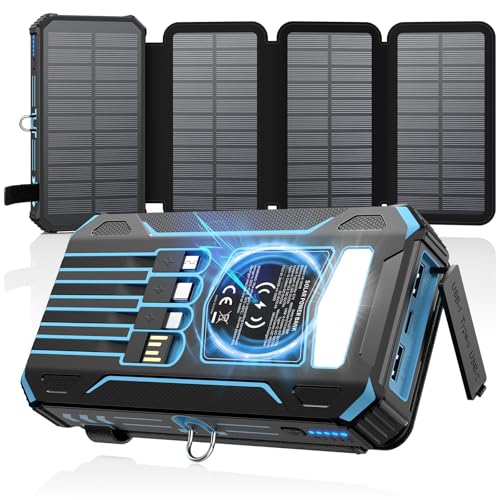
A multi-day campsite with no shore power means your phone, headlamp, and camera all live or die by your battery brick. The SOARAISE Solar Power Bank packs a 48000mAh lithium-polymer cell behind four solar panels, which the brand says charges several times faster than a single-panel unit in similar light.
Unlike the Ecarke inverter in pick 5, this bank needs no tool battery to operate, so it suits campers without a power-tool ecosystem. It also offers wireless charging on top, which keeps the cable count down at the picnic table.
What Makes Sense
- Four solar panels aim to soak up midday sun on a backpack lid or tent rain fly.
- Wireless top-up means compatible phones charge without digging out a cable.
- Massive 48000mAh capacity runs personal electronics for several days between wall charges.
Points To Note
- Solar input is a slow backup compared to a wall outlet, so plan to top off before the trip.
- Larger battery bricks add real weight to packs and may be overkill for one-night trips.
Feature Rundown
Who Will Love This
Weekend campers and van-lifers who want a single brick for phone, headlamp, and camera charging with a solar top-up for emergencies.
A Better Fit Elsewhere
Day-hikers worried about pack weight will find the SOARAISE pack in pick 8 a tighter option for shorter outings.
The SOARAISE pack reviewed in pick 7 focuses on wireless charging, while this sibling version of the same 48000mAh brick leans into cable-based versatility. Four built-in cables reduce the tangle of extras in your pack, and the same large cell carries you through several nights of headlamp and phone use.
Where the previous SOARAISE model is friendly to wireless-phone owners, this one favors travelers with mixed device types at the campsite. It still has four solar panels for emergency sun top-ups on a hung bag.
Everyday Wins
- Four built-in cables match common phone, tablet, and small-device connectors.
- Large 48000mAh capacity shares charging duties across multiple campers at once.
- Solar panel array adds an off-grid option when wall charging is not available.
Worth Noting
- Bulkier form factor than a slim 10000mAh stick, so it eats pack space.
- Solar input is slow, so travelers should plan a wall top-up before leaving home.
Whose Shelf It Belongs On
Group campers and family trip planners who need one brick to keep several phones, headlamps, and small cameras alive across a long weekend.
Not Your Match When
Solo travelers carrying one phone and a watch may prefer the slightly different SOARAISE in pick 9 for a tighter cable setup.
This third SOARAISE bank keeps the same high-capacity 48000mAh cell and four-panel solar layout, while positioning itself around the four built-in cables that travel with the brick. It is the model to grab when your pack already runs lean and you would rather leave charging cables at home.
Compared to the wireless-leaning version in pick 7 and the group-charging sibling in pick 8, this one aims at the all-in-one user who likes having every connector within reach of one device. Same solar panel count, same large lithium-polymer cell.
Strong Points
- Four built-in cables cover most modern phones and small tablets out of the box.
- Wireless pad still supports a quick drop-charge for a compatible phone on the picnic table.
- Multi-panel solar adds a real backup on long-distance hiking days.
Some Limits To Know
- All-in-one design means a single failed cable can limit which devices charge.
- Higher capacity bricks are heavier than small daily commuters, so hikers may leave them behind.
Perfect Match For
Solo travelers and digital nomads who carry several devices and prefer a single brick over a tangle of cables in a ditty bag.
Where A Sibling Pick Shines
Anyone prioritizing tool-battery charging at the campsite will get more direct AC from the Ecarke inverter in pick 5 for laptops and lights.
Makita’s LXT 18V platform shows up on job sites and home projects alike, so the Ecarke 220W inverter rounds out this list by tapping that same battery family. At about 0.68 pounds and roughly the size of a water bottle, it slips into a tool bag for the drive to the campsite.
Much like the DeWALT and Milwaukee versions reviewed earlier, this third Ecarke model shares the same port layout: one AC outlet, two USB-A ports, one Type-C, and an onboard LED. It just lands on Makita batteries instead.
What Pays Off
- Slide-on design avoids loose cables that wander off a picnic table in the dark.
- Same 220W continuous output covers laptops, fans, and campsite lights.
- LED light adds a backup lantern without packing a separate one.
- Compact weight stays friendly in a job-site bag that doubles as a camp kit.
Less-Strong Areas
- Battery is tool-only, so first-time Makita owners pay extra to add a pack.
- High-draw appliances like coffee makers will trip the inverter’s output limit.
The Right Fit
Makita 18V owners who already rotate batteries through drills and saws and want a small AC outlet for campsite electronics.
Skip It When
Travelers with no Makita tools in the garage should pick the SOARAISE 48000mAh bank in pick 7 for a self-contained power brick instead.
Choosing Camping Gear That Earns Its Weight
Every camping gadget on this list solves a narrow problem, and the right one depends on how you actually spend time at the campsite. Start with your existing kit: if you already carry a multi-tool, a dedicated bottle opener is duplicative. If your shed is full of Makita batteries, an inverter that skips on them makes more sense than another power bank.
Weight matters more than capacity for backpackers. A 48000mAh brick helps on a basecamp trip, but adds bulk that ultralight hikers feel on day three. Car campers can afford the heavier presses and full power stations because their car absorbs the load.
Use case shapes the right pick. Cooks who sear at the griddle want a heavy cast iron press. Travelers who recharge phones and lights want solar banks or tool-battery inverters. Host campers who pour drinks after dinner want a grippy, dedicated opener that does not bend or slip.
Build quality and weather resistance matter for any tool that lives in a damp tent bag. Stainless steel cutlery and coated aluminum handles age better than bare steel, while cast iron needs seasoning and drying to avoid rust across wet weekends.
Key Considerations Across These Picks
Pitfalls Shoppers Hit
The most common mistake is buying a power bank that is too small. A 48000mAh brick is overkill for a single-night trip but essential for three nights off-grid. Match the capacity to the length of your trip, not the headline number on the listing.
Another trap is choosing an inverter for a battery platform you do not already own. The Ecarke line only works if your garage is full of DeWALT, Milwaukee, or Makita batteries. Without a matching pack, the inverter is just an expensive shell.
Where The Extra Money Goes
Higher-tier models in this category tend to add multi-platform support, longer-lasting cells, or sturdier construction. Cast iron presses cost more than aluminum because the material lasts decades with care. Larger-capacity lithium-polymer banks cost more because the cells themselves are expensive.
Spending up makes sense when the gear sees frequent use, lives in harsh conditions, or replaces several smaller items. Casual campers who use a bottle opener twice a year will not feel a premium upgrade the same way a weekend tailgater will.
Frequently Asked Questions
What is the most useful camping gadget for beginners?
A pocket multi-tool like the Victorinox Classic SD covers the widest range of small tasks without adding complexity to the kit. It cuts cord, tightens loose screws, and rides on a key ring without extra weight.
Do solar power banks actually work while camping?
Solar panels add a slow backup top-up for emergencies, but a wall charge before the trip does the heavy lifting. Plan to leave home with a full battery and treat solar as a safety net, not the primary charging source.
Can I use a tool battery inverter for my laptop at camp?
Yes, a 220W inverter handles most laptop chargers without issue, though high-draw appliances like kettles and hair dryers will exceed the limit. Match your device’s wattage to the inverter’s continuous output before plugging in.
How heavy should a cast iron grill press be for camping?
Heavy enough to flatten food evenly without bowing, which usually means real cast iron rather than coated aluminum. The trade-off is weight in your cook kit, so balance that against how often you grill on site.
What is the best way to power multiple devices at a campsite?
A high-capacity power bank with multiple built-in cables covers most phone, headlamp, and small-camera charging for groups. For laptops and small appliances, a tool-battery inverter adds an AC outlet without a gas generator.
Wrap Up
The right camping gadgets are the ones you actually reach for once the fire is going and the cooler is open. Start with a multi-tool and a power solution, then add cooking and comfort gear that fits your trip length and pack size. A short list of well-chosen items makes outdoor weekends quieter, easier, and a lot more fun.