
Cooking outdoors looks different depending on how far you carry your kit. A weeklong car-camping trip with the family asks for a two-burner cooktop with serious BTUs and room for a 12-inch skillet. A solo thru-hiker three days into the Wind River Range needs something that weighs less than a full water bottle yet still boils water fast. The right stove lives at the intersection of fuel access, weight, and what you actually plan to cook.
The list below covers both ends of that spectrum, from featherlight backpacking systems to heavy-duty two-burner rigs built for car camping and tailgate breakfasts. Every pick here runs on propane, isobutane, or butane, with some accepting multiple fuel types. The honest read is that the “best” choice depends entirely on how you camp, and the trade-offs between weight, heat output, and footprint matter more than any single spec sheet.
A Snapshot Of The Selections

Jetboil Stash Ultralight Backpacking Stove System
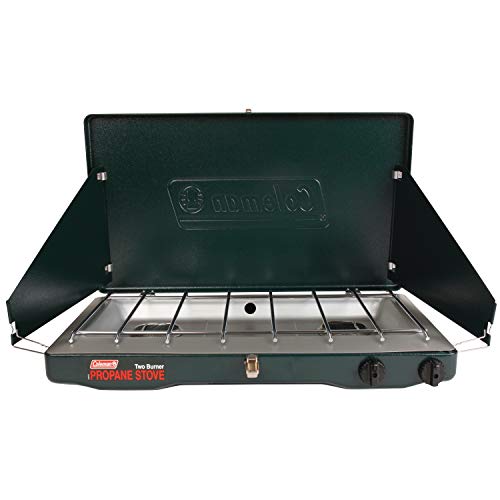
Coleman Classic Propane 2-Burner Camping Stove

Camp Chef Explorer Two-Burner Stove
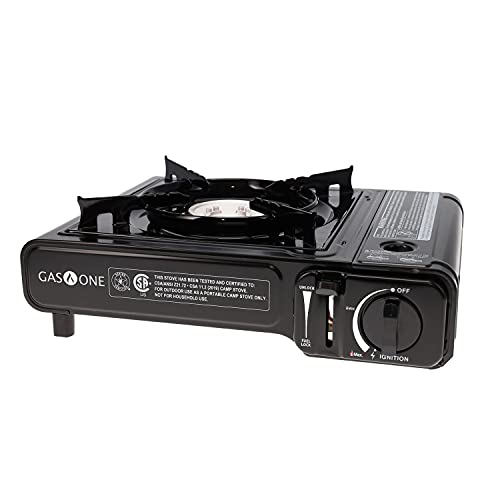
GasOne GS-1000 Portable Butane Stove

Coleman Triton 2-Burner Propane Stove

Chef Master 15,000 BTU Butane Backpacking Burner

Bonnlo 2-Burner 150,000 BTU Propane Stove
Hisencn 5800W Foldable Camping Stove Kit

Jetboil HalfGen Basecamp Cooking System

Jetboil Flash 1.0L Fast Boil Stove
A Deeper Look At The Lineup
The Jetboil Stash packs a titanium burner and a 0.8-liter FluxRing pot into a system designed to disappear inside your pack. At roughly 7 ounces for the burner alone, it targets thru-hikers and anyone counting every gram on a multi-day route. The pot nests around the stove and fuel canister, leaving room in the pack for sleep system and shelter.
Where the Stash earns its place is speed: the FluxRing design (a finned heat exchanger built into the pot wall) pulls heat away from the flame and into the water rather than letting it drift upward. A rolling boil for freeze-dried meals happens fast enough that you are not standing around in wind waiting for dinner.
What Makes Sense
- Titanium burner keeps weight minimal without feeling flimsy on the trail
- Nesting pot and burner design frees up pack volume for other essentials
- FluxRing heat transfer means faster boils and lower fuel use per meal
- Compact form fits neatly into a backpack’s side pocket or top lid
Honest Caveats
- The 0.8-liter pot is a single-meal size, so group cooks will need a different system
- Fuel canister sold separately, which adds cost and a sourcing step before the trip
- The integrated system design means swapping in a non-Jetboil pot sacrifices some efficiency
Feature Snapshot
Built With In Mind
Solo backpackers, thru-hikers, and anyone trying to shave weight from a multi-day kit will appreciate what the Stash leaves behind.
Consider Something Else When
The Coleman Classic Propane 2-Burner Camping Stove makes more sense for car campers who want a real cooktop instead of a single-pot system.
The Coleman Classic Propane 2-Burner Camping Stove has been a fixture at drive-in campgrounds for decades, and for good reason. Two adjustable burners produce up to 20,000 BTUs total, with enough spacing to host a 10-inch and a 12-inch pan at the same time. The footprint measures 4.1 by 21.9 by 13.7 inches when set up, a real cooktop rather than a backpacker’s compromise.
Wind-blocking panels on the sides help the flame stay steady in gusty conditions, and a built-in pressure regulator keeps output consistent across temperature swings. For a family cooking pancakes on Saturday and chili on Sunday, this is the kind of predictable performance that defines a long-running product.
Where It Delivers
- 20,000 total BTUs spread across two burners handles breakfast and dinner simultaneously
- Side panels block crosswinds that would otherwise stall a smaller flame
- Pressure regulator maintains steady output in cooler weather and high altitudes
- Two-pan capacity means coffee brewing and skillet cooking without waiting turns
Room For Improvement
- Runs on 1-pound propane cylinders, which are bulky in a small car trunk
- At roughly 11 pounds, it is firmly a car-camping stove, not a backcountry option
The Right Fit
Families car camping at established sites with vehicle access will find this stove easy to live with.
A Better Fit Elsewhere
The Jetboil Stash Ultralight Backpacking Stove System is a better match for backpackers who want a featherweight single-pot setup instead of a full cooktop.
Where the Coleman Classic covers family cooking, the Camp Chef Explorer covers cooking full stop. Two cast-aluminum burners push 30,000 BTUs each, enough output to sear steaks and simmer cast-iron pots without breaking a sweat. The cooking surface spans 14 by 32 inches, leaving room for a Dutch oven and a griddle side by side.
A three-sided windscreen and detachable steel legs make this a tailgate or base-camp workhorse rather than a backpack item. Compare that to the Coleman Classic, which is lighter and folds smaller, and the Explorer trades portability for raw cooking surface and heat.
What Helps Most
- 60,000 combined BTUs handle cast iron, griddles, and oversized cookware
- 14 by 32-inch cooktop supports multiple large pans at once
- Three-sided windscreen keeps the flame steady in breezy campsites
- Detachable steel legs simplify transport and storage between trips
Trade Offs
- Heavier and bulkier than folding two-burner stoves like the Coleman Classic
- Requires a full-size propane tank rather than 1-pound cylinders
- Cooking dimensions make it more of a station setup than a portable option
Whose Shelf It Belongs On
Camp cooks who own cast iron and plan to feed a crowd from one stove will find this level of heat and surface area genuinely useful.
Skip It When
The Coleman Triton 2-Burner Propane Stove suits tailgaters who want a smaller, lighter package and do not need the Explorer’s 30,000-BTU-per-burner output.
The GasOne GS-1000 is the kind of stove that lives on a countertop or in an emergency-prep kit rather than in a trunk. A single burner rated at 7,650 BTUs, automatic ignition, and a hard carrying case make it ready to grab and go. The unit runs on 8-ounce butane canisters, which are widely available and shelf-stable for years.
For tent camping with a small pot or brewing coffee on a picnic table, this stove punches above its footprint. The CSA-listed design (meaning it meets Canadian Standards Association safety benchmarks for this category) and built-in safety features add peace of mind in enclosed spaces.
A Few Strong Suits
- Compact body stores easily in a cabinet, RV, or emergency kit
- Automatic ignition eliminates the need for lighters or matches
- Hard carrying case protects the stove in transit and storage
- 8-ounce butane canisters are easy to source and store long-term
Worth Bearing In Mind
- Single-burner design means no parallel cooking for family meals
- 7,650 BTUs is modest compared to the Chef Master 15,000 BTU Butane Backpacking Burner
Made For
Emergency preparedness, dorm-room cooks, and anyone wanting a small hot plate at a picnic table.
Not Your Match When
The Chef Master 15,000 BTU Butane Backpacking Burner is the better call for campers who want serious single-burner heat output for fast boils.
The Coleman Triton steps up from the Classic with stronger wind management and improved cleanup. Two adjustable burners push 22,000 BTUs total, while wind guards on each side shield the flame from crosswinds at the parking lot or campsite. The chrome-plated grate lifts out for a quick wash after a greasy burger session.
The heavy-duty latch on the lid is a small detail that matters in practice: it keeps the stove closed if you walk away mid-recipe. Compare that to the Coleman Classic, and the Triton is the same family DNA with better weather tolerance and easier maintenance.
Positive Takeaways
- 22,000 BTUs of cooking power split across two adjustable burners
- Side wind guards keep the flame stable in open parking-lot setups
- Removable chrome grate simplifies post-cookout cleanup
- Secure lid latch lets you leave the stove between trips without drama
Some Limits To Know
- Still runs on 1-pound propane cylinders, so swapping a depleted tank mid-trip takes planning
- Lower total BTU output than the Camp Chef Explorer’s 60,000 BTU combined
Feature Snapshot
Perfect Match For
Tailgaters and sports-day cookers who need a folding cooktop with real wind protection and easy cleanup.
Look Elsewhere When
The Camp Chef Explorer Two-Burner Stove is the better pick for cooks who run cast iron and need higher per-burner BTUs.
The Chef Master Butane Camping Stove pairs a 15,000-BTU burner with a Piezo ignition system, which uses a spring-loaded hammer strike to light the gas without matches or a lighter. At that heat level, a small pot of water reaches a rolling boil in just a few minutes. The build feels closer to a base-camp stove than a tiny backpacking canister, with a wider footprint for stable pot placement.
The trade-off is weight and bulk compared to integrated systems like the Jetboil Stash. Where the Chef Master earns its keep is one-pot cooking at a campsite: pasta, soups, and dehydrated meals all benefit from the higher BTU output and reliable ignition.
Points In Its Favor
- 15,000 BTU output boils water quickly even in cooler ambient temperatures
- Piezo ignition lights reliably without external fire sources
- Wider platform holds larger pots and pans more securely than skinny canister stoves
- Heat control knob allows low-simmer adjustments beyond just on/off
Factors To Consider
- Heavier and bulkier than integrated backpacking systems like the Jetboil Stash
- Butane performance drops in very cold weather compared to isobutane-propane blends
Best Suited To
Base-camp and car-camp cooks who want single-burner heat without the footprint of a two-burner stove.
Reach For A Different Pick When
The Jetboil Flash 1.0L Fast Boil Stove is the stronger choice for backpackers who prioritize two-minute boils and integrated cookware.
The Bonnlo Two Burner Outdoor Stove sits in a different weight class than anything else on this list. Cast-iron heads put out up to 150,000 BTUs across two burners, more than double what most camp stoves deliver. Detachable stand legs fold down for transport, and a burner bracket adjusts to fit various pot sizes.
This is the stove you see at fish fries, crawfish boils, and tailgate parking lots where someone is feeding thirty people. The build is heavy, the heat is serious, and the propane appetite is real. Compare that to the Coleman Triton, which is friendlier for two-pan family dinners; the Bonnlo is purpose-built for volume cooking.
Real Benefits
- 150,000 BTUs combined handles stock pots, fish fryers, and crawfish boilers
- Adjustable burner bracket accommodates a wide range of pot diameters
- Detachable stand legs simplify transport and storage between events
- Cast-iron heads hold up to repeated high-heat use season after season
Practical Considerations
- Heavy and bulky, firmly a patio or truck-bed stove rather than a campsite item
- Requires a full-size propane tank, which adds to setup complexity
- Cast-iron heads need protection from moisture between uses to avoid rust
Made For
Boilmasters, fish-fry hosts, and anyone cooking for a crowd outdoors with serious volume needs.
Swap It Out When
The Camp Chef Explorer Two-Burner Stove is a better everyday cooktop for campers who do not need the Bonnlo’s extreme BTU output.
The Hisencn kit comes with everything a first-time camper might forget: a foldable single-burner stove rated at 5,800 watts, a nonstick pot, a frying pan, a mesh carry bag, and a 1-pound propane tank adapter with hose. There is no separate shopping list for the basics. Pull the kit out of the bag, hook up a fuel source, and start cooking.
At roughly 19,800 BTUs equivalent, the burner is competitive with mid-range single burners, and the included nonstick cookware handles eggs, soup, and pan-fried protein without sticking. Where the value lives is in the package: this is a giftable, ready-to-go setup rather than a standalone burner.
What It Does Well
- All-in-one package covers pot, pan, hose, and storage in a single purchase
- Nonstick cookware reduces cleanup time at the campsite
- Foldable burner design packs into the included mesh bag
- 1-pound propane adapter means no separate regulator purchase
Less Ideal Details
- Single-burner design means sequential cooking for multiple dishes
- Nonstick coating requires non-metal utensils to extend lifespan
Who Should Grab It
First-time campers, picnic cooks, and gift shoppers who want a complete cooking kit in one box.
Consider Something Else When
The GasOne GS-1000 Portable Butane Stove is a more compact single-burner option for emergency kits and small-space cooks.
The Jetboil HalfGen is a hybrid: standalone stove for base camp, or paired with other Jet link-compatible stoves to form an outdoor cooking range. A 10,000-BTU heating system boils water in just over three minutes, fast enough to matter when melting snow for drinking water in winter conditions.
Jetboil’s proprietary regulator technology offers incremental heat adjustments from simmer to full output, which is uncommon in single-canister stoves. Compare that to the Jetboil Stash, which is built for solo ultralight missions; the HalfGen is the family-base-camp sibling with modular ambition.
Strengths Worth Knowing
- 10,000 BTUs of output boils water quickly even at altitude or in cold weather
- Modular Jet link compatibility allows expansion into a multi-stove range
- Incremental heat adjustment supports both simmering and rapid boiling
- Standalone capability removes the need for a separate burner at base camp
Where It Is Less Suited
- Heavier and bulkier than ultralight options like the Jetboil Stash
- Modular range expansion adds cost and complexity for casual weekenders
Feature Snapshot
Right Fit For
Family base camps, winter campers melting snow, and Jetboil owners who want to expand into a modular outdoor kitchen.
Where Another Pick Suits Better
The Coleman Classic Propane 2-Burner Camping Stove is the right choice for car campers who need two burners at once rather than a modular single-burner system.
The Jetboil Flash 1.0L is the fastest hot-water option in this lineup: a half-turn of the knob triggers one-step automatic ignition, no matches needed, and a 1.0-liter pot reaches a rolling boil in roughly two minutes. The propane/isobutane burner runs on the same Jetboil fuel canisters as the Stash and HalfGen, simplifying logistics for anyone running multiple Jetboil systems.
This is the morning-coffee-first camper’s pick. Wake up, light the stove, watch the boil indicator change color, and pour. Compare that to the Jetboil Stash, which trims weight further, and the Flash trades a slightly larger footprint for faster boil times and easier one-handed ignition.
Advantages To Know
- Two-minute boils get coffee and freeze-dried meals ready fast
- One-step automatic ignition works reliably in cold or wet conditions
- 1.0-liter cooking cup handles two mugs of coffee or a full meal pouch
- Propane/isobutane burner performs well across a range of temperatures
Points To Keep In Mind
- Heavier and larger than the Jetboil Stash, which trims grams for thru-hikers
- Fuel canister is sold separately, adding a sourcing step before departure
Who It Suits Best
Coffee-first campers, hot-drink lovers, and backpackers who want the fastest boil possible in a self-contained system.
Where A Sibling Pick Shines
The Jetboil Stash Ultralight Backpacking Stove System is a better fit for thru-hikers who count every gram and can accept slightly longer boil times.
Choosing A Stove That Matches Your Camp Style
Before picking a stove, the honest place to start is with how you actually camp. Backpackers covering miles each day need weight and packability first, heat output second. Car campers and tailgaters can ignore pack weight entirely and focus on BTUs, cooking surface area, and wind tolerance. Emergency prep and small-space cooking call for compact single burners that store on a shelf and ignite reliably after long idle periods.
Fuel type shapes the decision more than most shoppers expect. Isobutane-propane blends perform better in cold weather than pure butane, which struggles below freezing. Propane cylinders are widely available but bulky in a small trunk. Butane canisters store well long-term and travel light, but cost more per BTU and run colder. Match the fuel to your climate and your trips, not to the stove’s spec sheet alone.
Wind is the silent variable. A high-BTU burner in a 15 mph gust performs like a low-BTU burner in calm air. Stoves with integrated windscreens, like the Jetboil systems and the Camp Chef Explorer, hold heat where it counts. Open-burner designs require a separate windbreak or suffer in exposed campsites.
Burner Count And Cook Surface
One burner means sequential meal prep, fine for solo travelers, limiting for family cooking. Two burners let you simmer sauce while searing protein, but they also double the weight and bulk. The Coleman Classic and Triton, plus the Camp Chef Explorer, sit on the two-burner side of the line.
Weight And Packability
Anything under 10 ounces (like the Jetboil Stash) disappears in a pack. Anything over 10 pounds (like the Camp Chef Explorer or Bonnlo) is firmly a vehicle-borne item. The middle ground, around 1 to 3 pounds, covers most car-camping scenarios where you walk a short distance from car to site.
Ignition And Safety
Piezo ignition and one-step auto ignition remove the need for lighters, which matters in wet weather. Look for built-in safety features like pressure sensors and automatic shutoff, especially on butane stoves used near tents or in semi-enclosed spaces.
Key Considerations Across These Picks
Common Shopping Slip Ups
The most common mistake is buying the highest-BTU stove without considering fuel cost and availability. A 150,000-BTU monster eats propane at a startling rate, and refilling a tank mid-trip is not always possible at remote sites. Smaller-stove shoppers sometimes under-budget for fuel canisters and end up with a cold dinner halfway through the trip.
The other slip is ignoring windscreen compatibility. A high-output burner in a gusty alpine meadow underperforms a modest burner with proper shielding. Read the wind-management specs carefully before assuming BTU numbers tell the full story.
What The Higher Tier Buys
Spending more on a premium stove typically buys you better materials, finer heat control, and modular expansion. The Jetboil systems justify their cost through faster boils, lower fuel consumption per cup, and integration across multiple Jetboil products. The Camp Chef Explorer earns its price tag with cast-aluminum burners, a real windscreen, and a cooking surface wide enough for cast iron.
The upgrade makes sense when you camp often enough that incremental gains in boil time, fuel efficiency, and durability add up across many trips. For occasional weekend use, the Coleman Classic or Triton delivers most of the cooking experience at a lower entry cost.
Frequently Asked Questions
What fuel type works best for cold weather camping?
Isobutane and propane blends maintain pressure better than pure butane in freezing conditions. The Jetboil Flash 1.0L and HalfGen both run on isobutane-propane canisters and perform reliably in cold weather, while pure butane stoves like the GasOne GS-1000 lose output as temperatures drop.
How do I know if a stove is compatible with my existing cookware?
Check the burner diameter and pot support dimensions against your pot’s base. Wider burners like those on the Coleman Classic and Triton hold 10-inch and 12-inch pans comfortably. Slim canister stoves like the Jetboil Stash work best with the included FluxRing pot or similarly sized lightweight cookware.
Can I use a camping stove indoors or in a tent?
Most propane and butane camp stoves are intended for outdoor use with adequate ventilation. Carbon monoxide buildup is a serious risk in enclosed spaces, even with a canister stove running briefly. Use any stove listed here only in well-ventilated outdoor settings or in a garage with the door fully open.
How long does a fuel canister typically last?
Run time depends on burner output and flame setting. A typical 8-ounce butane canister runs about 1 to 2 hours on high, while a 1-pound propane cylinder delivers around 1 hour on high for a 20,000-BTU burner like the Coleman Classic. Lower flame settings stretch fuel significantly.
What is the difference between a system stove and a standalone burner?
A system stove, like the Jetboil Flash or Stash, includes an integrated pot designed to capture heat efficiently, which means faster boils and less fuel per cup. A standalone burner, like the Chef Master or GasOne, works with any cookware but is slightly less efficient at transferring heat to the pot.
Closing Thoughts
The right camping stove is the one you actually use, not the one with the most impressive spec sheet. Backpackers will find their match in the Jetboil Stash or Flash; family campers will appreciate the predictability of the Coleman Classic or Triton; serious outdoor cooks will gravitate to the Camp Chef Explorer or Bonnlo.
Match the stove to your trips, your fuel access, and your climate, and the rest takes care of itself.