
Setting up a meal at a remote campsite strips cooking back to its basics. You’ve got flame, a flat rock or a grate, and whatever you brought along. The right kit quietly makes everything easier: flipping pancakes without a spatula snapping, lifting a lid off coals without flinching, packing a full dinner for four into a single bag.
This list rounds up seven well-considered kits for car campers, backpackers, and everyone in between. Some cover the basics, others lean into specialty gear like Dutch oven tools. Use it to match your cooking style to the set that fits the way you actually camp.
The Lineup, Simplified

BOMKI Grilling & Camping Cooking Utensils Set with Case

Life 2 Go 12 Pcs Camp Cooking Utensil Set

MalloMe Camping Cookware Mess Kit

Lodge Camp Dutch Oven Lid Lifter

Lodge Steel 4-in-1 Camp Dutch Oven Multi-Tool
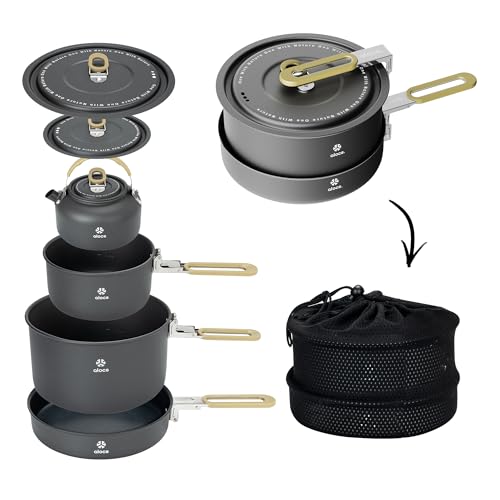
ALOCS Non-Stick Mess Kit with Foldable Handle
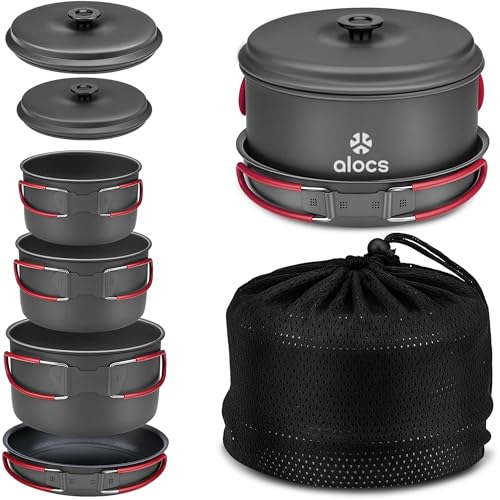
ALOCS Camping Cookware Compact Pots and Pans Set
A Breakdown Of The Leading Choices
Grill season and car camping share a lot of the same tools, which is exactly what the BOMKI set leans into. Everything tucks into a single carry case you can toss in the trunk next to a cooler, and the layout reads like a small BBQ workstation you take on the road.
Compared to the Life 2 Go kit below, this one feels more tuned toward grilling than backcountry cooking. Weekend tailgaters and car campers who fire up charcoal more often than they boil water will appreciate the focused tool list.
What Pays Off
- All-in-one carry case keeps the kit organized in transit, so nothing rattles loose on rough roads.
- Stainless steel build shrugs off rust and dishwashing after sticky marinades.
- Long handles keep hands a safe distance from grill flare-ups.
- Spatula, tongs, and serving tools cover a full cookout menu from burgers to corn.
Things To Consider
- No pots, pans, or plates, so it pairs with a separate cookware set on longer trips.
- Bulkier than a backpacking kit, which makes it less useful for mileage-heavy hikes.
- Owners commonly report that the case benefits from a quick wipe-down after sandy trips to keep grit out of the hinges.
Quick Facts
Made For
Grill-first campers who cook over charcoal or propane and want a tidy grab-and-go kit.
Where Another Pick Suits Better
The MalloMe Camping Cookware Mess Kit makes more sense for backpackers counting every ounce.
The Life 2 Go set reads like a portable kitchen drawer. Twelve pieces in a navy carry case covers cooking, serving, and plating, so a group trip doesn’t devolve into passing around a single spatula.
Where the BOMKI set leans toward grills, this one stretches into more general cooking. You may find the piece count generous for two campers and just right for a family setup at a state park.
What It Does Well
- Twelve tools mean shared meals stop feeling like a juggling act.
- Stainless steel heads resist bending even after flipping heavier items.
- Carry case doubles as storage between trips, so nothing wanders off.
Worth Noting
- No pots or cookware, so you’ll pair this with a separate mess kit for boiling water.
- Size of the case may crowd smaller daypacks on travel days.
Right Fit For
Group campers and RV travelers who want a complete serving and cooking tool set in one bag.
Consider Something Else When
Solo backpackers should look at the ALOCS Non-Stick Mess Kit for a tighter pack.
The MalloMe mess kit is the one that thinks like a backpacker. Pots, plates, cups, and utensils all nest into a single bag, and the included cleaning cloth hints that the brand expects you to wipe down before repacking, a real concern after three days of freeze-dried dinners.
Backpackers counting ounces will notice the compact footprint. Family campers at a developed site may find the two-plate layout too tight for a group of four.
Useful Touches
- Nested design cuts pack volume for mileage-heavy routes.
- Includes both a 1.7L pot and 1.15L kettle, so two dishes can run at once.
- Stainless steel plates hold up to metal spoons and forks without pitting.
- Drawstring bag keeps everything together inside a larger pack.
- Cleaning cloth and sponge mean less trail dirt coming home with you.
Trade Offs
- Capacity skews toward two campers rather than four.
- Storage pouches for cutlery can slow down cleanup if you’re in a hurry.
Feature Card
Built With In Mind
Thru-hikers and minimalists who want cookware, plates, and cleanup tools without splitting them across multiple bags.
Skip It When
Larger groups should consider the ALOCS Camping Cookware Compact Pots and Pans Set for higher capacity.
Anything that grips a glowing-hot cast iron lid deserves a closer look. The Lodge lid lifter is exactly that: a simple T-bar tool that fits the entire Lodge Dutch oven line and stops looking optional the first time you try to move a lid full of coals bare-handed.
Unlike the broader kits above, this is a single-purpose tool, and that’s the point. Dutch oven cooks who already own the pot get exactly what they’re missing.
Strengths Worth Knowing
- 9mm bar stock resists bending even under a lid packed with briquettes.
- T-bar design clears the lid rim so you can rotate without scraping the pot edge.
- Compatible across Lodge camp Dutch oven sizes.
- High-temperature coating handles direct flame exposure.
A Few Limitations
- Single-purpose tool, so it doesn’t replace tongs or a spatula.
- Designed for Lodge ovens and may sit loosely on other brands.
Best Suited To
Camp cooks working with a Lodge cast iron Dutch oven over coals or open flame.
Look Elsewhere When
Versatility seekers should grab the Lodge Steel 4-in-1 Camp Dutch Oven Multi-Tool for extra functions.
The 4-in-1 multi-tool picks up where a basic lid lifter stops. Flip it one way and it lifts hot lids; flip it the other and it becomes a trivet for the lid so you can repurpose it as a griddle. For cooks who want one tool that earns its weight, this is the move.
Fits inside Lodge camp Dutch ovens 10 inches and larger, which covers most family-sized setups. Smaller tabletop ovens may not have room to stow it.
Why It Works Well
- Four functions in one piece, including a lid stand that keeps ground dirt away from your cooking surface.
- Lets you use the inverted lid as a second cooking surface without scratching it.
- Stows inside larger Lodge ovens for transport.
Points To Note
- Too large for small Dutch ovens under 10 inches.
- Steel construction adds noticeable weight to a pack.
Whose Shelf It Belongs On
Slow-cook campfire chefs running a 10-inch or larger Lodge Dutch oven for stews, cobblers, and roasts.
A Better Fit Elsewhere
Grillers focused on BBQ rather than Dutch oven cooking will get more use from the BOMKI Grilling Set.
ALOCS designed this kit around a single pain point: burned fingertips mid-stove. The foldable, heat-resistant handles fold flat for packing, then lock out away from the flame. Combined with the non-stick coating, this one leans toward easy cleanup after a long day.
Solo or duo campers will get the most out of the 1.7L and 3L pot pairing. Larger groups may run short on volume when cooking for four.
The Upside
- Foldable handles save space and keep hands off hot metal.
- Non-stick coating cuts down on oil and scrubs fast at the campsite.
- Total kit weight stays low for backpack-friendly transport.
- Nestable design fits the entire kit into one bag.
Honest Caveats
- Non-stick coatings tend to need gentler cleaning and softer utensils to last.
- Capacity may feel tight when feeding a family rather than a duo.
At A Glance
Perfect Match For
Solo backpackers and couples who want non-stick convenience without bulk.
Reach For A Different Pick When
Backpackers who avoid coated cookware should check the MalloMe mess kit instead.
The other ALOCS kit on this list swaps non-stick coating for hard-anodized aluminum, a denser finish that shrugs off scratches from metal utensils. Three nesting pots plus a pan give you room to stage a real meal without juggling boiling water in the same pot you cooked pasta in.
Unlike the non-stick sibling above, this one expects rougher treatment. Depending on your cooking style, that tradeoff reads as a plus.
Benefits That Matter
- Hard-anodized aluminum resists scratches from metal spatulas.
- Three pot sizes (2.3Qt, 1.3Qt, 1.1Qt) handle multiple dishes running at once.
- Lightweight aluminum keeps pack weight down for the capacity.
Small Caveats
- No non-stick coating, so eggs and fish need more oil.
- Aluminum heats fast, which can scorch food if you walk away mid-cook.
Who Should Grab It
Group cooks at established campsites who want scratch-resistant cookware with multi-pot staging.
Swap It Out When
Anyone wanting a non-stick surface for delicate foods should pick the ALOCS Non-Stick Mess Kit instead.
What To Weigh Before Picking Your Camp Kitchen Kit
The right camping cooking utensils depend less on brand and more on how you actually cook outside. A weekend at a state park with a picnic table and a fire ring opens up heavier cast iron and full tool kits. A multi-day trail eats your pack space alive, so every ounce has to earn its place.
Material matters more than most people expect. Hard-anodized aluminum, which is aluminum treated with an electrochemical process to build a tougher surface layer, heats fast and shrugs off abuse. Stainless steel is heavier but bends less under pressure, and the Lodge tools above lean into that stiffness for a reason. Non-stick coatings make eggs and fish easier, but they tend to scratch if you use metal utensils.
Don’t forget the supporting cast. Plates, cups, and cleanup tools, like the sponge and cloth in the MalloMe kit, often decide whether a trip feels rough or relaxed. Build your kit around your largest meal, not your smallest one, and you’ll avoid mid-trip frustration.
Key Considerations Across These Picks
Pitfalls Shoppers Hit
Many first-time campers grab the biggest kit they find, then discover half of it stays in the bag. Start with your typical group size and your longest trip length. Buying cookware for eight when you usually camp as a couple means extra weight without extra value.
Another common slip: ignoring how the kit packs. A set that nests into one bag saves more time than a larger kit spread across two. Match the kit to your transport, whether that’s a backpack, trunk, or RV cabinet.
When Paying More Pays Off
Higher-tier camping cookware usually spends its budget on better materials and tighter nesting. Hard-anodized aluminum costs more than plain aluminum, but it resists scratches and lasts through years of weekend trips. Stainless steel upgrades add weight, though, so the premium is worth it when durability matters more than mileage.
Specialty tools like the Lodge multi-tool aren’t cheap for what they are, but they replace multiple single-purpose gadgets. Cooks who already own a Dutch oven get the most out of that investment.
Frequently Asked Questions
What utensils do you need for camping cooking?
A basic kit includes a spatula, tongs, a serving spoon, and a knife for food prep. Add plates, cups, and a pot or pan depending on your meal style. Car campers often pack more; backpackers trim down to multi-use tools.
Is stainless steel better than aluminum for camping cookware?
Stainless steel is heavier but more durable and resistant to warping. Aluminum heats faster and lighter but can dent or scorch more easily. The right pick depends on whether you prioritize weight or longevity.
How do you clean camping utensils in the backcountry?
Boil water in your pot, add a small amount of biodegradable soap, and scrub with a sponge or cloth. Wipe everything dry before packing to prevent mildew and rust during storage.
Can you use regular kitchen utensils for camping?
In a pinch, yes, but dedicated camping utensils use longer handles to keep hands away from open flames. They also tend to nest or fold for transport, which saves space in a pack.
How long do camping cookware sets usually last?
With reasonable care, anodized aluminum and stainless steel kits last for years of regular trips. Non-stick coatings tend to wear faster and may need replacing sooner depending on use and cleaning habits.
Wrap Up
The best camping cooking utensils match the way you cook outside, not the way you wish you cooked. Backpackers get the most from a tight nest like the MalloMe or ALOCS non-stick kits. Car campers and grill enthusiasts have room to spread out with the BOMKI set. Cast iron cooks should look at the Lodge tools as a starting point, not an upgrade.
Pick the kit that fits your trip, pack it once, and let the campfire do the rest.