
Sleeping in your vehicle shouldn’t mean waking up with a stiff back and a sore shoulder. The right camping car mattress turns a cramped cargo area into a real bed, and it matters whether you’re chasing a weekend in the woods or just trying to save on a motel during a long drive. This roundup covers foam pads, self-inflating mats, custom-cut SUV beds, and truck-bed setups, with a pick for solo travelers, couples, and families alike.
A Side-By-Side Look
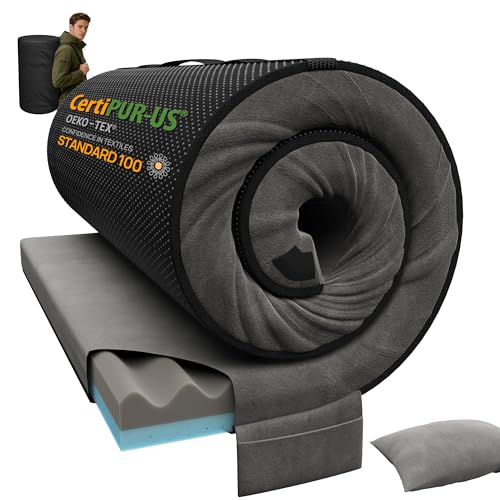
Releep 3 Inch Dual-Sided Memory Foam Camping Mattress with Pillow & Carry Bag

GOTIDY Full Sheets for Car Bed Air Mattress (Grey)

Luno AIR Base Mattress for Toyota 4Runner (3rd Row Seats, 2010+)

Zzuvjoy 3.1″ Self-Inflating Foam Sleeping Pad with Pillow

Lost Horizon Self-Inflating Foam Camping Mattress for Model Y

GOTIDY Truck Bed Air Mattress for 5.5-5.8ft Short Beds

POYNUC 3″ Memory Foam Camping Mattress with Storage Bag

MLILY 2.5″ Cot-Size Memory Foam Camping Mattress (Grey)

Lost Horizon Self-Inflating Foam Camping Mattress, Single 3″

Lost Horizon Option3 Self-Inflating Foam Camping Mattress, Full 4.5″
A Closer Look At Each Pick
The Releep pad earns its spot at number one for one simple reason: it works in more places than the rest of the list. Drop it in the back of an SUV, lay it on a tent floor, or roll it out on a cot frame. The dual-sided design flips between a firmer base and a softer cushioned face, so you can tune the feel without packing a second pad.
Where it really helps is during quick overnight stops where you don’t want to fuss with inflation. You unroll it, give it a minute to expand, and it’s ready. The included pillow and carry bag keep your packing list tight, which matters when you’re already loading a car for three days.
Points In Its Favor
- Dual-sided foam lets you pick between cushioned and firm in seconds
- Rolled-up carry bag fits beside a cooler without eating cargo space
- Works across car, tent, and cot setups without modification
- Three inches of foam keeps shoulders and hips off hard surfaces
- Comes with a matching pillow so you skip one more thing to pack
Things To Consider
- Heavier than air mattresses once you factor in the foam density
- Needs airflow when stored to prevent the foam from holding moisture
Quick Facts
Who It Suits Best
Anyone who splits time between car camping and tent trips and wants one pad that handles both without compromise.
Look Elsewhere When
Cold-weather sleepers heading below freezing should consider the Zzuvjoy 3.1″ Self-Inflating Foam Sleeping Pad, which carries a much higher R-value for insulating against frozen ground.
The GOTIDY sheets solve a problem most people don’t think about until it happens: getting a wet dog, a spilled coffee, or a sandy sleeping bag onto a flat inflatable mattress with no protection. The TPU waterproof layer under the soft top fabric catches everything before it reaches the air bladder, which extends the life of your primary mattress.
The fit works best with full-size car air mattresses, and the elasticized corners help the sheet stay in place when you toss and turn. If you’ve ever woken up with the sheet halfway bunched under your shoulder, that’s a non-issue here. Cleaning is straightforward: pull it off, shake it out, and toss it in a wash.
Bright Spots
- TPU waterproof backing blocks spills before they reach the mattress
- Soft top fabric feels closer to home bedding than vinyl
- Machine-washable for quick cleanup after muddy trips
Worth Noting
- Sized for full-size car mattresses, so smaller pads leave extra fabric bunching
- TPU layer can feel warm in summer without a top sheet over it
Built With In Mind
Road trippers with kids or pets who already own an air mattress and want a clean barrier between their family and the bladder.
Reach For A Different Pick When
You need the mattress itself, not just sheets; the Luno AIR Base Mattress for Toyota 4Runner is a better starting point for 4Runner owners.
The Luno AIR Base isn’t a generic pad dropped into a cargo area; it’s shaped to slot into the third-row footwell of a Toyota 4Runner (2010 and newer) and lay flat across the folded seats. That vehicle-specific geometry is the whole point. You don’t spend twenty minutes rearranging cushions and hoping nothing shifts.
The included 12V electric pump plugs into your 4Runner’s power outlet and tops off the mattress without manual puffing. The 200D Oxford fabric is noticeably tougher than the flimsier PVC used on cheaper inflatables, and the head support straps keep the upper edge from drooping when you lean back to read. It feels like gear built by people who actually sleep in their vehicles.
What It Does Well
- Custom-cut geometry fits the 4Runner third-row footwell without gaps
- 12V pump inflates and tops off using the vehicle’s outlet
- 200D Oxford fabric holds up to pet claws and gear dragged across it
- Head support straps prevent the upper edge from sagging overnight
Honest Caveats
- Only fits 2010+ 4Runner third-row configurations
- Heavier and bulkier to store than universal foam pads
The Right Fit
4Runner owners who want a purpose-built sleep platform rather than a workaround.
Swap It Out When
Tesla Model Y owners get a more tailored experience from the Lost Horizon Self-Inflating Foam Camping Mattress for Model Y, which is shaped to that vehicle’s cargo area.
Cold-weather car sleepers know the real enemy is heat loss into the ground beneath you, and that’s where R-value, a measure of insulation against conductive heat flow, matters most. The Zzuvjoy pad rates at 9.5, which puts it well into four-season territory. If you’ve ever woken up shivering even with a sleeping bag rated for the temperature, the floor was the problem.
The foot-pump inflation system lets you top off the pad without dragging along a separate pump or blowing into a valve. At 3.1 inches thick, it gives enough loft to clear uneven cargo floors, and the integrated pillow means one less thing in the packing pile. Storage rolls down to a manageable bundle.
Noteworthy Benefits
- R-value of 9.5 insulates against frozen ground in winter
- Foot-pump inflation avoids carrying a separate air pump
- Integrated pillow reduces the packing list by one item
- 3.1 inches of loft softens bumpy truck-bed platforms
Trade Offs
- Bulks out a vehicle cargo area more than a thin foam pad
- Heavier than summer-only pads with comparable thickness
Feature Snapshot
Whose Shelf It Belongs On
Winter campers and shoulder-season travelers who park on snow, frozen soil, or uninsulated truck beds.
Skip It When
You only camp in summer and want maximum packability; the MLILY 2.5″ Cot-Size Memory Foam Camping Mattress rolls up tighter for warm-weather trips.
Tesla Model Y owners have made this category into its own little niche, and the Lost Horizon pad speaks directly to them. It’s sized for the 2-row Model Y cargo area with the rear seats folded, which means it lays flat without bunching at the wheel wells or the liftgate. For anyone who’s wrestled with a generic pad that doesn’t quite fill the space, that fit matters.
At 4.5 inches thick, the foam filling is genuinely substantial, and the listed weight capacity of 440 pounds covers two adults without bottoming out. The self-inflating design means you crack a valve and walk away. For Model Y campers running low on accessory power, that simplicity is a real plus.
Strengths Worth Knowing
- Custom-fit dimensions for the 2-row Tesla Model Y cargo floor
- 4.5-inch foam depth handles two sleepers without compression
- Self-inflating valve cuts setup to opening and closing
- Listed 440-pound capacity suits couples and gear
Small Caveats
- Specific to 2-row Model Y, won’t suit 3-row or other Teslas
- Bulks up the cargo area when stored between trips
Made For
Model Y owners who camp overnight with the seats folded and want a pad that fills the space without modification.
Not Your Match When
You own a different vehicle or want a smaller, more general-purpose pad; the Releep 3″ Dual-Sided Memory Foam Camping Mattress handles broader use cases.
Truck camping has its own geometry, and the GOTIDY mattress is sized specifically for the 5.5 to 5.8-foot short beds that dominate full-size pickups from Tundra to F-150 to Silverado to Ram. The custom fit means you can inflate it without fighting wheel wells, and the surface lays flat enough to actually sleep on.
The double-layer fabric construction, with a “tensile” outer shell, adds puncture resistance for life around tailgates and gear. The detachable air pump runs off your truck’s 12V outlet, so you don’t need to track down a separate inflator at the campsite. For pickup owners, this gets close to a turnkey truck-bed sleep system.
Real Benefits
- Tailored for popular short-bed pickups including Tundra, F-150, Silverado, Ram
- Double-layer outer shell resists punctures from gear and tailgate edges
- Detachable 12V pump tops off the mattress at the campsite
- Fits the wheel wells without leaving gaps at the head or foot
Points To Note
- Not compatible with long-bed trucks or mid-size pickups
- Requires a flat tonneau or open bed to set up properly
Technical Highlights
Best Suited To
Pickup owners running 5.5 to 5.8-foot short beds who want a purpose-built mattress rather than improvising with pads.
A Better Fit Elsewhere
SUV campers should skip this for the Luno AIR Base Mattress for Toyota 4Runner, which is shaped for SUV cargo areas instead.
The POYNUC pad earns its spot by paying attention to materials the others gloss over. The foam carries CertiPUR-US certification, which means the foam content has been tested for certain emissions and material standards, and the cover meets Oeko-Tex standards for textiles screened against harmful substances. For shoppers who care about what they’re sleeping on, that documentation matters.
The breathable open-cell construction fights the sweaty-back problem that plagues closed-cell foam pads, and the dual-layer design pairs a 1-inch memory foam top with a 2-inch support base. The waterproof cover keeps morning dew and condensation from soaking through, and the non-slip bottom keeps the pad planted on slick cargo surfaces.
Everyday Perks
- CertiPUR-US foam and Oeko-Tex cover for verified material standards
- Open-cell ventilation reduces heat and moisture buildup
- Waterproof outer layer blocks condensation and spills
- Non-slip base grips cargo liners and tent floors
A Few Limitations
- Slower to dry if the waterproof cover ever wicks moisture inside
- Heavier than basic closed-cell pads at the same thickness
At A Glance
Right Fit For
Sleepers who want documented material safety and a pad that breathes well in warm weather.
Consider Something Else When
You camp in genuinely cold conditions and need a higher R-value; the Zzuvjoy 3.1″ Self-Inflating Foam Sleeping Pad is built for insulation rather than material certification.
The MLILY cot-size pad is the smallest foam option on this list, and that smallness is the whole feature. At 72 by 24 inches, it fits a standard camping cot frame, which means anyone already sleeping on a cot can upgrade from a thin fabric pad to a memory foam surface without a bulk penalty.
The 2.5-inch profile is enough to ease pressure points without raising you so high that you feel unstable on a narrow cot. The waterproof, non-slip bottom layer keeps the pad planted against the cot’s fabric surface, and the included travel bag makes it easy to stow between trips. For solo travelers, it’s a tidy upgrade.
What Helps Most
- Cot-friendly dimensions slip onto standard single frames
- Waterproof non-slip base keeps the pad stable overnight
- Travel bag makes storage and transport simple
- 2.5-inch foam softens cot pressure points without excess height
Things To Weigh
- Too narrow for two sleepers sharing a wide cot
- Less insulation than thicker pads for cold-ground camping
Perfect Match For
Solo travelers who already use a camping cot and want a memory foam upgrade that doesn’t bulk up the kit.
Where Another Pick Suits Better
Two sleepers sharing a wide platform should look at the Lost Horizon Option3 Self-Inflating Foam Camping Mattress, Full 4.5″, which covers more surface area.
The Lost Horizon single sits in a useful middle ground between ultralight backpacking pads and full car-camping mattresses. The 3-inch foam filling inflates by opening the valve and waiting, with minimal topping off needed. For minimalist campers who want real cushioning without dragging a thick full-size mattress, this single-person version fits the bill.
The listed 220-pound weight capacity handles most solo sleepers comfortably, and the foam-and-air hybrid structure distributes pressure evenly across the pad. It’s a less vehicle-specific choice than the brand’s Model Y and full-size options, which means it travels between a tent, a car, and a guest room with equal ease.
Notable Upsides
- Self-inflating design simplifies setup at the campsite
- 3-inch profile balances cushion and packability
- Single-person size stores in tighter spaces than full-size pads
- Hybrid foam-and-air build distributes pressure evenly
Points To Keep In Mind
- 220-pound capacity is generous for one sleeper but won’t carry two adults
- Less vehicle-specific than other Lost Horizon models
Who Should Grab It
Solo travelers who want a self-inflating pad that works in tents and cars without committing to a vehicle-specific design.
Wrong Turns To Avoid
Couples camping together will find this pad too narrow; the Lost Horizon Option3 Full 4.5″ covers both sleepers in one piece.
The Option3 is the thickest, fullest pad in the Lost Horizon lineup, and it earns its place at the end of the list by covering the case that none of the earlier picks really address: two sleepers sharing a platform. At 4.5 inches thick with a 12-pound foam fill, it doesn’t compress under a second body the way thinner pads do.
Self-inflation still does most of the work, and you only need a few breaths or puffs to dial in the firmness. The 440-pound weight capacity handles two adults plus gear without bottoming out. If you’ve ever shared a single air mattress and felt every move your partner made, the foam filling here absorbs that motion rather than transferring it.
The Practical Payoff
- Full-size surface accommodates two sleepers without a gap
- 4.5-inch foam fill absorbs partner movement through the night
- 440-pound capacity covers couples and gear weight
- Self-inflating valve limits setup to valve and firmness tweak
Some Limits To Know
- Bulks out a cargo area more than single or cot-size pads
- Heavier to transport than the thinner options on this list
Who Will Love This
Couples or solo sleepers who want maximum cushioning and don’t mind the extra packed size.
Where A Sibling Pick Shines
Vehicle-specific shoppers get a more tailored fit from the Lost Horizon Self-Inflating Foam Camping Mattress for Model Y, which is shaped to that SUV’s cargo floor.
What Matters Most Before Choosing Camping Car Mattresses
Pick a mattress type that matches your vehicle and your trip style before anything else. Foam pads roll up small and need no inflation, but they eat cargo space and add weight. Air mattresses deflate flat for storage and inflate large for sleeping, but they can lose air overnight and need a pump. Self-inflating hybrids split the difference and often deliver the best balance for travelers who alternate between car and tent setups.
Vehicle fit is the second decision point. A custom-cut pad like the Luno AIR Base or the Lost Horizon Model Y version fills the cargo area without gaps, while universal pads force you to improvise around wheel wells and seat folds. Measure your cargo floor with the rear seats down before deciding.
Insulation matters more than thickness once the temperature drops. An R-value above 4 handles three-season use, and anything above 6 covers winter. The Zzuvjoy pad’s 9.5 R-value puts it firmly in cold-weather territory, while thinner foam pads are fine for summer road trips.
Size and weight capacity should match your sleeping situation. A solo traveler saves packing space with a cot-size or single pad, while couples need a full-size surface that won’t compress under two bodies. Weight capacity ratings above 220 pounds handle most solo adults, and 440-pound pads are built for two.
Where Shoppers Go Wrong and When Spending Up Pays Off
Pitfalls Shoppers Hit
The most common mistake is buying by thickness alone, since a 4-inch pad with low R-value won’t keep you warm any better than a 2-inch insulated one. Another trap is assuming any inflatable will fit any vehicle, when in reality most cargo areas have wheel wells, seat brackets, or sloping liftgates that prevent a flat surface. Always measure twice before ordering.
What The Higher Tier Buys
Premium pads earn their higher cost through materials, fit, and insulation. CertiPUR-US foam means verified emissions testing, vehicle-specific geometry means no improvisation, and high R-value means real cold-weather performance. If you camp more than twice a year or deal with real temperature swings, the upgrade pays for itself in sleep quality.
Frequently Asked Questions
What thickness works best for a camping car mattress?
Three inches handles most situations, but cold-weather sleepers should prioritize R-value over thickness. A 3-inch pad with high insulation outperforms a 4-inch pad with low insulation once temperatures drop.
Can I use a regular home mattress topper in my car?
You can, but the bulk and weight make it impractical for vehicle camping. Camping-specific pads roll or deflate small enough to store between trips without eating your cargo capacity.
How do I keep an inflatable car mattress from sliding around?
Look for pads with non-slip bases, and use the head support straps or wheel-well cutouts that vehicle-specific models include. A yoga mat or rubber shelf liner underneath also works in a pinch.
Are self-inflating pads really self-inflating?
Mostly. Open the valve and the foam expands to draw in most of the air, but a few breaths or puffs usually finish the job. They aren’t fully hands-free, but they come close.
How do I clean a foam camping mattress?
Spot-clean with mild soap and water, then air dry thoroughly before rolling up. Avoid machine washing unless the manufacturer explicitly allows it, since water trapped inside foam causes mildew.
Closing Remarks
The right camping car mattress depends on your vehicle, your climate, and how many people you’re packing in. Solo travelers and warm-weather campers can stay light with foam pads, while couples and cold-weather users get better rest from self-inflating or vehicle-specific designs. Measure your cargo area, match the pad’s R-value to your season, and you’ll sleep well no matter where the road takes you.