
A flat pad under your sleeping bag changes a tent from something you tolerate into something you actually sleep in. The right camping bed mat adds insulation between your body and frozen ground, softens the rocks beneath the floor, and lets you wake up without that stiff-back shuffle. This lineup covers self-inflating foam mats for cold trips, roomier rectangular cuts for side sleepers, and a soft landing pad designed for river-camp lounging.
The Lineup, Simplified

Sea to Summit Camp Plus SI Tapered Regular

Sea to Summit Camp Plus SI Tapered Large
Sea to Summit Camp Plus SI Rectangular Large

Sea to Summit Camp Plus SI Rectangular Regular
Releep 3-Inch Dual-Sided Memory Foam Mattress

Outcast Sporting Gear Landing Pad 30-Inch
The Picks, Examined More Closely
The Sea to Summit Camp Plus SI Tapered Regular is built around a 2.6-inch foam core that opens up into a sleep surface thick enough to hide small rocks and roots. Its self-inflating design, where the foam expands and pulls air in once the valve opens, makes camp setup faster than wrestling with a separate inflatable. The 4.3 R-value (a rating of how well a pad blocks heat loss to cold ground, where higher numbers suit colder weather) handles anything short of a deep-winter expedition.
Compared to the Releep memory foam option below, this mat packs far smaller and trades plush cradling for a firmer, more stable platform. The reversible valve lets you dial in pressure for side sleepers who prefer more lift under their hips.
Useful Touches
- 2.6-inch foam thickness cushions hips and shoulders for side sleepers
- 4.3 R-value keeps the cold ground from stealing body heat overnight
- Reversible valve speeds setup and lets you fine-tune firmness
- Tapered shape shaves weight and rolls tight for backpacking
Things To Consider
- Heavier than ultralight air pads, so thru-hikers may count the grams
- Foam can take longer to fully re-inflate if stored compressed for months
Key Specs
Who It Suits Best
Backpackers and campers heading into shoulder-season cold who want a reliable self-inflating pad that balances warmth, comfort, and pack size.
Consider Something Else When
The Outcast Landing Pad suits rafters who mostly need a soft layer for boat-camping naps rather than long backcountry treks.
The Tapered Large stretches the same 2.6-inch foam construction of the first pick into a longer platform aimed at taller campers. If you have ever woken up with your feet dangling off the end of a regular-length mat, the extra length here solves that without forcing you into a bulky rectangular. The 4.3 R-value matches the Regular version, so the warmth story does not change.
Versus the Rectangular Large below, this tapered cut keeps weight closer to the Regular while still adding length, which makes it friendlier for backpackers than a full rectangle.
Real-World Strengths
- Extra length accommodates campers over six feet tall
- Self-inflating foam reduces setup time at camp
- Reversible valve allows quick pack-down and pressure tweaks
Worth Noting
- Longer footprint may not fit narrow one-person tent floors
- Bulkier pack size than shorter tapered pads in the same line
Made For
Longer-limbed backpackers who want the warmth of the Camp Plus line without committing to the wider rectangular shape.
Look Elsewhere When
The Sea to Summit Camp Plus SI Rectangular Regular suits scout groups or casual campers who prefer a slimmer, lighter pad over maximum length.
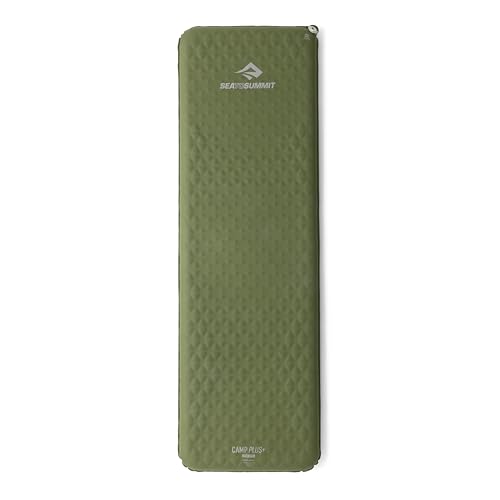
The Rectangular Large delivers the full-fat 2.6-inch foam platform without narrowing at the feet, giving restless sleepers room to roll without sliding off the edge. The 4.3 R-value keeps the same cold-weather insulation you’d find in the tapered cuts, so the comfort upgrade does not cost you warmth. Setup stays simple thanks to the reversible valve.
This is the heaviest option in the Camp Plus family, so the trade-off is real: more sleep surface means more pack weight, and the wide rectangle often fills an entire tent vestibule.
What Earns Its Place
- Un-tapered shape lets elbows and knees stay on the pad
- 2.6-inch foam height softens pressure points across the whole body
- Reversible valve lets you bleed air fast at break-down
Trade Offs
- Heavier than the tapered pads in the same line
- Wider footprint may crowd two-person tent floors
Feature Snapshot
Right Fit For
Side sleepers, couples sharing a tent, or anyone who moves a lot at night and wants the full rectangular platform under their bag.
A Better Fit Elsewhere
The Sea to Summit Camp Plus SI Tapered Regular suits backpackers who would rather save weight than gain floor space.
The Rectangular Regular uses a slimmer 1.5-inch foam layer to drop weight while keeping the rectangular shape’s edge-to-edge sleep surface. The 4.2 R-value still handles most three-season conditions and keeps cold ground at bay. Younger campers and scout troops hauling gear over uneven trails get a pad that packs light and inflates without mouthwork.
The trade-off shows up in the feel: at 1.5 inches, the foam does less cradling than the 2.6-inch models above, so heavier sleepers may bottom out on rocky tent pads.
Benefits That Matter
- Lower-profile foam keeps pack weight and roll size down
- Rectangular cut gives full shoulder room for side sleepers
- Self-inflating design simplifies camp routine for younger campers
Minor Gripes
- 1.5-inch thickness offers less cushioning than the thicker Camp Plus models
- Foam may compress under heavier sleepers on uneven ground
Quick Facts
Best Suited To
Scout groups, casual campers, and anyone carrying gear longer distances who prefers a lighter rectangular pad over a thicker one.
Swap It Out When
The Releep 3-Inch Dual-Sided Memory Foam Mattress suits car campers who prioritize plush cushioning over a tight pack-down.
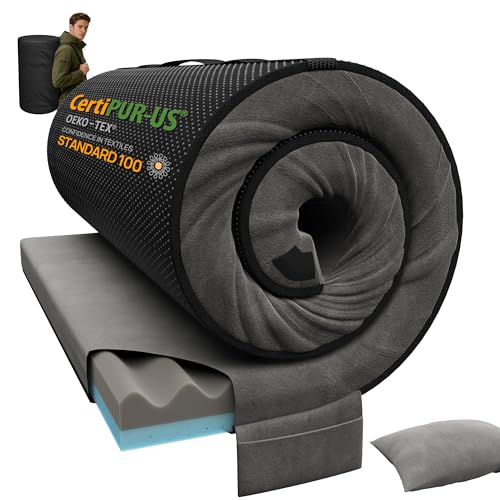
The Releep pad departs from the self-inflating crowd and goes straight to a 3-inch dual-layer foam build, combining gel-infused memory foam (foam laced with cooling gel beads that soften under body heat) over a denser support base. The result feels closer to a guest-bed mattress than a typical camp pad. A waterproof cover, portable pillow, and roll-up carry bag come bundled, so it leans toward car camping and tent setups where pack size does not matter.
Compared to the Sea to Summit self-inflating mats above, this one trades cold-weather R-value and pack-down size for outright plushness. Owners commonly mention that the roll-up bundle is heavy and bulky, which limits how far you can carry it from the car.
Advantages To Know
- 3-inch foam stack gives the cushioned feel of a guest bed
- Waterproof surface layer shrugs off tent condensation
- Bundled pillow and carry bag simplify setup and teardown
- Dual foam layers aim to cradle pressure points while supporting the spine
Points To Keep In Mind
- Large roll size is awkward to haul on foot from a trailhead
- Foam layers can absorb moisture if the waterproof cover is punctured
- Heavier carry weight makes it a poor fit for backpacking
Who Should Grab It
Car campers, family tent setups, and anyone needing a guest-ready sleep surface for the campsite who values cushioning over weight.
Another Choice May Suit
The Sea to Summit Camp Plus SI Tapered Regular serves backpackers who need a tighter pack and stronger cold-weather insulation.
The Outcast Landing Pad is a soft closed-cell foam cushion built for rafters, river campers, and anyone who wants a forgiving layer between body and ground or boat deck. Closed-cell foam (firm foam that does not absorb water and needs no inflation) keeps it simple, durable, and waterproof. The 30-inch width gives a stable platform for sitting, napping, or rigging gear on a sandy beach.
Versus the Sea to Summit and Releep options, this one skips the comfort-height foam entirely in favor of a flatter, utility-minded design. You won’t inflate it, and you won’t feel the same cushioned cradling, but you also won’t deal with valves or foam layers that can absorb water.
A Few Strong Suits
- Closed-cell foam stays dry and works wet without absorbing water
- Soft cushioning softens sandbars, rocky beaches, and raft decks
- No inflation means no valve failures in the field
Soft Spots
- Thinner profile offers less insulation than self-inflating foam pads
- Lacks a carrying strap, so tying it to dry bags is left to the user
- Less comfortable for full overnight use compared to thicker pads
Whose Shelf It Belongs On
Whitewater rafters, river guides, and beach campers who want a soft, waterproof layer that handles wet conditions better than inflatable mats.
Reach For A Different Pick When
The Sea to Summit Camp Plus SI Rectangular Large suits campers focused on multi-night tent comfort over river-deck versatility.
How To Pick The Right Camping Bed Mat
Insulation Rating And Temperature
R-value measures how well a pad blocks heat loss to cold ground, and higher numbers suit colder trips. Most three-season campers do fine around an R-value of 3 to 4. The Camp Plus Tapered Regular and Large sit at 4.3, which covers shoulder-season frost, while the Rectangular Regular drops slightly to 4.2 in a thinner package. The Releep memory foam option leans toward car camping where cold-ground heat loss matters less.
Thickness And Sleep Style
Thicker mats cradle hips and shoulders, which helps side sleepers avoid pressure points on rocky ground. The 2.6-inch Sea to Summit foam mats and the 3-inch Releep deliver that cradle, while the 1.5-inch Rectangular Regular keeps weight down at the cost of cushioning. Tapered shapes save ounces, but full rectangles give restless sleepers more usable surface.
Pack Size And Weight
Self-inflating foam rolls tighter than thick memory foam but never matches ultralight air pads for size. Backpackers typically favor tapered cuts and thinner foam. The Outcast Landing Pad is the lightest carry on this list, but it sacrifices insulation for the sake of a flat, packable layer.
Shape And Tent Fit
Tapered pads slip easily into narrow one-person shelters, while rectangular mats pair better with wider two-person floors. Always check the pad dimensions against your tent’s floor plan before committing.
Things Worth Knowing Before You Commit
Common Buying Mistakes
Choosing thickness over warmth is one of the most common slip-ups. A plush 3-inch memory foam pad feels great on a mild summer night, but it can leak body heat fast once temperatures drop, because thicker foam does not automatically mean a higher R-value. Match the mat to your typical climate, not just your comfort preference.
Another trap is overestimating how often you’ll haul the pad far from the car. A bulky memory foam bundle that seems fine in the driveway becomes a backbreaker on a half-mile portage. Backpackers benefit from thinner tapered foam; car campers can lean into plushness.
When Paying More Pays Off
Higher-tier mats in this category earn their price through denser foam, better valves, and stronger R-values. The Camp Plus line’s reversible valve and 4.3 R-value are real upgrades over entry-level foam pads, and they show up on cold nights when cheap foam lets ground chill seep into your back. For weekend trips in shoulder seasons, the upgrade often translates to actual sleep, not just marketing claims.
Frequently Asked Questions
What R-value do I need for three-season camping?
An R-value between 3 and 4 generally handles spring, summer, and fall nights. Cold-sensitive sleepers should aim higher for shoulder-season frost.
Are self-inflating mats comfortable for side sleepers?
Yes, when the foam is at least 2 inches thick. The 2.6-inch Sea to Summit Camp Plus models cradle hips and shoulders well, while the 1.5-inch Rectangular Regular may feel thin for some.
How do I clean and store a foam camping mat?
Wipe down the surface with mild soap and water, dry it fully, and store it unrolled or loosely rolled in a dry place. Long compression can slow the foam’s self-inflating response.
Can memory foam mats be used for backpacking?
They are heavier and bulkier than foam self-inflating mats, so most backpackers skip them. They shine in car camping and tent setups where pack size does not matter.
What is a closed-cell foam pad best for?
Closed-cell foam works well in wet environments because it does not soak it up. River trips, beach camping, and raft decks are ideal uses.
Wrap Up
The best camping bed mat is the one that matches your climate, sleep style, and how far you haul it. Backpackers chasing cold-weather trips will appreciate the Sea to Summit Camp Plus Tapered Regular, while car campers wanting plush cushioning will lean toward the Releep memory foam pad. Rafters and river campers get a durable, waterproof ally in the Outcast Landing Pad. Pick the mat that fits your typical trip, and your tent will feel less like a punishment and more like a bed.