
A weekend at a remote campsite has a way of exposing every gap in your power setup. A reliable camping battery bank keeps phones mapped, headlamps lit, fridges cold, and coffee brewing, and the right one matches how you actually camp rather than how the box looks in the catalog. This list covers full-size LiFePO4 stations for car campers and van lifers, lighter grab-and-go power banks for backpackers, and multi-source emergency radios that pull double duty when the trail leads far from the grid.
A Snapshot Of The Selections

Anker SOLIX C1000 Gen 2 Portable Power Station (1,024Wh)

Anker SOLIX S2000 Portable Power Station (2,010Wh)
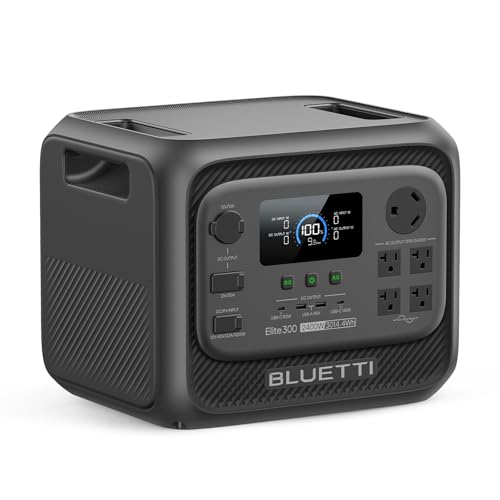
BLUETTI Elite 300 Portable Power Station (3,014Wh)

BLUETTI AC200L Portable Power Station (2,048Wh)

Anker SOLIX F3800 Portable Power Station with 400W Solar Panel

EF ECOFLOW Delta 3 Solar Generator with 220W Panel

FosPower NOAA Emergency Weather Radio A1 (7,400mWh)

FosPower NOAA Emergency Weather Radio A3 (14,800mWh)

FosPower NOAA Emergency Weather Radio A6 (19,240mWh)

FosPower Emergency Weather Radio D9 with Shortwave and Bluetooth
The Details Behind The Selections
The C1000 Gen 2 sits in that sweet spot where weekend campers usually land. Its 1,024Wh LiFePO4 (lithium iron phosphate) cell delivers 2,000W of continuous output with a 3,000W peak, meaning it handles a portable fridge, lights, and a laptop without breaking stride. Owners commonly appreciate the 49-minute HyperFlash wall recharge, which matters when the campsite A/C hookup is the only chance to top off between legs of a road trip.
Compare it to the smaller power banks lower on this list, and the C1000’s 10-port layout reveals why it earns a spot for car-based trips. For most weekend campers running a cooler and a few gadgets, this is the kind of capacity that quietly disappears into the trip rather than dominating the gear list.
Standout Benefits
- Rapid wall recharge at 1,600W, restoring a full 1,024Wh in roughly 49 minutes
- Drives 10 devices at once through AC, USB-A, USB-C, and car ports
- LiFePO4 chemistry suited to years of weekend cycling
- App control for monitoring draw, charging rate, and firmware updates
- 2,000W continuous handles most portable cooking and cooler loads
Things To Consider
- Solar input tops out around 600W, so cloudy-day charging takes longer than rated AC speeds
- At 1,024Wh it is overkill for short overnight trips
At A Glance
Right Fit For
Weekend car campers and tailgaters running a portable fridge, lights, and electronics across two to three nights.
Consider Something Else When
You need a lighter backcountry power source, in which case the FosPower A1 emergency radio covers phone charging for a fraction of the weight.
Where the C1000 is your weekend workhorse, the S2000 leans into longer stays. Its 2,010Wh capacity and 3,000W peak output let it run a full-size fridge for up to 35 hours, a useful benchmark for campers who treat their cooler as essential gear. The 314Ah LFP cells are rated for roughly 10,000 charge cycles, which translates to a service life approaching 15 years under normal weekend use.
Compared to the C1000 Gen 2, this unit trades portability for headroom. It is heavier and bulkier, but you feel the difference when running induction cooking or powering a small A/C unit overnight. For most off-grid setups longer than a long weekend, the extra capacity earns its keep.
Everyday Advantages
- Up to 35-hour fridge runtime thanks to a 6W idle draw
- 10,000-cycle LFP chemistry rated for roughly 15 years of regular use
- 3,000W peak handles surge loads from induction and power tools
Points To Keep In Mind
- Significantly heavier than the C1000, which limits portability for short walks
- Solar input is capped lower than some competitors in the 2kWh class
- Best value realized only by campers who actually use the capacity
Feature Snapshot
Made For
Long-haul campers and van lifers running full-size fridges and cooking gear across multi-day or week-long trips.
A Better Fit Elsewhere
If your priority is a small, lighter rig for two-night trips, the Anker SOLIX C1000 Gen 2 is the more practical pick.
Three thousand watt-hours in a footprint described as nearly 59% smaller than traditional large power stations is a real engineering win. The Elite 300 targets RV owners and van dwellers who measure space in inches, packing 3,014Wh into a chassis that fits behind a seat or under a bench. Recognition by Frost & Sullivan as the smallest 3kWh portable power station in its class backs up that positioning.
It earns its keep when your rig already feels crowded. Pair it with a portable solar panel, and you have a power system that disappears into the build without dictating layout. For RV travel specifically, that footprint advantage is often the deciding factor over larger-capacity competitors.
Notable Upsides
- 3,014Wh in a notably compact chassis for tight RV and van layouts
- Designed for RV and home-backup use cases side by side
- Recognized form-factor leadership in the 3kWh class
Trade Offs
- Higher continuous output than smaller banks means more fan noise under heavy load
- The compact size still requires a flat storage spot in smaller vehicles
- Charging cables and accessories tend to eat into the footprint savings
Whose Shelf It Belongs On
RV owners, van lifers, and small-space dwellers who need serious capacity without giving up valuable floor area.
Swap It Out When
You mostly camp out of a sedan or hatchback, where the lighter Anker SOLIX C1000 Gen 2 is easier to move from trunk to campsite.
Modularity is the AC200L’s calling card. Out of the box it delivers 2,048Wh and 2,400W of continuous output, but the real story is the expansion bay. Pair it with B300K, B210, B300, or B230 battery packs, and you can push total capacity as high as 8,192Wh, which lets a single unit grow with your camping style.
The 45-minute fast recharge via AC is a genuine quality-of-life improvement for trips with a brief hookup window. Compared to the S2000, the AC200L trades a slight capacity edge for the ability to expand in stages, which often matters more than the headline number. Campers who anticipate upgrading gear over the years appreciate the staged growth path.
Where It Excels
- Compatible with multiple BLUETTI expansion batteries up to 8,192Wh total
- 2,400W continuous runs induction cooking and high-draw appliances
- 45-minute AC fast recharge at full input
Less Ideal Details
- Expansion batteries are sold separately and add to the total spend
- The upgrade story only pays off if you actually buy the add-ons
Best Suited To
Campers who expect their power needs to grow, or households that want one station capable of serving camping today and emergency backup tomorrow.
Look Elsewhere When
You want the absolute smallest 3kWh chassis, in which case the BLUETTI Elite 300 is the better match for tight rigs.
At 3,840Wh, the F3800 is built to cover a full day of household-grade loads, then keep going. The included 400W solar panel makes it a true generator package rather than a bare power station. You can add up to six battery packs to push capacity to 26.9kWh, or pair two F3800 units for enough storage to ride through serious outages.
For campers who also want blackout readiness, the F3800 splits the difference between adventure gear and home backup. Compared to the S2000, this is the obvious step up when you find yourself charging two fridges, lights, and electronics at the same camp. The expansion ceiling makes it a future-proof anchor for serious off-grid households.
Practical Advantages
- 3.84kWh base capacity expandable to 26.9kWh with battery packs
- Bundled 400W solar panel for off-grid recharging from day one
- Auto Start-Stop pairing with a Smart Generator 5500 for hands-free runtime
- Capable of pairing two F3800 units for very large power demands
Practical Considerations
- Station alone is heavy and best left in a fixed spot
- Realized value depends on committing to the expansion ecosystem
- Overkill for campers who never tap beyond 2kWh
Who Will Love This
Off-grid households and serious campers who want a single system that bridges camping, RV life, and home backup.
Reach For A Different Pick When
You camp light and rarely run high-draw gear, where the BLUETTI AC200L delivers expansion at a lower base capacity.
The Delta 3 leans into speed. With 500W solar input and 1,500W AC input combined, the unit claims a full charge in roughly 56 minutes, with an 80% top-up in about 30 minutes. The included 220W bifacial solar panel (one that captures light from both faces) adds meaningful generation when parked, and two panels cut full solar recharge time down to around 2.9 hours.
At 1,024Wh and 1,800W output, this is the closest competitor to the Anker SOLIX C1000 Gen 2 on this list, but with a solar panel in the box. For campers prioritizing sun-based recharging, that bundle eliminates the most common rookie mistake of buying a station and a panel separately only to discover connector mismatches.
Real Benefits
- Full charge in 56 minutes via combined AC and solar input
- 1,024Wh base, expandable to 5kWh within the EcoFlow ecosystem
- Bifacial 220W panel harvests light from both faces for extra yield
- Two-panel setup recharges the unit in roughly 2.9 hours
Worth Noting
- Continuous output of 1,800W is lower than the C1000 Gen 2’s 2,000W
- Bifacial panel performance depends heavily on reflective ground surfaces
Perfect Match For
Sun-first campers who want a complete solar generator out of the box without piecing together panels and adapters.
Where Another Pick Suits Better
You need the highest continuous AC output, where the Anker SOLIX C1000 Gen 2 delivers 2,000W for induction cooking.
The A1 is the lightest end of the FosPower lineup, a 7,400mWh (2,000mAh) emergency radio with three charging sources built in. A hand crank, a small solar panel, and USB input cover the bases when wall power is gone, and the unit doubles as a backup phone charger for emergency calls and trail mapping. Backpackers and day hikers gravitate toward it precisely because it disappears into a pack.
It is a different class of product from the LiFePO4 stations earlier in this list. Where those run fridges and cooking gear, the A1 keeps a phone alive and pulls in NOAA weather alerts when the sky turns ugly. For ultralight kits and bug-out bags, that focus is exactly the point.
Real-World Strengths
- Three charging sources mean no single failure mode leaves you stranded
- Lightweight enough for backpacking without dominating pack space
- NOAA weather alerts keep you ahead of incoming storms
Honest Caveats
- 7,400mWh tops up a phone only, not a fridge or laptop
- Hand-crank charging requires sustained effort for meaningful output
Who Should Grab It
Ultralight backpackers and day hikers who want a phone-charging safety net plus weather alerts in one unit.
Skip It When
You need to power camping appliances, in which case the Anker SOLIX C1000 Gen 2 is the right class of gear entirely.
The A3 doubles the battery capacity of the A1 to 14,800mWh (4,000mAh) while keeping the same three-source charging philosophy. AM/FM plus NOAA weather reception, a flashlight, and an SOS alarm round out the package. Storm season preppers and remote campers tend to favor this size because it can run a radio for extended stretches without outside power.
Compared to the smaller A1, the A3 is the better choice when you want to listen for weather updates through an entire overnight storm window. It is still backpack-portable, though not ultralight. The trade-off is straightforward: more runtime per charge in exchange for a slightly heavier pack item.
Useful Strengths
- 14,800mWh sustains longer radio listening sessions than the A1
- AM/FM and NOAA coverage for both entertainment and emergency alerts
- USB, solar, and hand-crank inputs cover nearly any situation
Where It May Fall Short
- Still too small for actual appliance loads, so it complements rather than replaces a station
Built With In Mind
Storm season preppers and campers who want a reliable weather radio with serious backup battery capacity.
Not Your Match When
You want Bluetooth audio and shortwave reception, where the FosPower D9 adds both features.
The A6 tops the FosPower emergency-radio lineup at 19,240mWh (5,200mAh), which is enough to recharge a modern phone multiple times. Four charging sources are available, including the same USB, solar, and hand-crank trio the smaller models use, plus an additional backup option for redundancy. The added capacity shows up most clearly on multi-day trips where you cannot get back to a wall outlet.
It is the right pick when the A3’s 14,800mWh feels close but you want one more full phone charge in reserve. The honest read is that the A6 makes the most sense for campers who treat their radio as both an information source and a serious power bank, rather than picking one role or the other.
What Earns Its Place
- 19,240mWh delivers multiple phone charges per cycle
- Four charging sources for true redundancy off the grid
- Larger reserve supports longer trips without wall power
Some Limits To Know
- Heavier than the A1 and A3, which matters on long hikes
- Higher capacity adds pack volume even before accessories
Right Fit For
Extended off-grid campers who want maximum emergency-radio battery capacity without stepping up to a full LiFePO4 station.
Another Choice May Suit
Backpackers counting ounces, where the smaller FosPower A1 is the lighter carry at the cost of capacity.
The D9 is the most capable radio in the FosPower lineup, adding shortwave reception, Bluetooth 5.4, and an IPX3 splash-resistance rating to the standard NOAA/AM/FM coverage. Shortwave in particular opens up international broadcasts and amateur radio traffic, which matters when you are far enough off-grid that local stations fade out. The 14,800mWh power bank matches the A3 in capacity.
Compared to the other FosPower picks, this is the one that doubles as both a serious information tool and a phone charger. Campers assembling a remote backcountry kit often reach for the D9 because shortwave plus Bluetooth covers a wider range of communication and entertainment scenarios than the simpler models can.
The Good Stuff
- NOAA, AM/FM, and shortwave reception in a single unit
- Bluetooth 5.4 streams audio from a paired phone
- IPX3 splash resistance for use in wet conditions
- 14,800mWh bank handles multiple phone top-ups
Soft Spots
- Shortwave antenna performance is limited by the compact telescoping design
- More features mean more buttons to learn before the trip
Who It Suits Best
Remote backcountry campers and preppers who want shortwave reception and Bluetooth audio in one rugged radio.
Consider Something Else When
You only need basic NOAA coverage and prefer maximum battery size, where the FosPower A6 still leads on capacity.
Matching Capacity To Your Camping Style
Capacity matters most when it maps to your actual load. A 1,024Wh station covers a cooler, lights, and device charging for a long weekend for two people, while a 2kWh unit extends that to a full week with moderate cooking. The 3kWh-and-up tier makes sense when you run induction cooking, a portable A/C, or full-size RV refrigerators rather than compact coolers.
Chemistry drives longevity. LiFePO4 cells typically outlast standard NMC (nickel manganese cobalt) lithium-ion by several thousand cycles, which is why every full-size station on this list uses LFP. That chemistry also tends to handle heat better in a parked car, though you still want to shade the unit during summer midday sun.
Output wattage is the number most shoppers miss. A station with 1,800W runs a coffee maker but trips on a hair dryer, while 2,400W to 3,000W covers induction and space heaters. Match the output rating to the highest single load you realistically expect, not to your average draw.
Recharge speed changes the trip. Fast AC input (1,500W or higher) lets you top off during a short restaurant stop or A/C hookup window. Solar input ratings matter on multi-day trips but tend to fall short of rated speeds in cloudy weather, so plan panel oversizing accordingly.
Weight and form factor belong on the checklist for backpackers and sedan campers. The FosPower radios weigh ounces and slip into a side pocket, while a 3kWh station rewards dedicated cargo space. Lift before you buy when possible, since spec sheets rarely capture how a 50-pound brick feels after a quarter-mile walk to the site.
Quick Checks Before You Commit
Where Shoppers Go Wrong
The biggest mistake is sizing by total watt-hours without checking continuous output. A 2,048Wh station with 1,200W output cannot run a 1,500W induction burner, so the capacity is wasted on the appliance that matters most to you. Match both numbers to your real load profile.
Another common trap is buying a station without a solar panel and assuming you will add one later. Connector standards vary, and mismatched MC4 adapters are a frequent frustration. The EF ECOFLOW Delta 3 bundle sidesteps that risk by including a matched panel out of the box.
Where The Extra Money Goes
Stepping up to a 3kWh-plus station usually buys expansion headroom, faster AC charging, and longer battery cycle life. For campers who only run a cooler and lights, the upgrade rarely justifies itself. For households that want one unit to cover camping and emergency backup, the larger stations pull double duty in a way a 1kWh unit cannot.
Frequently Asked Questions
How long can a 1,024Wh power station run a portable fridge?
A 40W portable fridge draws roughly 960Wh per day, so a 1,024Wh battery covers about a day of continuous compressor runtime, longer when ambient temperatures stay cool and the compressor cycles less frequently.
Can I leave a LiFePO4 power station in a hot car?
LiFePO4 chemistry handles heat better than standard lithium-ion, but sustained interior temperatures above 110°F still degrade capacity over time, so shade the unit or bring it inside during summer midday stops.
Do emergency weather radios actually charge phones?
Yes, but slowly. A 7,400mWh unit gives a modern phone roughly half a charge, while 14,800mWh and 19,240mWh models deliver one to two full top-ups, depending on the phone’s battery size.
Is solar input rating the same as real-world charging speed?
Rarely. Rated solar input assumes perfect noon sun and a perfectly angled panel, so expect 60% to 80% of the rated number on a clear day and far less under cloud cover or with a flat-laid panel.
What is the difference between peak watts and continuous watts?
Peak watts handle brief startup surges from motors and compressors, while continuous watts define what the station can sustain over hours. Always size to continuous watts for cooking and refrigeration loads.
Wrap Up
The right camping battery bank depends less on the biggest spec number and more on how you actually camp. Weekend tailgaters get the most out of a 1kWh LiFePO4 unit, multi-day travelers benefit from 2kWh or modular expansion, and remote backpackers rely on compact emergency radios for safety net power. Pick the tier that fits your load, then match the chemistry and output to your real gear rather than the catalog photo.