
A campfire ring sets the stage for evenings outside, and a cooking grate turns it into a working kitchen. The trick is matching the ring’s size, steel weight, and airflow style to how you actually plan to use it, whether that means weekly backyard fires or occasional weekend camping.
How The Shortlist Stacks Up

onlyfire Heavy Duty Fire Pit Grate

Ash & Ember Heavy Steel 48″ Campfire Ring

Ash & Ember Heavy Steel 31″ Campfire Ring

AnBaiMei 28 Inch Smokeless Fire Pit Ring
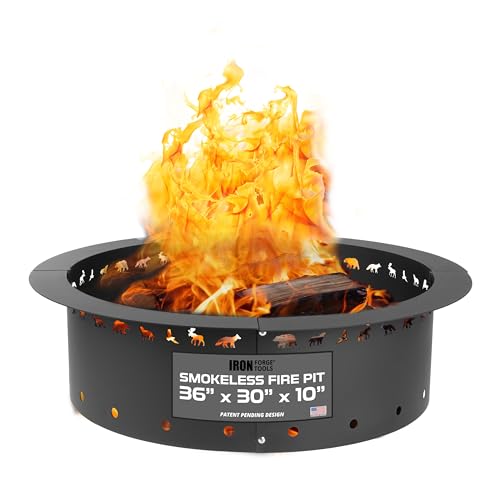
Iron Forge Tools 36 Inch Smokeless Ring


Ferrochef 24″ Swivel Grill with 38″ Stake

TBMLC 36″ Galvanized Steel Fire Ring Kit
The Details Behind The Selections
Start the list with a grate that earns its place in everyday backyards. The onlyfire 30-inch grate drops into a standard fire ring or a campfire pit, raising logs off the soil and giving flames better airflow from below. Compared to the bulky steel rings later in this list, this one is the lightest, simplest cook-first option.
The removable legs are the headline. They unscrew in seconds, which means a flat storage footprint in a garage or shed. For anyone cooking hot dogs, skewers, or a cast-iron pan over a backyard fire, that flexibility matters more than raw size.
Where It Delivers
- 30-inch diameter handles a small family’s worth of food at once
- Removable legs collapse the grate flat for off-season storage
- High-temperature coating helps the surface resist rust through wet weather
- Sits inside an existing ring, so no need to dig or pour a new pad
Things To Consider
- Designed as a grate only, so owners still need a separate ring or pit wall
- Coating can wear over seasons of heavy scrubbing, so mild cleaning tends to extend life
Whose Shelf It Belongs On
Home cooks who already own a ring and want a quick, no-fuss grate for weekend cookouts.
A Better Fit Elsewhere
Roaming campers without a built-in ring should reach for the Ferrochef 24″ Swivel Grill with 38″ Stake instead.
Step up to serious scale with this 48-inch ring from Ash & Ember. Twelve heavy steel panels connect through a tab-and-slot system that needs no tools, so two people can assemble or break it down in a single afternoon. Versus the onlyfire grate that opened this list, this is a full ring built around big fires.
The collapsible design is the practical surprise. Flat panels stack in a truck bed or shed, which matters when a 48-inch circle is otherwise hard to store. Owners commonly report that this format suits scout troops, large family reunions, and seasonal cabins where fires are big but the ring only lives part of the year.
Positive Points
- 48-inch diameter contains a generous wood fire for a crowd
- Tool-free tab-and-slot assembly saves setup time at the campsite
- Collapses flat for off-season storage in tight spaces
- Heavy-gauge steel panels hold shape against repeated heating cycles
Points To Note
- Twelve panels add carrying weight, so transport needs a vehicle
- Ring only, with no included grate, so a separate cooking surface is necessary
Made For
Large groups and big-yard hosts who want a wood fire that draws a crowd.
Swap It Out When
Tight patios and small crews should look at the Ash & Ember 31″ Campfire Ring instead.
The smaller sibling in the Ash & Ember lineup fits where the 48-inch version simply cannot. Eight heavy steel panels form a 31-inch ring using the same tab-and-slot approach, and the whole thing flattens down for closet or trunk storage. Compared with the larger 12-panel ring above, this one trades fire size for daily usability.
For renters and townhome owners, that smaller footprint matters. A 31-inch ring still handles a family evening’s worth of wood, but it stays clear of most HOA setbacks and fence-line rules.
Everyday Perks
- 31-inch diameter suits smaller yards and tighter clearances
- Eight panels stay manageable for one person to carry
- Disassembles flat for off-season indoor storage
- Tool-free setup keeps the routine simple on busy weekends
Trade Offs
- Smaller fire volume, so it is less suited to large gatherings
- Ring only, with no cooking grate in the box
Feature Snapshot
Right Fit For
Renters and small-yard owners who want a portable, manageable campfire ring.
Where A Sibling Pick Shines
Anyone hosting a full backyard party may find more room inside the Ash & Ember 48″ Campfire Ring.
Shift the focus from size to air quality with the AnBaiMei 28-inch insert. A ring of ventilation holes along the upper edge feeds extra oxygen into the fire, which promotes more complete combustion and reduces visible smoke. Compared to the open-top Ash & Ember rings earlier in this list, this one uses airflow to chase a cleaner burn.
The 28-inch diameter drops inside an existing fire pit, so it works as an upgrade rather than a full replacement. For households with close neighbors, that smoke reduction can mean the difference between a relaxing evening and a complaint at the fence line.
Useful Strengths
- Ventilation holes reduce smoke by feeding more oxygen to the fire
- 28-inch size fits most common fire pits as an insert
- Low profile keeps the fire closer to a safe cooking grate height
- Lightweight steel body simplifies transport for camping trips
Honest Caveats
- Smokeless claim depends on dry wood and good draft, not just the ring itself
- Insert only, with no grate, so plan a separate cooking surface
Best Suited To
Homeowners with close neighbors who care about cleaner air and less smoke drift.
Consider Something Else When
Campers who need a freestanding ring should look at the TBMLC 36″ Galvanized Steel Fire Ring Kit.
Step into the heavier-duty end of smokeless with this 36-inch Iron Forge Tools ring. The thicker steel body stands up to repeated high-heat cycles, and the integrated air channels push oxygen through the fire for a cleaner burn. Against the lighter AnBaiMei insert above, this one is built for year-round, year-after-year use.
The 36-inch radius gives a wide footprint, which means more room for a cooking grate across the top. For hosts who treat the fire pit like a fixed kitchen appliance rather than a seasonal setup, the extra weight pays off in stability and longevity.
Bright Spots
- 36-inch radius offers a substantial cooking and seating surface
- Thicker steel walls resist warping through repeated heating
- Smokeless airflow design reduces complaints from nearby neighbors
- Wide opening accepts most third-party cooking grates
Things To Weigh
- Heavier body makes it harder to move around the yard solo
- No grate included, so a separate cooking grate is needed for meals
At A Glance
Who Should Grab It
Year-round hosts who want a permanent-feeling fire pit with a cleaner burn profile.
Reach For A Different Pick When
Anyone needing a portable option for occasional trips should pick the Ferrochef 24″ Swivel Grill with 38″ Stake.
Leave the backyard rings behind and move to the cook-first side of the list. The Ferrochef 24-inch swivel grate plants a 33-inch ground stake into the soil and suspends a full 24-inch grill plate over the flames. Compared with the onlyfire grate that opened this list, the swivel action changes how a cook works the fire.
The 360-degree rotation is the real upgrade. Plates swing away from direct flame for safe flipping, then rotate back for a hard sear. For a small group of three to six people, that control over heat zones means real meals, not just foil-packet dinners.
Where It Excels
- Swivel action moves food away from flames for safer flipping
- 24-inch plate handles enough food for three to six people
- Tool-free height adjustment lets you tune cooking temperature
- Folding design packs down for car camping and tailgates
Worth Bearing In Mind
- Ground stake needs soft soil, so rocky sites may require adaptation
- No ring included, so the existing fire pit provides the boundary
Who It Suits Best
Campers and tailgaters who want a real cooking surface at the fire, not just a heat source.
Not Your Match When
Backyard hosts who want a permanent setup should pick the Iron Forge Tools 36 Inch Smokeless Ring instead.
Take the same swivel grate concept and stretch the height. The taller 38-inch ground stake on this Ferrochef model keeps the cook surface clear of tall flames and uneven ground. Against the 33-inch stake covered above, this version suits uneven campground terrain where flames tend to climb higher than expected.
The stainless body with a glossy finish is the practical upgrade. Camp cooks commonly want gear that wipes clean after a sticky marinade, and a smooth metal surface tends to cooperate better than raw steel in that regard.
What Works In Its Favor
- 38-inch stake lifts the grate well above tall campfire flames
- 24-inch plate supports a kettle plus a full spread of food
- Stainless finish wipes clean after messy cooks
- Swivel design swings food clear of the heat for safe flipping
Small Limitations
- Taller stake increases the load on soft ground and can wobble if the soil is loose
- No ring included, so a separate fire boundary is needed
Built With In Mind
Campers and backpack-style cooks working uneven ground who want extra clearance above the flames.
Look Elsewhere When
Backyard hosts wanting a fixed ring should consider the TBMLC 36″ Galvanized Steel Fire Ring Kit instead.
Close the list with the most versatile option in the roundup. The TBMLC 36-inch galvanized ring pulls double duty as a fire pit in summer and a raised garden bed the rest of the year. The zinc coating (galvanization is a process that bonds a protective zinc layer to steel) resists rust through wet seasons and snow. Compared with the bare-steel Ash & Ember rings above, this one handles weather with less hands-on maintenance.
The 36-inch diameter lands at the same size as the Iron Forge Tools ring covered earlier, but the use case points in a different direction. Owners get a fire pit now and a planter later, without committing to one role forever.
Points In Its Favor
- Galvanized coating holds up to rain and snow with minimal care
- Doubles as a raised garden bed when the fire season ends
- 36-inch diameter leaves room for a grate across the top
- Zinc layer protects against the rust that plagues bare steel
Practical Considerations
- Zinc coating is not food-safe at high heat, which matters for direct cooking surfaces
- Empty weight increases once soil is added as a planter
Technical Highlights
Perfect Match For
Yard multitaskers who want one ring that does double duty between fire pit and planter.
Skip It When
Cooks planning heavy daily grilling should pick the Ferrochef 24″ Swivel Grill with 38″ Stake instead.
How To Pick The Right Campfire Ring and Grate Setup
Diameter drives the most decisions because it sets the size of both the fire and the cooking area. A 28 to 31-inch ring handles a family evening, while 36 to 48-inch rings suit larger gatherings where guests sit around the fire.
Steel gauge (the thickness of the steel walls) decides how the ring holds up over time. Thin panels are light and portable, but heavy-gauge steel resists warping through repeated heating cycles. Galvanized or coated options add weather resistance for rings that stay outside year-round.
Cooking grate style changes how a fire pit works. Fixed grates sit inside the ring and stay put, while swivel grates on a ground stake let a cook swing food away from the flames for safer flipping. For someone cooking over an existing fire pit, a separate swivel grate often adds more value than a new ring.
Sizing For Your Space
Measure the spot before measuring the ring. Allow at least a few feet of clearance on every side from fences, overhangs, and seating. A 31-inch ring fits a tighter patio, while 48 inches really needs open ground.
Matching Grate To Use Case
Simple cookouts call for a basic drop-in grate. Real cooking with heat control benefits from a swivel grate that adjusts height. Campers without a built-in ring should choose a swivel grate with a ground stake and skip the ring entirely.
Steel Weight and Weather Care
Light panels move easily but show rust sooner. Heavy or galvanized steel stays outside longer with less upkeep. Owners in wet climates typically get more life from coated or galvanized rings, while dry climates can stretch the use of bare steel.
Airflow and Smoke
Smokeless rings use vent holes to feed more oxygen into the fire, which reduces smoke and improves combustion. The benefit shows up most at close quarters, where smoke drift is a real concern.
Key Things To Weigh Before Buying
Wrong Turns To Avoid
The biggest trap is choosing ring size by the fire alone, not by the cooking surface. A 48-inch ring without a compatible grate means great ambiance and no dinner. Match the diameter to the grate you plan to use, and confirm the grate fits before the ring goes in the cart.
A second common mistake is ignoring clearance. Rings radiate heat well beyond their steel walls, so a tight patio setup can scorch a fence or deck rail. Measure the space, then add a buffer.
Where The Extra Money Goes
Higher-tier models spend the budget on heavier-gauge steel and integrated airflow systems. Those upgrades show up as longer service life, less warping, and cleaner burns. For a backyard used weekly, that extra spend tends to pay back in fewer replacements.
Frequently Asked Questions
What size campfire ring works for a family of four?
A 31 to 36-inch diameter usually handles a family of four for evening fires and casual cooking. Smaller rings feel cramped, while anything over 40 inches spreads the heat and complicates cooking.
Can a cooking grate sit directly on the ring?
Yes, drop-in grates are designed to rest on the ring’s edge or sit just above the logs. For adjustable heat, look for a grate with legs at multiple heights or a swivel model with a ground stake.
Do smokeless fire pit rings really work?
Smokeless rings use vent holes to feed oxygen through the fire and encourage complete combustion. The result is less visible smoke, especially when the wood is seasoned and dry.
How do I keep a steel ring from rusting?
Galvanized or coated rings hold up best in wet weather. For bare steel, owners commonly report that covering the ring or storing it under shelter during the off-season extends its life.
Can the same ring serve as a grill?
Most rings can support a grate for grilling, but dedicated grill setups with adjustable height give better heat control. A simple drop-in grate works for skewers and basic food, while a swivel grate handles full meals.
Closing Remarks
The right campfire ring depends on where it lives and how often the fire gets lit. Backyard hosts gravitate toward heavier rings with airflow design, while campers tend to pick swivel grates that travel light and cook well. Either way, matching diameter to space and grate to use case makes the whole setup feel right from the first fire forward.