
A good camp water jug is one of those quiet essentials you only notice when it’s missing. Long trails, multi-day basecamps, and remote job sites all push the same question: how do you carry enough clean water without hauling something that fights back the whole trip? The picks below cover day-hike bottles, group-sized storage, and a few specialty systems that earn their weight for the right owner.
An Overview Of The Picks

Nalgene 48 oz Wide Mouth Silo Water Bottle, Jade
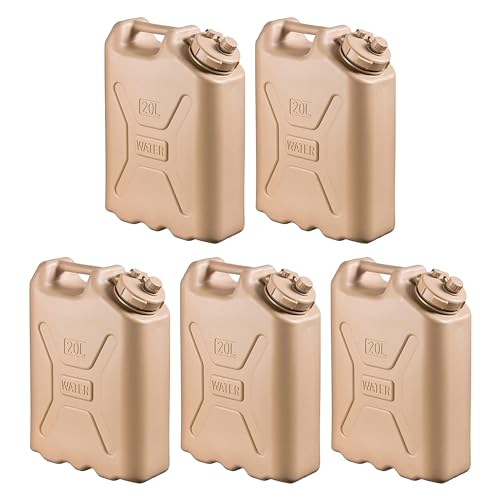
Scepter 5 Pack Military Style Water Container 5 Gallon, Sand

Hanaoyo 5 Gallon Portable Container with Touch Control Pump

Hanaoyo 3.5 Gallon Camping Water Jug with Spigot

Scepter Lightweight 5 Gallon Portable Water Storage (4 Pack)
Fire-Maple Fixed Star 1 Backpacking Stove System

Fire-Maple Petrel G2 Ultralight Camping Pot 750ml
Fire-Maple Fixed Star 1 Pro Camping Stove System

Hanaoyo Portable Camping Shower Kit 5 Gallon
More On The Choices That Made The List
The Nalgene 48 oz Wide Mouth Silo is the kind of bottle that disappears into your routine because it never asks for attention. At roughly 1.4 liters, it holds enough water to cover most day hikes and job-site shifts without refills, yet it still slips into a backpack side pocket. The wide-mouth opening is a quiet workhorse, easy to fill from a stream spigot, simple to drop ice cubes into, and forgiving when you need to clean the inside by hand.
Compared to the bulkier group containers below, this is a personal-scale tool that does one job well. You benefit most if your trips revolve around long days where you carry your own water rather than sharing it around a table.
The Good Stuff
- Tough plastic construction shrugs off drops on rock and gravel
- Wide mouth makes filling from a spigot or stream fast
- 1.4L capacity covers a long day of hiking between refills
- Lighter than any of the 5-gallon storage picks in this roundup
- Simple shape fits standard carabiners and bottle sleeves
Trade Offs
- Personal-scale only, so a family will need several to share
- Wide opening means it won’t fit narrow bottle cages on some bikes
- Plastic can pick up flavor ghosting if you stash coffee or sports mix inside without a deep clean
Feature Snapshot
Who It Suits Best
Solo hikers and day-trippers who want one rugged bottle they can refill on the trail.
Skip It When
Group basecamps will get more value from the Scepter 5 Pack Military Style Water Container, which is sized for crews rather than individuals.
Scepter’s 5-gallon military-style container trades elegance for raw capacity. A single jug holds 20 liters, and the five-pack turns one trip into a small reservoir network for a basecamp, hunting camp, or off-grid property. The rigid HDPE body (high-density polyethylene, a stiff food-safe plastic) stands up on uneven ground without collapsing, and the small spout makes refilling a personal water bottle less of a juggling act.
The honest read is that this isn’t gear for backpacking. It’s gear for the truck bed, the cabin porch, or the staging area where weight matters less than volume. You benefit most when you’re hydrating a crew rather than yourself.
Useful Highlights
- Five 5-gallon jugs cover a family or small group for a weekend
- Rigid walls prevent the slumping you get with collapsible containers
- Built-in handle keeps a full jug manageable to move short distances
- BPA-free food-grade plastic won’t taint stored water
Points To Note
- Empty jugs still take up significant storage room
- Small spout is slower to fill a sink than a wide-mouth jug like the Hanaoyo 3.5 Gallon
- Not designed to be tossed in a pack, so it’s a vehicle/camp item only
Built With In Mind
Large groups and basecamp cooks who need serious volume on site without depending on a municipal hookup.
A Better Fit Elsewhere
Solo backpackers should look at the Fire-Maple Fixed Star 1 Backpacking Stove System instead, which combines cookware with a much smaller footprint.
The Hanaoyo 5-Gallon takes a basic water jug and bolts a touch-control pump to the top, which sounds gimmicky until you picture washing a dog or rinsing a pan at a campsite. You tap a screen, the pump dispenses set volumes (200mL, 600mL, 800mL), and a USB port lets you top off the built-in battery. The 3.5-inch inlet is wide enough to drop a cleaning brush in, and food-grade PE plastic keeps stored water neutral in flavor.
For glampers, overlanders, and RV travelers, the extra electronics are a real upgrade over a passive spout. For backcountry campers, those same features add weight and another thing to charge.
Real-World Strengths
- Touch pump with preset volumes avoids guesswork when filling cookware
- Wide 3.5-inch opening speeds up fill-ups and cleanings
- Food-grade PE construction keeps water tasting clean
- BPA-free build reassures anyone storing drinking water long-term
Practical Considerations
- Rechargeable pump adds weight versus a passive spigot jug
- Electronics mean drying the touch panel is part of routine cleaning
- 5-gallon size is overkill for one person on a short trip
Quick Facts
Right Fit For
Glampers and RV travelers who want dispensable water without lifting a heavy jug every time.
Look Elsewhere When
Lightweight backpackers will find the Fire-Maple Petrel G2 Ultralight Camping Pot a much better match for trail-side cooking.
The 3.5-gallon Hanaoyo sits in a sweet spot the bigger 5-gallon picks don’t quite hit: portable enough for one person to move comfortably, big enough to feed a small picnic table. A built-in spigot pours without tilting, and the included carry bag keeps the jug from scuffing in your trunk or kayak hatch. BPA-free food-grade PE is the same material family as the larger Hanaoyo jug above.
If the Scepter military jug feels like overkill and a personal Nalgene is undersized, this is the middle ground. It works just as well for emergency water storage at home as it does on a weekend cookout.
What Pays Off
- 3.5 gallons is a manageable carry even when full
- Spigot eliminates the awkward jug-tilt pour
- BPA-free food-grade plastic is safe for drinking water
- Carry bag simplifies transport between vehicle and camp
Less Ideal Details
- Spigot adds a small part that owners commonly report as the first to need attention
- Not insulated, so water heats up in direct sun
- Smaller volume means heavier group setups need more than one
Whose Shelf It Belongs On
Weekend campers, small families, and anyone building an emergency water cache at home.
Consider Something Else When
Larger crews of five or more will want the higher-volume Scepter 5 Pack Military Style Water Container instead.
The 4-pack version of Scepter’s portable water jug trades the military aesthetic for a more consumer-friendly profile, while keeping the 5-gallon capacity and food-grade plastic. A sturdy screw-top cap keeps contents sealed during transport, and four jugs in a single bundle give you the option to split them across vehicles or stash extras for emergency prep.
This is a practical, no-frills container. There’s no pump, no spigot, and no carry bag. For a basecamp or homestead that values simplicity over features, that’s a feature in disguise.
Everyday Perks
- Four jugs let you distribute water across sites or vehicles
- Food-grade plastic preserves water flavor and safety
- Screw-top cap creates a tight seal for rough transport
- Lower weight than the comparable Scepter military jug
Where It May Fall Short
- No spigot or pump means pouring requires lifting and tilting
- Storing four empty jugs takes more room than a single collapsible container
- Lacks the carry handle integration found on the heavier Scepter military pick
Made For
Group campers and emergency-prep households who want bulk storage without breaking the bank on premium features.
Another Choice May Suit
The Hanaoyo 5 Gallon Portable Container with Touch Control Pump is a smarter pick if built-in dispensing matters for daily use.
The Fire-Maple Fixed Star 1 isn’t a water jug in the traditional sense, but it changes how much water you actually need to carry. The integrated stove boils a liter of water significantly faster than older backpacking stoves (roughly 30% per Fire-Maple’s heat exchange claim), which means you can stop hauling pre-boiled water and treat or boil on demand. The whole kit nests into the 1L cook pot, including a small bowl and most fuel canisters.
For backpackers treating their own water, the stove doubles as the purifier. For anyone who still wants a separate storage jug, pair this with a personal bottle like the Nalgene above.
What It Does Well
- Heat exchanger design cuts boil times versus older stoves
- All-in-one kit nests into the 1L pot for pack-friendly carry
- Compatible with most standard backpacking fuel canisters
- Lightweight 18 oz total system weight
Worth Bearing In Mind
- Fuel canister sold separately, adding a small extra purchase
- Not compatible with Coleman brand canisters, which can trip up first-time users
- Cook pot is small, so group cooking calls for multiple passes
Feature Card
Best Suited To
Backpackers who want to treat water on the trail rather than carry pre-boiled bottles.
Reach For A Different Pick When
Car campers seeking passive storage should choose the Hanaoyo 3.5 Gallon Camping Water Jug instead.
The Petrel G2 is built for the calorie counter of the trail: at 184.5 grams with a folding handle, it disappears into a pack and lets you boil just enough for ramen or a freeze-dried dinner. Aluminum alloy keeps weight down and heats quickly, while silicone accents around the rim protect your hands and lips during use. It functions more as a cook pot than a storage jug, but it pairs naturally with a personal water bottle for short trips.
You benefit most when every gram matters. For lazy car camping where weight isn’t on the table, the larger Hanaoyo or Scepter jugs simply hold more.
The Practical Payoff
- 184.5 g total weight barely registers in a packed bag
- Aluminum body heats water quickly to save fuel
- Folding handle keeps the pot packable
- 750 ml size is right for solo meals and hot drinks
Soft Spots
- Aluminum requires hand washing since dishwasher cycles damage the finish
- Not a storage jug, so you’ll still need a water bottle alongside
- Smaller capacity means no room for group-sized portions
Perfect Match For
Ultralight hikers and solo travelers who count every gram on the trail.
Swap It Out When
Cooks preparing meals for two or more should consider the larger Fixed Star 1 Backpacking Stove System above.
The “Pro” version of the Fixed Star 1 swaps the original handle for an upgraded one and adds a touch more mass (19.6 oz vs 18 oz) for a noticeably sturdier feel on the trail. Same heat exchange tech, same 1L cook pot, same ability to nest a fuel canister inside. The trade is small: you carry a hair more weight in exchange for a handle that won’t flex when the pot is full.
This is the pick for someone who burns through a backpacking season every year. First-timers will be just as well served by the standard Fixed Star 1 above.
Points In Its Favor
- Upgraded handle improves grip on a full, hot pot
- Heat exchange system cuts boil times versus older stoves
- 1L pot still nests the burner and most fuel canisters
- Compatible with most standard backpacking canisters
Honest Caveats
- Slightly heavier than the standard Fixed Star 1 for marginal real-world gain
- Still not compatible with Coleman fuel canisters, so check before you buy
- Fuel canister sold separately
Who Will Love This
Frequent backpackers, guides, and instructors who want a sturdier long-term investment over the entry-level version.
Where A Sibling Pick Shines
Budget-focused campers will do fine with the standard Fire-Maple Fixed Star 1 Backpacking Stove System reviewed earlier.
Hanaoyo’s shower kit doubles as a regular 5-gallon water jug and a pressurized rinse station for campers, dog owners, and overlanders. The 8000mAh rechargeable pump runs an IPX8-rated shower head (IPX8 means the pump can survive continuous submersion, which matters when splashes are constant) and offers five pressure modes from a gentle mist to a focused rinse. It’s a more specialized take on the touch-pump Hanaoyo jug above, aimed at people who actually need to clean things (or themselves) at camp.
Pet households and beach-goers will get the most out of the pressurized spray. Backpackers who never wash their dog on the trail will find a plain Nalgene jug far simpler.
Practical Pluses
- 5-gallon jug handles showering, dish washing, and pet bathing
- 8000mAh battery delivers long runtimes between charges
- IPX8 waterproof pump shrugs off splash-heavy environments
- BPA-free construction keeps water safe for skin and dishes
Where It Is Less Suited
- Rechargeable pump adds weight and another item to remember to charge
- Battery and pump add complexity owners commonly report when storage space is tight
- Overkill for backpackers who only need a personal water bottle
Key Product Details
Who Should Grab It
Pet owners, overlanders, and beach campers who want one tool for hauling water and spraying it.
Not Your Match When
Thru-hikers will find the simpler Nalgene 48 oz Wide Mouth Silo Water Bottle easier on the trail.
What Matters Most Before Choosing Camp Water Jugs
Capacity Versus Portability
The single biggest decision is how much water you actually need versus how much you’re willing to carry. Day hikers and backpackers fall into the personal-bottle category: anything from a 1L Nalgene to a 2L collapsible is plenty for the trail. Car campers and basecamp cooks operate in the 3.5 to 5-gallon range, while group or emergency storage usually means multiple 5-gallon rigid jugs. The right answer depends on how far the water has to travel between source and use.
Material And Food Safety
Almost every camp water jug on the market is some form of plastic: HDPE (high-density polyethylene, rigid and food-safe), LDPE (low-density polyethylene, more flexible), or PE blends. BPA-free construction matters if you’re storing drinking water long-term, since BPA is a chemical additive that can leach into water over time. Rigid plastic resists punctures but takes up storage room; softer plastic folds down but can absorb flavors and odors faster.
Dispensing Style
Passive spouts require lifting and tilting. Built-in spigots let you pour hands-free. Electric pumps add convenience for dishwashing and pet bathing, but they require charging and one more thing to dry after use. For most casual campers, a simple spigot or screw-top cap is enough. For glampers and overlanders, a touch-control pump like Hanaoyo’s adds genuine utility.
Intended Use And Storage
Some jugs are built for trail use, others for basecamp. Trail-friendly picks like the Nalgene 48 oz or Fire-Maple Petrel G2 are small and packable. Basecamp picks like the Scepter 5-gallon jugs are heavier but hold more. Think about where the jug lives most of the time: in a pack, in a truck bed, or on a porch, since that drives the right size and weight class more than anything else.
Smart Considerations Across These Picks
Where Shoppers Go Wrong
The most common mistake is buying too much jug for too little trip. A solo weekender rarely needs 20 liters of stored water, while a family of five trying to share a single 48 oz bottle is in trouble by lunch. Match the jug size to the trip duration and group size first, then refine by features like spigots or pumps.
When Paying More Pays Off
Higher-tier picks in this list tend to spend their money on dispensing convenience, integrated heat-exchange stoves, or all-in-one shower kits. None of that matters for someone who just needs a rigid jug to keep in the garage. The upgrade is worth it when you’ll use the feature every trip, not just once a year.
Frequently Asked Questions
What size camp water jug should I get?
For solo day trips, 1 to 1.5 liters is usually plenty. For weekend car camping, 3.5 gallons hits the sweet spot for one or two people. For groups or emergency storage, 5-gallon jugs in multi-packs offer the best volume-to-cost trade.
Are plastic camp water jugs safe for drinking?
Yes, as long as they’re made from food-grade, BPA-free plastic like HDPE or PE. Check the product description for those terms before storing drinking water long-term, and rinse the jug thoroughly before first use.
How do I clean a camp water jug?
For wide-mouth jugs, drop in a long-handled brush with warm water and a small amount of mild soap, scrub the interior, and rinse thoroughly. Narrow-mouth bottles benefit from a bottle brush and a diluted bleach rinse followed by multiple clean-water rinses. Air-dry the lid and interior fully before storage to prevent mildew.
Can I leave a water jug in the sun?
You can, but the water will heat up and plastic may slowly degrade over very long sun exposure. Where possible, store the jug in shade or under a tarp. For drinking water, a cool storage spot also keeps it more palatable.
Is a pump-powered jug worth the extra cost?
Only if you’ll use the pump often. Pet owners, overlanders, and people who wash dishes at camp benefit from touch-pump or shower-pump systems. Backpackers and casual car campers usually find a basic spigot perfectly adequate.
Final Verdict
The best camp water jug for you comes down to a single question: where will it spend most of its time? Pick the Nalgene for trails, the Scepter jugs for basecamps, the Hanaoyo spigot jug for weekend cookouts, and the Fire-Maple systems if your water needs boiling more than carrying. Match the size to the trip and the rest falls into place.