
The right tent light turns a cramped shelter into a livable space: bright enough to find the zipper, soft enough to wind down, and reliable enough to last a long weekend. This roundup covers compact battery lanterns, rechargeable mini work lights, and tall telescoping camp lights that lift illumination above head height. Each pick solves a different problem, from ultralight backpacking to car camping with the whole family.
The Main Contenders
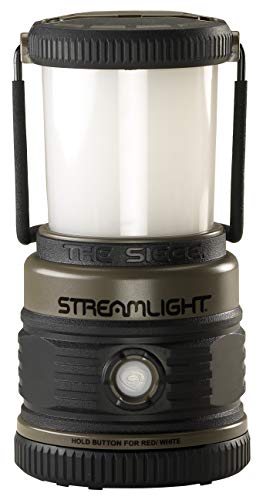
Streamlight 44931 Siege Compact Lantern
Consciot CL1 Mini Dual Light LED Lantern
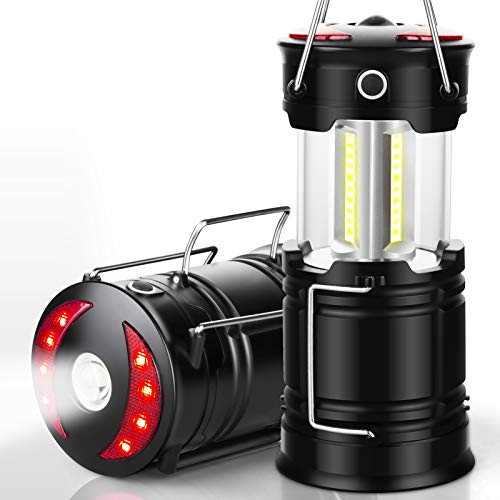
FLY2SKY Rechargeable 2000mAh LED Camping Light

Devos LightRanger 500 Compact Rechargeable Light

Devos LightRanger 4000 Telescoping Work Light

DEVOS LightRanger 1200 Telescoping Camp Light

DEVOS LightRanger 800 Mini Telescoping Camp Light

Devos LightRanger 1200 Filter Kit

Devos LightRanger 800 Filter Kit
The Picks, Examined More Closely
The Streamlight Siege is the kind of lantern you leave in the gear closet for years, then grab during a power outage and it just works. It runs on three D-cell batteries (large cylindrical cells sold separately), which most households keep in a junk drawer, and the rubberized base shrugs off drops onto campsite gravel. Compared to the smaller Consciot CL1 that follows, this one trades charm for sheer durability.
You get a wide white beam for cooking dinner and a red mode for reading maps without ruining your night vision. The removable globe and top handle make it easy to hang inside a tent or set on a picnic table, and the water-resistant body handles rain without drama.
Everyday Perks
- Multiple brightness tiers plus a steady red mode, so you can dim it for sleep or crank it up for meal prep.
- Rugged polymer construction with a rubber foot that absorbs drops on rocky tent pads.
- Removable top cap lets the light shine downward as a focused area lamp.
Things To Consider
- Runs on D-cell batteries rather than USB, so you’ll want spares for multi-day trips.
- Heavier than compact rechargeable options like the FLY2SKY unit.
Right Fit For
Family campers and emergency prep folks who want a no-fuss lantern that survives rough handling.
Skip It When
Backpackers counting ounces will find the Consciot CL1 Mini a friendlier carry.
The Consciot CL1 leans into atmosphere rather than raw output. Its retro glass globe mimics an old kerosene lantern, which makes it as much a vibe piece as a tool, and it tucks neatly onto a small camp shelf where bigger models won’t fit. Where the Streamlight Siege above is built for abuse, this one is built for cozy evenings.
Dual light sources (a top SMD LED for focused reading and a side glow for ambient warmth) plus stepless dimming let you tune the mood from card-game bright to candle-soft. Battery power means no charging cable to remember, and the compact form factor slips into a daypack without complaint.
What Earns Its Place
- Stepless dimming on both light sources for precise mood control.
- Compact, decorative form factor that doubles as tent decor.
- Battery operation keeps it simple, with no cables to forget on shorter trips.
Points To Keep In Mind
- Output is modest compared to flood-style work lights like the LightRanger 4000.
- The glass globe needs careful packing in a crowded gear bin.
Built With In Mind
Glampers, van-lifers, and tent dwellers who value warm ambient glow over lumens.
Reach For A Different Pick When
Cooks at a large group site will appreciate the broader reach of the DEVOS LightRanger 1200.
The EZORKAS pair is built for symmetry: one in the main tent, one in the cook tent, or one for you and one for the kids. Each unit collapses down small, opens up into a full COB LED lantern, and runs on standard AA batteries. That makes it a useful backup for power outages at home too.
Four lighting modes (including a flashing SOS option) cover most campsite scenarios, from late-night reading to signaling across a crowded trailhead. Compared to the single-lantern picks above, you get redundancy built into the box, which matters when one unit inevitably rolls into the creek.
Notable Upsides
- Two units per order, useful for splitting between tent and cook area.
- Collapsible COB design fits into most camp kitchen boxes when packed.
- Multiple modes including an SOS flash for roadside emergencies.
Worth Noting
- Plastic construction feels lighter-duty than the Streamlight Siege.
- AA batteries need replacing across both units on long trips.
Best Suited To
Group campers and Scout leaders outfitting multiple shelters on a tight gear budget.
Consider Something Else When
Solo backpackers will prefer the lighter FLY2SKY rechargeable cube.
FLY2SKY makes a strong case for “small enough to forget you packed it.” At roughly 2.8 inches per side and well under half a pound, this rechargeable cube slips into a backpack side pocket, a car glovebox, or a kitchen drawer without complaint. The 2000mAh built-in battery tops up over USB, so the same cable that charges your phone handles the lantern.
Where the Streamlight Siege trades weight for run time, this one trades brightness for portability. It handles tent-shelter reading, hallway navigation during a blackout, and quick campsite setup without becoming the anchor of your pack.
Practical Pluses
- Rechargeable via standard USB cable, no specialty batteries required.
- Cube footprint tucks into packs, drawers, and center consoles.
- Handy emergency light for cars, closets, and tent showers.
Honest Caveats
- Modest output compared to the 4,000-lumen LightRanger 4000 site flooder.
- Integrated battery means no swapping in fresh cells mid-trip.
Who Should Grab It
Backpackers and emergency kit builders who want a grab-and-go light they can recharge from any USB source.
Look Elsewhere When
Group cooks lighting a sprawling site will find the LightRanger 4000 a stronger match.
Feature Snapshot
The LightRanger 500 is the most “task light” option in this roundup, and the hand-wave activation makes that obvious. Wave your hand in front of the sensor and the lamp toggles on or off, which sounds like a gimmick until you’re hanging it inside a tent at 2 a.m. with cold, clumsy fingers. The built-in magnet and clip give you a third mounting option beyond “set it on a table.”
Three color modes (white for general work, amber for bug-reduced glow, red for night vision) cover most scenarios a camper or roadside fixer faces. USB-C charging and a built-in power bank function for phones round out a small but capable package.
The Upside
- Hand-wave sensor removes fumbling for a switch in the dark.
- Magnetic base and clip multiply mounting positions in tents and vehicles.
- White, amber, and red modes cover task work, ambiance, and night vision.
- USB-C charging plus phone top-off in a pinch.
Small Caveats
- 500 lumens is plenty for tent work but modest for lighting a full campsite.
- Wave sensor can trigger unexpectedly if something brushes past.
Made For
Mechanics, overlanders, and tent campers who want a versatile clip-on task light.
A Better Fit Elsewhere
Large-group cooks will want the flood-style LightRanger 4000 instead.
The LightRanger 4000 is overkill for most campers and exactly right for the ones running base camp. On a telescoping tripod that extends from 36 inches to 9 feet, this thing throws daylight over a 100-foot diameter, which means one light can handle a sprawling group site after dark. At 5.2 pounds it’s not a backpacking item, but it packs down short enough for a car trunk.
Bluetooth app control lets you adjust brightness and color temperature from your phone, which is genuinely useful when the light is hoisted high overhead. The 5000K daylight tone reads as clean white light, and IP56 weather rating covers rain and dust.
Useful Highlights
- Extends to 9 feet, lifting light well above head height for broad coverage.
- Up to 4,000 lumens to illuminate an entire campsite or worksite.
- Bluetooth app control for tweaking output from a phone.
- IP56 weather rating for rainy and dusty conditions.
Trade-Offs To Consider
- 5.2 lb weight rules out backcountry use.
- Highest setting drops run time to roughly 3 hours per charge.
Whose Shelf It Belongs On
Group campers, event organizers, and contractors who need a temporary light tower.
Swap It Out When
Family tent campers will find the smaller DEVOS LightRanger 800 Mini more practical.
Key Attributes
The LightRanger 1200 sits in the sweet spot between the pocket-friendly picks earlier in this list and the commercial-grade 4000 above. It telescopes from 36 inches up to 9 feet on a four-section aluminum pole, and the elevated light keeps bugs above you rather than swarming your face, a quiet quality-of-life upgrade after dark.
At 1,200 lumens it covers roughly a 60-foot diameter, enough for a family campsite or a backyard dinner party. Run time stretches up to 80 hours on the lowest setting, which means a weekend trip without recharging. The included carry case and one-year warranty are the kind of touches that show this brand thinks about ownership, not just the first night.
A Favorable Mix
- 9-foot reach on a sturdy aluminum pole for elevated, bug-aware lighting.
- Up to 80-hour run time on low for multi-day trips without recharging.
- Carry case included for clean transport and storage between trips.
- 1-year warranty covers manufacturing defects from day one.
Practical Considerations
- Heavier and bulkier than compact cubes like the FLY2SKY.
- Higher initial cost than non-telescoping lanterns.
Who It Suits Best
Family campers and overlanders who want one elevated light source that lasts a full weekend.
Where A Sibling Pick Shines
Solo travelers with smaller tents will find the LightRanger 800 Mini easier to manage.
Quick Technical Notes
The Mini borrows the elevated-light concept from its bigger sibling but shrinks it to a footprint that fits a sedan trunk or a small gear closet. It collapses down to roughly 3.5 by 3.5 by 16.5 inches and weighs about 20 ounces, which is approachable for campers without dedicated cargo space.
At full power it lights a 40-foot diameter area, plenty for a four-person tent setup or a small picnic table. Run time scales from 3 hours on max to 30 hours on the dimmest setting, and USB-C charging means no proprietary cable to track. Owners commonly pair it with the matching filter kit below for stargazing nights.
What Stands Out
- Collapses to roughly 16 inches for compact storage and travel.
- Telescopes up to 4.5 feet, lifting light off the ground and away from bugs.
- Up to 30-hour run time on low for relaxed multi-day pacing.
- USB-C charging uses cables you likely already own.
Where It Is Less Suited
- Lower output than the full-size LightRanger 1200 for larger sites.
- Aluminum pole sections need careful alignment to sit level on uneven ground.
Perfect Match For
Family tent campers and small-group hosts who want elevated light without a full light tower.
Not Your Match When
Contractors lighting large jobsites will want the LightRanger 4000 instead.
Feature Card
The 1200 Filter Kit is an accessory, not a light on its own, and that’s exactly the point. Three snap-on polycarbonate lenses (soft-white, amber, and red) shift the LightRanger 1200’s behavior without buying a separate fixture. The amber option, for instance, pulls fewer bugs toward your campsite, and the red lens preserves night vision for stargazing.
Snapping lenses on and off takes seconds, and the included nylon carry bag keeps them scratch-free between trips. If you already own the LightRanger 1200 above, this kit meaningfully extends what that lantern can do on a single trip.
Notable Gains
- Three lenses cover ambiance, bug reduction, and night vision in one kit.
- Snap-on design swaps modes in seconds without tools.
- Carry bag keeps lenses organized between trips.
- Polycarbonate build resists campsite scratches and drops.
Potential Drawbacks
- Requires the LightRanger 1200 to function, so it’s an add-on cost.
- Lens storage adds a small item to track in your gear bag.
Best Suited To
LightRanger 1200 owners who want one light to handle bright work, mood lighting, and stargazing.
Reach For A Different Pick When
Without the 1200 base unit, the LightRanger 800 Filter Kit pairs with the smaller Mini model.
The 800 Filter Kit mirrors the 1200 kit above but trims it down to two lenses, amber and red, sized for the LightRanger 800 Mini. That focused selection suits the Mini’s smaller campsite footprint: amber for relaxed evenings with fewer bugs, red for late-night reading and stargazing without disrupting sleep.
The snap-on mechanism is identical to the larger kit, and the nylon carry pouch slips into a glovebox or daypack pocket. For Mini owners, this is the simplest way to get more versatility out of a lantern that already pulls double duty between trips.
Standout Benefits
- Amber and red lenses tuned to the LightRanger 800 Mini footprint.
- Snap-on design keeps lens swaps quick and tool-free.
- Pocketable carry pouch fits alongside the collapsed Mini pole.
What To Weigh
- Only useful if you already own the matching LightRanger 800 Mini.
- Two-lens set covers fewer scenarios than the three-lens 1200 kit.
The Right Fit
LightRanger 800 Mini owners who want bug-reduced evening light and red-mode nights.
Consider Something Else When
Owners of the larger LightRanger 1200 should grab the matching 1200 filter kit for full coverage.
At A Glance
What To Weigh Before Buying Camp Tent Lightings
Brightness vs. Battery Life
Lumen output tells you how much light a lantern throws, but run time tells you how long that light actually lasts. A 4,000-lumen work light like the LightRanger 4000 can drain in three hours on max, while a dimmer 800-lumen Mini keeps glowing for thirty hours on its lowest setting. Match the brightness to your trip length and recharge access, since a powerful lantern without a USB-C cable at camp becomes a heavy paperweight by night two.
Power Source: Rechargeable vs. Replaceable
Rechargeable lanterns cut down on battery waste and let one USB cable handle phone and light. Replaceable-battery lanterns, like the Streamlight Siege, keep working through multi-day trips where recharging isn’t an option. Backpackers chasing ultralight setups usually prefer built-in rechargeable cells, while car campers and emergency prep folks often keep a stock of spares on hand.
Form Factor and Mounting
A lantern that sits on the table works for cooking, but a lantern that hangs from the tent ceiling or magnetizes to a car hood opens up far more scenarios. Telescoping pole lights elevate the source above head height, which keeps bugs further from your face. Hand-wave sensors and clip mounts, like those on the LightRanger 500, matter most when your hands are cold, wet, or full of gear.
Color Modes and Night Vision
White light handles tasks, amber pulls fewer insects, and red preserves dark-adjusted vision for stargazing and late-night tent exits. If you camp in mosquito-heavy areas or do any astronomy, multi-mode lanterns earn their keep. Filter kits extend a single light into multiple moods without buying extra fixtures.
Key Considerations Across These Picks
Common Shopping Slip Ups
The biggest trap is buying a lantern by lumen count alone. A 4,000-lumen flood light sounds impressive until you remember it’s heavy, drains fast, and lights up the whole campground, including the neighboring tent. Match output to your actual campsite size, and double-check run time at the brightness level you plan to use most.
Another slip is ignoring power source. A rechargeable lantern is useless on a four-day backcountry trip without a power bank, while a battery-powered lantern becomes dead weight once spares run out. Decide on your recharge plan before you commit.
Where The Extra Money Goes
Premium picks like the LightRanger 1200 cost more because of thoughtful touches: aluminum telescoping poles that don’t wobble, longer run times, included carry cases, and warranty coverage. You also pay for engineering that distributes light more evenly across a campsite rather than blasting a hot spot straight down.
The upgrade is worth it for campers who use a light more than a few weekends a year, or anyone tired of bargain-bin lanterns that flicker after a season. For occasional backyard use, a simpler pick holds up fine.
Frequently Asked Questions
How many lumens do most campers actually need?
For a small two-person tent, 100 to 300 lumens handles reading and general use. Family tents and small picnic areas usually want 500 to 1,200 lumens, while large group sites benefit from 1,200 lumens or more. Going much higher than that without a way to dim it becomes overkill inside a tent.
Are telescoping pole lights worth the extra size?
Telescoping lights earn their keep by lifting the source above head height, which spreads light further and keeps bugs farther from your face. For car camping with space to spare, the upgrade pays off. Backpackers counting every ounce usually skip them for compact cubes.
Can a tent lantern double as a power bank?
Some rechargeable models, including the LightRanger 500, include a USB-out port for topping off a phone in a pinch. Run time on the lantern drops noticeably when used this way, so treat it as an emergency feature rather than a daily charger.
How do I keep bugs away from my campsite light?
Amber and warm-white modes attract fewer insects than cool daylight tones. The filter kits from Devos snap onto compatible lanterns and shift the color temperature without buying a second light. Elevating the source on a pole also helps, since bugs swarm low-hanging fixtures more aggressively.
What maintenance do rechargeable camp lights need?
Keep the charging port covered when not in use, wipe down the body after dusty trips, and store the lantern at partial charge rather than fully drained during off-season months. Most LED panels don’t need bulb changes, but check that seals around the port stay intact before rainy trips.
Bottom Line
A solid camp tent light comes down to matching brightness, run time, and form factor to your actual trips. Backpackers and emergency prep folks get the most from compact rechargeable cubes like the FLY2SKY, while family campers and group hosts benefit from elevated telescoping lights in the DEVOS lineup. Filter kits and accessories stretch a single purchase further once you know which base light fits your routine.