
A propane stove is the small engine of a good campsite, the thing that decides whether dinner is a hot pan of eggs or a cold tortilla you regret. Plenty of choices claim to handle camp cooking, but the practical differences in burner count, weight, and fuel source matter more than the marketing copy lets on. This roundup covers seven camp stove propanes worth a serious look, from single-burner trail units to high-output cast-iron cookers that turn tailgate tables into makeshift kitchens.
The Essentials At A Glance

Coleman Cascade 18 1-Burner Camping Stove, Portable Cooktop with 8000 BTUs
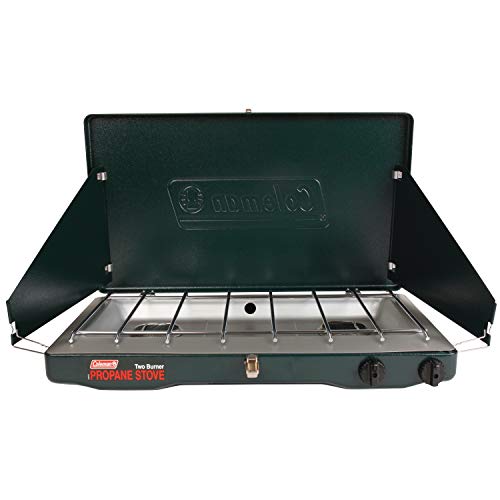
Coleman Gas Camping Stove, Classic Propane 2 Burner

Jetboil Jetpower Fuel Canister, 450 Grams

Jetboil MightyMo Ultralight Camping and Backpacking Stove

2 Burner Propane Camp Stove, 150,000 BTU

Coleman Tabletop 2-in-1 Grill and Stove

3 Burner Propane Camp Stove, 225,000 BTU
The Strengths Of Each Pick
The Cascade 18 is the kind of compact stove that lives at the bottom of a pack without complaint. It runs off a single propane cylinder and produces around 8,000 BTUs (British Thermal Units, a measure of how much heat a burner puts out), enough to bring water to a rolling boil while you filter the creek. A rotary ignition removes the need for matches, which is a small quality-of-life win in damp conditions.
Compared to the high-output two-burner workhorses later in this roundup, the Cascade stays deliberately simple. One burner, one knob, one job. It also features a detachable grate that flips 180 degrees, making it easier to fold flat and tuck between a cooler and a camp chair in a trunk.
The Value In It
- Lightweight footprint suits backpackers and bikepackers hauling minimal gear.
- Rotary matchless ignition helps when fingers are cold or wet.
- Detachable grate that flips 180 degrees aids compact storage in tight car trunks.
- Fits a 12-inch pan, giving solo cooks enough space for a one-pan meal.
- Aluminized steel cooktop wipes clean after a greasy breakfast.
Worth Noting
- Single burner limits multi-pan meals, so dinner for two takes planning.
- Wind protection is minimal, so a separate windscreen is worth carrying in exposed sites.
Who It Suits Best
Solo backpackers and minimalists who want one reliable burner that disappears into the pack.
Skip It When
Cooks feeding a family of four will find the Coleman Gas Camping Stove a far better match for their two-pan dinners.
This is the two-burner box most people picture when they think “camp stove.” It folds open like a briefcase, sits on a picnic table, and runs on a standard propane cylinder. Output reaches up to 20,000 BTUs across both burners, which is enough heat to handle a real skillet and a kettle at the same time.
Where the Cascade is a trail unit, this is a basecamp kitchen. The two adjustable burners let you simmer beans on one side while a pancake griddle heats on the other. Wind-blocking panels on the sides keep gusts from stealing your flame at exposed sites, which matters more than most people expect.
The Practical Payoff
- Two burners cook a main and a side simultaneously, which shortens mealtime chaos.
- Fits a 12-inch and 10-inch pan side by side for typical family cookware.
- Wind-blocking panels help the flame stay steady on breezy afternoons.
- Pressure regulator keeps performance steady as the cylinder cools.
- Folding design stores flat in a car trunk or gear bin.
Points To Keep In Mind
- Heavier and bulkier than the Coleman Cascade 18, so it suits car camping more than backpacking.
- Requires a separate propane cylinder, which adds to your packing list.
- Runtime of around one hour at high heat on a single 16.4 oz cylinder, so plan fuel for longer trips.
Made For
Family campers and weekend basecamp cooks who want two real burners and a familiar setup.
Consider Something Else When
Thru-hikers chasing ounces will find the Jetboil MightyMo a far lighter partner for trail meals.
The Jetboil JetPower is not a stove. It is the pressurized propane/isobutane blend (a fuel mix that vaporizes well in cold air) sold in a screw-on canister designed for Jetboil systems and other canister-mount stoves. At 450 grams, it is a sensible mid-size for two-to-three-day trips where you need predictable boil times.
It performs better than standard butane in cold weather because isobutane keeps vaporizing at lower temperatures. For shoulder-season campers who chase shoulder-season summits, this fuel solves a problem that knocks canister stoves offline well before freezing.
The Helpful Details
- Higher vapor pressure supports reliable burns in cold conditions where butane struggles.
- Designed specifically for Jetboil systems, so flow and threading stay consistent.
- Compact canister shape packs efficiently into Jetboil systems and similar stoves.
- Widely compatible with other backpacking stoves that accept threaded canisters.
Honest Caveats
- Refilling or refueling hot or burning devices creates explosive risk, so swaps require care.
- Empty canisters require proper disposal, which can be inconvenient on long trips.
- Does not include a stove, so this only makes sense alongside a compatible unit like the Jetboil MightyMo.
Whose Shelf It Belongs On
Backpackers running a Jetboil or compatible canister stove who need a four-season fuel source.
Swap It Out When
Car campers running the Coleman Gas Camping Stove will want a standard refillable propane tank instead.
The MightyMo is Jetboil’s answer to backpackers who want more than boil-only cooking without dragging a full camp kitchen. The system reaches a rolling boil in roughly three minutes and reportedly uses about half the fuel of older canister stoves, which adds up on long stretches between resupply.
A four-turn regulator gives finer flame control than typical backpacking stoves, so sautéing greens or simmering a sauce is actually possible. That broader range sets it apart from bare-bones canister stoves that basically offer “off” and “blowtorch.”
Where It Excels
- Roughly three-minute boil times save fuel and patience on cold mornings.
- Four-turn regulator supports true simmer control for real cooking, not just reheating.
- Ultralight build keeps pack weight low for long-distance hikers.
- Open platform design accepts a range of cookware sizes for varied trail meals.
Less Ideal Details
- Requires a separate Jetboil JetPower fuel canister, which adds to your gear list.
- Simmering is improved, but fine low-end control is still not on par with a two-burner car-camp stove.
Right Fit For
Thru-hikers and fast-pack campers who want light gear with real cooking capability at camp.
Reach For A Different Pick When
You regularly cook for a group at a basecamp, where the Pipopa 2 Burner Propane Camp Stove offers the heat and surface area you need.
This Pipopa unit is a different animal from the folding Coleman stoves earlier in the list. It is a high-pressure cast-style cooker built around 150,000 BTUs of total output, with each burner delivering around 75,000 BTUs. That is enough heat to bring a stockpot to a hard boil quickly, which matters when cooking crawfish or a fish fry.
For tailgate lots, outdoor fish fries, and group base camps, the extra heat turns long simmering tasks into short ones. The included dustproof cover helps when the stove spends weekends in a truck bed between uses, which is a real-world ownership touch the Coleman units do not offer.
Real-World Strengths
- Total output of 150,000 BTUs handles boiling pots and searing meat without long waits.
- Per-burner output of about 75,000 BTUs gives strong, focused heat under large pans.
- High-pressure gas burners suit outdoor cooking where propane cylinders deliver gas at higher pressure for stronger flames.
- Included dustproof cover shields the burner from grit and debris between outings.
- Sturdy frame feels more like an outdoor cooker than a folding camp stove.
Things To Weigh
- Larger and heavier than folding stoves, so it is a truck or SUV item, not a backpack unit.
- High output burns through propane faster, which raises running costs on long weekends.
Feature Snapshot
Who Will Love This
Tailgaters, hunters, and group cooks running a full crawfish or fish fry outdoors.
A Better Fit Elsewhere
Backpackers should stick with the Jetboil MightyMo, which delivers much of the boil speed at a fraction of the weight.
The Coleman Tabletop 2-in-1 combines a grill and a stove on one frame, so you can sear burgers while warming beans in a pan on the same surface. With about 20,000 BTUs split across two burners and a grilling area, it bridges the gap between a basic two-burner stove and a full tailgate cooker.
Push-button ignition removes the match dance, and wind guards help in open parking lots where gusts cut through. Where the basic Coleman folding stove leans toward utility, this unit adds real grilling marks, which makes a difference when steaks are on the menu.
A Strong Showing
- Two-in-one design lets you grill and simmer simultaneously, useful for full meals.
- Push-button starter simplifies lighting in cold or damp weather.
- Wind guards on the sides help the flame hold steady in open spaces.
- Grease tray captures drippings and simplifies cleanup after fatty cuts.
Some Limits To Know
- Total output of around 20,000 BTUs is modest compared to the Pipopa high-pressure units.
- Grilling surface is smaller than a full tailgate grill, so cooking for large groups takes batches.
Perfect Match For
Campers and tailgaters who want one unit that handles both grilling and side-dish duty.
Look Elsewhere When
If your priority is sheer boil power, the 3 Burner Propane Camp Stove is the heavier, hotter upgrade.
The three-burner Pipopa takes everything the two-burner version does and adds another station. At 225,000 BTUs of total output, split roughly across three burners, this is a unit built for large basecamp meals, big family breakfasts, and outdoor gatherings where multiple pans need heat at once.
The extra burner changes how a cookout runs. With three zones, you can run a main dish, a side, and a pot of water without juggling. The included dustproof cover remains a thoughtful touch for storage between weekends.
Positive Takeaways
- Three burners support parallel cooking for big groups or family-style meals.
- Total output of 225,000 BTUs handles three large pans simultaneously.
- High-pressure gas burners hold strong flames in outdoor conditions.
- Dustproof cover keeps the cooking surface clean between uses.
Where It May Fall Short
- Largest and heaviest stove in this roundup, so it lives in a truck bed or garage, not a closet.
- Higher fuel burn means planning propane supply for longer weekends, which adds a chore.
Feature Snapshot
Best Suited To
Large families, basecamp cooks, and group events where running multiple pans at once matters.
Where Another Pick Suits Better
If you mostly cook for two or three people, the Coleman Tabletop 2-in-1 saves weight without giving up versatility.
What To Weigh Before Picking Your Camp Stove Propane Setup
The right propane setup depends heavily on how you actually camp, so start with the trip before the spec sheet. Backpackers should focus on weight and fuel efficiency, which makes canister stoves and blends like the Jetboil JetPower worth the price per gram. Car campers usually have the luxury of a folding two-burner unit because they are not counting ounces, and tailgaters often want raw heat output more than portability.
Burner count matters more than people expect. One burner forces serial cooking, which works for solo breakfasts but turns a four-person dinner into a juggling act. Two burners are the practical minimum for most groups, while three burners make sense for full basecamp meals where everything needs to land hot at once.
Fuel type shapes your trip logistics. Standard propane cylinders (the green 16.4 oz size sold at every outdoor store) pair with folding stoves and are easy to swap. High-pressure stoves often need larger propane tanks, so storage space and fuel supply become part of the planning. Cold-weather travelers benefit from propane/isobutane blends that keep vaporizing when temperatures drop.
Finally, think about cooking style. Boil-only setups work for dehydrated meals and freeze-dried dinners, while campers who sauté, simmer, and sear need a regulator with real range. A high BTU count sounds impressive, but a flame you cannot turn down to a gentle simmer ends up burning more food than it cooks.
Shopping Smarts Across These Camp Stove Propanes
Wrong Turns To Avoid
Plenty of first-time buyers shop by burner count alone and end up with a heavy three-burner cooker for a once-a-year tailgate. Match the stove to the trip you actually take, not the trip you imagine taking. Another common slip is ignoring fuel logistics: a high-BTU stove is only useful if you can keep it supplied with propane, so size the unit to how much fuel you are willing to haul. Skip wind protection at your peril. Even a moderate breeze robs a flame of heat and lengthens cook times, so a stove with built-in panels pays off on exposed sites.
What The Higher Tier Buys
Stepping up from a basic two-burner folding stove to a high-pressure cast unit means trading weight for output and durability. The heavier models deliver stronger flames under big pans, run on more efficient high-pressure gas, and handle years of truck-bed storage thanks to sturdier frames and protective covers. The upgrade makes sense when you cook outdoors often and feed groups. For occasional family camping, a midrange folding unit will likely serve just as well and save real money at the register.
Frequently Asked Questions
How do I know what size propane tank my camp stove needs?
Most folding camp stoves run on standard 16.4 oz propane cylinders, which are sold at outdoor retailers. High-pressure cast stoves often pair with larger refillable tanks, so check the fuel fitting on the listing before you commit.
Can I use a camp stove inside a tent?
No. Camp stoves burn propane and produce carbon monoxide, which is dangerous in enclosed spaces. Always cook outdoors or in a well-ventilated open shelter, well away from tent walls.
How long does a propane cylinder last on a two-burner stove?
A standard 16.4 oz cylinder provides about an hour on high across two burners on units like the Coleman Gas Camping Stove. Lower flame settings stretch that significantly, so actual runtime depends on how you cook.
Are canister stove fuels like Jetboil JetPower interchangeable?
Threaded canisters from Jetboil and most other canister stove makers use a common standard, so fuel swaps work across brands. The fuel blend matters more than the brand, especially for cold-weather trips where isobutane blends outperform pure butane.
Do high-BTU camp stoves really cook faster?
Higher BTU output means more heat under the pan, which shortens boil times and speeds searing. In windy conditions or with large pots, the extra output makes a noticeable difference compared to lower-output folding stoves.
Bottom Line
The best camp stove propane is the one that matches your real weekend, not the one with the loudest spec sheet. Solo backpackers will be happy with the Coleman Cascade 18 and a Jetboil setup, while tailgate cooks and large families get real value out of the high-pressure cast units. Match the burner count and BTU output to the size of the meals you actually cook, and the right pick tends to make itself obvious.