
Camping used to mean leaving the grid behind, but a flat battery on a headlamp or phone can still ruin a perfect evening. The right portable solar setup quietly fixes that, turning a sunny patch into a charging station for lights, cameras, and small power stations. This list rounds up ten solid camp solar panels spanning ultralight trickle chargers, foldable kits, and rigid units that live on an RV roof, so you can match gear to your trip style.
A Fast Comparison Of The Options

Renogy 100W 12V Solar Panel Starter Kit
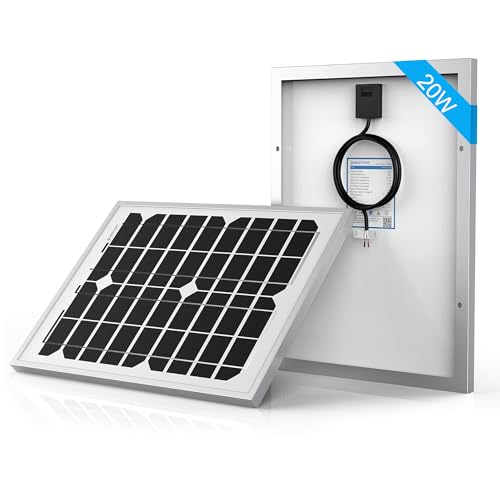
ACOPOWER 20W Mono Solar Panel
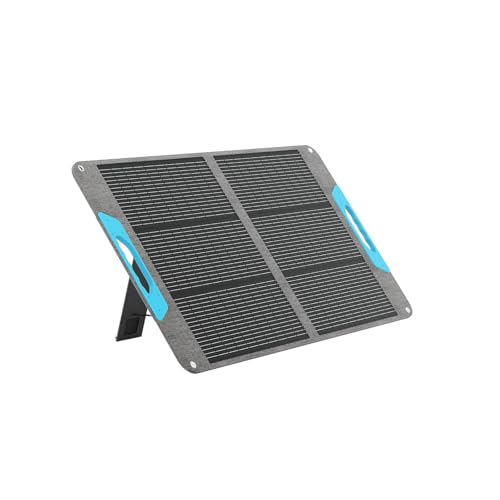
RENOGY REGO 100W Portable Solar Panel

Renogy N-Type 100W Solar Panel 2-Pack
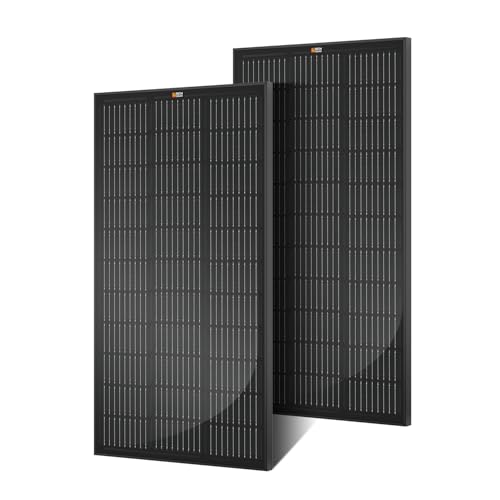
RICH SOLAR Premium 100W Panel 2-Pack

Callsun 200W Bifacial Solar Panel

200W ETFE Foldable Solar Panel

TWELSEAVAN 500W Portable Solar Panel

Traver Force 100W 12V Solar Panel

The Picks, Examined More Closely
The Renogy 100W starter kit is the one you hand a friend who’s building their first camp solar setup. It pairs a single rigid monocrystalline panel (a panel made from a single silicon crystal, which converts more sunlight per square inch than older multi-crystal designs) with a 30A PWM charge controller, the small box that sits between the panel and your battery and regulates voltage so the battery doesn’t overcharge. For weekend cabin trips or a basic RV rig, that combination covers the essentials without forcing you to buy pieces separately.
You mount it once, angle it toward the sun, and forget about it. Compared to the smaller ACOPOWER panel further down this list, this one trades portability for real daily output, which matters when you’re running lights, a fan, and a phone charger at the same time.
A Strong Showing
- Includes a matched PWM controller, so you avoid the guesswork of pairing one separately
- Rigid aluminum frame handles long rooftop mounts and frequent repositioning without flexing
- Around 500Wh of daily output in decent sun, enough for a small fridge or several device charges
- MC4-style connectors (the standard weatherproof plugs used across most camp solar gear) make it simple to add a second panel later
Small Caveats
- Fixed frame means no folding down for transport, so it works best on a permanent spot or RV roof
- Panel arrives without a battery, inverter, or mounting hardware, which you’ll need to source on your own
- Wiring routing into a cabin or van takes some planning to keep clean and weather-safe
Best Suited To
First-time off-grid campers setting up a small cabin, shed, or RV and who want a single panel that just works out of the box.
Skip It When
The Renogy N-Type 2-Pack suits you better if higher daily output and modern cell efficiency matter more than the bundled controller.
Twenty watts sounds tiny until you remember what a backpacker actually needs to charge. The ACOPOWER 20W mono panel is built for that scale: phones, headlamps, a small camera battery, or topping off a portable power station between hikes. Its compact footprint and waterproof housing with a built-in blocking diode (a small internal component that stops battery current from flowing back into the panel at night) make it a tidy match for outdoor use.
It isn’t trying to power a fridge. Think of it as a quiet companion that lives in a side pocket of your pack and earns its space by keeping small electronics alive on long trips. Where the Renogy starter kit demands a permanent spot, this one disappears into your duffel.
The Helpful Details
- Lightweight enough to hang from a tree, backpack, or tent line with basic clips
- Waterproof build handles rain, mist, and the occasional drop into wet grass
- Built-in blocking diode prevents reverse discharge, so you can leave it connected overnight
- Standard 12V output fits common battery chemistries used in camping setups
Where It May Fall Short
- 20W is plenty for phones and lights, but too small for laptops or larger power stations
- Charging speed drops noticeably under tree cover, so site selection matters more than with bigger panels
- No kickstand or framing included, so you’ll rig your own tilt for best sun angle
Made For
Backpackers, paddlers, and minimalist campers who only need to keep small electronics topped up.
Reach For A Different Pick When
The RENOGY REGO 100W foldable panel fits better when you want more output but still want to skip the rigid install.
Foldable panels earned their place in the camp solar world for one reason: no install. The RENOGY REGO 100W folds down into a briefcase-sized bundle, pops open with built-in kickstands, and goes back into the car in under a minute. It’s the sweet spot for campers who move sites every couple of nights or rent an RV without drilling holes.
Compared to the rigid Renogy starter kit, you trade a permanent mount for genuine portability. Compared to the tiny ACOPOWER trickle panel, you get ten times the wattage in a package that still fits behind a seat.
Good Reasons To Consider
- Folds flat for storage and slips behind a car seat or into a storage bin
- Integrated kickstand lets you angle toward the sun without improvising props
- Monocrystalline cells (single-crystal solar cells, the most efficient common type) deliver solid output in tight spaces
- Carrying handle and grommets make it easy to reposition throughout the day
Practical Considerations
- Soft folding design takes more care in storage than a rigid panel to avoid creasing the cells
- Output still depends on full, unshaded sun, so partial shade hurts performance more than with bigger panels
Who Will Love This
Campers and overlanders who move between sites and want real power without bolting anything down.
A Better Fit Elsewhere
The RICH SOLAR 100W panel pair makes more sense if you’re outfitting a permanent rooftop or shed array instead.
Where the basic Renogy starter kit covers a weekend, this two-pack of N-Type cells aims at year-round use. N-Type cells (a newer solar cell architecture that uses negatively doped silicon) lose less efficiency in heat and low light than older P-Type designs, which matters on long summer days and dim winter mornings. The 16BB busbar layout, referring to the thin metal ribbons printed on the cell that collect current, helps push more energy off each panel without enlarging the footprint.
Two rigid 100W panels wired in series or parallel give you serious daily production, enough to handle a small RV fridge and lighting without generator backup.
The Upside
- Higher cell efficiency means more watts per square foot of roof space
- Two-panel kit opens the door to series wiring for higher voltage or parallel for higher current
- Low-light performance helps on cloudy days or in shaded campsites
- Modern cell design reduces the gradual degradation common in older panels
Things To Consider
- Two rigid panels take more roof or ground space than a single 100W unit
- You still need a separate controller and wiring, which aren’t included
- Mounting hardware is sold separately, so factor that into your project plan
The Numbers That Matter
Right Fit For
Full-time RVers and cabin owners who want stronger daily output and longer panel lifespan from a familiar brand.
Where Another Pick Suits Better
The RENOGY REGO foldable fits you better when portability and quick setup matter more than per-panel efficiency.
RICH SOLAR’s two-pack leans into the classic all-black rigid panel aesthetic. The anodized aluminum frame (treated to resist corrosion and wear) and high-transmission glass surface hold up to rooftop installs where they’ll see real weather. For campers outfitting a shed, cabin, or boat, this is the kind of gear you mount and largely forget.
It’s also one of the more approachable ways to step up from a single 100W panel without going to a 200W unit that may not fit your roof layout.
Why It Works Well
- All-black design blends into dark RV roofs and shed mounts without looking industrial
- Two-panel kit gives flexibility for series and parallel wiring to match your controller
- Solid low-light response, useful during early mornings, evenings, and overcast days
- Standard quick-connect cables speed up install and removal
Less-Strong Areas
- Rigid format means no folding down for travel or quick pack-up
- Heavier than foldable options, so roof mounting is the realistic install path
- Charge controller and wiring sold separately
Who Should Grab It
Shoppers building a fixed rooftop or shed array and who prefer a clean, all-black look over flashy branding.
Consider Something Else When
The Callsun 200W bifacial panel makes more sense when you want higher output from a single rigid unit instead of two separate 100W panels.
Bifacial panels collect light from both sides, so they pull extra energy off reflected surfaces like light gravel, snow, or a pale RV roof. The Callsun 200W combines that dual-sided design with N-Type cells and an anti-shade layout that splits the panel into two sub-sections, so partial shade doesn’t kill the whole output.
It’s a step up from the basic Renogy 100W kit, aimed at serious RV, marine, or off-grid home installs where every watt per square foot matters. Expect to plan your wiring layout carefully to take full advantage.
Features That Help
- Bifacial gain can add meaningful output when mounted over light surfaces
- Dual-module parallel design reduces the impact of partial shading
- N-Type 16BB cells deliver high efficiency and slow long-term degradation
- Single 200W panel simplifies roof layout compared to wiring two separate 100W units
Things To Weigh
- Higher cost per panel than basic 100W options
- Needs an MPPT controller (a smarter charge controller that extracts more energy from higher-voltage panels than basic PWM models can) for best results, which adds to the total project
- Heavier than small portable panels, so transport and mounting need forethought
Quick Facts
Perfect Match For
Van lifers, boaters, and off-grid homeowners who want higher daily output and are willing to invest in a proper MPPT setup.
Not Your Match When
The RICH SOLAR 2-Pack fits better when budget or simplicity matters more than maximum efficiency per panel.
Where most foldable panels stop at MC4 output, this 200W ETFE model adds built-in USB ports you can actually use at camp. QC3.0 and a 60W Type-C port mean you can charge a phone, laptop, or camera battery directly from the panel without routing through a power station, which is genuinely useful in tight setups.
The ETFE laminate (a durable fluoropolymer coating that resists UV, heat, and scratching better than standard PET coatings) keeps the cells protected during travel and outdoor use. Compared to the smaller RENOGY REGO 100W, you trade compactness for serious wattage and direct device ports.
Everyday Perks
- Built-in USB-A QC3.0 and 60W Type-C outputs charge devices without a power station
- ETFE laminate resists UV, scratches, and weather better than older PET coatings
- Foldable design with carry handle still fits in a trunk or large storage bin
- MC4 output also feeds traditional power stations and battery banks
Points To Keep In Mind
- Larger folded size than smaller portable panels, so trunk space matters
- Charging speed from USB ports depends on direct sunlight and panel angle
- Heavier than a 100W foldable, which adds up on long walks from the car
Who It Suits Best
Campers and overlanders running a portable power station who also want direct device charging from the same foldable panel.
Look Elsewhere When
The TWELSEAVAN 500W panel makes more sense if you want maximum output and can handle a much larger foldable footprint.
Most camp solar panels aim at phones and small batteries. The TWELSEAVAN 500W aims higher, with enough output to feed a sizeable power station and keep an RV fridge, lights, and small appliances running across multiple days. The HPBC cell architecture (a back-contact cell layout that moves all electrical contacts to the rear of the cell, freeing up the front surface for more light capture) helps keep efficiency strong even when the panel is large.
It’s a big foldable, so plan for real storage space, but the output jump over 100W and 200W options is dramatic. For most campers this is overkill, which is exactly why it earns its spot.
The Practical Payoff
- 500W output covers serious off-grid loads without needing multiple panels
- HPBC cells maintain roughly 10% output in low light, useful at dawn, dusk, and overcast days
- 42V high-voltage design works efficiently with modern power stations and MPPT controllers
- Folds down for transport, unlike a comparable rigid rooftop array
Worth Noting
- Large folded footprint takes meaningful cargo space in smaller vehicles
- Output depends on pairing with a high-voltage capable power station for full benefit
- Higher cost than smaller foldables, so it’s a step worth justifying with real load math
Whose Shelf It Belongs On
Extended-trip RVers, cabin owners, and backup-power households who need one panel that can carry most of the daily load.
Swap It Out When
The TWELSEAVAN 250W panel suits you better when a 500W output is more than your trips actually need.
Traver Force slots into the list as a dependable mid-stream 100W rigid panel. The 10BB cell layout (ten thin conductive ribbons across each cell, slightly more than common 9BB designs) helps squeeze out extra efficiency without changing the size, and the standard 12V output drops into the same wiring setups you’d use with a basic Renogy kit.
It’s a quiet option for boats, cabins, and RV rooftops where the brand pedigree matters less than solid construction and predictable output.
Useful Highlights
- 25% cell efficiency keeps output competitive with newer N-Type designs
- 10BB layout reduces resistive losses, the small amounts of energy lost as heat inside the cell
- Standard 12V output fits common PWM and MPPT controllers without special adapters
- Rigid aluminum frame suits long-term rooftop or pole mounting
Honest Caveats
- No bundled controller, so total project cost includes that add-on
- Rigid form factor rules out quick pack-up camping
- Mounting hardware is sold separately, which is worth noting before checkout
Feature Snapshot
Built With In Mind
Boat, cabin, and RV owners who want a reliable 100W rigid panel with up-to-date cell tech and standard wiring.
Another Choice May Suit
The RICH SOLAR 2-Pack fits better if you want two 100W panels for a larger fixed array at a similar per-panel efficiency.
The 250W TWELSEAVAN sits in the middle of the foldable range, smaller than the 500W beast but stronger than the 100W and 200W options. The HPBC cell tech keeps efficiency at 25.8% with strong low-light output, so you can still pull useful power at dawn, dusk, or under thin cloud cover. The IP68 rating (a standard that rates dust-tight construction and protection against continuous water immersion) suggests it can handle real rain and seaside mist without drama.
It’s the upgrade pick for campers who’ve run out of headroom on a 100W foldable but don’t need the bulk of a 500W unit.
Strong Points
- HPBC cells with 25.8% efficiency rival many rigid panels in a foldable format
- IP68 rating handles heavy rain and damp coastal environments
- ETFE surface laminate resists scratches and UV wear over time
- Mid-size output fits common RV power stations without oversizing the whole setup
Soft Spots
- Heavier and bulkier than smaller foldables, so vehicle cargo space matters
- Best paired with a power station that accepts the panel’s voltage range
Key Product Details
The Right Fit
Campers and RV owners who’ve outgrown a 100W portable and want more headroom without committing to a 500W panel.
Not Your Match When
The 200W ETFE foldable fits better if built-in USB ports matter more than raw wattage in your setup.
Matching Panels to Your Camping Style
Picking the right camp solar panel starts with honest questions about how you actually camp. A backpacker hauling 30 pounds of gear into the Sierra has very different needs from a full-timer living in a Class A motorhome, and the right wattage, format, and wiring depend entirely on that picture.
Wattage sets the ceiling. A 20W panel keeps phones and headlamps alive on a long weekend, 100W covers modest RV loads and small power stations, and 200W to 500W opens the door to fridges, fans, and lights without a generator. Match the wattage to your realistic daily energy use rather than the highest number you can fit on the roof.
Form factor decides how the panel lives with you. Rigid aluminum-framed panels like the Renogy kit, the RICH SOLAR pair, and the Traver Force model mount once and stay put, which is perfect for fixed RV rooftops and cabins. Foldable panels such as the RENOGY REGO, the 200W ETFE, and the TWELSEAVAN 250W and 500W models travel with you and pack down between trips. Tiny mono panels like the ACOPOWER 20W fit in a backpack and top off small batteries.
Cell type affects real-world output. Monocrystalline cells are the standard, but newer N-Type and HPBC designs push higher efficiency and slower degradation, which matters if you plan to leave panels in the sun for years. Look at the conversion rate, which describes how much sunlight the panel turns into usable electricity, as a quick comparison point: 22% is solid, 24% to 25% is strong, and anything above that is at the top of the current pack.
Wiring and controller choices quietly decide whether your setup actually works. A PWM charge controller is fine for small 12V systems and single 100W panels. An MPPT controller (Maximum Power Point Tracking, a smarter type that adjusts to find the panel’s most productive voltage) extracts more energy from higher-voltage panels and is worth the upgrade on larger arrays. Plan for connectors (MC4 is the most common), fuse protection, and proper gauge wire for the distance between panel and battery.
Finally, think about where you camp. Coastal, humid, and high-UV environments reward ETFE-laminated surfaces and IP65 or IP68 ratings. Snow country benefits from bifacial gain on light-reflective ground. Deep tree cover cuts output dramatically, so panel placement and tilt matter as much as the panel itself.
Key Considerations Across These Picks
Common Shopping Slip Ups
The most frequent mistake is buying a panel before matching it to a battery and controller. A 200W panel with no charge regulation will cook a 12V battery fast, and undersized wiring turns into voltage drop that wastes the energy you worked to capture. Check the system, not just the panel.
Another trap is picking wattage based on the rating rather than your real-world sun hours. A 200W panel rated under lab conditions may only deliver 70% to 80% of that in a shaded valley or on a winter morning. For most campers, a slightly larger panel than you think you need is the safer move.
What The Higher Tier Buys
Stepping up to N-Type, bifacial, or HPBC cells costs more, but the trade shows up in three places: higher daily yield per square foot, stronger low-light output, and slower long-term degradation. For a fixed rooftop array that will sit in the sun for years, that long-term math often justifies the premium.
The jump from PWM to MPPT controllers follows the same pattern. A small single-panel system is fine with PWM, but any serious array pays back the controller upgrade quickly in extra daily energy. Higher tier is less about flashy features and more about getting closer to the panel’s actual output potential.
Frequently Asked Questions
How many watts of camp solar do I really need?
Figure out the watt-hours your devices draw per day, then divide by your expected peak sun hours, usually 4 to 6 in most U.S. camping regions. A weekend phone-and-laptop user often lands around 100W, while an RV fridge and lights setup typically wants 200W to 400W.
Rigid or foldable panel for camping?
Rigid panels win for fixed rooftops and cabins where they’ll stay put, while foldable panels suit campers who move sites, rent vehicles, or don’t want to drill mounting holes. If you drive and stay, rigid is usually simpler; if you move around a lot, foldable is easier to live with.
Do I need an MPPT controller for camp solar?
Small single-panel 12V setups work fine with a basic PWM controller, which is cheaper and simpler. Once you add higher-voltage panels, wire two or more together, or want maximum daily yield, an MPPT controller pays for itself in extra energy capture.
Can rain damage a portable solar panel?
Most panels rated IP65 or higher handle rain fine, but saltwater spray, abrasive grit, and sharp impacts shorten panel life over time. Rinsing with fresh water after coastal or dusty trips and storing foldables flat helps them last.
How long do camp solar panels typically last?
Quality monocrystalline panels commonly deliver strong output for well over a decade of regular use, with gradual efficiency loss around 0.5% to 1% per year. N-Type and HPBC designs tend to degrade more slowly, which matters for permanent installs.
The Takeaway
The right camp solar panel depends less on which model tops a list and more on how you actually use it. Backpackers, weekend campers, RV owners, and cabin dwellers each live in a different power reality, so start with your watt budget and your format, then let the panel choices narrow themselves. A well-matched setup quietly disappears into the trip, and that’s the whole point.