
A good night’s sleep outdoors depends less on the tent and more on what sits between you and the ground. Whether you’re a thru-hiker counting every ounce or a car camper spreading out a full-size foam mattress, the right camp sleeping pad transforms cold, rocky ground into something that actually feels like rest. This list rounds up nine pads covering fast-and-light missions, family basecamps, and everything between.
A Fast Comparison Of The Options

Exped Ultra Ultralight Inflatable Backpacking Sleeping Pad

Self Inflating Sleeping Pad with Electric Pump, 4in Foam Mat

INVOKER Camping Sleeping Pad, Self-Inflating, Green
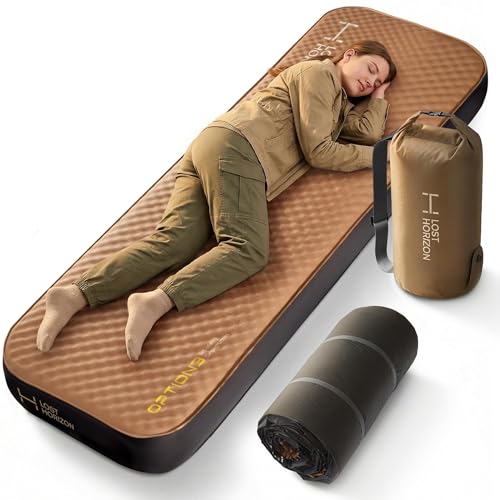
Lost Horizon Option3 Self-Inflating Foam Mattress, Cot, 4.5in

INVOKER Camping Sleeping Pad, Connectable Sides, Blue

INVOKER Camping Sleeping Pad, Connectable Sides, Green

Lost Horizon Option3 Self-Inflating Foam Mattress, Slim Single, 3in

Lost Horizon Option3 Self-Inflating Foam Mattress, Queen, 4.5in

Lost Horizon Option3 Self-Inflating Foam Mattress, Full, 4.5in
A Closer Look At Each Pick
The Exped Ultra targets hikers who count grams the way other people count dollars. At under a pound, it earns its slot in summer packs where every ounce compounds over a long traverse. Air-insulated chambers run head-to-toe, delivering about three inches of cushion that keeps hips and shoulders off jagged granite or root-covered forest floor.
Unlike the foam-heavy options further down this list, this pad compresses to roughly the size of a water bottle. Bikepackers and thru-hikers on the Pacific Crest or Appalachian trails appreciate how little space it eats in a frameless pack. For shoulder-season trips with cold nights, though, you may find its modest thickness and summer-tuned insulation underwhelming.
Where It Excels
- Sub-one-pound carry weight suits long-distance trekkers
- Compact stuff size fits bikepacking bags and fastpacking setups
- Head-to-toe air chambers create a stable, quiet sleep surface
- Three-inch loft handles side-sleepers on most terrain
Things To Consider
- Air-only construction is more puncture-sensitive than foam-air hybrids
- Field repairs require carrying patch materials
- Less insulation than thicker self-inflating models for cold nights
Key Specs
Made For
Summer backpackers, thru-hikers, and bikepackers prioritizing low weight over plush cushioning.
Consider Something Else When
The INVOKER Connectable Sides Blue pad suits campers who want a thicker, foam-backed surface and the option to link multiple pads together.
The LLUAII pad brings power-tool convenience to bedtime. A built-in electric pump inflates the mattress in roughly a minute at the push of a button, then deflates just as quickly. Foam fill combined with four inches of loft creates a surface that feels closer to a guest-room mattress than a backcountry pad.
Where the Exped Ultra demands lung power, this unit handles setup with a rechargeable pump. Car campers, overlanders, and festival-goers who never carry more than a few steps from the vehicle benefit most. One honest caveat: the integrated pump adds bulk and weight, making this a poor choice for trail use where every ounce matters.
What Works In Its Favor
- Push-button inflation saves effort at the end of a long drive or hike
- Four-inch foam fill delivers true cushioning for side and back sleepers
- Built-in pillow section reduces the gear list
- Multi-use versatility for tents, truck beds, and guest setups at home
Room For Improvement
- Pump electronics add weight that backpackers won’t tolerate
- Requires a charged battery for setup, with no manual backup listed
- Larger packed size compared to ultralight inflatables
Right Fit For
Car campers, SUV sleepers, and families who want plush comfort without hand-pumping.
Look Elsewhere When
The Lost Horizon Option3 Queen pad suits campers wanting a wider sleep surface without electric pump dependency.
The original INVOKER pad keeps setup simple. Crack the dual valve, the open-cell foam core draws air in on its own, and you’re set within minutes. The 30D knit outer fabric paired with a TPU waterproof layer handles damp ground better than bare-foam pads, and the green color blends into wooded sites.
For weekend campers at established sites, this pad covers the basics without fuss. Compared to the LLUAII’s electric-pump convenience, you trade inflation tech for a lighter, simpler package. The three-inch loft suits average-weight sleepers, but heavier users or restless side-sleepers may find it thinner than the Lost Horizon options below.
Notable Gains
- Open-valve self-inflation means no pump to forget or charge
- Knit-faced TPU shell resists ground dampness better than nylon-only pads
- Lightweight foam construction stays manageable on short carries
Some Limits To Know
- Three-inch thickness compresses more under heavier sleepers
- Self-inflation rarely fills the pad completely, so a few breaths are still needed
- Knit face can snag on rough ground over time
Quick Facts
Best Suited To
Weekend tent campers and casual backpackers who want simple setup without electric pump bulk.
Swap It Out When
The INVOKER Connectable Sides Blue pad fits campers planning to link two pads into a wider sleeping platform.
Lost Horizon’s Cot version targets campers who already sleep on a raised cot frame and need a thick foam topper to soften the bars. At 4.5 inches with a hefty foam core, it absorbs the rigid feel of cot hardware without sacrificing the off-ground height. The shape and dimensions match standard cot footprints.
Campers using traditional ground tents get better value from the Queen or Full versions below. This cot-specific model only earns its keep when paired with a compatible cot frame. The foam filling is dense enough to feel supportive but heavy enough to keep this firmly in car-camping territory.
Positive Points
- 4.5-inch foam depth softens any cot’s pressure points
- Self-inflating core eliminates manual pumping
- Higher weight capacity suits broader sleepers
Trade Offs
- Specialized cot shape limits tent versatility
- Foam density adds pack weight unsuitable for backpacking
- Larger stored size compared to thinner foam pads
Who It Suits Best
Overlanders and car campers who already own cot frames and want a cushioned topper.
A Better Fit Elsewhere
The Lost Horizon Option3 Full pad works better for ground-tent campers needing a wider sleep surface.
The INVOKER Connectable Sides pad solves the classic two-person problem: two narrow pads that drift apart overnight. Horizontal air chambers contour to your body for stable cushioning, while a built-in foot pump inflates the pad without mouth-blowing. Snap two together and you get a unified queen-sized surface.
The built-in pillow adds neck support without dragging a separate pillow into camp. The 40D nylon shell with TPU coating resists moisture and abrasion better than the entry-level INVOKER above. One small tradeoff: the foot pump works, but you may find yourself working up a sweat inflating two linked pads back-to-back.
Notable Upsides
- Side-snap system links two pads into a single bed
- Built-in foot pump eliminates mouth inflation
- Integrated pillow reduces total pack items
- 40D nylon with TPU handles rougher ground use
Points To Keep In Mind
- Foot-pumping two pads takes a few minutes of effort
- Linking snaps can wear over many seasons
- Heavier than non-connectable foam pads at similar thickness
Feature Snapshot
Who Should Grab It
Couples and camping partners who want a unified sleeping surface without buying a dedicated double pad.
Where A Sibling Pick Shines
The Lost Horizon Option3 Queen pad suits campers wanting a single, integrated wide pad rather than two linked singles.
Functionally identical to the blue version above, the green INVOKER Connectable Sides pad offers the same 75-by-24-inch footprint, 4-inch air-chamber construction, built-in foot pump, and snap-together edges. The color difference matters when matching tent aesthetics or coordinating gear across multiple pads at a busy campsite.
All the strengths and cautions from the blue model apply equally here. The horizontal air chambers, integrated pillow, and 40D TPU-coated nylon perform the same regardless of shell color. Pick this version when green suits your setup better than blue, or when stocking a rental fleet where color variety helps guests identify their own gear.
What It Does Well
- Same modular snap system for flexible paired setups
- Foot-pump inflation simplifies end-of-day setup
- Color-coded option helps organize multi-pad campsites
Worth Noting
- No functional difference from the blue sibling aside from color
- Inflating two pads still requires several minutes of foot work
Perfect Match For
Campers coordinating gear across multiple tents or families wanting easy pad identification at busy sites.
Reach For A Different Pick When
The Lost Horizon Option3 Slim Single pad works better for solo campers in compact tents or vehicle interiors.
When a standard 75-inch pad won’t fit, the Slim Single fills the gap. At roughly 62 by 26 inches and 3 inches thick, it slides into vehicle cargo areas, rooftop tents, and tight one-person shelters where longer pads leave wasted space. The self-inflating foam core keeps setup trivial at the end of a road-trip day.
Taller sleepers over six feet may find the shorter length awkward, leaving shoulders or feet hanging off the edge. For average-height adults in compact setups, the dimensions work well. Compared to the wider Queen and Full options elsewhere on this list, the tradeoff is a smaller sleep surface in exchange for vehicle-friendly storage.
Useful Strengths
- Compact footprint suits SUVs, vans, and rooftop tents
- Self-inflating foam handles setup without pumps or breath
- Three-inch profile balances thickness and packability
A Few Limitations
- Shorter length doesn’t fit taller sleepers comfortably
- 26-inch width feels narrow for restless movers
- Less cushion than thicker 4.5-inch sibling pads
Whose Shelf It Belongs On
Overlanders and solo travelers with compact sleeping setups who need a pad sized to a small footprint.
Not Your Match When
The Lost Horizon Option3 Queen pad suits campers prioritizing sleep surface width over storage size.
The Queen version of the Lost Horizon Option3 delivers wide-format comfort for two. At 4.5 inches thick with a generous foam fill, it spreads weight evenly so two sleepers don’t roll toward the middle. The internal structure distributes air and foam uniformly, reducing pressure points during long nights.
Setup still requires rolling the pad out and letting the foam core pull air in, though a few breaths finish the job. The Queen profile assumes a large tent footprint, so smaller shelters won’t accommodate the width. Compared to linking two Connectable Sides pads, this integrated single piece avoids the seam-down-the-middle problem couples often encounter.
The Case For It
- One-piece queen surface eliminates the gap of linked singles
- 4.5-inch foam absorbs pressure points under both sleepers
- Higher weight capacity handles two adults comfortably
Honest Caveats
- Significant bulk and weight rule out backcountry use
- Requires a tent sized for queen-width sleepers
- Self-inflation still needs supplemental breaths to fully firm
Who Will Love This
Glampers and basecamp campers pairing the pad with a large family or outfitter-style tent.
Skip It When
The INVOKER Camping Pad with Electric Pump fits solo car campers who value inflation speed over queen-size width.
The Full version rounds out the Lost Horizon lineup for campers who want a wide single sleeper surface rather than queen-sized duo capacity. The 4.5-inch foam fill matches the Queen in thickness, with internal structure distributing pressure evenly across the pad. Solo sleepers who toss and turn get the freedom of elbow room without the bulk of a two-person mat.
Compared to the Queen pad above, the Full trades a few inches of width for a slightly lighter foam payload, making it easier to handle at camp. Pet households especially benefit, since dogs and kids tend to migrate into the sleep zone overnight, and a wider single pad absorbs the extra bodies without anyone getting squeezed off.
What Stands Out
- Wide single-person surface suits restless sleepers
- 4.5-inch loft cushions a child or pet joining the sleep zone
- Self-inflating foam core simplifies setup for tired parents
Factors To Consider
- Still too bulky for backcountry transport
- Requires a full-size tent footprint for proper fit
- Foam fill adds more weight than air-only options
Built With In Mind
Families and pet owners with large tents who want one wide sleep surface for the whole crew.
Where Another Pick Suits Better
The Exped Ultra Ultralight pad works for backpackers who need to carry their sleep system, where this pad would be impractical.
What To Weigh Before Choosing Your Camp Sleeping Pad
Match The Pad To Your Carrying Style
Backpackers carrying a pack for days need to weigh every gram. Inflatable air pads like the Exped Ultra cut weight dramatically, while foam-filled self-inflating models add pounds you feel by mile three. Car campers and overlanders don’t face that tradeoff, so prioritizing comfort and thickness over weight makes sense. The R-value, which measures insulation from cold ground, matters more for shoulder-season trips than for summer-only missions.
Think About Sleep Surface And Thickness
Side sleepers generally need at least three inches of loft to keep hips and shoulders from bottoming out on hard ground. Back sleepers can manage with less. Couples should consider either a wide integrated pad or a connectable system, since two separate pads tend to drift apart mid-night. For restless sleepers or family setups, full and queen sizes absorb movement better than narrow single pads.
Consider Setup, Storage, And Long-Term Care
Self-inflating pads with foam fills handle setup with almost no effort but pack larger than air-only designs. Electric pumps trade carrying bulk for push-button convenience. Field repairs matter more for inflatables than foam pads, so carrying patch materials is wise on long trips. Storage also affects lifespan: leaving foam pads compressed for months can damage the foam cell structure, so storing them loose or partially inflated extends their life.
Key Considerations Across These Picks
Pitfalls Shoppers Hit
Choosing a pad based on packed size alone often backfires. A tiny packed dimension might mean an ultralight air pad with minimal insulation, which works fine in July but leaves you shivering in October. Similarly, picking the thickest pad on the list without checking tent dimensions leads to a mattress that crowds the shelter. Always cross-reference pad length and width against your tent floor before committing.
Where The Extra Money Goes
Premium camp sleeping pads invest in denser foam, tougher shell fabrics, and higher R-values for cold-weather insulation. A 4.5-inch foam pad costs more than a 3-inch basic because the foam fill alone adds material weight and manufacturing complexity. Higher weight capacities and integrated pumps also add cost. For weekend summer camping, a mid-tier pad often delivers everything needed without paying for winter-grade insulation or queen-size width.
Frequently Asked Questions
What R-value do I need for camp sleeping pads?
For summer camping above 50°F nights, an R-value around 1 to 3 keeps most sleepers comfortable. Shoulder-season trips dropping into the 30s and 40s benefit from R-values of 4 or higher. Winter or snow camping usually demands 5 or above to prevent conductive heat loss into frozen ground.
Are self-inflating pads worth the bulk?
Self-inflating pads trade pack size for convenience and durability. The foam core inflates on its own when you open the valve, then you add a few breaths to top it off. Foam also insulates better than air-only pads, making them useful for cold nights, though they pack larger than pure inflatables.
Can I use a camp sleeping pad indoors?
Yes, many campers use these pads as guest beds, kid sleepover mats, or floor cushions for yoga. Foam-filled models work especially well since they don’t require careful pressure management. Just confirm the pad fits your intended space before committing to a queen or full size.
How do I clean a camp sleeping pad?
Wipe down the shell with a damp cloth and mild soap after each trip. For deeper cleaning, inflate the pad fully and sponge the surface. Avoid harsh detergents or machine washing, which damages TPU coatings. Always dry the pad fully before storage to prevent mildew on foam cores.
How long do camp sleeping pads typically last?
With reasonable care, foam-air hybrid pads often last five to ten seasons of regular use. Pure inflatable pads may need patching along the way but the shells hold up. Storage matters more than trip count: pads stored compressed long-term lose foam resilience faster than pads stored loosely.
Final Verdict
The right camp sleeping pad depends entirely on how you travel. Ultralight backpackers chasing sub-one-pound carry weight will land on the Exped Ultra without hesitation. Car campers prioritizing plush comfort should look at the LLUAII electric-pump pad or the Lost Horizon Queen. Families and couples will appreciate the wider Lost Horizon Full or the connectable INVOKER pads. Whatever your style, there’s a pad on this list that turns restless nights outdoors into actual sleep.