
Camping season rolls around fast, and nothing ruins a trip faster than a cold, restless night in the wrong bag. Choosing between ultralight backpacking picks, family-friendly rectangles, and toddler sleep sacks means thinking hard about temperature, fit, and how you’ll actually use the gear. This roundup covers seven camp sleeping bags and accessories built for real-world outdoor and indoor use, from alpine treks to nursery naps.
How The Shortlist Stacks Up

deuter Exosphere -10° SL Synthetic Sleeping Bag

Copper Pearl Baby Sleep Sack River 18-24 Months
ALPS OutdoorZ Redwood -25 Sleeping Bag

Stephen Joseph Toddler Nap Mat Camo
OmniCore Designs 110L Poly Mesh Storage Sack

PTEROMY Lightweight Machine Washable Sleeping Bag

Carinthia Defence 1 Sleeping Bag
A Breakdown Of The Leading Choices
The deuter Exosphere -10° SL is built for women who push into shoulder-season conditions and don’t want to compromise on warmth for weight. Its SL designation (Slim Line) means a shorter cut, around 175 cm of effective length, so a 5’9″ hiker isn’t dragging empty space that pulls heat away from the torso.
Compared to a standard unisex mummy, this bag adds targeted fleece at the kidneys and feet, where women tend to feel cold first. The 25% stretch panel lets you roll onto your side or pull your knees up without fighting the shell, which matters on restless nights in a tent wall.
What Makes Sense
- Women’s-specific fit keeps insulation closer to the body for better thermal efficiency.
- Synthetic fill performs reliably in damp conditions and dries faster than down.
- Stretch panels add freedom for side sleeping and shifting positions.
- Targeted fleece warm zones at the kidneys and feet address typical cold spots.
- A -10°C comfort rating handles alpine spring trips and shoulder-season backpacking.
Points To Note
- Synthetic insulation adds bulk and weight versus a comparable down bag.
- The SL cut tops out around 175 cm, so taller hikers should look at the regular version.
- Synthetic fill has a shorter lifespan than premium down with heavy compression cycles.
Key Product Details
Best Suited To
Women backpackers heading into cold, damp shoulder-season trips who want a tailored fit and synthetic reliability without going full expedition-weight.
Consider Something Else When
If your priority is extreme cold-weather base camping, the ALPS OutdoorZ Redwood -25 offers a much heavier rectangular bag built for frigid nights in a fixed camp.
The Copper Pearl Sleep Sack sits in a different lane from the outdoor picks on this list, and that’s the point. For parents who want a safer alternative to loose blankets, this wearable blanket uses three layers of knit fabric with a plush fill, mimicking the feel of the brand’s original swaddle blankets.
At 18 to 24 months, toddlers tend to kick off traditional covers mid-cycle. The sleeveless design keeps arms free for self-soothing while the sack stays put around the torso, and multiple TOG ratings (a TOG is a thermal resistance measure; higher numbers mean warmer fabric) let you adjust warmth by season.
Features That Help
- Three-layer knit construction feels familiar to babies already used to Copper Pearl swaddles.
- Sleeveless cut supports safe arm movement and natural temperature regulation.
- Available in multiple TOG ratings for year-round nursery use.
- Stretchy knit gives room to grow without restricting leg movement.
Honest Caveats
- Knit fabric may snag on Velcro or rough crib corners over time.
- Sizing runs narrow, so a tall toddler may outgrow the 24-month size early.
- Not a true camping bag; the knit build isn’t suited to outdoor overnight use.
Right Fit For
Parents of 18 to 24-month-olds transitioning out of swaddling who want a breathable, easy-to-layer sleep sack for nursery or travel cribs.
Where Another Pick Suits Better
For daycare naps away from home, the Stephen Joseph Toddler Nap Mat bundles blanket and pillow into one carry-handled piece, which older kids often prefer.
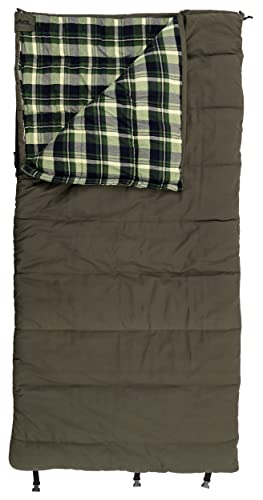
The ALPS OutdoorZ Redwood -25 is what you grab when the forecast says single digits and you’re staying put at a base camp. Where the Exosphere leans lightweight and tailored, this oversized rectangle bag gives you room to sprawl, stash gear inside, or share space with a dog.
Techloft insulation uses hollow micro-denier fibers with a siliconized finish, which is a fancy way of saying the fill traps more warm air per ounce and resists moisture. The rectangular shape sacrifices pack size for comfort, so this lives best in a car-camping or cabin scenario, not a multi-day backpacking haul.
A Few Highlights
- -25°F rating handles serious cold without supplemental blankets.
- Roomy rectangular cut suits restless sleepers and gear-sharing setups.
- Siliconized Techloft fill balances loft and compactness better than basic synthetic.
- Heavy-duty build stands up to repeated base-camp use and rough handling.
Where It May Fall Short
- Bulky packed size makes it impractical for backpacking trips with limited pack space.
- Heavy when carried long distances, so it’s better suited to vehicle-based camping.
- Rectangular shape runs cooler than a snug mummy in extreme wind conditions.
Feature Snapshot
Made For
Car campers, hunters, and winter base-campers who need deep cold-weather performance and don’t mind hauling extra weight from the truck to the tent.
Swap It Out When
Carrying your sleep system on your back for miles, the Carinthia Defence 1 packs down to a fraction of the size while keeping core warmth for military-style use.
Preschool teachers and daycare providers know the drill: every kid needs a designated sleep setup that’s easy to identify and easy to carry. The Stephen Joseph Nap Mat folds blanket, pillow, and mat into one connected piece with hook-and-loop straps, so a three-year-old can haul their own gear down the hall.
Unlike the Copper Pearl Sleep Sack, which stays behind in the crib, this rolls up into a self-contained bundle. The removable pillow means you can wash the cover separately, and the bold camo print keeps things fun while staying gender-neutral for shared classroom use.
Points In Its Favor
- All-in-one design eliminates lost blankets and forgotten pillows.
- Hook-and-loop straps let small hands carry it independently.
- Removable pillow simplifies cleaning of the most-worn component.
- Large front pocket holds small comfort items or a stuffed animal.
- Polyester build wipes clean after spills or daycare messes.
Small Caveats
- Thinner padding than a full camp sleeping bag, so comfort varies by floor surface.
- All-over prints may show wear faster on high-contact areas.
- Designed for indoor classroom naps, not outdoor overnight use.
Who It Suits Best
Parents of preschool and early-elementary kids who need a self-contained nap system for daycare, travel, or grandparent sleepovers.
A Better Fit Elsewhere
Younger infants and toddlers still using wearable blankets overnight do better with the Copper Pearl Sleep Sack, which stays on in the crib.
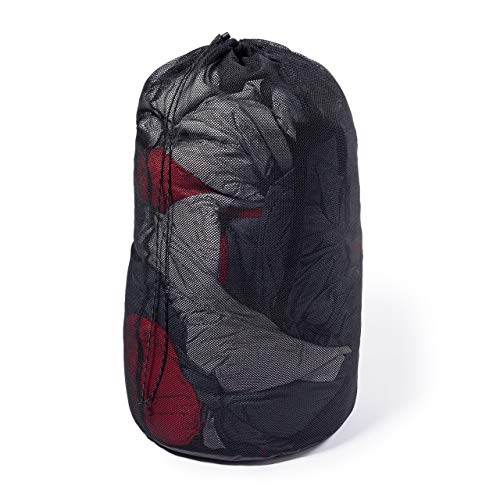
Here’s the thing most campers learn the hard way: stuffing a sleeping bag back into its compression sack for long-term storage kills loft and shortens insulation life. The OmniCore Designs 110L Mesh Sack solves that by giving down and synthetic fills room to breathe between trips.
At 110 liters, it swallows oversized bags like the ALPS Redwood, plus comforters, duvets, and dorm bedding. Owners commonly use it for laundry, sports ball storage, and garage overflow, so it earns its keep year-round rather than sitting empty nine months at a time.
The Good Stuff
- Breathable mesh prevents insulation compression that degrades loft over time.
- 110L capacity fits oversized rectangular bags and household bedding alike.
- Drawcord with cordlock secures the load without snagging gear.
- Multi-purpose design works for laundry, sports balls, and dorm organization.
Worth Noting
- Mesh offers no dust or moisture protection in damp garages or basements.
- Not a transport sack; it lacks compression straps for backpack carry.
- Larger capacity takes up considerable closet or storage room space.
Who Should Grab It
Campers and households storing seasonal bedding, oversized comforters, or dorm gear who want to extend insulation lifespan between uses.
Look Elsewhere When
You need a bag you can compress and carry on a backcountry trip, where a standard stuff sack or the PTEROMY’s included carry pouch fits the bill.
The PTEROMY Sleeping Bag covers the sweet spot most casual campers actually need: three-season comfort from roughly 50°F to 80°F. Unlike the Exosphere, which targets alpine cold, this stays light, packable, and forgiving enough to toss in the washer after a dusty festival weekend.
At 7 feet 2 inches long and 2 feet 7.5 inches wide, the rectangular cut accommodates tall adults up to 6’7″ without the cramped feeling of a mummy. Double S-shaped stitching helps keep fill evenly distributed, and the water-resistant outer shell shrugs off light condensation and morning dew.
A Few Strong Suits
- Machine washable construction simplifies post-trip cleaning.
- Water-resistant shell handles dew and light moisture without soaking through.
- Rectangular cut fits tall sleepers up to 6’7″ comfortably.
- Three-season comfort range covers most spring through fall camping.
- Lightweight design suits backpackers and festival-goers alike.
Possible Compromises
- Not built for sub-40°F overnight temperatures without supplemental insulation.
- Rectangular shape runs cooler than a fitted mummy in windy conditions.
- Lightweight shell may feel less durable under heavy abrasion or rough terrain.
Quick Facts
Whose Shelf It Belongs On
Casual backpackers, festival campers, and car-campers who want an easy-care three-season bag without specialized temperature ratings.
Another Choice May Suit
For sub-freezing trips where weight matters, the Carinthia Defence 1 packs smaller and warmer, trading machine-wash convenience for true cold-weather performance.
The Carinthia Defence 1 borrows from military sleep systems, where small pack size and proven reliability matter more than plush comfort. G-LOFT insulation is a polyester fiber engineered to mimic down’s loft while retaining warmth in damp conditions, a key trait when you can’t control where you sleep.
Unlike the roomy PTEROMY, this mummy hugs the body with a differential cut that lets the outer shell drape loosely over the inner fill, maximizing loft and comfort in a tight package. The two-way center zipper lets you vent from the feet or top without fully opening the bag.
The Upside
- Extremely compact pack size frees up pack space for other essentials.
- G-LOFT insulation retains warmth even when exposed to moisture.
- Mummy shape with differential cut maximizes heat retention efficiency.
- Two-way zipper enables foot venting and fine-tuned temperature control.
- Military-proven construction handles repeated field use.
Factors To Consider
- Snug mummy cut feels restrictive for side sleepers and restless movers.
- Specialty build carries a premium over casual car-camping bags.
- Lightweight single-layer design isn’t suited to extreme winter cold.
Core Details
Built With In Mind
Backpackers, tactical users, and minimalists who want proven military-style warmth in a tiny pack footprint for shoulder-season trips.
Reach For A Different Pick When
Sleeping warm-blooded in mild weather with room to stretch, the PTEROMY’s rectangular cut and machine-washable shell suit casual car camping more naturally.
What Matters Most When Choosing Camp Sleeping Bags
Temperature Rating Versus Real Conditions
Manufacturers list comfort, limit, and extreme ratings (the lowest temps at which an average sleeper stays warm, a warm sleeper survives, and survival is barely possible). For most campers, the comfort rating is the number to trust, since shivering at 2 a.m. ends trips fast. Match the bag’s rating to your lowest expected overnight temperature, then add a small buffer for unexpected cold snaps.
Fill Type And Care Trade-Offs
Down insulation packs smaller and lasts longer when properly stored, yet loses loft when wet. Synthetic fills handle dampness better and cost less, though they weigh more per unit of warmth. G-LOFT and Techloft blends aim to combine both advantages, with higher price tags reflecting the engineering.
Shape And Fit Choices
Mummy bags save weight and trap heat but feel restrictive. Rectangular bags sprawl comfortably and fit restless sleepers, at the cost of thermal efficiency and pack size. Women’s-specific cuts (SL) trim length and add insulation where cold typically strikes first, while toddler nap mats prioritize soft, machine-washable fabrics over thermal performance.
Key Considerations Across These Picks
Wrong Turns To Avoid
Treating the temperature rating as gospel leads to cold nights, since ratings assume ideal conditions and a warm sleeper. Buyers often pick mummy bags without considering shoulder and hip room, then wake up sore from restricted movement. Skipping a storage sack compresses insulation long-term and quietly reduces loft before the next season even starts.
Where The Extra Money Goes
Premium camp sleeping bags cost more because of engineered fills like G-LOFT, differential-cut shells that preserve loft, and women’s or tactical patterning refined over years. The upgrade buys smaller pack size, better moisture handling, and longer insulation lifespan, which matters most for serious backpackers and multi-season use.
Frequently Asked Questions
What temperature rating should I pick for summer camping?
A comfort rating around 50°F handles most summer nights in temperate regions, with a 40°F-rated bag offering safety margin for surprise cold fronts at elevation.
Can synthetic sleeping bags keep you warm when wet?
Synthetic insulation retains more warmth than down when damp and dries faster on a line, making it a smart pick for humid climates or trips where keeping the bag dry is tough.
How do I store a sleeping bag long-term?
Store it uncompressed in a breathable mesh sack like the OmniCore 110L, since constant compression breaks down insulation loft and shortens the bag’s useful life.
Are wearable blankets safe for toddlers?
Sleep sacks replace loose blankets and stay on through the night, reducing rebreathing risk, and pediatric sleep guidance generally recommends them once a baby outgrows swaddling.
What is a TOG rating?
TOG (Thermal Overall Grade) measures fabric warmth; higher numbers mean warmer material, with summer ratings around 0.5 and winter ratings reaching 2.5 or higher.
The Takeaway
The right camp sleeping bag depends entirely on where you sleep and how you get there. Alpine backpackers benefit from tailored mummy cuts, base campers want heavy-duty warmth, parents need breathable sleep sacks or all-in-one nap mats, and every bag lasts longer with breathable storage between trips. Match the bag to your climate, fit, and care habits, and you’ll sleep well for seasons to come.