
A flat patch of dirt can ruin an otherwise great night outdoors, and the pad you unroll has everything to do with how rested you feel the next morning. Camp pads vary wildly in thickness, warmth, weight, and how they pack down, which matters whether you carry one into the backcountry or just toss it in the car for a state park. The lineup below pulls together self-inflating foam mats, ultralight inflatable pads, and a few solid foam classics that have earned their reputation over decades. Pick the one that matches your typical trip, your temperature range, and how much pack space you can spare.
A Closer Look At The Lineup

Sea to Summit Camp Plus SI Tapered Regular

Sea to Summit Camp Plus SI Tapered Large
Sea to Summit Camp Plus SI Rectangular Large
Releep 3-Inch Memory Foam Camping Mattress
Therm-a-Rest Z Lite Original Sleeping Pad

MalloMe Sleeping Bag for Adults and Kids

Therm-a-Rest Z Seat Insulated Cushion

Sea to Summit Camp Plus SI Rectangular Regular

MalloMe Sleeping Pad With Foot Pump
What Each Pick Brings To The Table
The Tapered Regular sits in the sweet spot for backpackers who want a self-inflating mat that actually feels like a bed. Its 2.6-inch foam core delivers noticeable loft off the ground, and the tapered shape trims a bit of pack weight without cramping a side-sleeper too badly.
Worth considering for shoulder-season trips where the overnight temperatures swing fast. The foam’s 4.3 R-value (a standardized measure of insulation from the ground; higher numbers mean more warmth) handles cold soil well, so late-frost campers won’t lose sleep to conduction chill.
Strong Points
- 2.6-inch foam creates real cushioning over roots and rocks
- Self-inflating design cuts setup time after a long day on the trail
- Tapered geometry shaves pack volume versus a full rectangle
- Higher R-value than typical summer pads, useful below freezing
Trade Offs
- Heavier than an air-only pad, which matters on long thru-hikes
- Tapered shape leaves feet near the edge for active sleepers
- Larger packed size than ultralight inflatables
Best Suited To
Backpackers running three-season routes who want comfort without hauling an inflatable.
Look Elsewhere When
Thru-hikers counting every ounce should consider the Therm-a-Rest Z Lite Original Sleeping Pad instead.
Think of the Tapered Large as the Tapered Regular’s older sibling, stretched out for taller frames and broad shoulders. The same self-inflating foam and 4.3 R-value show up here, just with more length and width to actually fit an adult who normally dangles off standard pads.
It shines on cold nights in a tent where every inch of loft matters. The valve setup allows fine-tuning pressure after the pad self-inflates, which is the difference between firm support and a saggy middle by 2 a.m.
The Practical Payoff
- Longer cut accommodates campers over six feet without foot overhang
- Higher insulation rating makes winter shoulder-season trips realistic
- Reversible valve speeds both inflation and morning breakdown
- Foam core holds warmth even if a bit of air escapes overnight
Points To Keep In Mind
- Bulkier packed profile than the Regular version
- Adds noticeable weight, a real factor on long approaches
Right Fit For
Tall campers and cold-weather travelers who refuse to compromise on pad length.
Not Your Match When
Budget-focused weekend car campers may get more value from the Releep 3-Inch Memory Foam Camping Mattress for the same comfort at home-level thickness.
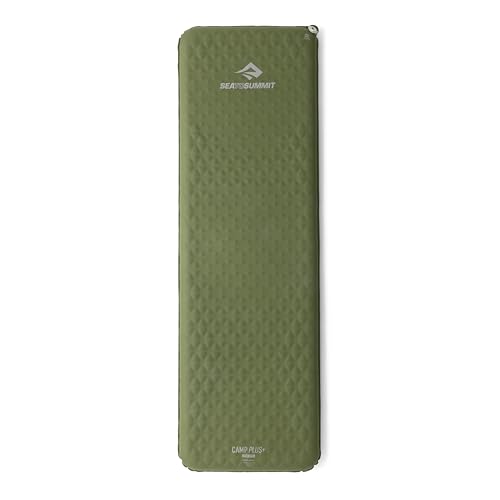
The Rectangular Large trades the pack-friendly tapered shape for pure usable surface. Two adults can lie side by side without falling into a gap, or one restless sleeper can roll, sprawl, and stretch without sliding off the edge.
Same 2.6-inch foam and 4.3 R-value as the tapered Sea to Summit pads, just spread across a wider, longer rectangle. It’s the choice when the trip involves a car trunk rather than a backpack.
Features That Help
- Full rectangular footprint suits restless sleepers and shared setups
- Self-inflating foam inflates faster than manually pumping
- Higher R-value handles cooler shoulder-season nights
- Durable surface tolerates ground-sheet use on rough soil
Honest Caveats
- Bulkiest of the Sea to Summit self-inflating lineup
- Overkill for ultralight backpackers counting grams
Key Attributes
Built With In Mind
Car campers, couples, and parents sharing a tent who value surface area over packed size.
A Better Fit Elsewhere
Solo backpackers chasing minimal bulk will be happier with the Sea to Summit Camp Plus SI Tapered Regular.
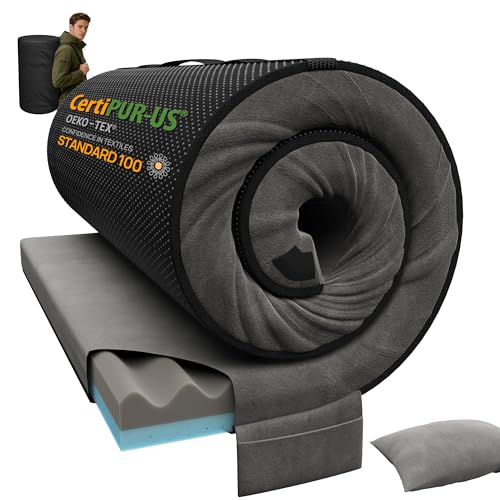
The Releep mattress is essentially a slice of home compressed into a carry bag. Its 3-inch dual-sided memory foam build feels closer to a guest-room mattress than a typical camp pad, which is the entire point for people who want real cushioning.
Use it when the campsite has car access, an SUV platform, or a tall cot to lay it across. It’s also pulled double duty as a crash pad for overnight guests at the house, depending on how you set it up.
Bright Spots
- 3-inch foam depth rivals a thin home mattress
- Water-resistant surface protects against damp ground and morning dew
- Rolls into a carry bag for stowage in a trunk or closet
- Includes a portable pillow to round out the sleep setup
Potential Compromises
- Heavy and bulky compared to inflatable or foam pads
- Not suited to backpacking or any trip where weight matters
- Foam can hold odors over time without airing out
Whose Shelf It Belongs On
Car campers and homeowners who want a plush guest-bed option that doubles as outdoor gear.
Swap It Out When
Anyone hiking more than a few hundred yards from the car should choose the Sea to Summit Camp Plus SI Tapered Regular for a fraction of the weight.
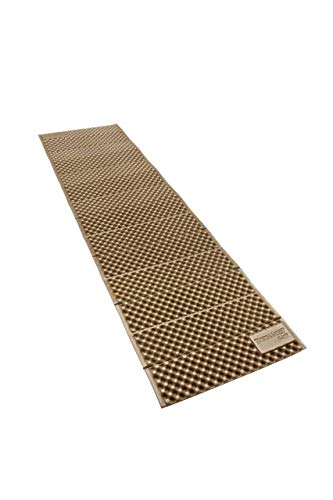
The Z Lite has been around long enough that some campers have inherited one. Its closed-cell foam (dense foam that resists absorbing water or air, making it nearly indestructible) accordion-folds into a flat brick that straps to any pack and shrugs off abuse that would puncture an inflatable.
It’s not cushy, but it never will be, and that honesty is part of the appeal. You unpack it, you lay it down, you sleep, you fold it back up. No valves, no pumps, no drama.
Good Reasons To Consider
- Closed-cell foam resists punctures and moisture absorption
- Lightweight enough for serious backpacking routes
- Dimple pattern traps warm air for extra insulation
- Affordable entry point for new campers
Trade-Offs To Consider
- Thinner profile means sleepers feel roots and stones more
- Bigger packed footprint than inflatable alternatives
Feature Snapshot
Who Will Love This
Thru-hikers, scout troops, and minimalist backpackers who want gear that survives rough handling.
Consider Something Else When
Side sleepers craving cushioning may prefer the Sea to Summit Camp Plus SI Tapered Regular.
Technically a sleeping bag rather than a pad, but it earns its spot as part of a complete sleep system for first-timers outfitting a family on a tight budget. The double-layer shell aims to handle both cool and warm conditions, and the lightweight build suits kids’ summer-camp packing lists.
It works best as a complement to a dedicated pad like the Z Lite, since a bag alone won’t insulate from cold ground. Together, they form a starter setup for casual trips.
Where It Helps
- All-in-one package covers most casual camping trips
- Lightweight shell works for backpacking and sleepovers alike
- Cold-weather rated for shoulder-season family campouts
Less Ideal Details
- Acts as a bag, not a pad, so ground insulation still required
- Single sizing may not suit very tall adults
Made For
Parents buying first-time gear for kids’ camps and weekend family trips.
Reach For A Different Pick When
Ground insulation is the priority; the Therm-a-Rest Z Lite Original Sleeping Pad covers that need directly.
The Z Seat is the smallest item on this list, and that’s the whole point. It’s a sit pad, not a sleep pad, but for backpackers who want one piece of foam that handles both trail breaks and emergency bivouac duty, it earns a spot in the lid of a pack.
Owners commonly use it during lunch stops, summit pauses, and wet-log seats where the ground would soak through regular clothing. The closed-cell foam shrugs off moisture that would ruin an inflatable.
Noteworthy Benefits
- Tiny folded footprint barely registers in a kit
- Closed-cell foam resists moisture and damage
- Useful for breaks, summits, and wet ground
Practical Considerations
- Too small to serve as a primary sleep pad for most adults
- Limited cushioning compared to full-length pads
Quick Facts
Perfect Match For
Day hikers and ultralight backpackers who want a backup sit surface without added bulk.
Skip It When
Overnight comfort matters; the Sea to Summit Camp Plus SI Tapered Regular covers that need.
The Rectangular Regular pairs the rectangular floor plan of the larger version with a more standard length. It suits campers who want maximum sleep surface without committing to the bulk of the Large version.
Inside a tent, that rectangle means no more elbows hanging over the edge during a midnight turn. It’s a sensible middle ground between the tapered Sea to Summit pads and the oversized Large.
What Makes Sense
- Rectangular footprint uses tent space efficiently
- Self-inflating setup saves effort at the end of a long day
- Higher R-value holds warmth on cold soil
Points To Note
- Heavier than tapered versions
- Bigger pack profile for minimalist thru-hikers
Who Should Grab It
Weekend campers who value a full rectangular sleep surface at moderate packed size.
Another Choice May Suit
Weight-conscious backpackers will prefer the Sea to Summit Camp Plus SI Tapered Regular.
The MalloMe pad solves the most annoying part of air-pad ownership: pumping it up. The integrated foot pump inflates the pad without mouth-breath huffing, and the quick-release valve handles the morning teardown.
Its V-shaped air-cell pattern spreads weight evenly across the surface, which helps side sleepers who tend to bottom out on simpler baffled pads. It packs small enough for backpacking and works for car trips alike.
Practical Pluses
- Built-in foot pump eliminates hand or mouth inflation
- Compact packed size fits in backpack and luggage
- V-shaped air cells distribute weight to reduce pressure points
Room For Improvement
- Air construction means a puncture becomes a sleep-ending problem
- Less insulating than foam-core pads for cold ground
Feature Rundown
The Right Fit
Travelers and casual campers who want inflatable comfort without carrying a separate pump.
Where A Sibling Pick Shines
Cold-weather campers should choose the Sea to Summit Camp Plus SI Tapered Regular for superior insulation.
Choosing The Right Camp Pad For Your Trips
A camp pad does more than soften the ground. It insulates you from cold soil, which can drain body heat faster than cold air, and it shapes how easily you fall asleep in a tent. Pick the wrong one and you spend the night shifting around on a lumpy, freezing surface.
Match The Pad To Your Sleep Style
Side sleepers need real loft, around 2.5 inches or more, to keep hips and shoulders off the ground. Back sleepers get away with thinner pads, and stomach sleepers usually want firmer support so the lower back doesn’t hyperextend. The Sea to Summit Camp Plus SI line fits side sleepers well thanks to its 2.6-inch foam, while the Therm-a-Rest Z Lite works for back sleepers who don’t mind feeling terrain through the pad.
Insulation Matters More Than Thickness
The R-value tells you how well a pad blocks heat loss to the ground, on a standardized scale where higher numbers mean warmer sleep. Anything above 4.0 handles three-season conditions, while sub-2.0 pads work fine for summer trips only. Campers chasing shoulder-season flexibility should focus on the Camp Plus SI mats, since their 4.3 rating covers most conditions below freezing.
Weight And Bulk Drive Backpacking Choices
Every gram matters when a pad rides in a pack for days. Self-inflating foam pads are heavier than pure inflatables but provide backup insulation if the pad deflates overnight. The MalloMe Sleeping Pad With Foot Pump packs smaller and lighter, which suits trips where carrying capacity is tight. Car campers can ignore packed size and prioritize comfort, which is where the Releep memory foam mattress becomes appealing.
Common Shopping Slip Ups And Upgrade Trade Offs
Pitfalls Shoppers Hit
Buying the thickest pad without checking R-value is a common trap. A thick summer pad still leaves you shivering on cold ground because foam thickness and insulation are different things. Shoppers also tend to skip testing pad width, only to find that their shoulders hang off on a standard 20-inch cut. Tapered pads save weight but assume you don’t move much; restless sleepers should pick rectangular shapes.
Where The Extra Money Goes
Premium pads usually upgrade three things at once: insulation, surface fabric, and valve design. A better valve means faster inflation and finer pressure control, which matters on cold mornings when you don’t want to fight the pad for ten minutes. Higher-denier fabric (a measure of fabric thread thickness; higher numbers mean tougher material) resists punctures from pine needles and granite, so the pad survives more trips. Higher R-value means more nights per season and more terrain flexibility. For most campers, those upgrades show up over years of use rather than on the first trip.
Frequently Asked Questions
How Thick Should A Camp Pad Be?
Most adults sleep well on pads around 2.5 to 3 inches thick. Side sleepers benefit from thicker pads because their hips and shoulders need loft to avoid pressure points, while back and stomach sleepers can manage with slimmer profiles. Car campers with no weight limit can go thicker; backpackers usually cap out around 3 inches to keep pack weight reasonable.
What Does R-Value Actually Mean?
R-value measures how well a pad blocks heat flow from your body to the cold ground. Higher numbers mean more insulation. A rating above 4.0 covers most three-season conditions, while ratings below 2.0 work for warm summer nights only. For winter camping, look for ratings well above 4.0, often paired with a foam or insulated-air construction.
Can I Use A Camp Pad For Guests At Home?
Yes, especially thicker options like the Releep memory foam mattress. It rolls out for overnight guests and stores in a closet between visits. Self-inflating foam pads also work but feel less like a real mattress. Pure inflatables are least suitable because the texture and movement feel different from a stationary guest bed.
How Do I Store A Camp Pad Long Term?
Keep self-inflating and inflatable pads unrolled or loosely folded in a dry place to preserve the foam and adhesive seams. Closed-cell foam pads like the Therm-a-Rest Z Lite can be stored flat or folded without issue. Avoid leaving any pad in direct sunlight for extended periods, since UV exposure degrades fabric coatings over time.
Are Self-Inflating Pads Better Than Pure Air Pads?
Self-inflating pads combine foam and air, which means they keep some warmth even after a slow leak. Pure air pads pack smaller and weigh less, but a puncture becomes a serious problem in cold weather. Most backpackers prefer self-inflating for shoulder-season trips and switch to air-only pads for summer routes or ultralight setups.
Bottom Line
The right camp pad depends on where you go and how you sleep. Backpackers chasing warmth should look at the Sea to Summit Camp Plus SI line for its foam-and-air hybrid build, while ultralight travelers will prefer the MalloMe foot-pump pad for its compact packed size. Thru-hikers and budget-focused campers will be happy with the Therm-a-Rest Z Lite, and car campers chasing plush comfort should look at the Releep memory foam mattress. Match the pad to your trips and sleep position, and the next morning outdoors starts on the right foot.