
A bad night’s sleep on a thin mat turns a great campsite into a punishment. Whether you’re packing deep into a backcountry trail, setting up a basecamp for the family, or throwing an extra bed in the tent for friends, the pad underneath you decides how you feel the next morning. This roundup sorts through ten camp mattresses built for different trips, body sizes, and budgets so you can match your kit to your plans.
The Essentials At A Glance

Sea to Summit Camp Plus SI Tapered Regular

Sea to Summit Camp Plus SI Tapered Large
Sea to Summit Camp Plus SI Rectangular Large
Releep 3-Inch Memory Foam Camping Mattress
Milliard Trifold Mattress Cot Size 6-Inch

Therm-a-Rest Z Lite Original Sleeping Pad
SoundAsleep CloudNine Queen Air Mattress

SoundAsleep Camping Series Twin Air Mattress

Sea to Summit Camp Plus SI Rectangular Regular

SoundAsleep Dream Series Queen Air Mattress
What Each Pick Brings To The Table
Self-inflating foam pads have earned a loyal following for one simple reason: open the valve, walk away, and the pad does most of the work for you. The Camp Plus SI in the tapered regular size leans into that hands-off setup while pushing warmth well past what a standard closed-cell mat offers.
For shoulder-season backpacking and shoulder-season basecamps, this is a sensible middle path between ultralight inflatables and chunky roll-up foam. The tapered cut also trims a bit of weight and packed size compared to the rectangular shape, which matters when every liter of pack space counts.
What It Does Well
- Self-inflating foam core that simplifies setup and limits late-night top-offs
- Warm enough for chilly ground, so three-season trips stay comfortable
- Tapered shape cuts bulk without sacrificing shoulder room for most sleepers
- Reversible valve supports fast deflation when breaking camp in the rain
Trade-Offs Worth Knowing
- Heavier and bulkier than air-only pads, so ultralight hikers may push back
- Foam can take longer to fully reinflate after long compression in a stuff sack
- Tapered cut feels snug for side sleepers who sprawl or shift onto their elbows
At A Glance
Built With In Mind
Three-season backpackers and weekend campers who want real warmth without hauling an air pad and pump.
Look Elsewhere When
Ultralight thru-hikers counting every gram should consider the Therm-a-Rest Z Lite Original Sleeping Pad instead.
Take the Camp Plus SI platform and stretch it for taller sleepers, and you get a mat that finally fits a six-footer without feet dangling off the end. The tapered shape keeps the profile slimmer than a rectangle while giving you the length you need to stretch out flat.
Campers who run cold on frozen ground appreciate the same foam thickness and warmth rating as the regular tapered version. The difference is purely dimensional, so you trade a bit of packed size for a much more humane sleeping position at night.
The Case For It
- Longer footprint supports taller sleepers who normally outgrow tapered pads
- Same foam depth as the smaller version, so warmth carries over
- Self-inflating setup still cuts down on bedtime fuss
- Reversible valve handles both inflation and rapid pack-up
Points To Keep In Mind
- Packs down larger than the regular size, which tightens smaller packs
- Carries more weight than an ultralight air pad of similar length
- Foam may need a day or two to loft fully after extended storage
Whose Tent It Belongs In
Taller campers and broader-shouldered sleepers who want self-inflating comfort without going to a full rectangle.
Swap It Out When
Anyone prioritizing a flat, wide surface to sprawl on will get more out of the Sea to Summit Camp Plus SI Rectangular Large.
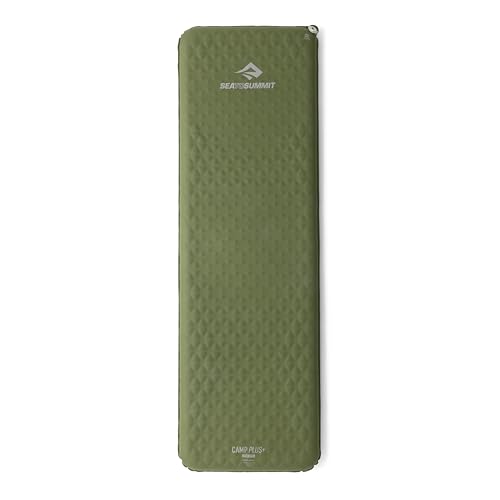
Rectangular pads waste less sleep than people think. The flat, full-width surface means you stop bracing your elbows against a tapered edge when you roll over, and gear stays put instead of sliding off into the tent wall.
This rectangular large stretches the Camp Plus platform into something close to a guest bed, only compressible into a backpack. Campers who treat sleep as non-negotiable, especially on longer trips, tend to land here once they accept the bulk.
The Helpful Details
- Full rectangular footprint keeps restless sleepers centered
- 2.6-inch foam depth softens pressure points at hips and shoulders
- Self-inflating core reduces late-night micro-adjustments
- Generous surface area doubles as a dry platform for boots and packs
Honest Caveats
- Bulkiest pick in the Sea to Summit line, so pack space planning matters
- Heavier than tapered siblings, which adds up on long approaches
- May be overbuilt for fair-weather summer trips where minimal warmth is fine
Right Fit For
Campers who shift positions often or share space with pets and gear and want a true bed-like surface.
Consider Something Else When
Weight-conscious backpackers should reach for the Sea to Summit Camp Plus SI Tapered Regular to save space.
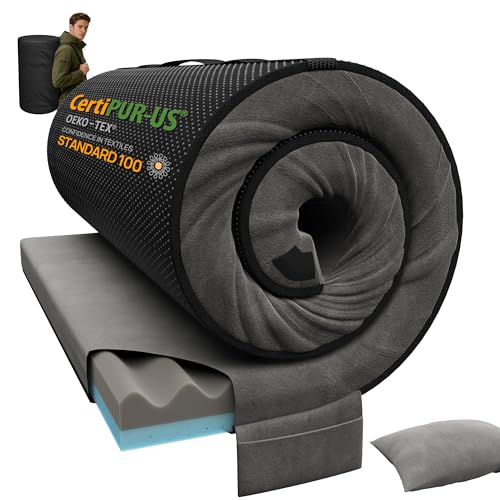
Memory foam and camping usually don’t share a sentence, but the Releep roll-up design pulls it off with a thick dual-layer build that genuinely changes how a night outdoors feels. Three inches of foam pushes you well off hardpan, and the waterproof surface shrugs off damp ground.
This is not a backpacker’s pad, and that’s the point. It’s a comfort-first mattress for car camping, road trips, surprise guests, and anyone who’d rather think of it as a portable bed than a piece of gear.
Strengths Worth Knowing
- Three-inch foam profile feels closer to a home mattress than most camp pads
- Waterproof outer surface handles dewy grass and damp tent floors
- Rolls compactly for trunk or backseat storage between trips
- Bundled pillow and carry bag simplify packing
A Few Limitations
- Too bulky and heavy for backpacking or fastpacking trips
- Foam needs airflow to dry fully after wet nights, which slows cleaning
- Less insulating than high-R-value self-inflating pads in freezing conditions
Feature Snapshot
Who It Suits Best
Car campers, SUV travelers, and hosts who want a real mattress feel that can travel between a tent and a guest room.
Reach For A Different Pick When
Anyone trekking long distances on foot will find the Milliard Trifold Mattress Cot Size 6-Inch better suited for camp hosts than backpackers.
Tri-fold foam mattresses live a quieter life than inflatable pads, but they keep showing up in places that need a real bed in a closet. The Milliard Trifold in cot size adds six inches of foam and a washable cover, which is closer to guest-bed comfort than most camping gear.
The appeal is versatility. It folds flat for storage, sets up in seconds, and works as well in a guest room as it does in a tent or RV. People who buy one usually end up using it everywhere.
Practical Pluses
- Six-inch foam depth rivals many guest mattresses for comfort
- Washable cover handles spills, sweat, and pet hair
- Tri-fold design stores neatly in a closet or under a bed
- Sturdy build supports frequent use across multiple settings
Where It May Fall Short
- Too heavy and bulky for backpackers or motorcycle campers
- Cot-size footprint may feel narrow for two people sharing
- Foam takes time to fully recover thickness after months in storage
Made For
RV owners, hosts with frequent overnight guests, and campers who want one pad that doubles as a floor bed at home.
Not Your Match When
Backpackers chasing minimal pack weight will prefer the Therm-a-Rest Z Lite Original Sleeping Pad.
Closed-cell foam pads don’t win comfort awards, but they never fail. The Z Lite has been strapped to packs for decades because it weighs almost nothing, costs very little, and shrugs off sharp rocks, tent floors, and abuse that would pop an air pad.
The accordion fold lays flat instantly, which makes it a favorite for fastpacking trips and emergency backups. It’s also one of the most affordable pads on the market, so budget-conscious campers keep one in rotation for years.
Features That Help
- Lightweight foam construction adds minimal pack weight
- Durable closed-cell design resists punctures and rough ground
- Accordion fold sets up in seconds without inflation
- Compact packed size fits behind a pack or attaches outside
Trade-Offs To Consider
- Thinner profile feels firm compared to inflatable or self-inflating pads
- Limited insulation means cold-soak in winter conditions
- Bulky when strapped outside smaller packs
Quick Facts
Best Suited To
Thru-hikers, ultralight packers, and anyone who wants a pad they cannot pop, tear, or ruin with rough use.
A Better Fit Elsewhere
Campers chasing real plushness should consider the Releep 3-Inch Memory Foam Camping Mattress instead.
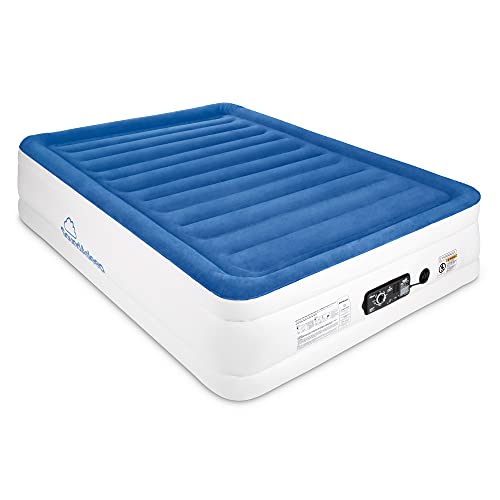
Most air mattresses slowly deflate through the night, forcing you to top off firmness before dawn. The CloudNine series tackles that frustration with a dual pump that runs quietly in the background to maintain pressure, which is closer to a real bed than a typical inflatable.
It sits at the indoor end of the camping spectrum: great for guest rooms, sleepovers, and basecamp setups where access to power isn’t an issue. Campers who mostly set up near a car or cabin will appreciate the comfort jump.
Real-World Strengths
- Dual pump keeps the mattress firm all night without manual top-offs
- Queen footprint fits two sleepers comfortably
- Raised profile makes getting in and out easier than floor-level pads
- Multiple comfort settings let you tune firmness for different sleepers
Where It Is Less Suited
- Needs continuous power, which limits true backcountry use
- Larger packed size compared to foam-based pads
- Pump noise, while low, may still register in quiet rooms
Who Should Grab It
Households and basecamp hosts who want a guest bed that stays inflated without babysitting it through the night.
Skip It When
Campers traveling far from power should pick the SoundAsleep Camping Series Twin Air Mattress, which runs on a rechargeable pump.
Air mattresses usually need an outlet, which makes them a non-starter in the backcountry. The Camping Series Twin solves that with a rechargeable pump and a tougher PVC shell built for campsite abuse, so you can inflate at the trailhead and deflate before driving home.
Twin size keeps the packed footprint manageable for trunk storage, and the internal coil structure adds stability that cheaper blow-up mattresses lack. It’s a smart middle ground between ultralight pads and full home-style air beds.
What Helps Most
- Rechargeable pump removes the need for an outlet at camp
- Twin footprint fits standard tents and backseats for travel
- Reinforced PVC stands up to rocks, sand, and uneven ground
- Internal air coils distribute weight more evenly than flat air pads
Potential Drawbacks
- Rechargeable pump needs a charge cycle before each trip
- Not as warm as foam pads in freezing ground conditions
- Punctures are still a possibility, so a patch kit belongs in the bag
Perfect Match For
Tent campers, road-trippers, and overlanders who want real air-bed comfort without a wall outlet nearby.
Where Another Pick Suits Better
Cold-weather campers should consider the Sea to Summit Camp Plus SI Tapered Regular for its stronger insulation.
Rectangular pads aren’t just about extra inches. The flat, full-width surface means your sleeping bag can loft properly across the entire pad, which improves warmth on cold nights. The regular size keeps the packed volume reasonable for shorter backpackers and average-height campers.
If you tend to shift at night or sleep on your side, the rectangular shape keeps your elbows and knees from drifting off the edge. Pair it with a self-inflating foam core and you get a pad that practically sets itself up.
What Earns Its Place
- Flat rectangular surface lets sleeping bags loft for better warmth
- Self-inflating foam saves effort at the end of long hiking days
- Reversible valve supports fine-tuning of firmness
- 2.6-inch depth cushions shoulders and hips nicely
Smaller Caveats
- Shorter length may feel cramped for sleepers above six feet tall
- Bulkier than tapered alternatives, so pack space matters
- Foam core adds weight compared to ultralight air pads
Who Will Love This
Average-height campers who prioritize a flat sleeping surface over absolute pack size savings.
Reach For A Different Pick When
Taller sleepers should consider the Sea to Summit Camp Plus SI Tapered Large for extra length.
The Dream Series keeps things simple: built-in pump, internal coils for support, and a flocked top that feels closer to a real bed than a vinyl mattress. It inflates in minutes and deflates just as fast, which makes setup and teardown painless.
It’s most at home as a spare bed or a basecamp queen for car camping, where weight isn’t an issue and comfort is the point. Camp hosts and weekend guests tend to land on this pick for the balance of price and bed-like feel.
Well-Handled Touches
- Built-in pump eliminates the need for a separate inflation device
- Internal coils help distribute weight and reduce sagging
- Flocked top adds grip and a softer feel against skin
- Queen footprint fits couples and solo sleepers who sprawl
What To Weigh
- Vinyl construction still faces puncture risk on sharp ground
- Needs an outlet, so off-grid trips require a generator or power station
- Larger packed size compared to foam pads
The Right Fit
Spare-bedroom owners and basecamp hosts who want a queen-size air bed that sets up fast and stays supportive through the night.
Look Elsewhere When
Tent campers far from power should pick the SoundAsleep Camping Series Twin Air Mattress for its rechargeable pump.
What To Weigh Before Picking Your Camp Mattress
Match The Pad To The Trip
Backcountry trips demand low weight and packed size, which is why thru-hikers gravitate to closed-cell foam like the Therm-a-Rest Z Lite Original Sleeping Pad. The trade-off is comfort, and most backpackers accept it because every gram matters after mile ten. For car camping, basecamps, and guest setups, weight becomes irrelevant, which opens the door to thicker foam and air mattresses that prioritize sleep quality.
Understand Warmth Ratings
The R-value measures how well a pad resists heat loss to cold ground, and higher numbers mean more insulation. Campers in shoulder seasons and winter conditions benefit from mats rated 4.0 and above. Summer-only trips can get away with thinner pads, especially when paired with a warmer sleeping bag. Buying a higher R-value than you need is rarely a problem; buying too little insulation turns cold ground into a miserable night.
Decide Between Foam, Self-Inflating, And Air
Closed-cell foam is durable and lightweight but firm. Self-inflating foam blends foam with air for more comfort and better warmth. Air mattresses deliver the plushest feel but add pump dependency and puncture risk. Matching the construction to your camping style, trip length, and weather window keeps the right balance between comfort and practicality.
Size And Shape Matter More Than People Think
Tapered pads trim weight and packed size, which backpackers love, but they can feel narrow for restless sleepers. Rectangular pads use pack space more generously and let sleeping bags loft properly, which improves warmth. Taller campers should look for large or long versions to avoid feet hanging off the edge, while broad-shouldered sleepers often do better with a wide rectangular layout.
Mistakes Worth Dodging Before You Buy
Underestimating Insulation Needs
Cold ground steals body heat faster than cold air, so skimping on warmth rating turns a sleeping bag into a poor insulator. Campers often overspend on bags and underspend on pads, which reverses where the warmth should come from.
Choosing Weight Over Comfort For Car Trips
If your vehicle carries the gear, weight stops being the bottleneck. Campers hauling pads to a basecamp frequently regret buying ultralight pads that feel like plywood under their hips and shoulders.
Where The Extra Money Goes
Premium pads tend to add thicker foam, higher R-values, more durable shell fabrics, and refined valves that inflate and deflate faster. The upgrade pays off most on longer trips and colder conditions, where comfort and reliability save energy for the next day’s hiking. Budget picks cover weekend summer trips just fine, while higher-tier models earn their cost on extended and four-season adventures.
Frequently Asked Questions
What R-value do most campers actually need?
For three-season use on most US terrain, an R-value between 3.0 and 4.5 covers overnight frost and snow-free shoulder seasons. Winter campers and alpine trips usually want 4.5 and above.
Are self-inflating pads better than air pads?
Self-inflating pads combine foam insulation with adjustable air, which makes them more forgiving on cold ground and easier to top off. Air pads feel plusher and pack smaller but require a pump and carry some puncture risk.
How thick should a camp mattress be?
Two inches covers summer backpacking where weight matters. Three inches and up feels closer to a home mattress and suits car camping, families, and sleepers who want pressure relief at hips and shoulders.
Can air mattresses handle real camping?
Outdoor-rated air mattresses like the SoundAsleep Camping Series use tougher PVC and reinforced coils to handle tent floors and uneven ground. Standard indoor air beds still work under shelters but puncture more easily.
How do I store a foam pad long-term?
Keep foam pads unrolled or loosely folded in a dry, ventilated space. Long-term compression in stuff sacks can slow how quickly foam relofts when you next pull it out for a trip.
Closing Remarks
Camp mattresses span a wide range, from ultralight foam that weighs almost nothing to plush air beds that feel like home. The right pick depends on how you camp, where you camp, and how much sleep you need to enjoy the next morning. Match the pad to your trip, and the rest of the gear tends to fall into place.