
A reliable camp light changes the way an evening outdoors feels, from a cozy tent glow to a fully lit worksite after sunset. This roundup covers compact tabletop lanterns, telescoping pole lights, and tripod-mounted workhorses, so anyone from casual car campers to weekend contractors can find a match for their setup. Each pick is sized for a specific scene, with honest trade-offs noted along the way.
A Quick View Of The Lineup

EverBrite Halloween Pumpkin Lantern & Bat Glow Sticks

PBPHX Rechargeable Camping Light with Stand
Streamlight 44931 Siege Compact Lantern (Coyote)

PBPHX 21000-Lumen 3-Head Tripod Work Light
EZORKAS 2-Pack Collapsible Camping Lanterns

PBPHX 14000-Lumen 2-Head Tripod Work Light

Devos LightRanger 500 Hand Wave Light

Devos LightRanger 4000 Telescoping Work Light

Devos LightRanger 1200 Telescoping Camp Light

Devos LightRanger 800 Mini Telescoping Light
A Closer Look At Each Pick
Unlike every other pick on this list, this entry is not a flashlight or a job site flood light. It’s a Halloween decoration: a collapsible pumpkin lantern that pushes out and pulls in to switch the warm LED on and off, plus a handful of bat-shaped glow sticks for trick-or-treat tables or porch steps.
The pumpkin face glows through a 360-degree spread, which makes it a nice centerpiece for a covered entryway or a party table. Glow sticks are single-use, so anyone hosting a recurring haunt will eventually want to budget replacements.
Everyday Wins
- Collapsible design saves storage space in a seasonal bin
- Push-pull switch keeps it simple for kids to operate
- 360-degree glow fills a small entryway without extra fixtures
- Bundled glow sticks round out a porch display in one purchase
Things To Consider
- Single-purpose: not useful once Halloween is over
- Glow sticks are consumable and will need replacing yearly
- Light output is decorative, not functional for tasks
Feature Snapshot
Who Should Grab It
Hosts decorating a front porch or Halloween party table who want a themed glow without running cords.
Consider Something Else When
Campers and hikers will get far more value from the Devos LightRanger 1200 Telescoping Camp Light, which doubles as a real area light for tents and outdoor cooking.
This PBPHX lantern pulls double duty on longer trips. A magnetic base lets it stick to a car hood or a steel tent pole, while a built-in stand keeps it upright on a picnic table. Three color modes (warm, cool, and red) cover both cooking tasks and preserving night vision at the campsite.
The standout feature, however, is the 12000mAh rechargeable battery. With a USB-C input for refueling and a USB-A output, the lantern doubles as a power bank, so a dead phone after a long day of navigation is no longer an emergency.
Positive Takeaways
- Large battery also tops off phones and GPS units
- Magnetic base simplifies attaching to a vehicle for repairs
- Three color temperatures suit cooking, reading, and stargazing
- Stand keeps it stable on uneven ground or a tabletops
- Rechargeable design avoids ongoing battery purchases
Worth Noting
- Heavier than pure candle-style lanterns when carried on foot
- Power bank use cuts into lantern runtime
Made For
Weekend campers and overlanders who want one piece of gear that handles lighting and emergency phone charging.
A Better Fit Elsewhere
Backpackers counting every ounce will prefer the Devos LightRanger 800 Mini Telescoping Camp Light, which collapses smaller and weighs far less.
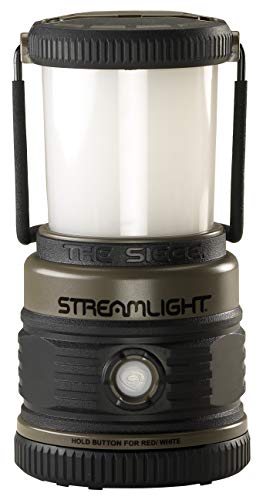
Streamlight built the Siege for people who treat gear roughly. The Coyote rubberized body shrugs off drops on rocky ground, and a removable cover keeps the lantern safe inside a packed duffel. Up to 540 lumens spread through a polycarbonate dome light up a four-person tent without hotspots.
Compared to the PBPHX model reviewed earlier, this one trades the power bank feature for a more compact footprint and a dedicated SOS flash mode. That red SOS function is meaningful for emergency kits and backcountry trips where signaling matters.
The Practical Payoff
- High output punches through rain and fog
- Multiple white modes plus a red SOS preserve battery and night vision
- Rubberized shell survives typical campsite drops
- Compact size fits a backpack side pocket
Trade Offs
- No USB output for charging devices
- AA batteries need spares for extended trips
- Color choices are limited to tactical Coyote
Quick Facts
Best Suited To
Backpackers and emergency preppers who prioritize durability over bells and whistles.
Skip It When
Group car campers wanting tall overhead coverage should look at the Devos LightRanger 1200 Telescoping Camp Light instead.
When a single lantern is not enough, this tripod floods a garage, basement, or driveway with 21000 lumens across three adjustable panels. The 6500K color temperature reads closer to daylight than warm yellow, so paint colors and wiring colors look closer to how they appear in true sunlight.
The tripod telescopes and folds to roughly 80 inches for transport, which fits in most SUVs when laid across the cargo floor. Panels tilt independently, so a single fixture can light a hood and a wall at the same time.
Where It Excels
- Three-panel design covers a wide jobsite footprint
- Daylight color temperature aids detailed work
- Each head adjusts independently for direction
- Tall tripod puts light overhead where shadows drop away
Honest Caveats
- Corded design limits placement to outlet reach
- Tripod footprint is wider than a tabletop lantern
- Output is overkill for a small camping tent
Feature Snapshot
Who It Suits Best
Homeowners tackling garage renovations, basement finishing, or detail-heavy automotive repairs after dark.
Not Your Match When
Campers and tailgaters who need a cordless, packable option will find the Devos LightRanger 4000 Telescoping Work Light a more flexible tool.
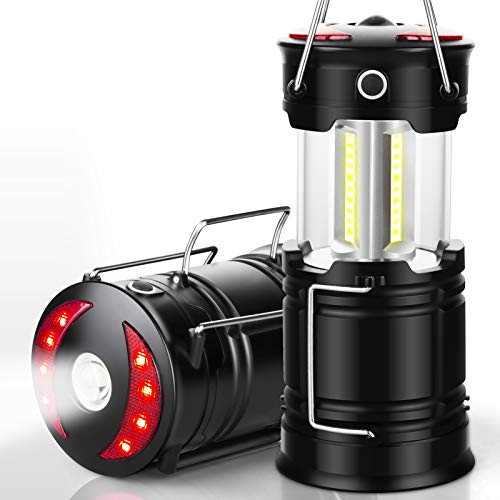
This two-pack targets new campers who want a simple starter set without a big investment. Each lantern collapses flat for transport, opens to a 360-degree COB LED panel, and runs on either rechargeable power or standard batteries, depending on what is on hand at the campsite.
Owners commonly use one lantern inside the tent and another clipped to a picnic table. The dual-lantern setup feels immediately useful rather than leaving one spare in a gear bin.
Advantages To Know
- Two lanterns cover both common use zones (tent and table)
- Collapsible form factor saves trunk space
- Multiple modes adjust brightness for cards versus cooking
- Operates on rechargeable or disposable batteries
Some Limits To Know
- Plastic body feels less rugged than the Streamlight Siege
- Not waterproof, so heavy rain needs a sheltered spot
Right Fit For
Family campers and first-timers who want an affordable, low-stakes starter kit.
Look Elsewhere When
Anyone running a jobsite or extended power outage should consider the PBPHX 21000-Lumen Tripod Work Light for serious output.
This two-head sibling to the 21000-lumen model trims weight and cost by dropping the third panel. For driveway car repairs or a one-car garage workspace, two panels at 14000 lumens is often plenty.
Compared to the larger three-head version, this one sets up faster and stores more easily. The catch is narrower coverage: a single corner of the room may fall outside the lit zone without repositioning.
Features That Help
- Two adjustable heads cover both sides of a vehicle
- Smaller folded footprint than the 3-head model
- Same daylight color temperature as the larger unit
- Tripod telescopes for overhead task lighting
Room For Improvement
- Still corded, so outlet placement matters
- Less total output than the 21000-lumen version
Technical Highlights
Whose Shelf It Belongs On
DIYers tackling weekend car repairs, deck builds, or modest garage projects without the budget for the bigger 3-head version.
Reach For A Different Pick When
Larger jobsites needing maximum spread are better served by the PBPHX 21000-Lumen 3-Head Tripod Work Light.
The LightRanger 500 is sized like a chunky TV remote, but it casts light down and outward from its base, which is more useful than a typical handheld flashlight when working under a hood or inside a tent. A wave of the hand turns it on and off, which is genuinely convenient when fingers are greasy or cold.
White, amber, and red modes handle everything from task lighting to preserving night vision, and a USB-C port keeps the battery topped off between trips. Magnetic back and integrated clip broaden the mounting options.
A Favorable Mix
- Hand wave control works with dirty or gloved hands
- Magnetic base sticks to car hoods and steel tent poles
- Three color modes cover task, ambient, and night-vision needs
- USB-C charging reuses cables already in your kit
Points To Note
- 500 lumens is modest for illuminating large rooms
- Hand sensor can occasionally trigger on accidental swipes
Who Will Love This
Roadside mechanics, campers hanging lanterns inside tents, and anyone who wants touch-free control in a small package.
Swap It Out When
Group campsites needing tall overhead coverage are better served by the Devos LightRanger 1200 Telescoping Camp Light.
Built for contractors and event crews, the LightRanger 4000 telescopes from a low task height to a full 9 feet, throwing daylight-balanced light across a 100-foot diameter. At roughly 5 pounds, it is portable enough for one person to deploy yet substantial enough to stay planted in a breeze.
Bluetooth app control is the unusual feature here. Adjusting brightness and toggling modes from a phone means no one has to walk across a dark jobsite to tweak settings. IP56 weather rating handles dust and unexpected rain showers.
Useful Highlights
- App control removes the need to walk to the fixture
- 9-foot max height puts light well overhead
- IP56 rating handles dust and rain on outdoor jobs
- 100-foot coverage replaces several smaller lights
- USB-C fast charging refills quickly between shifts
Potential Compromises
- Heavier and pricier than casual camping lanterns
- App dependency is awkward if a phone battery dies
Perfect Match For
Contractors, event organizers, and sports field setups needing serious output with remote control convenience.
Where A Sibling Pick Shines
Casual campers will find the Devos LightRanger 800 Mini Telescoping Camp Light lighter on the back and easier on the wallet.
The LightRanger 1200 extends to a full 9 feet and lights a 60-foot diameter from above, which is the difference between a dim campfire ring and a fully usable outdoor living room. Elevated light also keeps bugs farther from faces, an underrated quality at dinnertime.
An aluminum four-section pole telescopes smoothly, and the included carry case makes transport painless. Runtime scales dramatically with mode: up to 80 hours on low for weekenders who only use it after sunset.
Notable Gains
- 9-foot height puts light above eye line and bugs
- 60-foot coverage serves a full campsite or tailgate
- Carry case protects the telescoping pole in transit
- Long low-mode runtime for week-long trips
- Sturdy aluminum sections resist bending in wind
Things To Weigh
- Bulkier than a tabletop lantern for short walks
- Setup takes a minute longer than a basic lantern
Built With In Mind
Group campers, large family setups, and tailgaters who want to flood a wide area from overhead.
Another Choice May Suit
Solo backpackers will prefer the Devos LightRanger 800 Mini Telescoping Camp Light, which packs down much smaller.
The Mini version collapses to roughly 3.5 by 16.5 inches and weighs around 20 ounces, which is small enough to slide behind a van seat or into a backpack sleeve. Extended, it tops out at 4.5 feet: short compared to its big sibling, but enough to keep the light out of eyes at a picnic table.
Two sides of the panel can run at once on low for up to 30 hours, which is plenty for weekenders off-grid. USB-C charging reuses the cable already in the kit.
The Upside
- Collapses small enough for a backpack or van cabinet
- Elevated light keeps bugs below face level
- USB-C charging matches phone and tablet cables
- Carry case protects the telescoping sections
A Few Limitations
- Lower output than the full-size LightRanger 1200
- Max 4.5-foot height is shorter than group tents need
The Right Fit
Backpackers, van lifers, and minimalists who want a real overhead lantern without devoting a tote to it.
Look Elsewhere When
Larger group campsites needing taller coverage will benefit more from the Devos LightRanger 1200 Telescoping Camp Light.
What To Weigh Before Choosing Camp Lights
Lumens And Beam Spread
Lumens measure total light output, but beam shape matters just as much. A 500-lumen lantern with a 360-degree dome lights a tent evenly, while a 4000-lumen work light with narrow panels throws farther across a driveway. For most campers, 200 to 1200 lumens covers cooking and tent duties. Job sites typically need 4000 lumens or more.
Power Source And Runtime
Rechargeable lanterns are convenient but tied to a power outlet or power pack for refueling. Battery-powered lanterns like the Streamlight Siege keep working with fresh AA cells, which matters in prolonged outages. Hybrid models like the PBPHX lantern reviewed earlier offer both options at the cost of extra weight.
Form Factor And Setup
Tabletop lanterns are grab-and-go but sit at eye level where they can be knocked over. Telescoping pole lights, like the Devos LightRanger 1200, lift illumination overhead, which spreads light farther and reduces bug annoyance at dinnertime. Tripod work lights handle jobsite duty but need floor space.
Durability And Weather
Outdoor lights take knocks and weather. Look for rubberized bodies, sealed seams, and meaningful IP ratings (a two-digit ingress protection code that rates resistance to dust and water) for outdoor exposure. Indoor-only lanterns rarely survive a stormy weekend.
What Most Shoppers Overlook
Wrong Turns To Avoid
A common trap is buying a lantern with high lumen ratings that focuses output in a narrow beam, leaving the rest of the campsite dim. Beam spread and beam shape affect coverage as much as raw output. Another mistake is choosing the brightest option for a small tent, which creates harsh glare that disrupts sleep. Match brightness to space.
The Upgrade Payoff
Higher-tier models typically add features that earn their keep over time. The Devos LightRanger 1200’s telescoping pole, for instance, replaces both a tabletop lantern and a hanging light in one tool, which simplifies packing. Commercial-grade models like the LightRanger 4000 add app control and weather sealing, features that save real time on jobsites where walking across the area to adjust settings costs minutes each trip.
Frequently Asked Questions
How Many Lumens Do You Need For A Campsite?
For most four-person tents and picnic tables, 200 to 800 lumens is the sweet spot. Group campsites that need to illuminate a wider area usually benefit from 1200 lumens or more, often from an elevated light source.
Are Rechargeable Camp Lights Better Than Battery Powered?
Rechargeable lights save ongoing battery costs and tend to be more powerful per ounce, but they depend on access to a power source. Battery-powered lanterns like the Streamlight Siege keep working as long as you carry spare cells, which can matter during multi-day outages.
Can Camp Lights Be Used As Work Lights?
Some can. Tripod-mounted models like the PBPHX 21000-Lumen Work Light and the Devos LightRanger 4000 deliver daylight-balanced output suited to jobsites. Small tabletop lanterns are usually too dim and too warm for detailed work.
How Long Do LED Camp Lights Last?
LEDs themselves often run for tens of thousands of hours, but battery degradation is the real lifespan limit for rechargeable models. Owners commonly replace rechargeable lanterns every few years of heavy use, while battery-powered units can last much longer with occasional cell swaps.
Are Camp Lights Safe Inside Tents?
Most LED camp lights run cool enough to leave inside a tent overnight, but always check for heat buildup near fabric. Enclosed fixtures with ventilation gaps are safer than fully sealed plastic shells, which can trap warmth.
The Takeaway
The right camp light depends entirely on where and how you plan to use it. Casual campers will appreciate the simplicity of the EZORKAS pair, while power users will gravitate toward the Devos LightRanger 4000 for its app-controlled output. Whichever you choose, focus on the beam shape, runtime, and form factor that match your trips rather than chasing the highest lumen count on the spec sheet.