
A good camp stove earns its place quietly. It boils water fast in cold air, simmers without flaring out, and packs small enough that you stop noticing it in your pack. After sorting through dozens of options across ultralight, car-camping, and patio-cooking categories, these eight camp gas stoves cover the bases worth knowing for 2026. Each one solves a different cooking problem, from gram-counting backpackers running solo missions to families feeding six at a state park.
Your Options, Compared

Firebox Stainless Steel Nano Stove G2 Kit

Coleman Cascade 18 1-Burner Camping Stove
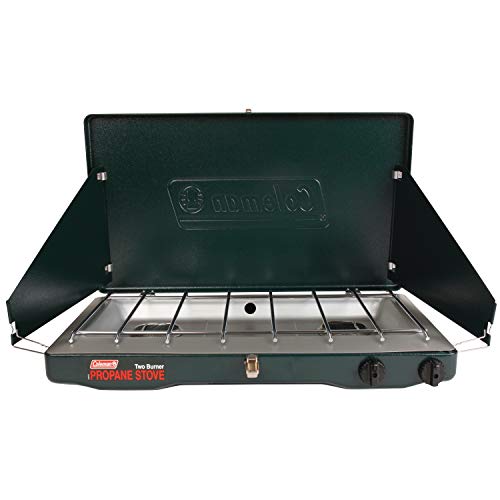
Coleman Classic Propane 2-Burner Stove

Butane Fuel Canisters 24-Pack with RVR

MSR PocketRocket 2 Ultralight Mini Stove Kit

Bonnlo 2-Burner 150,000-BTU Patio Cooker

Coleman Tabletop 2-in-1 Grill & Stove

Trangia Gas Butane Burner GB74
Inside Each Recommended Option
For backpackers who refuse to carry a fuel canister, the Firebox Nano G2 is a folded sheet-steel hearth that weighs roughly 6 oz by itself and around 9 oz with its X-Case kit. Its hinged construction means no assembly at camp: unfold, set a pot on top, and feed it twigs. The cross-feed fuel delivery system draws air through sticks laid across the chamber, which is bushcraft-class functionality in ultralight packaging. Hikers running long stretches through fire-restriction zones may find it limited, but for winter wood-burning or shoulder-season trips where gathering is fair game, it earns real estate in the pack.
Unlike the canister-fed MSR PocketRocket 2 covered later, this stove runs on whatever burns locally. The adjustable pot stand opens to fit everything from a small titanium mug to a 10-inch pan, and the head space on top accommodates a Trangia spirit burner as a hybrid setup.
The Case For It
- Multi-fuel versatility: burns wood, gas, alcohol, or gel with separate accessories
- Hinged folding design eliminates field assembly and pack fumbling
- Compatible with Trangia spirit burners for hybrid wood-and-spirit cooking
- Stainless steel construction holds up to season-after-season trail use
- Adjusts to small titanium cups or larger group cookware
Worth Noting
- Requires dry standing fuel, so wet-weather trips limit its usefulness
- Soot buildup on pot bottoms is widely reported and needs routine cleaning
- Multi-fuel accessories (gas valve, alcohol tray) are sold separately
Made For
Solo backpackers and bushcraft enthusiasts running dry-condition trips who want a fuel-free cooking system.
Where Another Pick Suits Better
The MSR PocketRocket 2 Ultralight Mini Stove Kit fits thru-hikers who face rain or fire bans on every leg and need a reliable boil.
The Coleman Cascade 18 hits a sweet spot for casual campers who want one burner that does real work. It pushes 8,000 BTUs through an aluminized steel cooktop, which gives it enough heat output to handle eggs, soups, and chili without making you wait. The matchless rotary ignition means no hunting for a striker in the dark, and the 180-degree flipping grate lets the whole unit collapse flat for car-trunk storage.
Compared to the multi-burner Coleman Classic propane stove reviewed later, this single-burner design is simpler to deploy. You get the same Coleman reliability in a footprint that doesn’t demand a picnic table.
What Works In Its Favor
- Fits a 12-inch pan, which covers most everyday cookware
- Push-button rotary ignition skips the matches in wet weather
- Aluminized steel cooktop wipes clean with minimal effort
- Improved knob rotation gives genuine simmer control
Honest Caveats
- Single burner limits meal complexity for groups
- Wind performance lags without an added shield in open sites
- Propane cylinder sold separately from the stove body
Right Fit For
Solo travelers, couples, and tailgaters who want a simple single-pan setup without two-burner weight.
Look Elsewhere When
Families running multi-pot meals should pick the Coleman Classic Propane 2-Burner Stove for parallel cooking.
Few stoves have logged more state-park weekends than the Coleman Classic 2-Burner. At 20,000 total BTUs across two independently adjustable burners, this unit handles pancake breakfasts and pasta dinners for groups of four to six without breaking a sweat. The wind-blocking panels on both sides of the cooktop keep flame stability respectable even on breezy exposed sites, and the integrated pressure regulator smooths performance as fuel levels drop.
Where the Coleman Cascade 18 keeps things compact, this model leans into capacity. The footprint accommodates a 12-inch and a 10-inch pan simultaneously, which means side dishes and main courses cook in parallel.
Everyday Advantages
- Dual 10,000-BTU burners let you simmer sauce and sear meat simultaneously
- Wind-blocking panels maintain flame in open sites
- Pressure regulator keeps output steady through long cook sessions
- Two-pan simultaneous cooking fits family meal prep
- Generous 4.1 x 21.9 x 13.7-inch footprint holds standard camp cookware
Things To Consider
- Runtime tops out around 1 hour on high per 16.4 oz cylinder
- Heavier and bulkier than backpacking-oriented stoves
- Best at sites with vehicle access due to size
Key Product Details
Who It Suits Best
Car campers, RV tailgaters, and family cooks running established sites with vehicle access who need real two-pan capacity.
Consider Something Else When
Solo backpackers moving on foot daily should reach for the MSR PocketRocket 2 Ultralight Mini Stove Kit instead.
Fuel canisters aren’t a stove, but they’re the recurring purchase that makes butane systems work. This 24-pack from NATIONAL STANDARD includes a RVR (Relief Valve and Rupture) safety system: 12 scored vents in the dome that release pressure in the unlikely event the canister overheats, preventing catastrophic rupture. UL listing adds a third-party review of the container design itself, which matters for storage in a hot garage or car trunk.
For owners of the Trangia Gas Butane Burner (covered below) or any portable butane stove, a 24-pack means a season’s worth of fuel on hand. Storage becomes the practical concern, since pressurized canisters should never sit near heat sources.
What Makes Sense
- UL-Listed container meets recognized safety container standards
- RVR system vents pressure before rupture during overheat events
- 24-canister bulk count covers a full season of weekend trips
- Standard threading fits most portable butane stoves on the market
Practical Considerations
- Never refuel a hot or burning device, as the safety label explicitly warns
- Pressurized canisters need climate-controlled storage away from heat
- Bulk order requires planning for transport and shelf space
Built With In Mind
Multi-trip households running butane stoves who want a stockpile rather than reordering fuel before every weekend.
Swap It Out When
Backpackers counting every gram should skip the bulk canisters and run the MSR PocketRocket 2 Ultralight Mini Stove Kit on small isobutane mix cartridges.
The MSR PocketRocket 2 has been a thru-hiker staple for years, and this kit version packages the stove with the essentials for solo cooking. The included 0.75-liter hard-anodized aluminum pot boils water fast, the bowl doubles as an eating vessel, and the lid has built-in straining ports for pasta or dehydrated meals. Boil time for one liter runs around 3.5 minutes under standard conditions, which is competitive for the weight class.
Where the wood-burning Firebox Nano G2 trades convenience for fuel independence, this kit trades absolute minimalism for speed and weather reliability. You carry a small isobutane cartridge, but rain and wind don’t shut you down.
Useful Strengths
- All-in-one kit eliminates buying the pot separately
- Hard-anodized pot serves as both cooking and eating vessel
- Lid with straining ports handles pasta and rehydrate meals
- Compact storage fits inside the pot for space-efficient packing
- Reliable performance in rain and wind where wood stoves fail
A Few Limitations
- Isobutane canister availability varies in remote or international zones
- Single-burner design limits meal complexity for two
- Pot size suits solo portions, not group cooking
Quick Facts
Whose Shelf It Belongs On
Solo thru-hikers, bikepackers, and minimalist backpackers running multi-day trips where speed-to-boil matters more than group capacity.
Reach For A Different Pick When
Fire-restriction zones and dry-tinder regions favor the Firebox Stainless Steel Nano Stove G2 Kit instead.
This isn’t your ultralight trail cookware: the Bonnlo 2-Burner is a cast-iron patio cooker rated at 150,000 BTUs across two burners. Each head produces the kind of concentrated flame a carbon-steel wok or large stockpot needs to sear properly, which is why outdoor cooks in many Asian kitchens reach for a single jet burner. The detachable legs break down for trunk storage, and the cast iron holds heat steady through long simmers.
Compared to the Coleman Classic 2-Burner reviewed earlier, this unit trades portability for raw thermal mass. It’s heavier, taller, and built around serious heat output.
Practical Pluses
- 150,000 total BTUs handle wok cooking and stockpot boiling
- Cast iron burner heads retain and radiate heat evenly
- Detachable legs and frame break down for transport
- Adjustable flame supports everything from simmer to sear
- Burner bracket fits varied cookware diameters and shapes
Potential Drawbacks
- Cast iron construction adds real weight to your vehicle load
- Requires a high-capacity propane supply for full output
- Not a backpack or backcountry product: patio, driveway, or tailgate use only
- Heat output exceeds what most standard camp cookware is designed for
Best Suited To
Outdoor cooks running wok stations, crawfish boils, and stockpot work in drive-up settings where raw heat matters most.
Another Choice May Suit
Campers cooking for two to four at a normal picnic table will find the Coleman Classic Propane 2-Burner Stove a more measured fit.
The Coleman Tabletop 2-in-1 splits its 20,000 BTUs across a grill grate on one side and a burner on the other, which solves a common tailgate problem: how to sear burgers while simmering beans. The push-button ignition lights both sides without matches, and the wind guards keep the flame steady in open parking lots. The removable chrome-plated grate simplifies cleanup, and the integrated grease tray catches drippings without leaking onto the table surface.
Where the Coleman Classic 2-Burner stove is all-simmer-all-the-time, this unit adds direct-flame grilling to the equation. The trade-off is a smaller cooking footprint per side.
What It Does Well
- Dual-zone cooking: grill and stove run simultaneously
- Push-button ignition skips the striker
- Wind guards stabilize flame on exposed sites
- Grease tray simplifies cleanup after fatty foods
- 20,000 total BTUs handle burgers and sides at once
Smaller Caveats
- Each cooking zone is smaller than dedicated single-function stoves
- Tabletop design demands a stable flat surface to deploy
- Grease tray needs emptying between heavy grilling sessions
Feature Card
Perfect Match For
Tailgaters, driveway grillers, and small-event hosts who want both grilling and stovetop capacity in one tabletop unit.
Skip It When
Backpackers and minimalists should pass on this unit and consider the MSR PocketRocket 2 Ultralight Mini Stove Kit instead.
The Trangia GB74 is a drop-in gas burner that swaps into the lower windshield of Trangia 25 and 27 series stoves, replacing the traditional spirit burner with a butane-cartridge system. The appeal is conversion: existing Trangia owners gain faster boil times and easier flame control without buying a whole new cook kit. Boil time for one liter runs around 3.5 minutes on a standard butane cartridge, which compares favorably to the alcohol-burner default.
Where the Firebox Nano G2 runs on wood and the MSR PocketRocket 2 runs on isobutane mix, this unit is the butane counterpart designed specifically for the Trangia modular ecosystem.
Key Advantages
- Direct replacement for the Trangia spirit burner in 25/27 kits
- Boil time near 3.5 minutes beats alcohol-burner performance
- Runs on widely available butane gas cartridges
- High-efficiency flame control supports simmering as well as boiling
- Fits inside Trangia windshield for integrated storage
Things To Weigh
- Requires an existing Trangia 25 or 27 stove to function as designed
- Butane performance drops in cold temperatures below freezing
- Cartridge threading is region-specific in some markets
Feature Snapshot
Who Should Grab It
Existing Trangia 25 or 27 stove owners who want a faster, easier-to-control alternative to the included spirit burner.
A Better Fit Elsewhere
Shoppers without a Trangia system should consider the Coleman Cascade 18 1-Burner Camping Stove for a complete standalone solution.
Choosing a Camp Stove That Actually Fits How You Cook
Picking a camp stove starts with a simple question: where does the cooking happen, and how far does the gear travel to get there? Backpackers weight-counting every gram need an ultralight stove system like the MSR PocketRocket 2 Mini Stove Kit, where the entire package boils water fast and packs into a single pot. Car campers, by contrast, can absorb the bulk of the Coleman Classic 2-Burner Stove and gain two-pan capacity in return.
BTUs, Weight, and Footprint: What the Numbers Mean
BTU (British Thermal Unit) ratings measure heat output. Higher BTUs boil water faster and handle wind better, but they also burn through fuel faster. For solo trail cooking, 8,000 to 10,000 BTUs is plenty. For group cooking with multiple pans or woks, 100,000+ BTUs becomes practical, which is what makes a cast-iron patio cooker viable.
Fuel Type Shapes Your Whole Trip
Isobutane cartridges are the standard for backpacking stoves because they’re light, sealed, and stable. Butane is similar but less cold-tolerant. Propane cylinders (the 1-lb green bottles) are cheap and powerful but bulky, suited to car camping. Wood-burning stoves skip fuel entirely but require gathering dry tinder and tolerate fire restrictions poorly.
Wind, Ignition, and Real-World Reliability
Wind guards matter more than raw BTU ratings on open sites. Matchless ignition (rotary or push-button) saves real time when hands are cold. Pressure regulators smooth output as canister levels drop, and removable grease trays make cleanup faster after fatty meals.
Key Considerations Across These Picks
Common Shopping Slip Ups
The most common mistake is matching a stove to a trip type it doesn’t fit. Buying a heavy two-burner propane stove for a backpacking trip means leaving it in the closet or carrying regret on your back. The flip side: ultralight canister stoves can’t simmer a sauce or sear a steak for four. Before any purchase, decide first whether the stove lives in a pack or a car trunk, then narrow from there.
What The Higher Tier Buys
Higher-priced camp stoves typically deliver better materials (stainless steel versus aluminum), tighter flame control, wind performance, and modular accessory ecosystems. The Coleman Tabletop 2-in-1 and Bonnlo patio cooker carry premium pricing because they combine cooking functions and use heavier-gauge components. For weekend warriors running four trips a year, mid-tier options cover the bases well. For people living out of a camp setup season after season, the upgrade pays off in reliability and faster cleanup.
Frequently Asked Questions
What is the safest fuel type for camp gas stoves?
Butane and isobutane cartridges are widely considered stable choices for portable stoves, with UL-listed canisters adding a third-party safety review of the container design.
Can you use camp gas stoves indoors?
Most manufacturers warn against indoor use because of carbon monoxide buildup. A well-ventilated garage with open doors is a different scenario from a closed tent.
How long does a typical butane canister last?
Runtime depends on heat output and flame setting, but a standard canister can fuel a single burner for roughly an hour on high, which is enough for several meals at moderate use.
Are two-burner stoves worth the extra weight?
For groups cooking full meals, two burners save real time by running a main and side simultaneously. For solo cooks, a single burner covers the bases and packs lighter.
What is the best way to store fuel canisters?
Keep pressurized canisters in a cool, dry place away from direct sunlight and heat sources. A garage shelf or climate-controlled closet works better than a car trunk in summer.
Bottom Line
The right camp stove depends almost entirely on where you go and how you cook. Backpackers running wet or wind-prone terrain will find the MSR PocketRocket 2 Mini Stove Kit the most dependable companion. Car campers feeding a group should look at the Coleman Classic 2-Burner. Patio cooks chasing wok heat should consider the Bonnlo. Match the stove to the trip, and the rest falls into place.