
A good night outside depends more on what’s under you than most first-time campers realize. Cold ground, uneven terrain, and thin air mattresses turn a fun trip into a stiff, sleepless ordeal fast. The right camp bedding changes all that, whether you’re outfitting the family tent, kitting out a rooftop setup, or just want something cozy for the kids back at the cabin.
The Lineup, Simplified

Franco Kids Bedding Super Soft Micro Raschel Throw, Paw Patrol Skye

Lost Horizon Option3 Self-Inflating Foam Camping Mattress, Queen 4.5″

HDFK Pizza Blanket for Kids Flannel Double Sided Round Cheese Cozy 60in
Lost Horizon Option3 Self-Inflating Foam Camping Mattress, Cot 4.5″

Lost Horizon Option3 Self-Inflating Foam Camping Mattress, Twin 4.5″

Lost Horizon Option3 Self-Inflating Foam Camping Mattress, Slim Single 3″

Lost Horizon Option3 Self-Inflating Foam Camping Mattress, Full 4.5″
Lost Horizon Option3 Self-Inflating Foam Camping Mattress, Single 4.5″
Meet The Standout Selections
Not every camping trip means roughing it in the backcountry. For families setting up base at a campground or a rental cabin, having something soft and recognizable waiting at the end of the day matters just as much. The Franco Kids Bedding Super Soft Micro Raschel Throw leans into that exact use case with a Paw Patrol Skye theme that instantly reads as comforting for younger kids.
At roughly 46 by 60 inches, it’s a throw-sized piece rather than a full bedding set, which makes it versatile. You can layer it over a sleeping bag, drape it across a cot, or use it for couch-and-fort nights between hikes. For a parent packing the family car, that kind of flexibility removes one decision from a long packing list.
Good Reasons To Consider
- Micro raschel fabric feels plush against bare arms and legs, which matters for kids who kick off their sleeping bag.
- The Skye-themed graphics tie into a familiar character, helping younger campers settle in faster at bedtime.
- Light enough to toss into a duffel or car trunk without weighing down a parent’s packing list.
- Doubles as a picnic blanket at the campsite or a fort-building layer in the living room when you return home.
Trade-Offs To Weigh
- It’s a throw, not a fitted sheet or sleeping bag replacement, so colder nights still call for extra insulation underneath.
- The themed print appeals to a specific age window, and kids tend to outgrow favorite characters quickly.
Right Fit For
Families with Paw Patrol fans heading to mild-weather campgrounds or cabin getaways who want a familiar comfort item layered over standard bedding.
Swap It Out When
Anyone sleeping on the ground in cooler weather should pair this with the Lost Horizon Option3 Self-Inflating Foam Camping Mattress, Queen 4.5″, which provides the actual insulation layer below.
The 4.5-inch profile is the headline here. That’s thick enough to keep sleepers off cold ground and to soften roots, rocks, and uneven tent floors. For couples or car campers who want a real bed feel, this queen-size mat brings the comfort bar up without inflating it by mouth or carrying a bulky pump system.
A self-inflating design (a foam core that expands as air pulls in through the valve) makes setup faster at the end of a long drive. You unroll it, open the valve, and the mattress largely fills itself before you top it off with a few breaths. Compared to the queen pads that demand constant re-inflation through the night, this one tends to hold its loft longer.
Everyday Wins
- 4.5-inch foam core cushions hips and shoulders, the spots where side sleepers tend to feel the ground most.
- Queen footprint lets two people stretch out without rolling into each other, a real upgrade from twin pads side by side.
- Self-inflating mechanism cuts setup time, which matters when you’re arriving at camp tired or after dark.
- Foam filling distributes weight evenly, so the middle doesn’t sag the way air-only mattresses often do.
Practical Considerations
- Bigger packed size than the Twin or Single versions, so it works best for car camping rather than long backpacking trips.
- Owners commonly report that keeping the valve clean is the key to long-term performance; grit in the valve slows inflation.
Key Product Details
Best Suited To
Couples and car campers who want one wide, supportive surface that deploys quickly and holds up across multiple nights.
A Better Fit Elsewhere
Solo backpackers hauling miles into the backcountry should look at the Lost Horizon Option3 Self-Inflating Foam Camping Mattress, Single 4.5″, which cuts weight dramatically.
The HDFK Pizza Blanket isn’t serious backcountry gear, and it isn’t trying to be. It’s a 60-inch flannel circle printed to look like a cheese pizza, and that novelty is the point. For kids who need something fun at the end of a campfire night, a sleeping bag just doesn’t have the same personality.
Flannel is a smart material choice here. It traps warm air in its brushed fibers, holds color well through repeated washes, and resists the static that cheaper blankets tend to build up. The double-sided print keeps the visual joke working whether it lands cheese-up or cheese-down on the cabin floor.
Strong Points
- 100% flannel construction keeps warmth without the weight of fleece, which matters for kids who drag blankets everywhere.
- The 60-inch round shape gives kids room to burrito themselves in, mimicking the look of the pizza they’re lying on.
- Machine washable, so campfire smoke, s’mores drips, and cabin dust come out without special care.
- Doubles as a picnic blanket, cape, or fort centerpiece once the novelty wears off indoors.
Honest Caveats
- The round shape doesn’t fold flat, which makes it awkward to stack in a tight car trunk.
- It’s a themed comfort blanket, not an insulated camp layer, so cold nights still need a real pad underneath.
Who Should Grab It
Parents looking for a fun, gift-style layer for cabin trips, sleepovers, or themed birthday camping weekends where personality matters more than thermal performance.
Look Elsewhere When
Anyone sleeping on the ground in cooler weather should grab the Lost Horizon Option3 Self-Inflating Foam Camping Mattress, Full 4.5″ instead, which provides actual ground insulation.
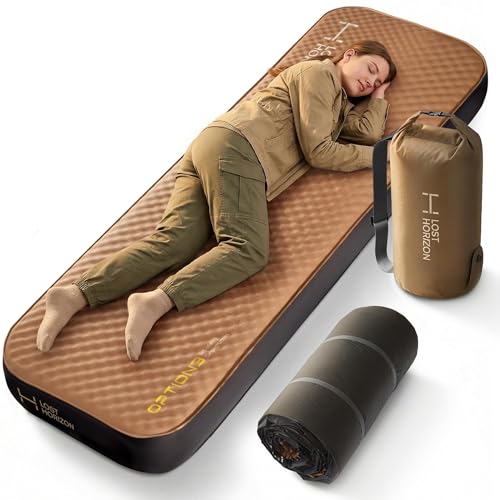
If you already sleep on a camp cot, you know the trade: a raised bed keeps you off cold ground and away from critters, but the canvas or nylon surface feels bouncy and leaves you feeling every bar underneath. The Lost Horizon Cot-size mat solves that gap by giving the cot a foam topper that calms the springy feel.
At 4.5 inches, it matches the loft of the rest of the Option3 lineup, which means a familiar feel whether you’re using the Cot, Twin, or Queen version across different trips. For families who move between setups (a cot at base camp, a twin at the car, a queen at the cabin) that consistency is more useful than it sounds.
Advantages To Know
- Cuts the bounce and bar-pressure that bare cot surfaces tend to produce on side sleepers.
- Same self-inflating mechanism as the larger sizes, so setup stays consistent across the lineup.
- Foam filling holds warmth better than air-only inflatables, which matters on chilly nights above cold ground.
Points To Note
- Lower weight capacity (up to 220 pounds) than the Queen or Full options, so it’s sized for a single sleeper.
- Pairs only with cot-width frames, so it won’t substitute for a Twin on the tent floor.
Feature Snapshot
Whose Shelf It Belongs On
Campers who already rely on a cot frame and want a foam topper that turns it into something closer to a real bed.
Reach For A Different Pick When
Sleepers without a cot frame should grab the Lost Horizon Option3 Self-Inflating Foam Camping Mattress, Twin 4.5″, which sits directly on tent floors.
The Twin sits in a useful middle ground between the Solo Single and the roomy Queen. It’s wide enough for one sleeper to stretch out diagonally or for a parent to share a night with a small child, but narrow enough to fit a standard backpacking tent without crowding the vestibule.
The 8.5-pound foam fill strikes a balance between cushioning and packability. Heavy enough to feel supportive under your hips, light enough that you can roll it into a car trunk or strap it to a roof box without rethinking your packing list. For most first-time family campers, this is the size that ends up in the rotation year after year.
Positive Takeaways
- Twin footprint adapts to solo use, parent-and-kid sharing, or two side-by-side pads in a larger tent.
- 4.5-inch foam core insulates better than thin air pads, which matters once overnight temperatures dip.
- Up to 300 pounds of weight capacity handles adults plus restless sleepers and pet co-sleepers.
- Self-inflating valve keeps setup fast, so the kids aren’t waiting around the tent while you wrestle with a pump.
Less-Strong Areas
- Twin size still adds weight and bulk compared to the Single, so backpackers will feel the difference on long hauls.
- Not quite wide enough for two full-grown adults to sleep side by side without contact.
Feature Card
Made For
Solo campers and small families who want one mattress that flexes between solo use, sharing with a kid, or doubling up in a bigger tent.
Consider Something Else When
Two adults sharing a tent will find the Lost Horizon Option3 Self-Inflating Foam Camping Mattress, Queen 4.5″ more comfortable for full nights.
The Slim Single is the smallest and lightest mattress in the lineup, and it targets a specific pain point: sleeping in places where a standard mattress just won’t fit. The 3-inch profile and narrow dimensions work in SUV back seats, short truck beds, and solo tents where floor space is at a premium.
It still uses the same self-inflating foam construction as its bigger siblings, so you get the convenience of valve-open inflation without giving up the feel of foam underneath you. The trade-off is loft. Three inches cushions but doesn’t isolate the way a 4.5-inch mat does, so cold-weather campers may want to layer it over a closed-cell foam pad.
Where It Excels
- Narrow footprint fits vehicle interiors, hammock-floor tents, and tight single-person shelters where wider mats won’t fit.
- Lower profile reduces packed bulk and weight, making it easier to stash in a small trunk or cargo nook.
- Self-inflating foam keeps the setup ritual consistent with the rest of the Option3 family.
Practical Considerations
- 3-inch thickness doesn’t insulate as well as 4.5-inch mats, which matters in shoulder-season cold.
- Smaller size won’t suit restless sleepers who roll or shift through the night.
Feature Snapshot
Built With In Mind
Solo travelers sleeping in SUVs, short truck beds, or compact tents who need a low-profile mattress that doesn’t crowd the available space.
Where A Sibling Pick Shines
Campers with full tent floor space and cooler nights will appreciate the extra loft and warmth of the Lost Horizon Option3 Self-Inflating Foam Camping Mattress, Twin 4.5″.
The Full-size sits between the Twin and the Queen, and for a lot of families that’s the sweet spot. It’s wider than a Twin (so two people can actually share without one of them hanging off the edge) but more manageable than a Queen (which can dominate a small tent). For a couple, two kids, or a parent with a pet, this hits a usable middle ground.
Like the rest of the lineup, it uses a self-inflating foam core, which means you don’t need to bring a pump and you don’t need to spend ten minutes blowing it up. The 12-pound foam fill gives the mat enough substance that it doesn’t bottom out under two sleepers, which is where a lot of air-only pads fall apart.
A Few Strong Suits
- Full footprint offers more room than a Twin without the bulk of a Queen, which works for two-person tents.
- 12-pound foam core stays supportive across the full surface, even with two sleepers sharing the night.
- Up to 440 pounds of weight capacity handles two adults or a family that includes a dog sprawled across one corner.
- Same 4.5-inch loft as the larger Queen, so warmth carries over without a step-down in comfort.
Small Caveats
- Still a car-camping mattress, not a backpacking one, and that shows up in packed size and weight.
- Full dimensions may be too wide for narrow two-person tents designed around Twin pads.
Who It Suits Best
Two sleepers sharing a family-size tent who want more shoulder room than a Twin without committing to a full Queen footprint.
Another Choice May Suit
Couples outfitting a larger family tent will find the Lost Horizon Option3 Self-Inflating Foam Camping Mattress, Queen 4.5″ worth the extra room if pack space allows.
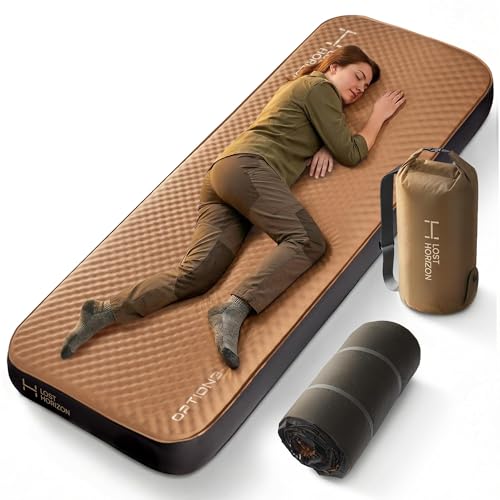
The Single is the most portable full-thickness option in the lineup. It’s narrower and lighter than the Twin, but it keeps the 4.5-inch foam core that makes the Option3 series feel different from a cheap air pad. For solo travelers on motorcycles, in roof-top tents, or shuttling between hostels and huts, that balance matters.
Self-inflating foam (a foam slab inside the mattress that expands as air enters through the valve) does most of the setup work for you. You unroll the mat, crack the valve, and the foam core draws air in on its own before you top it off with a couple of breaths. That’s a real time-saver when you’re pitching at the end of a long day.
Noteworthy Benefits
- Single footprint packs smaller and lighter than the Twin, which matters for solo travelers hauling their own gear.
- 4.5-inch thickness insulates well enough for shoulder-season trips, unlike most ultralight pads.
- Up to 220 pounds of capacity covers a wide range of adult sleepers.
- Foam core helps the mat hold its shape across multi-night trips rather than sagging by day three.
Some Limits To Know
- Smaller footprint doesn’t suit restless sleepers who shift and roll through the night.
- Heavier than an ultralight air pad, so distance hikers hauling packs may want to look elsewhere.
Feature Snapshot
Made For
Solo campers who want the comfort of foam without hauling a queen-size mattress to the campsite.
Reach For A Different Pick When
Tight vehicle sleepers should consider the Lost Horizon Option3 Self-Inflating Foam Camping Mattress, Slim Single 3″, which fits smaller footprints.
What Matters Most Before Choosing Camp Beddings
Picking the right camp bedding comes down to where you sleep, who sleeps next to you, and how cold the nights get. Foam thickness, mattress footprint, and inflation style each change the experience in measurable ways, and lining them up with your usual trips matters more than chasing the biggest option you can fit in the car.
Thickness And Ground Insulation
Thickness in a camp mattress does two jobs at once: it cushions your body against rocks and roots, and it traps a layer of still air between you and the cold ground. For shoulder-season trips and chilly mountain nights, a 4.5-inch foam core tends to outperform thinner pads because the foam itself slows heat transfer. For warm-weather family camping, a 3-inch pad can be plenty, especially when paired with a softer blanket on top.
Size And Sleeping Arrangement
The footprint decision is about the people on it and the tent around it. A solo backpacker can manage a Single or Slim Single and save weight, while a couple sharing a family tent usually does better with a Full or Queen so they’re not fighting for shoulder space all night. Measure your tent floor before committing to a wide mattress, since some two-person tents are built around narrower pads.
Inflation Style And Packed Weight
Self-inflating foam mats (mattresses that combine an open-cell foam core with an air valve) sit in a middle ground between ultralight air pads and old-school foam pads. They pack smaller than closed-cell foam and inflate faster than a manual air pad, but they still weigh more than the lightest backpacking options. For car camping and short carries, that’s a worthwhile trade. For distance hiking, every ounce counts, and a thinner dedicated backpacking pad starts to make more sense.
Care, Storage, And Long-Term Use
A few habits extend the life of any foam-and-air camp mattress. Owners commonly report that storing the mat unrolled (or loosely rolled) at home keeps the foam from taking a compression set. Keeping the valve clean and free of grit is what owners most often cite when asked what keeps inflation working over multiple seasons. A simple patch kit goes a long way in the field too.
Key Considerations Across These Picks
A few patterns show up when you put all eight options side by side. Most shopping regrets in this category come from skipping those patterns until the first cold night, and a little awareness upfront goes a long way.
Mistakes Worth Dodging
The most common slip-up is sizing down to save weight and then discovering the mattress is too narrow for real sleeping. A pad that fits your back but leaves your shoulders hanging off gets uncomfortable by midnight. The flip side happens too: a queen that fits the family tent on paper but won’t actually fit through the tent door once it’s rolled up. Measure twice, including the rolled dimensions.
Where The Extra Money Goes
Higher-tier options in this category tend to buy thicker foam cores, higher weight capacities, and wider self-inflating footprints. For couples, parents sharing with kids, and campers in shoulder-season weather, that extra foam and the wider surface pay off in real sleep. For a single backpacker running three-season trips, a lighter pad with the same inflation style may serve just as well at a fraction of the packed size.
Frequently Asked Questions
How thick should a camp mattress be for cold nights?
For cold nights, look for a mattress with at least 4 inches of foam core. Thicker foam slows heat transfer to the ground and creates a buffer against uneven terrain, which is what makes the 4.5-inch options in this lineup work well in shoulder seasons. Thin pads work fine for summer trips but tend to feel cold once temperatures drop.
Can two people share a Full-size camp mattress comfortably?
Yes, a Full-size mat works for two average adults or one adult with a kid and a pet, especially at 4.5 inches of foam. Sleepers who move around a lot in their sleep may still prefer a Queen for the extra shoulder room, but the Full sits in a practical middle ground for family tents.
What does “self-inflating” actually mean?
Self-inflating means the mattress combines an open-cell foam core with a valve. When you open the valve, the foam expands and pulls air into the mattress on its own, and you top it off with a few breaths or puffs. That’s faster than a manual air pad and gives you foam underneath you rather than just air.
Are themed kids’ blankets warm enough for camping?
Themed kids’ blankets like flannel throws add comfort and personality, but they’re not insulation layers. On mild nights they work over a sleeping bag or directly on a mattress, while on cold nights you still need a real pad or rated sleeping bag underneath to keep sleepers warm.
How do you store a self-inflating foam mattress long term?
Owners commonly store self-inflating mats unrolled or loosely folded in a dry place, which helps the foam recover its loft between trips. Keeping the valve clean and storing the mat away from sharp gear also extends its usable life across multiple camping seasons.