
A flat cot pad or a thin air mattress can ruin a good night outdoors faster than rain. Camp bed foams come in different shapes and densities, and the right one turns rocky ground, a backseat, or a spare corner into an honest sleeping setup. This roundup covers foldable memory foam toppers, self-inflating mats, dual-sided camping pads, and an elevated cot, so you can match the foam to your trip, your tent, or your guest room.
The Leading Options At A Glance

Fancylion 4 Inch Memory Foam Trifold Mattress Topper

BedsPick 2 Inch TwinXL Memory Foam Mattress Topper
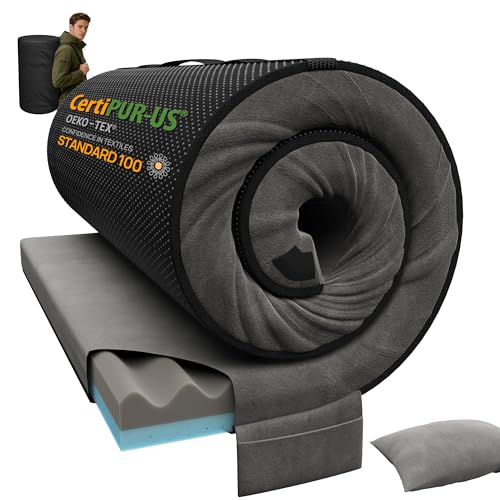
Releep 3 Inch Dual-Sided Memory Foam Camping Mattress

Lost Horizon Option3 Self-Inflating Mattress Queen

Coleman ComfortSmart Big & Tall Cot with Mattress Pad

Outcast Sporting Gear Foam Cushion Sleeping Landing Pad

LLUAII Self Inflating Sleeping Pad with Electric Pump

Lost Horizon Option3 Self-Inflating Mattress Twin

Lost Horizon Option3 Self-Inflating Mattress Full
A Deeper Look At The Lineup
The Fancylion trifold lives at the intersection of mattress topper and guest bed. The four-inch memory foam profile unfolds into a queen-size sleep surface and folds back down into a closet-friendly block when the morning coffee is done. In small apartments where a permanent guest room is a luxury, this foam earns its keep as a stowable spare.
Unlike the camping-focused mats lower in this list, this one is built for indoor comfort. Memory foam cradles pressure points and stays quiet on hardwood or laminate, which matters when a guest is drifting off in a living room. The triple-fold design means you can slide it under a platform bed or stand it in a coat closet between visits.
What It Does Well
- Folds into three compact panels for under-bed or closet storage in seconds.
- Four-inch memory foam depth softens firm guest mattresses without replacing them.
- Queen footprint sleeps two adults for short stays or overnight visits.
- Quiet foam surface won’t squeak or shift on hardwood the way cots sometimes do.
- Lighter and easier to move than a folding steel frame, which makes setup a one-person job.
Points To Keep In Mind
- Not rated for outdoor use, so moisture and rough ground can damage the foam over time.
- Memory foam tends to hold body heat, so warm bedrooms may need a lighter top sheet.
- Spot cleaning is the practical option; owners commonly report that deep cleaning a thick foam slab is awkward at home.
Who Will Love This
Studio dwellers and small-home hosts who want a real bed waiting for visitors without dedicating a full room to it.
A Better Fit Elsewhere
For actual tent trips, the Releep 3 Inch Dual-Sided Memory Foam Camping Mattress is lighter and built to handle damp ground.
BedsPick keeps the design stripped down to the essentials: a two-inch medium-firm memory foam layer in a TwinXL footprint. The ventilated purple foam helps air move through the slab, which is the kind of feature that pays off on warm nights or in rooms without strong cross-ventilation.
This topper fits comfortably on tatami platforms, bunk beds, and standard dorm mattresses. The medium-firm feel is a deliberate middle ground, firmer than a plush pillowtop but softer than a bare futon. You lay it on top of an existing surface, and it instantly changes how the bed feels without requiring a new mattress purchase.
The Upside
- Ventilated foam channels reduce the trapped-heat feel common in budget memory foam.
- TwinXL footprint matches most college dorms and bunk frames, a real perk for students.
- Two-inch depth adds noticeable softness without making the bed feel unstable or too high.
- Light enough to roll and store when a room needs to flip between guest space and office.
Trade-Offs To Consider
- Only two inches thick, so it won’t rescue a truly worn-out mattress the way a four-inch topper can.
- Not designed for outdoor or high-moisture environments, which limits versatility beyond indoor use.
Best Suited To
Students in dorms and renters with firm futons who want a softer night’s sleep without replacing their bedding setup.
Swap It Out When
Car campers and backpackers get more from the LLUAII Self Inflating Sleeping Pad with Electric Pump, which is built for outdoor nights.
The Releep camping mattress takes a different approach than the indoor toppers above. A dual-layer foam stack sits inside a waterproof shell, and the whole pad rolls up into a carry bag with a portable pillow tossed in. It reads like a sleep system designed for people who treat their car like a second bedroom.
Three inches of foam bridges the gap between ultralight pads and full-size air mattresses. You feel uneven ground less than you would on a thinner mat, and the foam doesn’t need an external pump. Roll it out on a tent floor, the back of an SUV, or a spare corner of a cabin, and it behaves like a slice of home.
Good Reasons To Consider
- Waterproof outer shell shrugs off dew, condensation, and the occasional spilled drink.
- Includes a portable pillow, so the kit feels complete right out of the carry bag.
- Dual-sided foam gives you a firmer or softer side depending on which way you flip it.
- Three-inch depth softens gravel campsites and truck-bed camping without losing portability.
Points To Note
- Heavier and bulkier than a self-inflating pad, so ultralight hikers may want something thinner.
- Foam absorbs moisture over time, so drying the pad fully before storage is a real maintenance step.
Right Fit For
Car campers, SUV sleepers, and weekend festival-goers who want real cushion without hauling an air mattress.
Where Another Pick Suits Better
Backpackers counting every ounce will prefer the Lost Horizon Option3 Self-Inflating Mattress Twin, which packs down smaller for trail use.
Self-inflating mats use open-cell foam that sucks in air when you crack a valve, doing most of the setup work for you. The Lost Horizon Option3 in queen is the plush version of that idea: a 4.5-inch profile, 13 pounds of foam filling, and a 440-pound weight capacity that suits a wide range of campers.
Open the valve and walk away for a few minutes while the pad inflates on its own, then close it up and tweak the firmness with a few breaths. The internal foam structure spreads air evenly across the surface, which matters when you’re shifting at 2 a.m. and don’t want a saggy hip pocket. Compared to the thinner Releep above, this pad gives you significantly more loft under the shoulders.
A Few Highlights
- 4.5 inches of loft softens rocky tent floors and uneven cabin platforms.
- Open-cell foam inflates itself once the valve opens, so pump-bag fatigue stays out of the equation.
- 440-pound capacity handles two adults sharing a queen site without bottoming out.
- Even air distribution means fewer cold spots and pressure dips during the night.
Honest Caveats
- Bulks up large when packed, so vehicle space matters for canoe trips and motorcycle camping.
- Open-cell foam can hold moisture if stored damp, so drying before packing is a recurring chore.
Key Advantages
Made For
Couples and family campers who want a near-bedlike surface without hauling a full rollaway into the woods.
Not Your Match When
Solo backpackers should look at the Lost Horizon Option3 Self-Inflating Mattress Twin, which trades size for packability.
The Coleman ComfortSmart skips the foam-only approach and adds a steel frame to the mix. A coil suspension system and a plush foam pad sit on top of a folding camp bed, which lifts sleepers off the ground entirely. For campers over six feet or anyone who has fought a low tent cot in the dark, that elevation is a quality-of-life upgrade.
The frame supports up to 300 pounds and folds into a footprint that fits most car trunks. Compared to the self-inflating pads in this list, the ComfortSmart trades portability for structure: you get a real sleeping platform, but it takes up more space in a trunk and weighs more on a portage. It also doubles as an extra bed indoors during overflow hosting.
Practical Pluses
- Elevated steel frame keeps sleepers off cold, damp, or bug-heavy ground.
- Coil suspension spreads weight across the pad for a more bed-like feel than flat foam.
- Plush mattress pad softens the frame so it doesn’t read as a bare cot.
- Fits campers up to 6 feet 6 inches, addressing a real pain point for tall users.
Less Ideal Details
- Heavier and bulkier than a roll-up foam mat, so it isn’t a backpack-friendly option.
- Setup takes longer than unrolling a self-inflating pad, which matters on quick overnight stops.
Who Should Grab It
Taller campers and hosts who want a guest bed that lives in the garage between trips and pulls out when company arrives.
Skip It When
Backcountry hikers will do better with the LLUAII Self Inflating Sleeping Pad with Electric Pump, which packs much tighter.
The Outcast Landing Pad is built for wet, awkward ground where most foam mats struggle. Designed around river trips and raft setups, the 30-inch foam cushion takes abuse that would soak a memory foam topper and keeps on working. Think of it as a landing zone for gear, dogs, and sleepers alike.
Unlike the closed-cell mats more common in outdoor stores, this foam is intentionally soft, which makes it a comfortable crash pad for drift-boat camping. It also handles splash zones where spray and soaked gear would ruin a conventional sleeping pad. The honest read is that it’s a specialist pick, not an all-purpose foam.
The Good Stuff
- Closed-foam construction tolerates moisture without breaking down the way open-cell foam can.
- 30-inch width works as a seat, a sleep surface, or a landing pad for boats and rafts.
- Bright red color stays visible on busy beaches and rocky riverbanks, reducing loss risk.
- Doubles as a kneeling pad for fishing, pumping, and rigging in the same trip.
Things To Weigh
- Only 30 inches wide, so it reads more as a single sleep surface than a shared one.
- Not as plush as the memory foam options above, which matters for side sleepers on hard surfaces.
Perfect Match For
River runners, raft guides, and anglers who need a moisture-tolerant cushion for wet camps and gear staging.
Look Elsewhere When
Dry-land tent campers will get more sleep quality from the Releep 3 Inch Dual-Sided Memory Foam Camping Mattress.
Most self-inflating pads still ask you to top off the air with lung power. The LLUAII pad skips that step by building an electric pump into the mat itself, with a built-in pillow to round out the sleep kit. Hit the button and the foam-and-air hybrid fills itself while you deal with the rest of camp.
The 9.5 R-value (a measure of how well a pad insulates you from cold ground) puts this firmly in four-season territory, which is rare at this category of self-inflating mat. That makes it a strong pick for shoulder-season camping, truck-bed overnights, and cold-floored cabins. Compared to the Lost Horizon pads below, the headline feature here is automation rather than raw size.
Key Advantages
- Built-in electric pump inflates and deflates the pad on demand, no manual pumping needed.
- 9.5 R-value handles cold-ground camping across three or four seasons.
- Four-inch foam-and-air build softens truck beds and cot frames without bottoming out.
- Built-in pillow streamlines the kit, which is helpful for first-time foam-pad shoppers.
Things To Consider
- Electric pump adds weight and bulk compared to a basic valve-driven self-inflating pad.
- Requires a power source to use the pump feature, so backup breath-inflation is worth knowing.
Who It Suits Best
Glampers, overlanders, and cold-weather campers who want push-button setup and serious insulation in one package.
Consider Something Else When
Weight-conscious backpackers should consider the Lost Horizon Option3 Self-Inflating Mattress Twin for a lighter trail-ready footprint.
The twin version of the Lost Horizon Option3 trims the queen down to a solo-friendly footprint. With 4.5 inches of loft, 8.5 pounds of foam fill, and a 300-pound capacity, it carries the same comfort profile as the queen above but in a packable size that fits small tents and bunks.
Same self-inflating story: crack the valve, let the open-cell foam do the work, and tweak firmness by mouth. Solo campers, paddlers, and anyone sleeping in a one-person tent will appreciate that this pad gives up less trunk space than the queen. It also fits across the back seat of a sedan for stealth-camping setups.
What Stands Out
- Self-inflating foam saves time and lung power after a long drive to camp.
- 300-pound capacity handles larger solo sleepers without losing loft under the hips.
- Twin footprint fits small tents, bunks, and back seats where queen pads won’t go.
- Open-cell construction stays warmer on cold ground than basic closed-cell foam mats.
Where It May Fall Short
- Not wide enough for two adults, so couples will want the queen version instead.
- Open-cell foam needs a dry storage routine to avoid mildew between trips.
Right Fit For
Solo backpackers, paddlers, and hostel-style travelers who want real cushion in a manageable footprint.
Where A Sibling Pick Shines
Couples camping together will sleep better on the Lost Horizon Option3 Self-Inflating Mattress Queen, which spreads the same foam across a wider surface.
The full version sits in the middle of the Lost Horizon lineup, between the twin and the queen. You get the same 4.5-inch foam-and-air construction, a 12-pound foam fill, and a 440-pound weight capacity, all on a full-size platform that bridges solo and shared sleep setups.
For parents camping with one child, or for a single sleeper who wants elbow room, the full-size footprint hits a sweet spot the twin can’t match and the queen overdelivers on. It also fits standard full-size sheets if you want a familiar bedding layer on top, which most self-inflating pads don’t accommodate.
Useful Strengths
- Full-size footprint fits standard sheets, which makes bedding swaps familiar and easy.
- 12-pound foam fill adds noticeable density for restless sleepers who shift at night.
- 440-pound capacity handles a parent-and-kid setup or a single sleeper with a dog on the pad.
- Self-inflating valve cuts setup time compared to traditional air mattresses on cold nights.
A Few Limitations
- Bulkier than the twin, so solo backpackers may still prefer the smaller sibling.
- Not as wide as the queen, so two adults sharing will feel a tighter fit than on the queen version.
Built With In Mind
Parents camping with one child and solo sleepers who want extra elbow room without committing to a queen footprint.
Reach For A Different Pick When
Couples sharing long-term will appreciate the wider surface of the Lost Horizon Option3 Self-Inflating Mattress Queen.
What Matters Most Before Choosing Camp Bed Foams
Foam Type And Density
Memory foam cradles pressure points but runs warm; closed-cell foam (firm, waterproof foam that won’t absorb water) shrugs off moisture but feels firmer under the shoulders; open-cell foam (softer foam that expands as air fills its chambers) handles self-inflation and cold insulation in one package. Density drives durability: heavier foam per cubic foot generally outlasts lightweight slabs, but adds pack weight.
Thickness, R-Value, And Loft
Thicker pads protect you from rocks and roots, while R-value measures insulation from cold ground. For summer car camping, 2 to 3 inches usually works. Shoulder-season trips and cold cabins benefit from 3.5 inches or more and a higher R-value, which is where the LLUAII and Lost Horizon options earn their keep.
Size, Footprint, And Storage
Match the pad to the tent floor and the vehicle. Twin sizes fit back seats and small shelters; queen sizes demand family tents and SUV cargo space. Self-inflating pads roll into cylinders, while foldable toppers flatten into closet-friendly blocks, which matters more for indoor guest beds than for trail use.
Setup Style And Use Case
Self-inflating foam saves lung power at camp. Electric pumps go further by automating the job entirely. Folding memory foam toppers need no inflation but are built for indoor use. Cots with foam pads add elevation but trade packability for structure. Pick based on whether you want to sleep in a tent, a guest room, a raft, or a truck bed.
Key Considerations Across These Picks
Pitfalls Shoppers Hit
A common mistake is buying a memory foam topper for outdoor use, where moisture and rough ground shorten its life fast. Another is choosing thickness without checking R-value, which matters far more for cold-ground camping than loft alone. Shoppers also tend to underestimate packed size, so a pad that fits a tent may not fit a sedan trunk on the way there.
Why Top Tier Costs More
Premium picks in this category tend to add features that solve real problems: electric pumps cut setup time, higher R-values extend your camping season, and denser foam fillings resist bottoming out under restless sleepers. The upgrade pays off most when you camp often, sleep cold, or share the pad with a partner or a child.