
A good night’s sleep shouldn’t depend on how much you spend. After a long day of hiking, setting up camp, or driving across the country with a packed car, the mat beneath you decides whether you wake up stiff or rested. The right foam sleeping mat cushions pressure points, blocks cold from the ground, and rolls up small enough to live in your trunk or pack.
This list rounds up ten budget-friendly sleeping mats that handle real outdoor use. Each one earns its place through specific attributes: insulation ratings, foam density, packed size, and how it fits different sleeping styles. Whether you’re a first-time camper or a seasoned backpacker chasing lighter loads, there’s something here that fits the way you actually sleep outside.
An Overview Of The Picks
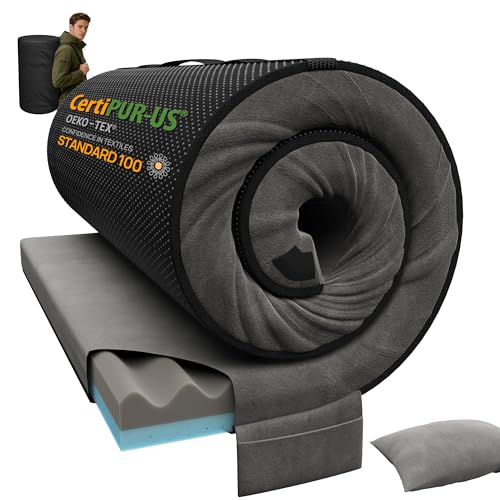
Releep 3 Inch Dual-Sided Memory Foam Camping Mattress

Therm-a-Rest Z Lite Original Sleeping Pad
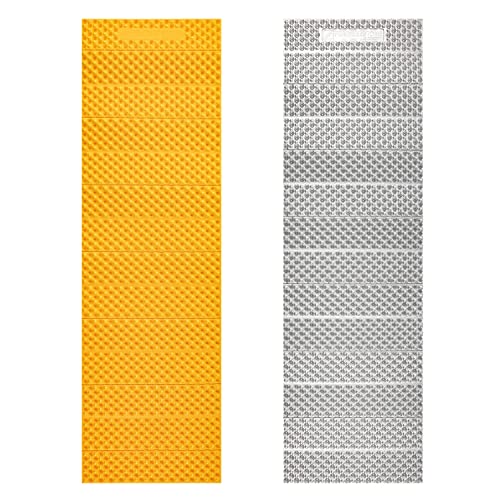
Featherstone El Cordion R-Value 2.1 Sleeping Pad

Zzuvjoy 3.1 Inch Self-Inflating Sleeping Pad

FOCHIER F Foam Camping Pad for Hiking

Night Cat Foam Sleeping Pad

POYNUC Memory Foam Camping Mattress
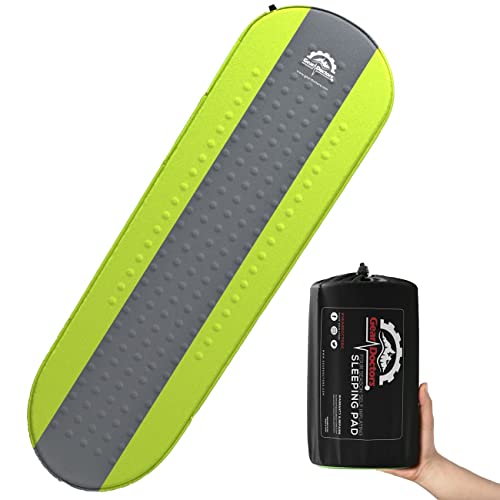
Gear Doctors Oxylus Self-Inflating Pad

TREKOLOGY Self-Inflating Camping Pad

Elegear 4 Inch Insulated Sleeping Pad
The Strengths Of Each Pick
Car campers who want real mattress comfort without hauling a full-size bed will appreciate what Releep brings to the table. The mat rolls out flat, fills three inches of vertical space, and uses a dual-layer foam system that cradles hips and shoulders far better than the typical thin foam pad. Compared to the Therm-a-Rest Z Lite that follows, this one trades packability for actual cushion, making it the right call when your gear lives in a trunk rather than a backpack.
A bundled pillow and carry bag keep the setup feeling like a complete sleep system. For overnight guests who would otherwise sleep on a hardwood floor, or for car-camping weekends when comfort matters more than ounces, this mat handles the job. The waterproof surface adds confidence in damp tent floors or unexpected condensation on cooler nights.
Points In Its Favor
- Gel-infused memory foam top layer relieves pressure on shoulders and hips during side sleeping
- High-density support base prevents bottoming out on rocky or uneven terrain
- Three-inch thickness mimics a home mattress feel, helping first-time campers sleep deeper
- Included pillow and carry bag simplify packing for weekend trips
Things To Consider
- Bundled size and weight rule out serious backpacking; this is a car-camping mat, not a trail mat
- Open-cell foam construction can absorb moisture over time, so owners commonly air it out before long-term storage
Made For
Car campers, SUV overlanders, and anyone hosting overnight guests who need a comfortable sleep surface away from home.
Consider Something Else When
Long-distance backpackers should look at the Therm-a-Rest Z Lite Original, which packs smaller and weighs far less for trail use.
Few sleeping pads have earned the kind of trust the Z Lite carries. This accordion-fold closed-cell foam mat has been the entry point for backpackers and mountaineers for decades, and it remains one of the lightest ways to get off the ground. Where the Releep mat ahead of it aims for mattress comfort, the Z Lite aims for reliability: it cannot pop, it cannot leak, and it folds small enough to strap to the outside of any pack.
The dimpled surface pattern traps warmth and adds a touch of cushion without inflating. For three-season use on moderate terrain, the foam does the job. Beginners especially benefit from a pad that requires no setup and no repair kit, since the learning curve of camping already asks enough of you.
What It Does Well
- Closed-cell foam construction is puncture-proof and reliable in harsh conditions
- Accordion fold packs compact and straps easily to a backpack exterior
- Heat-trapping dimples add insulation where bare foam would feel cold
- Generations of backpackers trust the design, which means replacement parts and accessories are easy to find
Worth Noting
- Foam-only comfort feels thin compared to the Releep memory foam mat or the TREKOLOGY inflatable
- Bulk when folded takes up pack space that inflatable pads can compress further
Right Fit For
Backpackers, thru-hikers, and first-time campers who want a no-fuss pad that survives rough handling.
A Better Fit Elsewhere
Car campers seeking mattress-level comfort will find the Releep memory foam mat a more comfortable match.
Three-season backpackers who push into shoulder seasons need insulation, and that’s where Featherstone’s El Cordion earns its spot. Unlike the bare Z Lite, this pad uses cross-linked polyethylene foam paired with a dual-density reflective film that bounces body heat back toward you. The hexagonal nodes lift you higher off cold ground than the traditional egg-crate foam most pads use, which means more warmth and a more level sleeping surface on rocky campsites.
An R-value measures a pad’s ability to resist heat flow to the ground, and 2.1 here handles cool autumn nights and chilly spring mornings without dragging extra weight. For thru-hikers counting grams and section hikers facing surprise frost, the El Cordion threads the needle between insulation and packability.
The Helpful Details
- Reflective film layer recycles body heat for warmer sleep on cold ground
- Hexagonal nodes add height and coverage compared to egg-shell foam patterns
- Closed-cell construction means no inflation, no leaks, and no repair worries
Points To Note
- Closed-cell foam cushioning remains thinner than the self-inflating options on this list
- Storage in tight compression can deform foam over years of heavy use
Best Suited To
Backpackers and thru-hikers who camp in three-season conditions and want better cold protection than bare foam offers.
Look Elsewhere When
Deep winter campers should consider the Elegear 4 Inch Insulated Sleeping Pad, which handles extreme cold far better.
Cold-weather campers who want inflatable comfort without spending twenty minutes blowing up a pad should look closely at the Zzuvjoy. The foot-operated pump system inflates the mat in roughly twenty seconds after a brief auto-expansion, which is a real advantage when temperatures drop and your hands don’t want to cooperate. The 3.1-inch thickness places it between the Releep foam mat and the TREKOLOGY air pad, balancing cushion with pack size.
An R-value of 9.5 (a measure of insulation against ground cold) pushes this pad into genuine winter territory, well beyond what the Featherstone El Cordion handles. For base camp setups, car camping in cold months, or shoulder-season trips at altitude, the insulation does serious work.
Key Advantages
- Foot pump inflation keeps cold hands away from the valve and saves breath in freezing air
- 9.5 R-value supports winter and shoulder-season use without supplemental insulation
- 3.1-inch foam-and-air hybrid cushions side sleepers better than closed-cell foam alone
Trade Offs
- Self-inflating hybrid weighs more than pure closed-cell foam, so backpackers will notice it in the pack
- Air component means occasional leak checks and a small repair kit belongs in your gear
Who It Suits Best
Winter campers, base camp setups, and car travelers who want inflatable comfort with serious cold protection.
Reach For A Different Pick When
Ultralight backpackers will prefer the Night Cat Foam Sleeping Pad, which keeps weight low without sacrificing durability.
Not every sleeping mat exists only for sleeping. The FOCHIER F foam pad stretches its usefulness across hiking, yoga on the grass, and picnic blankets at the park, thanks to a wide footprint and a soft IXPE foam feel. The peanut shape and accordion fold let it stack neatly with other pads of the same design, which is a thoughtful touch for families or groups carrying multiple mats.
Closed-cell foam construction keeps the weight reasonable and the maintenance simple, with no inflation or leaks to worry about. For day hikes where you want a sit pad that doubles as emergency shelter insulation, or for weekend camping where yoga sessions are part of the routine, this mat handles more than the typical backpacking pad.
Real Benefits
- Wide format works well for yoga, stretching, and lounging beyond just sleeping
- Peanut shape nests with other pads of the same design for compact group packing
- Lightweight IXPE foam resists moisture and dries quickly after wet ground
A Few Limitations
- Lower profile cushioning feels thin under side sleepers compared to the Releep or TREKOLOGY mats
- Closed-cell foam lacks the insulation ratings needed for cold-weather camping
Perfect Match For
Casual campers, yoga practitioners, and families who want one mat that pulls double duty across multiple outdoor activities.
Skip It When
Winter backpackers will find more value in the Gear Doctors Oxylus Self-Inflating Pad, which delivers stronger insulation for colder trips.
Counting grams on a long trail means choosing gear that disappears in your pack, and at roughly a pound the Night Cat foam pad does exactly that. The accordion fold compacts down small enough to fit in a pack lid or strap to the outside without taking up room where it matters. Unlike the FOCHIER F mat, this one adds a silver aluminum foil film layer that reflects body heat back upward, nudging insulation past what bare foam delivers.
For thru-hikers logging serious miles, the wear-resistant IXPE surface handles abrasion against granite and grit without flaking apart. The included elastic straps keep the fold tight during transit, so the pad stays neat rather than unfolding mid-hike.
Real-World Strengths
- Around one pound total weight barely registers on long-distance trail days
- Aluminum foil reflective layer adds warmth without the weight of inflatable insulation
- Closed-cell foam cleans with a wipe-down and resists absorption of mud or water
Honest Caveats
- Foam-only comfort feels firmer than inflatable alternatives for restless sleepers
- Compact accordion size still adds bulk that purist ultralighters may want to minimize further
Who Should Grab It
Thru-hikers and ultralight backpackers who want dependable foam insulation without the weight penalty.
Not Your Match When
Car campers craving a soft mattress feel should consider the POYNUC Memory Foam Camping Mattress instead.
People who run warm at night know the frustration of sleeping on foam that traps heat and leaves you clammy by morning. POYNUC addresses that with an open-cell ventilated design that promotes airflow through the mattress, paired with a slow-rebound memory foam top that softens pressure on shoulders and hips. The 3-inch build places a 1-inch memory foam layer over a 2-inch high-density support base, so you don’t bottom out when you shift onto your side.
For indoor use as a guest bed or outdoor use on calm tent floors, the waterproof surface handles spills and ground moisture. Compared to the Releep mat earlier in this list, the breathable construction here makes a real difference for hot sleepers in warm climates.
The Upside
- Open-cell foam construction breathes better than closed-cell pads for hot sleepers
- Slow-rebound memory foam top adapts to body shape and reduces tossing
- Non-slip bottom keeps the mat in place on tent floors and car trunks
Soft Spots
- Larger packed size compared to foam-only pads limits use to car camping and guest stays
- Open-cell foam may need occasional airing to prevent musty smells in humid storage
Built With In Mind
Hot sleepers, guest accommodations, and indoor-outdoor users who want breathable memory foam without paying premium prices.
Swap It Out When
Backpackers will find the Therm-a-Rest Z Lite Original far more practical for trail use.
Versatility matters when trips span spring, summer, fall, and winter, and the Gear Doctors Oxylus threads that needle at a comfortable weight. With an R-value of 4.3 (insulation that works across three-plus seasons), the pad handles frosty mornings without demanding a second insulating layer underneath. The foam-and-air hybrid self-inflates when you unroll it, then takes a few breaths to top off for personal firmness preference.
At roughly 35 ounces packed down to a manageable roll, this mat sits comfortably in the middle of the weight spectrum, lighter than the Zzuvjoy but heavier than the Night Cat foam pad. For backpackers and campers splitting time across seasons, that middle ground is often the sweet spot.
Strengths Worth Knowing
- 4.3 R-value covers three-plus season use without extra insulation
- Self-inflating foam saves setup time and reduces breath needed at altitude
- Packed size fits in standard 60+ liter backpacks without dominating space
Factors To Consider
- Air component means occasional leak risk on rough or thorny terrain
- Firmness varies with topping-off breaths, which takes practice to dial in
The Right Fit
Year-round backpackers and campers who want one pad that adapts across seasons rather than buying multiple options.
Where A Sibling Pick Shines
Deep winter campers should look at the Elegear 4 Inch Insulated Sleeping Pad for stronger cold-weather insulation.
Side sleepers know the struggle of waking up with hips pressed against hard ground. TREKOLOGY tackles that with a generous 4.9-inch height that lifts shoulders and hips well clear of rocks and roots, paired with a built-in pump so you never blow into a valve in cold air. The integrated neck-support pillow adds a touch of structure many camp pillows lack, so your head doesn’t roll off a stuff sack mid-sleep.
The 73-inch length suits taller sleepers who find standard pads too short, while the 29.9-inch width balances room to roll without dominating tent floor space. Compared to the Gear Doctors Oxylus ahead of it, this one trades some packability for outright sleeping comfort.
Standout Benefits
- 4.9-inch thickness cushions side sleepers without bottoming out on hard ground
- Built-in hand pump inflates the pad in under two minutes without external accessories
- Integrated pillow saves packing a separate camp pillow for backpackers
Practical Considerations
- Inflatable air chamber requires care around sharp rocks and pet claws
- Larger packed volume than foam-only options, so smaller packs may need creative strapping
Who Will Love This
Side sleepers, taller campers, and anyone who values thick cushioning over compact pack size.
Another Choice May Suit
Backpackers focused on weight savings should consider the Night Cat Foam Sleeping Pad instead.
Snow camping and alpine bivouacs ask more of a sleeping mat than three-season trips ever will, and Elegear answers with serious cold-weather engineering. An advanced insulation build and a 9 R-value rating push this pad into genuine deep-winter territory, well beyond what the Gear Doctors Oxylus covers. The 4-inch air-and-foam hybrid builds vertical space between you and frozen ground, which matters when temperatures drop hard overnight.
For mountaineers, winter backpackers, and anyone camping on snow, the thickness and insulation combine to keep body heat from bleeding into the ground. It costs more weight than the foam-only options earlier in this list, but for sub-freezing trips that weight buys survival comfort you don’t get from budget three-season pads.
Everyday Perks
- 9 R-value insulation handles extreme cold and frozen ground conditions
- 4-inch thickness creates a buffer between sleeper and snow or frozen earth
- Air-and-foam hybrid delivers cushion that pure foam pads cannot match in cold weather
Details To Watch
- Higher insulation and thickness increase packed weight compared to summer-focused mats
- Premium cold-weather positioning means it’s overkill for fair-weather weekend campers
Whose Shelf It Belongs On
Winter campers, alpine backpackers, and snow-sports enthusiasts who need real insulation in extreme cold.
Where It Is Less Suited
Summer car campers should look at the Releep Memory Foam Mattress, which prioritizes comfort over cold-weather ratings.
How To Choose The Right Budget Sleeping Mats
Understanding R-Values And Warmth
An R-value measures how well a sleeping pad resists heat flowing from your body into the ground, and higher numbers mean better insulation. Three-season backpackers usually need an R-value between 2 and 4, while winter campers should look at 5 or higher. The Featherstone El Cordion and Gear Doctors Oxylus cover most shoulder-season trips, while the Elegear handles deep cold. Foam-only pads run cooler than air-and-foam hybrids, so cold sleepers benefit from choosing the latter.
Foam Type And Construction
Closed-cell foam is lightweight, puncture-proof, and requires no setup, which makes it a favorite for backpackers. Open-cell foam feels softer and breathes better, but absorbs moisture and needs more care. Hybrid pads combine foam with air for cushion and insulation, though they introduce the risk of leaks. Your sleep style and trip type drive this choice: side sleepers generally prefer thicker hybrids, while stomach sleepers often get by on thin closed-cell mats.
Thickness And Comfort Needs
Thicker pads cushion pressure points better but weigh more and pack larger. Three inches handles most side sleepers on moderate terrain, while four or more inches makes a real difference for restless sleepers or those on rocky ground. The Releep, POYNUC, and TREKOLOGY mats all push past three inches for genuine mattress-style comfort. Backpackers counting grams may prefer the Night Cat or Z Lite, which sacrifice cushion for lighter loads.
Weight, Packed Size, And Use Case
Car campers can prioritize comfort over packed dimensions, since trunk space is rarely a constraint. Backpackers need every ounce to earn its keep, which is why the lightest pads on this list trade cushion for portability. Match the mat to your trip, not the other way around: a thru-hiker carrying a Releep memory foam mattress would regret it by day two, while a car camper using a foam Z Lite might wake up stiff.
Smart Strategies Before You Commit
Pitfalls Shoppers Hit
The biggest mistake is choosing a mat based on price alone without matching it to the season and sleep style. Summer buyers sometimes grab a thick memory foam pad and wonder why they sweat through the night, while winter campers under-buy thin foam and wake up shivering. Another common slip is ignoring packed size: a comfortable mat that doesn’t fit your pack or trunk creates friction on every trip. Measure your storage space before you commit, and think about how the pad works with your sleep system as a whole.
What The Higher Tier Buys
Premium sleeping pads earn their higher cost through stronger insulation, lighter materials, and better-packed designs. An R-value above 5 costs more because the insulation layers add manufacturing complexity. Thinner ultralight materials cost more than basic foam but reduce backpack weight meaningfully over long distances. The trade-off is real: for weekend summer trips, budget pads handle the job well, while winter expeditions and thru-hikes benefit from the performance gains that justify spending up.
Frequently Asked Questions
What R-value do I need for three-season camping?
An R-value between 2 and 4 handles spring, summer, and fall conditions for most sleepers. The Featherstone El Cordion and Gear Doctors Oxylus both land in this range and work well for shoulder-season trips at moderate altitudes.
Can foam sleeping pads be used indoors?
Yes, foam camping mats work well as guest beds, kids’ sleepover pads, or floor cushions. The Releep and POYNUC memory foam mats are particularly suited for indoor-outdoor use thanks to their waterproof surfaces and comfortable cushioning.
How do I clean and store a foam sleeping pad?
Wipe closed-cell foam with a damp cloth and mild soap, then dry thoroughly before storing. Open-cell foam benefits from occasional airing to prevent musty odors. Store pads unrolled or loosely folded in a dry place rather than compressed in tight bags for long periods.
Are self-inflating pads better than foam-only options?
Self-inflating pads offer better cushion and higher insulation at the cost of weight and puncture risk. Foam-only pads are lighter, more durable, and need no setup. Your choice depends on whether you prioritize comfort or simplicity on each trip.
How long do budget sleeping mats typically last?
With reasonable care, foam sleeping mats last several years of regular use. Closed-cell foam tends to outlast inflatable hybrids because there’s no air chamber to fail. Avoid prolonged compression storage and sharp objects to extend the life of any mat.
Bottom Line
A budget sleeping mat that matches your trip and sleep style will outshine an expensive pad bought for the wrong conditions. Car campers craving comfort should start with the Releep or POYNUC, backpackers chasing lighter loads belong with the Z Lite or Night Cat, and winter campers need the insulation the Elegear delivers. Match the mat to the season, the terrain, and how you actually sleep, and you’ll rest well without overspending.