
Letting a robot handle the mowing used to feel like a luxury reserved for big properties with thick wallets. The current crop of wire-free models brings that hands-off lifestyle to small and mid-size lawns, often at a price that won’t sting. The trick is matching the mower to your actual turf, slope, and tolerance for setup. Below are seven models that deliver real automation without breaking into premium territory.
The Leading Options At A Glance
YARDCARE V100 Automatic Robot Lawn Mower HD Vision
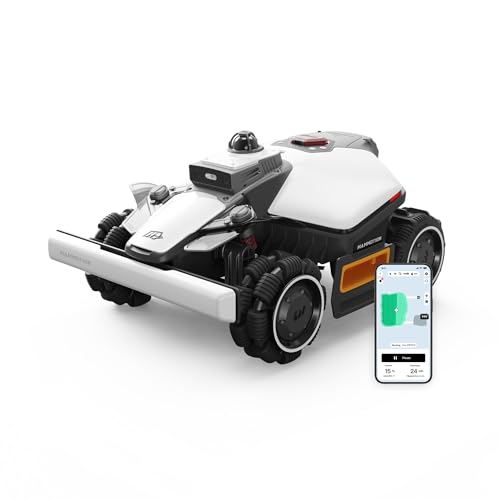
Mammotion LUBA mini 2 AWD 1500H Robot Lawn Mower
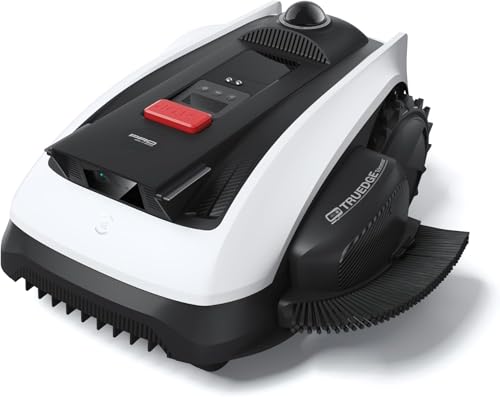
ECOVACS Goat O1000 LiDAR PRO Robot Lawn Mower
YARDCARE V100 Robot Lawn Mower for Small Lawns

ANTHBOT M5 Robot Lawn Mower 1/8 Acre

Segway Navimow i105N Robot Lawn Mower 1/8 Acre

Segway Navimow i210 AWD Robot Lawnmower 0.25 Acre
The Picks, Examined More Closely
For a city patio lawn or a small suburban front strip, the YARDCARE V100 keeps things wonderfully simple. Its HD camera plus bumper sensor combo learns the turf boundaries without requiring buried wire, which saves you a sweaty weekend of peg installation. The onboard AI distinguishes grass from pavement, so it doesn’t wander off into your flower bed on the first outing.
Where this little unit genuinely earns its place is in households that want automation without ceremony. You can let it run while you’re at work, and it returns to dock on its own schedule. One thing worth considering: in our view, the 1600 sq ft ceiling means this is strictly a small-yard tool, not a half-acre solution.
What Earns Its Place
- Camera-based AI recognizes up to 150 obstacle types, sparing garden hoses and stray toys.
- No perimeter wire setup, which cuts installation time dramatically.
- Bumper sensor catches blind spots the camera misses, then reroutes automatically.
- Compact enough to store in a shed corner without dedicated housing.
Things To Consider
- Coverage tops out at roughly 1600 sq ft, so anything beyond a small patch is out of reach.
- Visual navigation can struggle under dense tree cover on gloomy afternoons.
- Blade deck is modest; tall fescue may need a pre-trim on the first run.
Who It Suits Best
First-timers with a flat, open lawn under 1600 sq ft who want a low-fuss introduction to robotic mowing.
Consider Something Else When
Property owners with thicker, sloped turf should look at the Mammotion LUBA mini 2 AWD 1500H, which handles inclines and rougher ground with more authority.
If your lawn looks more like a nature preserve than a putting green, the LUBA mini 2 AWD 1500H brings serious traction to the category. The all-wheel-drive system climbs grades that would leave lesser mowers spinning their wheels, and the 360-degree LiDAR (a laser-based scanning method that builds a 3D map of surroundings) plus dual-camera setup reads the terrain before committing to a path.
Compared to the YARDCARE V100 above, this Mammotion tackles much larger and steeper properties without breaking a sweat. Owners with multi-zone layouts get up to 20 distinct mowing regions through the app, which is a real time-saver for properties with front, back, and side patches. For most backyards with mixed terrain, the upgrade feels justified.
A Few Highlights
- All-wheel drive climbs up to 80% slopes, leaving flat-terrain mowers behind.
- Dual-camera plus 360-degree LiDAR creates reliable obstacle recognition in low light.
- Multi-zone management handles up to 20 separated lawn areas.
- Covers roughly 0.37 acres per charge cycle, fitting mid-size properties well.
Trade Offs
- Heavier chassis than the budget models, so storage in a tight shed gets awkward.
- Garage accessory, while protective, adds bulk to your chosen docking spot.
- Higher learning curve on the app side for first-time robotic mower owners.
Key Specs
Made For
Homeowners with hilly, multi-section lawns up to a third of an acre who need slope-handling muscle.
A Better Fit Elsewhere
Shoppers on a tighter budget with flat terrain will find the YARDCARE V100 a friendlier entry point.
Lawns tucked under mature trees or hemmed in by tall fences often confuse GPS-based mowers, but the ECOVACS Goat O1000 stays composed with its dual-LiDAR sensing. Because LiDAR doesn’t rely on satellite signals, it keeps mapping accurately even in shaded corridors where other systems drop connection. The wire-free setup means no trenching, no pegs, no fuss on day one.
For neighbors who appreciate quiet weekends, the operating volume here stays conversation-friendly. The edge-cutting mode trims right up against borders, so the follow-up string trim happens far less often. Assuming a standard quarter-acre lot, you may find the coverage ceiling tight if your property runs larger.
Standout Benefits
- HoloScope dual-LiDAR (laser-based mapping that builds a 3D model of the yard) maintains positioning under tree canopy.
- Wire-free mapping means no buried boundary cables.
- Smart edge mowing trims borders automatically, cutting down manual touch-ups.
- App-based zone and schedule control for tailored weekly routines.
Honest Caveats
- Roughly a quarter-acre coverage cap rules out bigger properties.
- Edge mowing adds runtime, so battery cycles stretch on long border jobs.
Right Fit For
Owners of shaded quarter-acre lots who value quiet operation and clean edges without installing boundary wire.
Skip It When
Anyone needing all-wheel-drive traction should consider the Segway Navimow i210 AWD instead.
This sibling to the earlier YARDCARE V100 targets an even more specific niche: bungalow owners with modest grass patches who don’t need premium features. The HD vision system reads the same boundary cues, distinguishing turf from walkway without buried wire. If your yard fits inside a modest rectangle, this is the low-cost way to automate.
Where this version differs from the first YARDCARE listing is mostly in positioning. It’s aimed at shoppers who’d rather skip the highest-spec variant and stick with a simple visual-navigation unit. In our view, owners commonly report the camera adjusts well after the first few outings, learning the layout it sees each day.
Everyday Wins
- Vision-based obstacle recognition handles typical yard clutter reliably.
- 1600 sq ft capacity suits most townhouse lawns.
- No perimeter wire simplifies setup for renters and short-term residents.
Some Limits To Know
- Coated plastic body shows scuffs more easily than metal-clad alternatives.
- Wet grass clippings can stick to the underside, so routine cleaning matters.
- Less effective in heavy shade than LiDAR-equipped models.
Who Should Grab It
Budget-focused shoppers with a flat, sun-exposed lawn under 1600 sq ft who want dependable automation.
Look Elsewhere When
Properties with dense tree cover benefit from the ECOVACS Goat O1000 LiDAR PRO and its laser-based mapping.
The ANTHBOT M5 enters the category with a fresh take on positioning tech. Full-band NRTK (Network Real-Time Kinematic, a satellite correction method that sharpens GPS accuracy to within centimeters) plus dual-vision AI keeps the mower oriented even where satellite signals bounce off buildings or struggle under heavy leaf cover. The bundled garage gives the unit a covered home base, which extends the electronics’ lifespan through wet seasons.
Unlike the Mammotion’s all-wheel-drive system, this M5 relies on standard traction with adaptive cruise control. That makes it a sensible pick for gardens with mild slopes and complex borders rather than aggressive hills. You may find the multi-zone mapping especially handy if your lawn wraps around a pool, a shed, and a separate side strip.
Notable Gains
- Full-band NRTK keeps accuracy stable under challenging satellite conditions.
- Dual-vision AI supports centimeter-level path planning.
- Included garage protects the dock and mower body from weather.
- Multi-zone mapping handles disjointed lawn sections gracefully.
Minor Gripes
- 45% slope rating trails the LUBA mini 2’s climbing capacity.
- App control requires a stable home Wi-Fi signal at the dock.
Key Specs
Best Suited To
Garden owners with patchy layouts, light slopes, and a need for centimeter-level mapping on a moderate budget.
Where A Sibling Pick Shines
Anyone needing serious slope work should look at the Segway Navimow i210 AWD instead, which climbs steeper terrain.
The Segway Navimow i105N hits a sweet spot for owners with awkward lawn shapes. RTK (Real-Time Kinematic, a satellite correction system that improves GPS precision dramatically) plus a vision enhancement layer, what Navimow calls EFLS 2.0, keeps the mower oriented through narrow corridors and tree-dappled patches that trip up pure-satellite systems. At around 58 dB(A), it hums along without dominating your Saturday morning.
Versus the ECOVACS Goat O1000 above, this Navimow uses a hybrid positioning method rather than pure LiDAR. For most home gardens, the difference shows up mainly in tight passageways where RTK plus vision reads the boundaries cleanly. AI-assisted mapping draws virtual boundaries through the app, eliminating the wire-burial step entirely.
The Helpful Details
- RTK plus vision hybrid handles shaded, narrow, and complex layouts.
- 58 dB(A) operating volume stays polite around patio conversations.
- Virtual boundary setup replaces buried wire entirely.
- Multi-zone management separates front, back, and side yards.
Factors To Consider
- 1/8 acre coverage is modest, so larger lawns need longer charge cycles.
- Vision enhancement can struggle in heavy rain when the lens beads up.
Whose Shelf It Belongs On
Apartment and townhouse dwellers with irregular lawns up to 1/8 acre who want quiet, wire-free operation.
Another Choice May Suit
Property owners planning to expand landscaping or work on steeper terrain should consider the ANTHBOT M5 instead.
The Navimow i210 AWD steps up to quarter-acre lawns with the kind of traction the smaller i105N can’t match. All-wheel drive plus automotive-grade electronic stability control keeps the chassis planted on 45% slopes, and the concentric third-wheel design pivots without tearing the turf on tight turns. Four blade assemblies widen the cutting path, finishing the job in fewer passes.
For shoppers graduating from a starter mower to something more capable, this is the natural next stop. Owners with mixed terrain, gentle hills, and a quarter-acre footprint will find the upgrade pays off across a full mowing season. On the flip side, if your lawn stays small and flat, the i105N above handles it with less chassis weight.
The Upside
- All-wheel drive tackles slopes up to 45% with stability control.
- Four blade assemblies speed up coverage on larger lawns.
- Zero-turn concentric wheel design protects the turf during pivots.
- Quarter-acre capacity fits mid-size suburban lots comfortably.
Practical Considerations
- Heavier than two-wheel-drive alternatives, so a firm shed floor helps.
- Higher entry price than the smaller Navimow i105N sibling.
Key Specs
Perfect Match For
Owners of quarter-acre lawns with rolling terrain who want stronger traction and a wider cutting path.
Swap It Out When
Tiny, flat lawns under 1600 sq ft don’t need this much hardware; the YARDCARE V100 is a smarter fit.
What To Weigh Before Picking A Robotic Mower
Robot mowers are not interchangeable appliances, and the cheapest option is rarely the cheapest to live with. Coverage area, slope rating, and navigation tech do most of the heavy lifting when you compare models.
Coverage Area And Lawn Size
Your lawn’s square footage is the single biggest filter. A 1600 sq ft yard fits any of the seven picks above, but a quarter-acre lot immediately narrows the field to the Mammotion, ECOVACS, and Navimow i210. Overspec the coverage and you waste money; underspec it and the mower runs itself ragged trying to keep up. For most backyards under a third of an acre, the right fit sits squarely in the mid-tier options here.
Navigation Tech: Vision, LiDAR, And RTK
Each system has trade-offs. Camera vision is affordable and works in open sunlight, but struggles in shade and rain. LiDAR uses laser scanning to map the environment and stays accurate in low light and under trees, though it adds cost. RTK corrects satellite GPS signals for centimeter-level positioning, which excels in open spaces but loses accuracy near tall structures. Hybrid systems like the Navimow i105N and ANTHBOT M5 blend two methods to cover each other’s blind spots.
Slope And Terrain Handling
Flat lawns can stop worrying. Anything over 20% slope earns attention, and anything over 40% demands all-wheel drive. The Mammotion LUBA mini 2 climbs the steepest grades here at 80%, while the Segway i210 AWD and ANTHBOT M5 settle into the 45% range. Rough, uneven turf also benefits from stability control, which keeps the chassis planted through dips and rises.
Installation And Ongoing Maintenance
Wire-free models skip the most painful setup step, but they still need a charging dock with clear sky above for any RTK or GPS reception, plus a stable Wi-Fi signal for app control. Owners commonly report that regular underside cleaning prevents grass buildup from dulling blades, and blade replacement typically runs once per season depending on use. Storage matters too, since keeping the unit out of direct rain extends motor life considerably.
Key Considerations Across These Picks
Pitfalls Shoppers Hit
Many first-timers buy by lowest sticker price without checking the coverage rating, then discover the mower can’t finish their actual lawn in one charge. Others underestimate slope, picking a two-wheel-drive unit for a yard with hidden hills. Skipping the Wi-Fi and GPS signal check at the intended dock location is another common misstep; weak signals there mean mapping headaches from day one.
Where The Extra Money Goes
Higher-tier models earn their premium through better navigation, sturdier traction, and wider cutting decks. The Mammotion LUBA mini 2 and Segway i210 AWD command more because all-wheel drive and laser-grade sensing cost real money, and they pay you back in fewer missed patches and longer service life. For flat, compact lawns, the entry-level picks still deliver genuine automation without the surcharge.
Frequently Asked Questions
Do budget robot mowers actually work on uneven ground?
Yes, with caveats. Models with all-wheel drive like the Mammotion LUBA mini 2 and Segway i210 AWD handle moderate slopes and bumpy turf well, while basic two-wheel-drive units perform best on flat, even lawns. Picking a mower rated for your steepest grade keeps it from getting stuck or leaving uncut strips.
How long does setup take for a wire-free model?
Most wire-free robot mowers map a typical lawn in under an hour using app-guided virtual boundaries. You will spend more time positioning the charging dock in a spot with solid Wi-Fi and clear sky than on the actual mapping step. Compared to wire-buried systems, the time savings are substantial.
Can a robot mower handle wet grass safely?
Most modern units are designed to operate in damp conditions and shut off automatically if rain becomes heavy enough to risk damage or uneven cuts. Cutting very wet grass does tend to leave clumps, so scheduling sessions during dry windows gives the cleanest result. The electronics are sealed against moisture in every model on this list.
What maintenance does a robotic lawn mower need?
Routine care includes brushing grass clippings from the underside, checking blades for dullness or damage, and replacing blades roughly once per season under typical use. Keeping the dock area clear of debris helps the mower find its home base reliably. Storage in a covered spot during winter extends the life of batteries and electronics.
Are robot mowers noisy enough to bother neighbors?
The category runs much quieter than gas mowers, with most units landing between 55 and 65 dB(A). The Segway Navimow i105N specifically advertises around 58 dB(A), which is conversation-friendly. You can comfortably run most models during early morning hours without complaints from neighbors.
Closing Remarks
The right robotic mower depends almost entirely on your lawn’s size, slope, and the level of automation you actually want. Smaller yards do well with vision-based budget picks like the YARDCARE V100, while bigger or hillier properties benefit from all-wheel-drive and hybrid navigation in the Mammotion and Navimow lineups. Match the mower to your terrain rather than chasing features you won’t use, and your weekends get a quiet upgrade you’ll feel right away.