
Car camping, family weekends, and group backcountry trips all run into the same wall: a tent that fits four adults without breaking the bank, leaking in the first storm, or turning setup into a 40-minute argument. You want enough floor space for sleeping pads and gear, decent weatherproofing, and a frame that doesn’t feel like wet spaghetti after a long drive.
This lineup covers ten budget-friendly 4-person tents across three seasons and four seasons, from ultralight backpacking shelters to instant pop-up basecamps. Each pick includes honest strengths and trade-offs, so you can match a shelter to the way you actually camp, whether that’s tossing a duffel in the trunk or hiking six miles into a quiet canyon.
A Quick View Of The Lineup
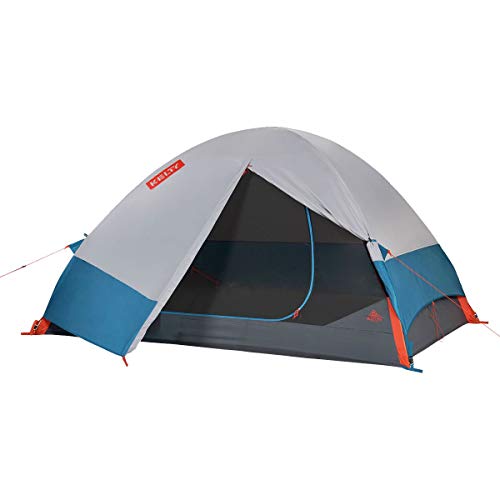
Kelty Late Start 4P Backpacking Tent

ALPS Mountaineering Lynx 4 Tent
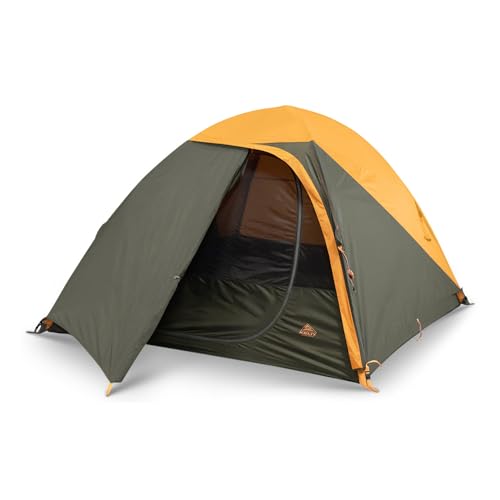
Kelty Grand Mesa 4P Backpacking Tent

Gazelle T4 Pop Up Camping Tent

BISINNA 2/4 Person Backpacking Tent

Kelty Late Start 2P Backpacking Tent

OneTigris JOVIAN 4 Person Camping Tent

OneTigris Northgaze Canvas Hot Tent

Coleman Sundome 4-Person Camping Tent

Coleman Sundome Dark Room 4/6 Tent
A Closer Look At Each Pick
Pulling into a dark campsite at 9 PM is the real test of a family-friendly tent, and the Kelty Late Start 4P is built for exactly that moment. Its Quickcorners hardware and pre-bent aluminum poles (the flexible tent skeleton that holds the shape) let you pitch the shelter in roughly two minutes, even with headlamps and tired kids in the way. Compared to the ALPS Lynx 4 below, this Kelty skips the mesh-heavy walls for a roomier, more enclosed feel that holds body heat better on cool nights.
The polyester fly is treated for water resistance, which handles light to moderate rain without issue, though for sustained downpours you may want to seam-seal (apply waterproof tape along the stitched seams) once a season. Four adults fit on pads if you pack light, and the tent works best for two adults plus two kids, a common family setup.
Points In Its Favor
- Quickcorners setup gets you out of the car and under cover fast, even after dark
- Pre-bent poles give noticeably more headroom than a straight-pole design
- Aluminum frame keeps packed weight reasonable for a 4-person shelter
- Freestanding layout lets you reposition the tent without disassembling it
Things To Consider
- Stock waterproofing holds for typical rain, but a quick seam-seal adds real confidence in storms
- Four adults on full-width pads is tight, so plan on gear living in vestibules (covered porches attached to the tent) or a backpack
Who It Suits Best
Families who roll into camp late and want a forgiving, fast setup that won’t end the night in a tangle of poles.
Consider Something Else When
Backpackers counting every ounce in their pack should look at the ALPS Mountaineering Lynx 4, which trades some livable space for a lighter trail-ready profile.
The ALPS Mountaineering Lynx 4 takes a different swing than the Kelty Late Start: it’s a backpacking-first design with two aluminum poles, half-mesh walls, and a 75-denier (a measure of fabric thread thickness, where higher numbers mean tougher cloth) rainfly rated to 1500mm hydrostatic head (a standard measure of how tall a column of water the fabric can resist before leaking). That spec sheet reads like a storm-ready shelter aimed at paddlers, hikers, and anyone camping in shoulder-season drizzle.
Setup uses pole clips (small plastic clamps that grab the pole instead of threading it through fabric sleeves), which is faster than full sleeve systems but lets wind in through the gaps in heavy gusts. The floor measures 8’6″ by 7’6″, with a 4’4″ peak height that’s comfortable for sitting up but won’t let you stand. Compared to the Kelty Grand Mesa below, the Lynx feels more open and breathable, which is exactly what you want on humid summer nights.
Noteworthy Benefits
- Half-mesh sidewalls dramatically cut condensation in warm, humid weather
- 1500mm fly and 2000mm floor handle rain well, well above entry-level tents
- Two-pole design keeps the packed weight light enough for short hikes to camp
- Free-standing frame sets up on any surface, including rocky or rooty ground
Worth Noting
- Center height of 4’4″ rules out standing, so plan on crawling in and out
- Pole clips are quick but let wind-driven rain sneak through during sideways storms
- Coated polyester fly can feel clammy in cold weather without a separate footprint (a ground sheet placed under the tent floor for extra protection)
Key Specs
Made For
Backpackers and paddlers who need reliable three-season weatherproofing without adding serious weight to their kit.
Look Elsewhere When
Car campers wanting standing room and faster setup will get more from the Gazelle T4 Pop Up, which trades trail-ready weight for livable space.
Thru-hikers (long-distance backpackers tackling trails over multiple days) and section hikers tend to obsess over two things: weight and whether they can pitch the tent alone. The Kelty Grand Mesa 4P answers both with a freestanding, single-door shelter built on 68-denier polyester with a pre-attached frame design. You can stake the corners, walk around the tent, and slide it into the flattest patch of ground without taking it apart.
The single door and vestibule layout keeps the packed weight low, but it also means four campers enter and exit through the same opening. For couples or a parent with kids, this is fine; for four adults sharing tight quarters, the Kelty Late Start 4P above offers a more balanced entry and exit pattern.
Standout Benefits
- Freestanding setup pitches in minutes even if you’re solo after a long day on trail
- Light enough for thru-hikers watching total pack weight
- Repositionable design lets you chase the flat ground or shift out of the wind
- Aluminum pole frame holds shape in wind better than budget fiberglass
Trade Offs
- Single door and vestibule get awkward with four adults coming and going
- 68-denier fabric balances weight and durability but isn’t as tough as a 75-denier build
- Best suited for fair weather, not sustained storms
Best Suited To
Thru-hikers and minimalists who want a low-weight, three-season shelter they can pitch alone without a second pair of hands.
Reach For A Different Pick When
Families needing faster setup and dual entry points will prefer the Kelty Late Start 4P, which has the same Quickcorners speed with better access.
The Gazelle T4 isn’t a backpacking tent, and that’s the point. It’s a pre-assembled hub-style shelter (a tent where the poles fold out from a central hub like an umbrella) that goes from bag to standing in under 90 seconds, which is roughly the time it takes to find a level campsite at a festival. The removable floor and mesh walls make it equally at home on grass, sand, or a tailgate pad.
Where the Kelty Late Start 4P above uses an aluminum pole skeleton for backcountry weight savings, the Gazelle leans on a pop-up hub that prioritizes speed over pack-down size. The packed bag is bulky, but it lives in a trunk, not a backpack, so that trade-off rarely matters for the target buyer.
Why It Works Well
- Pop-up hub design gets four people out of the rain and into shelter in about a minute
- Mesh walls and removable floor suit warm-weather camping, beach days, and festival grounds
- Pre-attached rain fly means no separate pieces to forget in the garage
- Near-vertical walls feel roomier than the typical dome shape
Honest Caveats
- Packed size is large, so it’s a car-camping shelter, not a trail option
- Polyester build is heavier than a backpacking shelter and lacks the wind profile of a low dome
- No traditional vestibule, so wet boots and packs live near the door
Perfect Match For
Festival campers, beachgoers, and car campers who value a 90-second setup over trail-ready pack weight.
Swap It Out When
Backpackers needing to carry the tent any real distance will do better with the ALPS Mountaineering Lynx 4, which packs small and light.
The BISINNA 2/4 Person tent sits at the entry-level end of the budget spectrum, with a 190T polyester rainfly (a lightweight, tightly woven fabric common in budget tents) rated to 2000mm and 7001 aluminum poles (an aluminum alloy prized for being both light and strong). For a first-time camper or anyone outfitting a kid’s sleepover tent on a tight budget, the spec sheet outperforms what you’d find in the same aisle at a big-box store.
Compared to the Kelty Late Start 4P above, the BISINNA uses no-see-um mesh (an extra-fine bug netting that blocks tiny insects like no-see-ums and midges) on the inner tent and gives up some of the premium frame hardware. It’s a smart pick if you camp a few weekends a year and don’t need the long-term durability of a backcountry workhorse.
What Pays Off
- 7001 aluminum poles are a meaningful upgrade over fiberglass at this cost
- 2000mm rainfly keeps campers dry through typical three-season weather
- Lightweight packed weight suits short hikes and bike-packing trips
- No-see-um mesh keeps out gnats and mosquitoes in buggy terrain
Room For Improvement
- 190T polyester is thinner than the 68- to 75-denier fabrics used on pricier tents
- Brand-specific replacement parts can be harder to source if a pole snaps
- Setup instructions take a first-timer a few extra minutes the first time
Who Will Love This
First-time campers, casual weekend trips, and budget-focused shoppers who still want aluminum poles over fiberglass.
A Better Fit Elsewhere
Backpackers heading into rougher terrain should consider the Kelty Grand Mesa 4P, which uses a tougher 68-denier build and a more refined frame system.
The Kelty Late Start 2P shares the same Quickcorners DNA as its 4P sibling earlier in the article, but in a tighter, lighter package aimed at couples, solo-plus-dog campers, and parents with one child. The 2024 update refines the pole geometry for a touch more interior space and a tidier packed profile, useful when you’re splitting gear between two packs.
It’s not a true 4-person tent, which is why it lives alongside the larger picks here: a couple who values comfort over capacity often gets a better night in a 2P than a cramped 4P. If you’re a small family, the Late Start 2P is genuinely worth considering as your main shelter.
A Strong Showing
- Updated pole geometry gives more usable floor space than earlier versions
- Aluminum frame keeps total weight low enough for two-pack hiking
- Quickcorners setup gets the tent standing fast, even on rough ground
- Waterproof poly fly handles typical three-season rain confidently
Points To Note
- Two-person capacity, so it’s a poor fit for families of four
- Smaller vestibule leaves limited covered space for backpacks
- Stock waterproofing benefits from an initial seam-seal in wetter climates
Feature Snapshot
The Right Fit
Couples and small families who want the Kelty setup experience in a lighter, more compact footprint.
Where A Sibling Pick Shines
Campers needing true four-person sleeping space should step up to the Kelty Late Start 4P, which shares the Quickcorners system in a full-family layout.
Wet-ground camping is where many entry-level tents fail, and the OneTigris JOVIAN addresses that head-on with a 5000mm-rated floor and a separate waterproof floor mat. The 210T taffeta outer (a smooth, tightly woven polyester often used for rainflies) with 2000mm coating handles the rain above, while the Oxford fabric floor (a thicker, basket-weave polyester known for abrasion resistance) and mat handle the moisture below. For families with kids who treat sleeping pads like waterbeds, that extra floor protection earns its keep.
The 6.8′ by 7.8′ footprint sleeps four adults on pads with room for two cots if you’re car camping, though like the Kelty Late Start 4P, four adults in sleeping bags means gear ends up stacked near the door. Setup is straightforward for two people and doable solo with practice.
Useful Highlights
- 5000mm floor rating is unusually high for a budget tent and shrugs off wet ground
- Included floor mat adds a layer of puncture and moisture protection
- 210T taffeta outer is tougher than typical 190T budget fabrics
- Roomy 6.8′ x 7.8′ footprint fits two camp cots comfortably
Practical Considerations
- Heavier than ultralight picks, so it’s better as a car-camping shelter than a long hike
- Color and fabric choices show dirt and tree sap more visibly than darker tents
- Floor mat adds setup steps and one more thing to dry before pack-up
Right Fit For
Families camping on wet ground, spring shoulder-season trips, and anyone who has watched a budget tent floor soak through during a rainy weekend.
Skip It When
Backpackers tracking every ounce will prefer the ALPS Mountaineering Lynx 4, which trades the heavy-duty floor for trail-friendly weight.
The OneTigris Northgaze sits in a different category than every other tent on this list. It’s a four-season canvas pyramid with a stove jack (a reinforced opening in the tent wall that lets a hot stovepipe pass through safely) at the top, designed for cold-weather camping where a wood stove or propane heater turns the shelter into a livable winter base. The T/C fabric blend (a poly-cotton mix that breathes better than pure polyester and resists condensation) and fire-retardant treatment address the obvious safety concerns of running a flame inside a tent.
Unlike the Kelty Late Start 4P or the ALPS Lynx 4 above, this isn’t a backpacking shelter. It’s a car-camping or snow-camping tent for two to four people who want real winter comfort. Reinforced stress points and a teepee-style frame stand up to wind that would flatten a dome tent.
Features That Help
- Stove jack supports a wood or propane heater for genuine cold-weather camping
- T/C canvas breathes well and resists the heavy condensation common in cold tents
- Fire-retardant treatment reduces risk when running a flame inside
- Pyramid shape sheds snow and shrugs off high wind
- Complete setup kit with pegs and guy-lines (tension cords that anchor the tent against wind) is included
Potential Drawbacks
- Heavy and bulky, strictly a car-camping or basecamp shelter
- Requires careful stove setup and ventilation discipline, never a casual purchase
- Canvas needs thorough drying before storage to prevent mildew
Quick Facts
Built With In Mind
Cold-weather and winter campers who want a four-season shelter they can heat with a stove and trust in real weather.
Not Your Match When
Summer backpackers should pick a lighter three-season shelter like the ALPS Mountaineering Lynx 4, which carries easily on trail.
The Coleman Sundome is the tent many people cut their teeth on, and there’s a reason it keeps showing up at campgrounds, festivals, and backyard sleepovers. The continuous-pole sleeve system (fabric tubes the poles slide through, eliminating separate clips) and pre-attached rainfly cut setup to about ten minutes, which is fast enough for first-time campers to handle without a tantrum. The 9′ by 7′ floor fits a queen air bed with a strip of gear space left over.
Compared to the Kelty Late Start 4P, the Sundome is heavier and uses fiberglass poles (glass-fiber tent poles that are cheaper and more flexible than aluminum but heavier and more prone to cracking in extreme cold) instead of aluminum, but it’s a friendlier first tent for casual use. The included E-Port (a small access port that lets you route an extension cord into the tent) is a small touch that makes campsite life easier when you’re running a fan or charging a phone.
Real Benefits
- Setup takes about ten minutes even for first-time campers
- Fits a queen air bed with room to spare for a gear strip
- Welded floor seams and included rainfly handle typical rain well
- Window and ground vent layout manages condensation better than sealed domes
- E-Port makes it easy to run power inside for lights and devices
Where It May Fall Short
- Fiberglass poles are heavier than aluminum and more vulnerable to cold-weather cracking
- Best for fair-weather camping, not multi-day storms
- Larger packed size makes it a poor fit for backpacking trips
Feature Rundown
Who Should Grab It
Casual campers, families new to camping, and anyone outfitting a backyard or festival tent for the first time.
Another Choice May Suit
Backpackers should look at the Kelty Grand Mesa 4P instead, which packs lighter and pitches on rougher backcountry ground.
The Coleman Sundome Dark Room tackles a problem most budget tents ignore: sunlight turning the shelter into an oven at 7 AM. The fabric blocks about 90% of sunlight, which keeps the interior noticeably cooler and lets late risers sleep past sunrise. For families with kids who treat dawn like a starting gun, that single feature can save a whole camping trip.
Beyond the dark-room fabric, this version shares the same WeatherTec system (Coleman’s welded-floor and protected-seam waterproofing approach), 4’11” center height, and E-Port as the standard Sundome above. The trade-off is a slightly darker interior during the day, so it pairs better with a lantern or headlamp for daytime tent time.
Strengths Worth Knowing
- Blocks about 90% of sunlight, keeping the interior cooler at dawn
- Welded floors and protected seams keep rain out during typical storms
- Same beginner-friendly pole sleeves as the standard Sundome
- E-Port and Illumiline trim (reflective guy-line accents visible in low light) round out campsite usability
Some Limits To Know
- Reduced interior light means you’ll want a lantern for daytime tent tasks
- Same fiberglass-pole caveat as the standard Sundome in cold conditions
- Best for car camping or short carry distances, not backpacking
Whose Shelf It Belongs On
Late sleepers, families camping in sunny climates, and anyone who’s watched a child pop awake at sunrise one too many times.
Where Another Pick Suits Better
Backpackers chasing weight savings over camp-comfort features will prefer the ALPS Mountaineering Lynx 4, which trades the dark-room fabric for trail-ready portability.
What Matters Most Before Choosing Budget 4 Person Tents
Capacity vs Comfortable Capacity
Manufacturer “4 person” ratings assume four sleeping pads pressed shoulder to shoulder with no gear. Real-world camping usually means two adults and two kids, or three adults plus a dog, with backpacks needing a home. Floor dimensions tell the honest story: the Coleman Sundome at 9′ by 7′ fits a queen air bed, while a true 8’6″ by 7’6″ floor like the ALPS Lynx 4 sleeps four but leaves little gear space. Pick the shelter that matches your typical crew, not the spec sheet.
Weatherproofing That Actually Holds
Three numbers matter most: the fly rating (how waterproof the rainfly fabric is, measured in mm of hydrostatic head), the floor rating (same measurement for the tent bottom), and seam construction (taped or welded seams stop water from seeping through stitch holes). A 1500mm fly with sealed seams handles summer storms; a 2000mm or higher rating buys margin in shoulder-season rain. The OneTigris JOVIAN stands out with a 5000mm floor, useful for wet ground or early-spring camps where the soil hasn’t dried out.
Weight and Pack Profile
Backpackers care about ounces, car campers care about trunk space. The Kelty Grand Mesa 4P and ALPS Lynx 4 are the lightest in this lineup, while the Gazelle T4 and OneTigris Northgaze are bulky basecamp shelters that earn their weight with livable space or winter durability. Match the shelter to your transport, not the other way around.
Pole Material and Frame Geometry
Aluminum poles (stronger and lighter but slightly heavier than fiberglass) hold shape in wind and cold better than fiberglass, which is heavier but cheaper and more flexible. Pre-bent pole geometry, like the Kelty Late Start 4P’s design, adds headroom where straight poles can’t. For storm-prone terrain, aluminum is the safer bet.
Key Considerations Across These Picks
Mistakes Worth Dodging
A common trap is trusting the “4 person” label as a fit for four adults. Floor dimensions and peak height are the honest numbers; a 7′ by 7′ floor with a 4’4″ peak is cozy, not generous. Another slip-up is skipping seam-sealing on entry-level tents. A $10 tube of seam sealer and an afternoon of drying time turns a 1500mm fly into a genuinely storm-ready shelter. Finally, don’t buy a backpacking-weight tent for car camping; you’ll pay more for ounces you don’t need.
What The Higher Tier Buys
Stepping up to premium 4-person tents adds real-frame aluminum, factory-taped seams, larger vestibules for gear storage, and DAC-style pole hubs (high-grade aluminum pole joints known for light weight and durability). For weekend car campers, those upgrades are nice but rarely essential. For backpackers, thru-hikers, and four-season campers, the extra cost buys real safety margin in bad weather and noticeably longer tent life across years of use.
Frequently Asked Questions
How big is a 4 person tent really?
A true 4-person tent typically measures between 7′ by 7′ and 9′ by 7′ on the floor, with peak heights of 4′ to 5′. That fits four sleeping pads with minimal gear space, or three adults plus gear comfortably. If you want room for cots, a family of four, or a wet entry vestibule, consider sizing up to a 6-person model.
Can budget 4 person tents handle rain?
Most budget 4-person tents include a rainfly with a hydrostatic head rating (a lab test that measures how much water pressure fabric can resist before leaking) between 1200mm and 2000mm, which handles typical rain showers. Sealed or taped seams (strips applied over stitched seams to block water entry) matter as much as the rating itself; applying seam sealer once a season adds real storm protection without much effort.
Are 4 person tents good for families?
Yes, especially models like the Kelty Late Start 4P or the Coleman Sundome with quick setup and intuitive pole sleeves. Two adults and two kids fit comfortably in most 4-person tents, with room for a small gear strip. For families with teenagers or four adults sharing the space, stepping up to a 6-person model usually pays off in fewer elbow-bumping nights.
How long do budget tents typically last?
With reasonable care, a budget 4-person tent lasts several seasons of weekend use before fabric wear or pole fatigue becomes a concern. Drying the tent thoroughly before storage, patching small tears early, and avoiding prolonged UV exposure all extend its life. Premium tents last longer largely because of tougher fabric and replaceable parts.
Is a 4-season tent necessary?
A four-season tent is worth it only for winter camping, snow camping, or consistently windy exposed sites. For three-season use (spring through fall), a properly seam-sealed three-season tent handles most conditions at a much lower cost. The OneTigris Northgaze is the only true four-season pick on this list, and it’s built for a specific use case.
The Takeaway
A budget 4-person tent is one of the best values in outdoor gear, but the right pick depends entirely on how you actually camp. Backpackers should focus on packed weight and seam quality. Families and car campers should prioritize setup speed and floor space. Late sleepers get the most out of dark-room fabric. Match the shelter to your real trips, not the spec sheet, and the rest of the weekend takes care of itself.