
Hauling a fully loaded ice chest across a wet dock or up a boat ramp is the kind of chore that ruins an afternoon before it starts. The right wheeled cooler turns that grind into a single-handed pull, letting you focus on the trip instead of the trek. After sorting through the most talked-about rolling and towable coolers on the market, these ten stand apart for ice retention, wheel quality, capacity, and the simple fact that they make boat days easier.
The Shortlist At A Glance
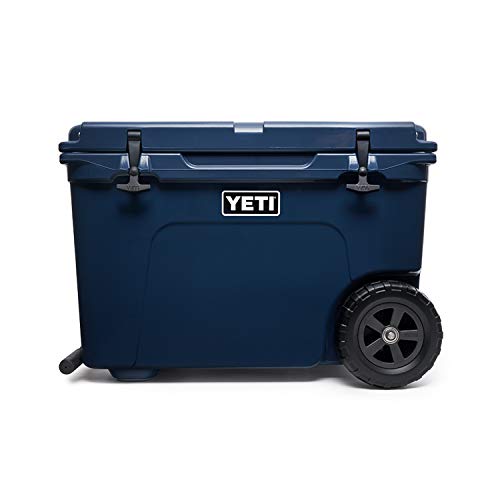
YETI Tundra Haul Portable Wheeled Cooler

YETI Roadie 60 Wheeled Cooler
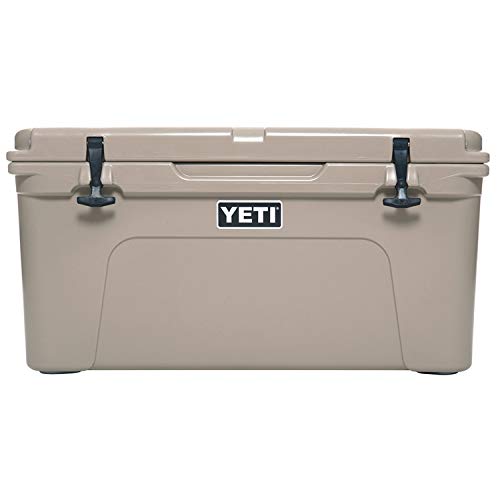
YETI Tundra 65 Cooler

YETI Roadie 32 Wheeled Cooler
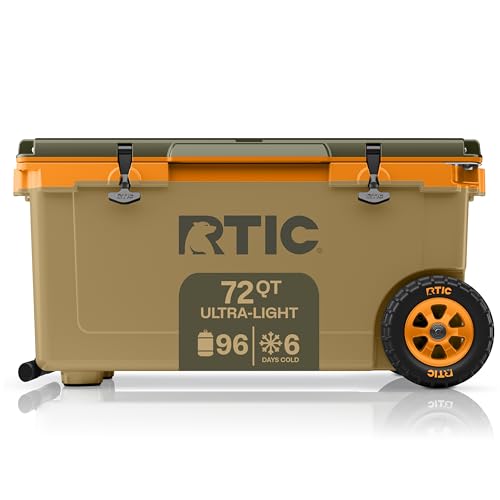
RTIC 72 QT Ultra-Light Wheeled Hard Cooler
VEVOR 37QT Dual-Zone Car Refrigerator

VEVOR 61.5QT Dual Zone Portable Freezer

VEVOR 63.4QT Portable Electric Cooler

VEVOR 48QT Dual-Zone Car Refrigerator

JEKO&JEKO 60QT Cooler with Wheels
A Breakdown Of The Leading Choices
The Tundra Haul was YETI’s first rolling cooler, and it still earns its place at the top of conversations about boat coolers with wheels. The rotomolded (rotationally molded, a process that produces a single seamless shell) body carries the same armored feel as the rest of the Tundra line, while a telescoping aluminum handle and oversized tires let you pull a fully packed load across gravel, grass, or a wooden dock without it bucking or dragging.
For a captain running a crew out to a sandbar or a family pulling drinks across a busy launch ramp, the Haul’s capacity is the headline. The welded handle stays rigid even at full extension, and the wheels are designed to roll over the rough stuff you’ll meet between the parking lot and the boat. It is heavier than soft-sided alternatives, but that weight is what gives it the planted, stable feel people want on uneven terrain.
The Value In It
- Single-piece tire construction resists punctures on rocky ramps.
- Welded aluminum arm with comfort grips holds steady when fully loaded.
- Matches the legendary ice retention YETI’s Tundra line is known for.
- Tank-grade rotomolded shell handles rough handling season after season.
Things To Consider
- Empty weight is substantial, so lifting it into a boat trunk takes some effort.
- Occupies more deck space than smaller wheeled picks like the YETI Roadie 32.
Who It Suits Best
Tailgaters, charter captains, and families running large crews who need a serious pull-behind cooler that rolls over anything.
Skip It When
The YETI Roadie 32 Wheeled Cooler fits better for solo anglers or couples who want a more compact tow.
The Roadie 60 stands out for its upright shape and a telescoping handle that disappears cleanly into the body when you’re loading it into a cabin. Compared to the Tundra Haul’s wider stance, this one is taller and narrower, which makes it easier to maneuver down a tight companionway or onto a small center console.
YETI rates the capacity for over fifty cans, which covers a long day trip or an overnight without needing to restock. A dry goods basket ships in the box, and the same rotomolded shell used across the YETI lineup is present here, so the cold-holding performance is consistent with the brand’s reputation. For boaters with narrow decks or limited swim platforms, the geometry alone makes this an easy recommendation.
What Earns Its Place
- Retractable handle keeps the profile clean when stowing under a console.
- Tall format slips into spots where wider coolers won’t fit.
- Includes a dry-goods basket to separate snacks from ice.
- Same tank-grade construction as the rest of YETI’s wheeled line.
Honest Caveats
- The taller footprint takes careful placement on a rocking deck.
- For flat-bed carting across rough ground, the wider Haul stays steadier.
Made For
Anglers and cruisers with tight cabin layouts who want a long-rolling cooler that tucks out of the way when stored.
Consider Something Else When
The YETI Tundra Haul Portable Wheeled Cooler fits better if you want maximum capacity and a lower center of gravity.
The Tundra 65 isn’t a wheeled cooler by factory spec, but it lands in this roundup for a reason. It is the platform many serious anglers tow across boat ramps using aftermarket wheels, and it has earned a reputation for being nearly indestructible in saltwater and rough handling conditions.
The PermaFrost insulation (a dense, closed-cell polyurethane foam pressed into the lid and walls) pairs with a thick FatWall design to push ice retention out several days when pre-chilled. The body is certified bear-resistant, which tells you something about how rugged the shell really is. For a boater who values raw cold-holding and toughness over factory-installed wheels, this is the cool, hard-tank option.
Useful Strengths
- Up to three inches of insulation for multi-day ice retention.
- Bear-resistant certification confirms the shell’s toughness.
- T-Rex rubber latches resist breakage in heavy use.
- Holds a hefty load of fish, drinks, or food for big crews.
Less-Strong Areas
- Factory wheels are not included, so a cart or aftermarket kit is needed.
- The large size and weight make solo lifting impractical.
Best Suited To
Off-shore anglers and hunting-style boat trips where ice retention and abuse resistance matter more than factory mobility.
Look Elsewhere When
The RTIC 72 QT Ultra-Light Wheeled Hard Cooler is the right call if you want factory-installed all-terrain wheels at a friendlier cost.
The Roadie 32 is the smallest YETI on wheels, and it is purpose-built for the day-trip crowd who doesn’t want to wrestle a full-size cooler down to a kayak launch. Compared to the larger Roadie 60 and the Tundra Haul, this one is a genuinely personal-scale cooler that still rolls like a YETI.
The same single-piece wheels used on YETI’s larger rolling models are present here, which means the small size does not mean a compromise in tire quality. BearFoot non-slip feet hold it in place on a wet boat deck, and the retractable Periscope handle drops flush when not in use. For paddlers, SUP anglers, and small-center-console owners, this is the right scale of cooler.
What Pays Off
- Compact body fits in places larger wheeled coolers can’t reach.
- Puncture-resistant wheels scaled down from the larger YETI wheelset.
- BearFoot non-slip feet keep it planted on slick surfaces.
- Easy single-handle tow for short walks to the launch.
Points To Note
- Capacity tops out quickly for larger groups or longer trips.
- Price per quart is higher than the bigger Roadie 60.
Right Fit For
Solo anglers and couples heading out for a day on the water who value easy towing over capacity.
A Better Fit Elsewhere
The YETI Roadie 60 Wheeled Cooler suits better when you need more vertical room and longer-trip capacity.
RTIC built this model around a clear use case: family-sized capacity with all-terrain wheels, at a noticeably friendlier cost than the YETI flagships. The 72-quart cavity swallows a weekend’s worth of food and drinks, while the puncture-resistant wheels roll over the same kind of ramps and rocky paths you would ask any premium cooler to handle.
The “Ultra-Light” branding is RTIC’s pitch on weight, and while it is not featherlight, the body is easier to wrestle into a trunk or onto a swim platform than some heavier rotomolded competitors. For boaters who want factory wheels without the flagship price tag, this is the practical, no-apology pick that gets the rolling part right.
Advantages To Know
- Factory all-terrain wheels handle gravel, grass, and sand.
- 72-quart capacity covers most family day outings.
- Friendlier cost than flagship wheeled coolers with similar size.
- Solid ice retention for full-day use in moderate heat.
Practical Considerations
- Insulation is solid but not at the multi-day flagship level for extreme heat.
- Lighter build trades some of the bomb-proof feel of heavier rotomolded picks.
Who Will Love This
Family crews and casual boaters who want a large rolling cooler without paying for the absolute premium tier.
Not Your Match When
The YETI Tundra Haul Portable Wheeled Cooler suits better when multi-day ice retention and tank-grade durability matter most.
VEVOR’s 37-quart dual-zone electric cooler is a different kind of boat cooler with wheels: it runs on a compressor, draws from a 12/24V DC or 100-240V AC source, and pairs with an app for temperature control. Compared to the ice-only coolers earlier in this roundup, the appeal is precise temperature zones instead of hoping your ice holds.
You may find this format fits boats with house-battery banks or built-in shore power. The two zones chill drinks and freeze food at the same time, each adjustable from -4°F to 68°F. Wheels and a handle mean it still rolls, but it adds real electric cooling to a category dominated by passive ice chests.
Positive Points
- Dual zones let drinks and frozen food live side by side at different temperatures.
- App control adds remote temperature management.
- Multi-voltage input works in boats, vehicles, and standard outlets.
Where It May Fall Short
- Requires a power source, so it doesn’t suit dry-ice-only or paddle-only trips.
- Compressor adds some operational noise versus a passive cooler.
The Right Fit
Boaters with a house-battery setup or shore power who want true refrigeration on board without hauling a separate portable fridge.
Skip It When
The YETI Roadie 32 Wheeled Cooler fits better when you want simple ice-cooled portability with no power requirement.
The big sibling to VEVOR’s 37-quart model doubles the cavity to 61.5 quarts while keeping the same dual-zone compressor architecture. The compressor-driven cooling gets drinks cold quickly and keeps frozen goods below freezing, which means ice is no longer the cold source, only a backup.
The capacity matches liveaboard needs: ninety-four cans of 330ml drinks, thirty-four bottles of water, or a serious haul of bait and catch. The trade-off, of course, is power. Run it from a 12V boat outlet, an inverter, or shore power, and the dual zones stay steady as long as the battery or plug holds out.
Everyday Perks
- Massive 61.5-quart capacity for long trips or liveaboard use.
- Independent dual zones prevent odor crossover between food groups.
- Compressor cooling reaches safe food temps without depending on ice melt.
Trade-Offs
- Power-hungry compared to passive coolers and needs battery management.
- Bigger cabinet demands more floor space than the smaller VEVOR option.
Whose Shelf It Belongs On
Multi-day cruisers and liveaboard boaters who want a fridge-class rolling cooler with real frozen storage.
Reach For A Different Pick When
The JEKO&JEKO 60QT Cooler with Wheels makes more sense for simple weekend outings where you only need ice-cooling.
VEVOR’s 63.4-quart rolling electric cooler is built for the boater who heads out often and wants a real refrigerator on the deck. The compressor drops the interior from 68°F to 32°F quickly, and can hit -4°F in around an hour and twenty minutes. That kind of pull-down matters when you load warm drinks and bait on a hot launch ramp.
Wheels and a handle keep it portable even at this capacity. The body uses the same multi-voltage input as the other VEVOR entries here, so it works on a 12V boat outlet, a 24V truck system, or shore power. For cabin cruisers and trailered boats with inverter hookups, it’s a quiet workhorse.
Useful Highlights
- Rapid pull-down cooling keeps contents at safe temps from the moment you start.
- Wide voltage compatibility covers most marine and RV electrical setups.
- Wheels and handle make a 63-quart cabinet manageable to move.
Points To Keep In Mind
- Pulls meaningful battery power, so trip-length planning matters.
- Heavier than passive coolers of similar capacity.
Built With In Mind
Frequent cruisers, cabin-boat families, and trailer boaters who want fridge-grade cooling on every outing.
Swap It Out When
The YETI Tundra 65 Cooler is the better match if you camp without power and want tank-grade ice retention instead.
This 48-quart VEVOR slots between the smaller 37QT and the larger 61.5QT, and brings the same dual-zone, app-controlled, multi-voltage setup to a mid-sized cavity. Compared to the larger VEVOR units, this one is easier to fit on smaller decks while still giving you independent freezer and fridge compartments.
You can freeze bait on one side and chill snacks on the other, then check both readings without opening either zone. The pull-down time is fast, hitting 32°F from room temperature in roughly twenty-six minutes. For boaters who want electric cooling but don’t need the maximum capacity of the 61.5-quart model, the 48QT is the well-balanced middle.
What Works In Its Favor
- Mid-sized 48-quart cavity fits comfortably on smaller decks.
- App control adds remote temperature checks and adjustments.
- Fast pull-down reduces wait time after loading.
Honest Caveats
- Still requires a stable power source for full-day use.
- Zoning controls add a small learning curve for first-time electric cooler owners.
Perfect Match For
Connected-boat owners who want app-managed refrigeration in a size that doesn’t overwhelm a small deck.
Another Choice May Suit
The VEVOR 37QT Dual-Zone Car Refrigerator is the smarter choice for tighter spaces and shorter trips.
The JEKO&JEKO 60QT is a straightforward, no-nonsense cooler aimed at casual weekend boaters who don’t want to spend flagship money. The PE+PP shell with six-sided PU insulation claims ice retention between 72 and 120 hours depending on outside temperature, which is impressive spec-wise for the cost tier.
Two reusable ice packs ship in the box, adding value up front and helping the cooler hit its claimed retention numbers. Smooth-rolling wheels and a sturdy handle let one person move it solo, which matters when you’re loading a cart down to a dock alone. It’s a sensible pick for short trips where flagship multi-day performance is overkill.
Where It Helps
- Includes reusable ice packs to extend cold retention out of the box.
- Single-person transport thanks to smooth wheels and a sturdy handle.
- Six-sided PU insulation covers more surface than budget competitors typically do.
Some Limits To Know
- Build quality is solid but not at the flagship rotomolded tier.
- Long-term durability under saltwater abuse is the typical concern at this cost.
Who Should Grab It
Casual weekend boaters and families who want a capable rolling cooler without paying flagship prices.
Where A Sibling Pick Shines
The YETI Tundra Haul Portable Wheeled Cooler suits better when long-term abuse resistance and premium ice retention are top priorities.
Picking The Right Rolling Cooler For Your Boat
A wheeled cooler earns its keep on the path between the parking lot and the boat, not just in storage. Start with the surface you’ll actually roll across: smooth marina docks reward narrow tires and short wheelbases, while gravel ramps and rocky shores demand bigger, single-piece tires with puncture resistance. Capacity matters, but only after you’ve measured how much deck space you can spare and how often you want to refill ice.
For traditional ice-cooled options, look at insulation thickness (two to three inches is the high tier), shell construction (rotomolded bodies resist cracking far better than cheaper blow-molded shells), and latch quality because rubber T-latches outlast plastic clips in saltwater conditions. Electric options change the math entirely: check voltage compatibility with your boat’s electrical system, compressor noise, and whether dual zones actually fit your food storage style or if a single zone is plenty.
Wheel and handle design separates the practical picks from the gimmicks. A telescoping handle that locks firmly at full extension matters more than a slick look, and wheels with sealed bearings shrug off saltwater better than basic plastic hubs. Match the cooler to your crew size, power setup, and the typical length of your outings rather than chasing the largest capacity available.
Smart Buying Advice For Boat Coolers With Wheels
Common Shopping Slip Ups
The biggest miss is choosing a cooler too big for the boat. A massive 75-quart cooler that won’t fit between the leaning post and the console is useless, no matter how well it holds ice. Measure your available deck or storage space before you settle on capacity. Another trap is ignoring wheel diameter, since small wheels choke on gravel ramps and force you to drag the cooler anyway.
Where The Extra Money Goes
Premium picks spend the difference on thicker insulation, rotomolded shells, and better wheels and handles. For long offshore runs or multi-day trips, that build quality pays off in ice retention and durability. For casual day trips on inland lakes, a mid-tier cooler with good wheels and reasonable insulation handles the job without stretching the budget. The upgrade is worth it when your cooler will live in a saltwater environment, see rough handling, or need to hold ice for more than a day.