
Packing for a weekend in the woods used to mean wrestling bent poles into nylon sleeves until your knuckles hurt. Modern inflatable shelters let you skip most of that, pumping up a tent in minutes and getting straight to the campfire. This roundup covers eight setups built for different styles of outdoor life, from solo backpacking treks to canvas-base glamping weekends with a wood stove humming inside.
How The Shortlist Stacks Up

RBM Outdoors Panda Canvas Inflatable Camping Tent

Woolftent 4-Season Inflatable Camping Tent

Coody Premium Canvas Inflatable Camping Tent
CORE Instant Cabin Family Cabin Tent

High Peak South Col 4-Season Backpacking Tent
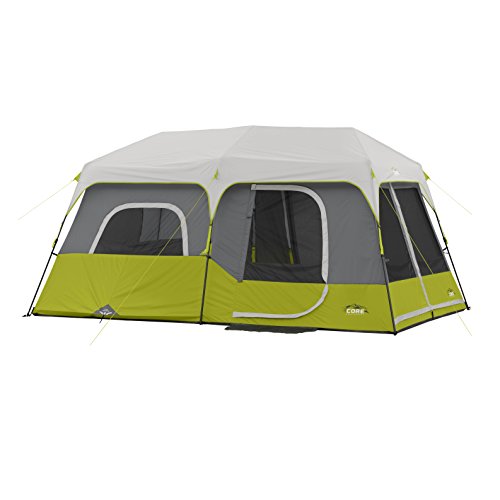
CORE 9 Person Instant Cabin Tent 14×9

Woolftent Inflatable Tunnel Camping Tent

CORE 4 Person Instant Cabin Tent Camping Set
More Details On Our Top Picks
The Panda inflatable shelter brings a different texture to weekend camping. Instead of thin nylon, this option uses a breathable canvas (a heavy cotton-blend fabric) wrapped around an air-tube frame, so the inside feels closer to a small cabin than a typical bivvy. That material choice helps regulate humidity overnight, which matters when you wake up on a cold morning and don’t want everything dripping.
The integrated stove jack is the feature that sets it apart. If you camp into shoulder seasons or you just like a warm tent, you can run a small wood or gas stove safely without roasting the canvas. The compact footprint makes it a strong match for one to four people on a short trip, but it isn’t really built for base-camp living like the Coody covered later in this list.
The Practical Payoff
- Canvas body breathes well, cutting down on condensation in cool, damp nights.
- Built-in stove jack lets you safely use a small heater inside, extending your season.
- Air-frame design removes the pole-fighting most traditional tents demand.
- Compact footprint fits smaller campsites without crowding your sleeping layout.
- Better interior comfort than typical nylon shells for the same number of campers.
Points To Keep In Mind
- Canvas dries slowly after rain, so packing up wet is a common headache.
- Heavier than nylon-only shelters, so it’s less suited to long carry-in trips.
Key Attributes
Whose Campsite It Belongs On
Small groups of one to four people running weekend trips in shoulder seasons who want canvas comfort and a stove-ready interior.
A Better Fit Elsewhere
The CORE 4 Person Instant Cabin Tent Camping Set works better for families who want a true bundled car-camping kit rather than a stove-ready canvas shelter.
Built around thick 600D Oxford fabric (a heavy-duty woven polyester rated to 3000mm of water resistance, well above the threshold for steady rain) and 6.3-inch PVC air columns, this shelter targets the harsher end of the camping calendar. The snow skirt around the base blocks wind-driven snow from creeping underneath, and the 8-level wind rating points to gusty ridgeline conditions rather than summer meadow pitching.
Inside, the tent gives you roughly 173 by 86 inches of floor space with mesh doors, TPU windows, and skylights for ventilation. That generous footprint is a real upgrade over the smaller Panda profile covered earlier. The trade-off is weight and pack size, so it’s best loaded into a truck or SUV rather than hauled up a trail.
Useful Highlights
- 3000mm waterproof rating handles prolonged rain and snow without seepage.
- Snow skirt at the base keeps drifts from working their way inside.
- Wide interior fits a family group plus gear without feeling cramped.
- Multiple mesh and TPU panels manage airflow in milder conditions.
Possible Compromises
- Heavier than backpacking-oriented shelters, so carry-in trips get tiring fast.
- Bulkier pack size means it really wants a car-camping setup.
- Winter-grade fabric and tubes feel overbuilt for summer-only use.
Made For
Campers tackling four-season conditions, alpine trips, or stormy shoulder-season weekends where weather resistance matters more than light weight.
Where Another Pick Suits Better
Solo hikers and small duos will find the High Peak South Col 4-Season Backpacking Tent a much lighter alternative for trail-based travel.
The Coody shifts the conversation from “sleeping shelter” to “outdoor living space.” Designed for families and groups who want to spend real time inside the tent rather than just crash for the night, it pairs a breathable TC cotton canvas with an inflatable structure that pitches quickly. The result feels closer to a canvas wall tent than a typical backpacker’s shelter.
A stove jack opens up cold-weather and shoulder-season use, and the roomy interior gives you space for cots, chairs, and gear. Compared to the compact Panda earlier in this list, the Coody trades portability for livability. If your idea of camping involves cooking, reading, and lounging, the extra room pays off.
Real-World Strengths
- Breathable cotton-blend canvas reduces condensation and feels comfortable over long stays.
- Stove jack supports cold-weather and extended-season camping.
- Spacious floor plan fits cots, chairs, and family gear comfortably.
- Air-frame setup removes the slow pitch process of traditional canvas tents.
Trade-Offs To Consider
- Significantly heavier and bulkier than nylon tents, so transport requires planning.
- Canvas needs careful drying before storage to prevent mildew.
- Overkill for short summer trips where a lighter shelter would do.
Feature Snapshot
Who It Suits Best
Families and groups running extended glamping weekends or base-camp setups where interior space and comfort matter more than portability.
Consider Something Else When
The CORE 9 Person Instant Cabin Tent 14×9 fits better for large groups who want maximum interior volume with the simplest possible setup.
The CORE Instant Cabin uses pre-attached telescoping poles (rigid metal shafts that extend and lock into place without assembly), so the tent goes from bag to standing in minutes. That’s the appeal: you pull into the campsite, unfold, extend, and stake. No loose parts to sort, no instructions to study while rain starts falling.
Inside, the multi-room cabin layout gives families separation without losing shared space. Storage pockets throughout the interior handle headlamps, books, and kid gear. The frame isn’t inflatable, so it sits in a different category than the Coody covered above. You trade the soft, quiet air tubes of an inflatable for the faster, more rigid feel of a cabin-style shelter.
What Pays Off
- Pre-attached poles mean setup takes minutes without sorting parts.
- Multi-room layout gives parents and kids their own space.
- Interior storage pockets keep small items organized.
- Cabin-style walls create near-vertical sides, which feel more like a room.
Points To Note
- Heavier and bulkier than inflatable options of similar capacity.
- Rigid pole frame makes it less compact than air-tube shelters.
Right Fit For
Families car camping who want fast setup, organized storage, and divided rooms rather than the more open canvas layouts.
Skip It When
The Coody Premium Canvas Inflatable Camping Tent suits shoppers who want an inflatable frame and breathable canvas for a more relaxed glamping feel.
At 9.7 pounds, the South Col lands in a different category than most of the inflatable shelters in this roundup. It’s a traditional three-person backpacking tent with a four-season rating, built from water-resistant nylon and supported by a flexible pole frame. The lower weight and compact pack-down make it a real candidate for trail-based trips where every ounce counts.
Setup uses the included poles and stakes and goes quickly once you’ve done it a few times. The trade-off against the inflatable options earlier: you do have to thread poles through sleeves, and the interior is snug. For solo backpackers or tight duos heading into shoulder-season weather, that compromise feels worthwhile.
Real Benefits
- 9.7-pound carry weight is far lighter than inflatable shelters.
- Four-season rating handles snow and cold shoulder-season conditions.
- Three-person capacity suits solo hikers or close duos.
- Water-resistant nylon shell sheds rain without weighing you down.
A Few Limitations
- Pole-based setup is slower than the inflatable options above.
- Snug interior feels tight for three adults with gear.
Feature Rundown
Who Should Grab It
Backpackers and trail-based campers who want a portable four-season shelter rather than a heavier car-camping inflatable.
Look Elsewhere When
The Woolftent 4-Season Inflatable Camping Tent fits better for campers who want inflatable setup and heavier-duty weather fabric on a car-camping trip.
For groups who care more about standing room than backpack-friendly weight, the 14 by 9-foot CORE Instant Cabin delivers. With pre-attached poles, the shelter pitches in two minutes or less, and the 78-inch center height lets most adults stand upright. Two queen air beds fit comfortably with space for cots and gear beyond that.
Weather protection comes from H20 Block Technology (a treatment that combines a 1200mm coated fabric with active water-repellent coatings), fully taped rainfly seams, and fully zipped windows. The result handles rain and wind without leaking from common seams. Compared to the smaller CORE Instant Cabin earlier, this is the option to choose when group size is the priority.
Everyday Wins
- Two-minute setup is hard to beat for a tent this size.
- 78-inch center height lets adults stand upright inside.
- Fits two queen air beds with room for additional gear.
- Taped seams and rainfly handle steady rain without leaks.
- Family-friendly capacity without the complexity of larger canvas shelters.
Small Caveats
- Pack size and weight make it a car-camping-only option.
- Polyester fabric is less breathable than canvas for extended stays.
Built With In Mind
Large families and group campers who want the simplest possible setup combined with enough room for everyone to sleep and stand comfortably.
Swap It Out When
The Coody Premium Canvas Inflatable Camping Tent is a better fit for groups who prefer breathable canvas and want to use a stove inside.
The Woolftent tunnel shelter targets campers who want inflatable convenience without moving into the heavier four-season category. Built from lightweight Oxford fabric, the tent fits one to four people in roughly 7.9 by 6.9 feet of floor space, with a peak height around 5.9 feet. Setup uses a hand pump, which means no electrical pump or muscle-burning foot pump.
The included stove jack opens up cool-weather camping, and the tunnel shape (a long, arched profile that maximizes interior space) gives you more usable room than a comparable dome. The level-5 wind rating handles moderate conditions but won’t match the heavier Woolftent 4-Season model covered earlier. For most three-season family or friend trips, that balance lands in a sensible spot.
Good Reasons To Consider
- Hand-pump setup skips the foot-pump workout and stays portable.
- Tunnel shape gives more usable floor space than compact dome tents.
- Stove jack extends use into cooler shoulder-season conditions.
- Three-season rating covers spring, summer, and fall for most regions.
Things To Weigh
- 35-pound package weight is heavier than backpacking-friendly shelters.
- Wind rating tops out below the heavier 4-season model.
- Tunnel tents need proper staking for stability in gusty conditions.
Best Suited To
Campers running three-season family or group trips who want inflatable convenience with a stove-ready interior at a sensible weight.
Where Another Pick Suits Better
The RBM Outdoors Panda Canvas Inflatable Camping Tent fits better for shoppers who want breathable canvas and a smaller, more compact profile.
The bundled camping set strips decision-making out of weekend trips. You get a 4-person instant cabin tent with 60-second setup, an outdoor table, two padded quad chairs, and a single carry bag that holds everything. For new campers or anyone who doesn’t want to buy gear piecemeal, that all-in-one package is hard to ignore.
The tent itself measures 8 by 7 feet with a 54-inch center height, comfortably accommodating two people or a family with smaller kids. The instant cabin uses pre-attached poles just like the larger 9-person CORE covered above, but in a more compact footprint. Storage is generous enough for short trips, and the included chairs remove the need to source your own on day one.
The Helpful Details
- Bundled tent, table, and chairs remove the need to shop separately.
- 60-second setup with pre-attached poles works well for first-time campers.
- Single carry bag simplifies transport and storage.
- Compact 4-person size suits couples and small families.
Honest Caveats
- Smaller floor plan feels tight for four adults with gear.
- Bundled accessories are functional rather than premium quality.
Feature Card
Perfect Match For
New campers, couples, and small families who want a one-purchase camping kit rather than assembling gear piece by piece.
Another Choice May Suit
The CORE 9 Person Instant Cabin Tent 14×9 is a better fit for larger groups who need standing room and more interior volume.
What To Weigh Before Choosing A Blows Up Tent
The first decision is whether you want true inflatable construction or just rapid setup. Inflatable tents rely on air-filled tubes that you pump up, while instant cabin tents use pre-attached telescoping poles. The air-tube approach gives a quieter, more flexible interior feel. Pole-based instant cabins tend to pitch faster but pack down bulkier.
Material matters more than most shoppers expect. Cotton canvas breathes well, manages condensation in cool weather, and feels substantial, but it weighs significantly more and dries slowly. Polyester and Oxford fabrics are lighter and dry faster but trap more moisture inside in cool conditions. For shoulder-season camping where you’ll wake up to cold, damp mornings, the breathability trade-off is worth thinking through.
Capacity ratings can overstate real-world fit. A “9-person” cabin tent fits two queen air beds, which realistically sleeps four adults with gear. A “3-person” backpacking tent usually works best for two adults or one person with a lot of gear. Match the rating to how many adults and how much equipment you actually bring, not the marketing maximum.
Weather season matters most for the frame and fabric thickness. Three-season shelters handle spring, summer, and fall in most regions. Four-season shelters add heavier fabrics, snow skirts, and stronger wind ratings for winter and shoulder-season storms. The High Peak South Col and the Woolftent 4-Season sit on the more weather-capable end of this list. Most others are three-season rated.
Key Considerations Across These Picks
Common Shopping Slip Ups
Buying by capacity rating alone is one of the most common traps. Marketed capacity assumes minimal gear and tight sleeping setups. Real-world camping with packs, boots, and shared space usually drops the comfortable count by one or two people. Match the tent to your actual headcount and gear, not the number on the label.
Another easy mistake is overlooking packed size and weight. An inflatable shelter that weighs 35 pounds might feel fine in the driveway but becomes a chore after a quarter-mile carry. Car-camping shoppers can ignore pack weight; backpackers cannot. Always check the package weight and folded dimensions before committing.
Where The Extra Money Goes
Higher-tier shelters buy heavier fabrics, stronger air-tube construction, and breathable canvas. The Coody and the Woolftent 4-Season sit on the premium end of this list, and that buys you better weather handling and longer service life. For campers who head out a dozen weekends a year, that investment pays off. For occasional summer trips, a lighter three-season shelter handles the job without stretching the budget.
Frequently Asked Questions
How long does it take to set up an inflatable tent?
Most inflatable tents in this roundup pitch in roughly five to fifteen minutes once you get used to the process, depending on pump speed and how many people are helping. The CORE instant cabins covered above pitch faster because their pre-attached poles extend in under two minutes.
Are inflatable tents durable enough for regular use?
Owners commonly report that well-maintained inflatable tents hold up across many seasons of normal use, though the air tubes and seams deserve routine inspection. Avoid dragging the tent across abrasive surfaces and check valve seals before each trip for the longest service life.
Can I use a stove inside any of these tents?
Only tents with a specifically designed stove jack should be used with a heater inside. The RBM Panda, the Coody, and the Woolftent models in this list all include a stove jack. The CORE instant cabins do not, and running a stove inside them is unsafe.
What is the difference between three-season and four-season tents?
Three-season tents handle spring, summer, and fall in typical conditions. Four-season tents add heavier fabrics, stronger frames, and snow skirts for winter storms and shoulder-season alpine weather.
Do inflatable tents need a special pump?
Most ship with a hand pump or include compatibility with a standard foot pump. Some shoppers add a small electric pump for faster inflation, though a hand pump is sufficient and stays portable for remote trips.
Wrap Up
The right shelter depends on how and where you camp most often. Backpackers and trail travelers will appreciate the lighter High Peak South Col. Canvas-comfort seekers who camp into shoulder seasons will find the RBM Panda and the Coody hard to beat. Families who want fast setup will lean toward the CORE instant cabins. Match the shelter to your headcount, your climate, and how you actually get to camp, and the rest sorts itself out.