
A dull or mismatched mower blade leaves torn grass tips, ragged edges, and that brownish hue that shows up a day after cutting. Whether you’re bagging clippings on a postage-stamp lawn or maintaining a half-acre riding mower, the right replacement blade makes a real difference in cut quality, mulching performance, and how much time you spend emptying bags. The ten blades below cover the most common residential and commercial setups: cordless EGO walk-behinds, Cub Cadet and Troy-Bilt riding mowers, John Deere lawn tractors, Lawn-Boy push mowers, and 61-inch commercial zero-turns from Scag and Ferris.
A Side-By-Side Look

Fismiuta AB2101 High Lift Mower Blade for EGO 21″

Fismiuta AB2101D Mulching Blade Kit for EGO 21″

Oregon 91-626 Blade for 61″ Commercial Mowers

GICOOL 942-0610A Mulching Blades for 38″ Decks
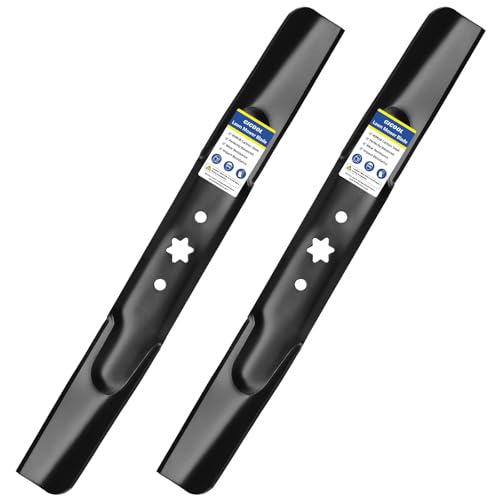
GICOOL 942-04308 Blades for Cub Cadet 42″ Decks

GICOOL 942-04290 Mulching Blades for Cub Cadet 46″

John Deere GY20850 OEM Mower Blade Kit

Lawn-Boy 89963 20-Inch Replacement Blade

GICOOL 942-0616A Blades for Cub Cadet XT1 LT42
Fismiuta AB2100 3-in-1 Blade for EGO 21″
What Each Pick Brings To The Table
If you own an EGO 56V 21-inch mower, the Fismiuta AB2101 is built to mirror the OEM part that came on LM2100 and LM2101 series machines. A high-lift profile (the rear edge curves up sharply) creates a strong updraft under the deck, which is exactly what you want when bagging spring growth or wet grass.
Compared with the AB2100 multi-mode blade below, this one is unapologetically about airflow rather than versatility. You won’t swap a plug in and out; you install it, you bag, you empty. For homeowners who bag every cut, that focus pays off in cleaner fills and fewer half-full trips to the compost pile.
Well-Handled Touches
- Replaces the EGO AB2101 OEM part directly across LM2100, LM2101, LM2100SP, LM2102SP, and LM2142SP models.
- High-lift geometry moves clippings upward efficiently, helping the rear bag fill completely on cool mornings.
- 21-inch length keeps the factory cutting swath on compatible decks.
- Steel construction handles the occasional hidden stick without bending badly.
Things To Consider
- Designed only for bagging; mulching performance will lag behind the Fismiuta AB2101D covered below.
- Single blade, so a missed measurement before install can leave you stuck waiting on a replacement.
Feature Snapshot
Who It Suits Best
EGO owners who bag clippings on most cuts and want a drop-in OEM replacement without fuss.
Look Elsewhere When
Pick the Fismiuta AB2100 instead when you want one blade that toggles between mulching and bagging across seasons.
The Fismiuta AB2101D is a two-blade replacement kit tailored for EGO’s Select Cut Multi-Blade System, which uses stacked blades under the deck for finer mulching. If you own an LM2130SP, LM2135SP, LM2150SP, LM2156SP, or LM2133, this is the kit designed for that specific deck architecture.
Unlike the single high-lift blade above, this setup uses an upper and lower blade working together to recut clippings before they fall. The honest read is that you give up some bagging efficiency in exchange for noticeably finer mulch output on spring and fall cuts.
Practical Advantages
- Two-blade configuration matches the Select Cut deck on LM2130 and LM2150 series mowers.
- Doubles down on mulching, returning finer clippings to feed the soil through summer.
- Direct OEM AB2101D replacement, no shimming required.
- Compatible with EGO’s bagging mode when the mulch plug is removed.
Worth Noting
- Won’t fit the older single-blade LM2100 and LM2101 models covered in pick 1.
- Two blades to install means a longer swap and slightly more careful alignment under the deck.
Made For
EGO Select Cut owners who prioritize fine mulch and don’t mind the extra install steps.
Reach For A Different Pick When
Choose the Fismiuta AB2100 if your EGO mower is a standard 21-inch LM2100/LM2101 model rather than a Select Cut deck.
Oregon’s 91-626 lands in a different league than the rest of the list. It’s a 12-pack of replacement blades sized for commercial zero-turns with 61-inch decks, including Scag, Ferris, and Simplicity models. Oregon has been a long-standing OEM supplier in this space, which is why landscapers reach for these by name.
Bulk packing matters when you’re running two or three mowers across a week’s worth of properties. The trade-off is that this set is overkill for anyone with a 21-inch walk-behind, and you need to verify your part number before ordering because 61-inch decks use different blade profiles across brands.
Advantages To Know
- Genuine Oregon replacement part, widely used by commercial crews.
- Twelve-blade bulk pack covers a full season of wear across multiple machines.
- Compatible with Scag 48111 and 481708, Ferris 5020842 and 5101755, and Simplicity 5022808ASM applications.
Trade Offs
- Massively overspec’d for residential users with smaller decks.
- Requires checking the owner’s manual for exact part match; blades for different 61-inch decks can look identical.
- Bulk pack adds storage bulk if you only need one or two blades.
Right Fit For
Commercial landscapers and pros managing a small fleet of 61-inch zero-turn mowers.
A Better Fit Elsewhere
Skip this in favor of the GICOOL 942-04290 if your operation runs 46-inch Cub Cadet decks instead of 61-inch commercial units.
The GICOOL 942-0610A targets 38-inch deck mowers from MTD, Troy-Bilt, Huskee, Murray, and White Outdoor brands. It comes as a two-pack, which is genuinely useful on this size deck because most use a paired blade setup.
Where the larger Cub Cadet blades below focus on riding tractor applications, this one fits older mid-frame lawn tractors from the same MTD family. Replacing both blades at once keeps the deck balanced and avoids the uneven cut that shows up when one new blade meets a worn partner.
A Strong Showing
- Two-pack ships both blades needed for the 38-inch deck.
- Mulching profile returns nutrients to the soil rather than bagging.
- Covers Huskee LT3800, Murray M115-38 and M135-38, plus Troy-Bilt Tuffy models.
- OEM cross-reference for 942-0610 and 942-0610A keeps ordering straightforward.
Honest Caveats
- Specific to MTD-family 38-inch decks, so verify the OEM number before checkout.
- Mulching blades can leave clumps in very tall growth; mowing frequency matters more than blade choice here.
Best Suited To
Owners of older MTD, Troy-Bilt, or Murray lawn tractors with a 38-inch cutting deck.
Swap It Out When
Choose the GICOOL 942-04308 instead if your mower is a newer Cub Cadet 42-inch riding unit rather than a 38-inch MTD model.
For Cub Cadet riders with 42-inch decks, the GICOOL 942-04308 replacement blade set covers XT1 LT42, XT2 LX42, RZT42, and ZT-1 42KH models. It also fits Troy-Bilt units using the same OEM cross-reference numbers, which makes it a versatile pick if your household runs mixed equipment.
Replacing both blades keeps the deck spinning true. You may find the 21-3/16-inch length makes measurement easier compared to some metric-only blades that require a converter tape. Compared with the 38-inch GICOOL pick above, the trade-off is deck size rather than build quality.
Everyday Perks
- Cross-compatible across Cub Cadet XT1, XT2, and RZT 42-inch families.
- Length of 21-3/16 inches simplifies measuring the old blade for confirmation.
- Covers Troy-Bilt equivalents under the same OEM family.
- Standard replacement cycle keeps cut quality consistent across the season.
Points To Note
- Check spindle hole pattern before ordering; some 42-inch Cub Cadets use the 6-star hole covered in pick 9.
- Steel blades will dull over a season of weekly mowing and benefit from a mid-year sharpening.
Who Will Love This
Homeowners with a Cub Cadet 42-inch riding mower who want a straightforward OEM-style replacement.
Consider Something Else When
Switch to the GICOOL 942-0616A from pick 9 if your XT1 LT42 uses a 6-star spindle hole rather than the standard pattern here.
Stepping up to a 46-inch deck, the GICOOL 942-04290 covers Cub Cadet’s LTX1046, RZT-L46, RZT-S46, and RZT-SX 46 series mowers. A wider deck means more blade surface and a faster mowing pace on larger lawns, but it also means more careful measurement before buying replacement parts.
The benefit over the 42-inch blade above is genuine time savings per pass. The honest read is that you’ll only appreciate that gain if your yard is large enough to justify a 46-inch deck in the first place. For half-acre lawns, the 42-inch pick above is usually the smarter buy.
The Case For It
- Wide fit list across Cub Cadet’s 46-inch LTX and RZT families.
- Mulching profile distributes clippings finely across wider passes.
- Cross-reference covers OEM numbers 942-04290, 942-04290-X, and 742-04290.
Minor Gripes
- Verify exact OEM cross before checkout; several similar part numbers live in this size range.
- Mulching blades in this size range benefit from a higher horsepower deck; older LTX models can bog down in thick spring grass.
Perfect Match For
Cub Cadet owners with larger properties mowing a 46-inch LTX or RZT deck weekly.
Skip It When
The GICOOL 942-04308 from pick 5 is a smarter fit for any yard under three-quarters of an acre.
The John Deere GY20850 is the OEM blade kit sold under the John Deere name, fitting D100, D105, D110, D120, D125, D130, and the LA100, LA105, LA110, LA115, LA120, LA125, and LA135 series lawn tractors. Going OEM removes any guessing about fitment because it carries the factory part number.
Compared with the aftermarket Cub Cadet options above, the John Deere kit is the conservative choice: it costs a little more, but you know it fits without measuring twice. For homeowners who don’t want to cross-reference OEM numbers, that certainty is the whole selling point.
Real-World Strengths
- Genuine John Deere OEM part, eliminating fitment guesswork.
- Covers a long list of D-series and LA-series 42-inch and 46-inch decks.
- Factory-specified steel thickness for the listed John Deere tractors.
Room For Improvement
- OEM kits typically cost more than the GICOOL aftermarket alternatives listed earlier.
- Limited to John Deere applications; not a universal solution across brands.
Built With In Mind
John Deere D100 and LA-series owners who prefer factory-direct parts over aftermarket cross-references.
Where Another Pick Suits Better
Choose the GICOOL 942-04308 if your lawn runs a Cub Cadet 42-inch rider rather than a John Deere D-series.
The Lawn-Boy 89963 is the replacement blade for 20-inch Lawn-Boy walk-behind mowers. It uses a tri-cut steel profile, which produces a finer clipping than a standard single-edge blade and makes bagging and mulching easier on smaller yards.
Where the EGO blades above target cordless electric walk-behinds, this one serves the gas push-mower crowd. The honest trade-off is that Lawn-Boy machines have been around for decades, so owners commonly report that a new blade transforms an older mower that had started leaving ragged tips behind.
Useful Strengths
- OEM replacement for 20-inch Lawn-Boy walk-behinds.
- Tri-cut profile produces finer clippings for cleaner mulching and bagging.
- Direct part number 89963 simplifies ordering without cross-referencing.
Points To Keep In Mind
- Limited to Lawn-Boy 20-inch models; not interchangeable with other walk-behind brands.
- Smaller blade means more passes on a yard over a quarter acre.
Who Should Grab It
Lawn-Boy 20-inch walk-behind owners looking for a direct OEM replacement rather than an aftermarket cross.
Not Your Match When
The Fismiuta AB2101 from pick 1 is the right call for EGO 21-inch cordless mower owners.
Some Cub Cadet 42-inch decks use a 6-star spindle hole instead of the standard pattern, which is where the GICOOL 942-0616A comes in. It covers XT1 LT42, XT2 LX42, RZT42, RZT-L42, and ZT-1 42KH units that use the 6-star mounting.
Mixing the wrong spindle pattern is a common rookie mistake on these decks. The OEM cross-reference for 942-0616 and 942-0616A matches Craftsman CMXGZAM110115 as well, which helps if your garage holds a mixed fleet.
What Pays Off
- 6-star hole pattern fits XT1 LT42 decks that don’t take the 942-04308 blade from pick 5.
- Cross-references Craftsman and Toro part numbers, expanding household compatibility.
- Mulching profile works well for routine weekly cuts.
Where It May Fall Short
- Wrong fit for XT1 decks with the standard (non-6-star) spindle pattern.
- Blade balance matters more on a 6-star mount; minor warping can throw off the deck.
Whose Shelf It Belongs On
Cub Cadet XT1 LT42 owners with the 6-star spindle pattern who want a verified aftermarket replacement.
Another Choice May Suit
Pick the GICOOL 942-04308 if your Cub Cadet 42-inch deck uses the standard spindle pattern rather than the 6-star mount.
The Fismiuta AB2100 is the versatile sibling to the high-lift AB2101 from pick 1. It fits the same EGO LM2100, LM2101, LM2100SP, LM2102SP, and LM2142SP walk-behinds, but it handles mulching, bagging, and side-discharge without swapping blades out.
For homeowners who change cutting modes by season (mulching in summer, bagging in fall for leaf cleanup), the 3-in-1 design is the practical pick. The trade-off versus the dedicated high-lift blade is slightly less aggressive airflow on bagging days, but for most yards, the difference is modest.
Reasons It Performs
- Single blade handles mulching, bagging, and side-discharge modes.
- Replaces OEM AB2100 across the LM2100 and LM2101 EGO 21-inch families.
- Quick swap from mulching to bagging with the deck plug change, no second blade on hand.
Things That May Matter
- Bagging efficiency trails the dedicated high-lift AB2101 on very wet or thick spring growth.
- EGO Select Cut owners should choose the AB2101D kit from pick 2 instead.
The Right Fit
EGO 21-inch owners who mulch in summer and bag leaves in fall and want one blade that handles both.
Where A Sibling Pick Shines
The Fismiuta AB2101 from pick 1 is the better bagging choice for dedicated baggers on cool spring mornings.
Picking The Right Blade For Your Mower
Blade length must match the deck size on your mower, with no exceptions. A 21-inch blade cannot balance a 42-inch deck, and a 42-inch blade will not fit a 21-inch walk-behind. The OEM part number, usually printed on the blade or listed in the owner’s manual, is the safest anchor for ordering. Cross-references like the MTD 942-0610A or EGO AB2101 listings above only work when the original deck size matches.
Mulching blades feature a curved profile with more cutting edges along the length, so they recut clippings into finer pieces before dropping them back into the lawn. High-lift blades curve upward more sharply at the rear, generating stronger airflow that pushes clippings into a rear bag for collection. Standard blades sit between those two, producing a clean cut without specialized airflow.
Match The Spindle Pattern First
Before choosing a blade profile, confirm the spindle hole pattern on your deck. Most Cub Cadet 42-inch decks use a standard 5-point or 6-point star hole, but the 6-star pattern covered in pick 9 is genuinely different from the standard version in pick 5. A blade that looks correct in photos can refuse to mount if the hole pattern is off by even one tooth.
Consider Steel Thickness And Hardness
Aftermarket blades vary in steel grade and heat treatment. Thicker stock resists bending on hidden rocks but adds weight that smaller engines may struggle to spin up to speed. For residential walk-behinds, mid-range steel offers the best balance between durability and engine load.
When A Two-Pack Saves A Return Trip
Most 38-inch and 42-inch decks use two blades, which is why the GICOOL picks above ship as pairs. Replacing both blades at the same time keeps the deck balanced and avoids the uneven cut that comes from one sharp blade meeting a dull partner. For walk-behinds, a single blade is usually sufficient because the deck only carries one cutting edge.
Key Considerations Across These Picks
Common Shopping Slip Ups
The most frequent mistake in this category is ordering by deck size alone. Two 42-inch Cub Cadet decks can use different spindle patterns, and the wrong hole means returning the blade and waiting days for a replacement. Always cross-reference the OEM part number from the manual or the existing blade before checkout. A second common error is buying a high-lift blade expecting mulching performance, or vice versa. Blade profile (high-lift versus mulching) determines how clippings move through the deck, so match the profile to your cutting style rather than your deck size alone.
What The Higher Tier Buys
Premium blades, like the Oregon commercial set in pick 3, command more because of steel grade, heat treatment, and bulk-packaging economics. For a homeowner mowing a quarter acre weekly, the upgrade rarely justifies the cost. For a commercial crew running three or four mowers across the same week, bulk OEM-grade steel pays for itself through fewer mid-season replacements and more consistent cut quality across an entire fleet. The honest read is that the upgrade matters most when downtime costs real money.
Frequently Asked Questions
How often should I replace mower blades?
Most residential blades last one to two mowing seasons before needing sharpening or replacement. Heavy weekly use on sandy or rocky soil shortens that window. A quick visual check for nicks, bends, and uneven cutting tips tells you when a blade is past its useful life.
Can I sharpen a mower blade instead of replacing it?
Yes, sharpening extends blade life if the steel is still straight and the cutting edges aren’t deeply pitted. A bench grinder or angle grinder with a file finish works for most DIYers. Replace the blade if it has visible bends, cracks, or excessive wear near the mounting hole.
What is a high-lift blade used for?
A high-lift blade generates strong upward airflow under the deck, which forces clippings into a rear bag for collection. The trade-off is more engine load and louder operation. If you bag every cut, a high-lift blade fills the bag more completely than a standard or mulching blade.
Are aftermarket blades as good as OEM?
Aftermarket blades from established makers like GICOOL or Oregon generally match OEM fit when the part number cross-references correctly. OEM blades, like the John Deere kit in pick 7, eliminate guesswork but usually cost more. Either route works when the fit is verified.
Do mulching blades work for bagging too?
Most mulching blades handle bagging reasonably well, though bag fill efficiency tends to lag behind a dedicated high-lift blade. The Fismiuta AB2100 from pick 10 is a 3-in-1 design that handles both, which is the practical middle ground for mixed-use mowing.
Closing Remarks
The right replacement depends less on brand hype and more on three checks: confirm the deck size, confirm the OEM part number, and confirm the spindle hole pattern. Once those line up, the choice between high-lift, mulching, or 3-in-1 comes down to how you actually mow across the season. Match the blade to your cutting style and the rest takes care of itself.