
When the temperature drops and the forecast turns ugly, the right emergency shelter can turn a dangerous night into a survivable one. Bivy bags, also called bivy sacks or bivouac sacks, are compact, weather-resistant covers that slip over or replace your sleeping setup to block wind, trap heat, and shed rain. Whether you keep one in a bug-out bag, your car trunk, or your pack for ultralight backpacking, the right one matters far more than you might think.
Your Options, Compared

Sierra Madre Puffle 40 Camping Quilt
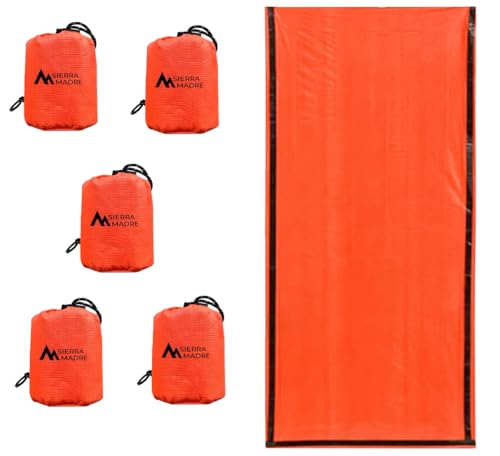
Sierra Madre Emergency Bivy Sack

Mart Cobra Mylar Bivy Sack

Zmoon Emergency Survival Bivy

Leberna Emergency Sleeping Bags 2-Pack

Tennier Military Modular Sleep System
Why These Options Stand Out
The Sierra Madre Puffle 40 stands apart from the rest of this list because it isn’t a one-trick emergency shell. Built around a 20D nylon shell with a waterproof coating, this puffy camping quilt morphs into a sleeping bag, poncho, underquilt, or top quilt depending on what the night demands. Hammock campers get genuine utility here, and backpackers trimming ounces can skip the rigid setup entirely.
Versatility like this earns its weight when conditions shift mid-trip. You may find the modular design awkward at first, but once you learn the snap configuration it becomes second nature. Unlike the rest of this list, which leans toward pure emergency Mylar sacks, the Puffle 40 lives comfortably as a regular piece of camp kit.
Advantages To Know
- Five distinct configurations reduce the need to pack separate blankets, bags, and ponchos
- Waterproof 20D nylon shell sheds light rain and morning dew reliably
- Works as a top quilt over a sleeping pad for cold nights or alone in summer
- Compresses small enough for multi-day backpacks without dominating space
Points To Note
- Not a true emergency-only bivy; insulation is comfort-oriented rather than survival-grade
- The snap closures take a few practice runs before they feel intuitive in the dark
Who It Suits Best
Backpackers and hammock campers who want a single piece that adapts to shifting conditions and trips that blend hiking with lounging at camp.
A Better Fit Elsewhere
Reach for the Tennier Military Modular Sleep System if your priority is deep-winter cold ratings rather than warm-weather versatility.
The Sierra Madre Emergency Sleeping Bag shifts this list into pure survival territory. Its shell uses Mylar, a polyethylene film originally engineered for spacecraft insulation, that reflects roughly 90 percent of radiated body heat back toward you. The material is also tear-resistant, which matters when you’re crawling through brush to reach a sheltered spot.
Where the previous Puffle 40 trades warmth for flexibility, this sack commits fully to keeping you alive through a bad night. For most hikers it’s overkill in summer and exactly right when the forecast turns serious. You can stuff it into a pack lid, a car trunk, or a desk drawer without thinking about it.
Practical Pluses
- Mylar reflects about 90 percent of body heat, the core advantage over a basic tarp
- Waterproof and windproof construction blocks the two biggest heat-stealing forces
- Compact packed size makes it easy to stash in a glove box or small pack
- Tear-resistant film holds up to rough ground and thorny approaches
Trade Offs
- Mylar crinkles loudly and doesn’t breathe, so condensation can build inside on calm nights
- Designed as one-time emergency shelter rather than a reusable primary bivy
Made For
Anyone building a serious bug-out bag, car emergency kit, or backcountry safety layer for shoulder-season trips where weather can flip fast.
Where Another Pick Suits Better
The Mart Cobra Mylar Bivy Sack fits a similar role at a lower entry point, making it the smarter choice if you’re equipping multiple kits on a tight budget.
The Mart Cobra emergency sack lands in the same Mylar category as the Sierra Madre option but aims at a more stripped-down audience. Reflective insulation, a tube-tent footprint, and a flat-fold pack profile mean you can drop it into a pack, a glove box, or a saddlebag without reorganizing anything. It’s a single-use shelter built for emergencies rather than extended comfort.
Preppers and day-hikers tend to gravitate toward this style because the size penalty is nearly zero. You may find yourself wishing for a hood or drawcord opening if you plan to use it for more than a few hours, but for a true rescue shell that works exactly as intended.
Everyday Wins
- Reflective Mylar shell traps radiated heat efficiently for its size
- Tube-tent shape lets it double as an emergency tarp shelter
- Minimal packed volume makes it easy to carry on day hikes
- Fits standard survival kits and 72-hour bag layouts without modification
Worth Noting
- Lacks the reinforced seams and hooded openings of more purpose-built emergency bivy sacks
- Reflective film degrades faster than coated nylon if folded repeatedly
Right Fit For
Day-hikers, ultralight packers, and preppers who want a true emergency layer that adds almost no weight to their kit.
Look Elsewhere When
Pick the Leberna two-pack instead if you want to equip multiple vehicles or shelters from a single purchase.
The Zmoon Emergency Sleeping Bag threads through the same survival niche as the Mart Cobra and Sierra Madre options but leans further into portability. Its Mylar body is waterproof and thermal, and the bag folds into a pouch small enough to slip into a coat pocket or attach to a pack strap. For campers who want a backup they won’t talk themselves out of carrying, the size argument is a real advantage.
Where the Sierra Madre Puffle 40 invites you to sleep in it for fun, the Zmoon stays squarely in the backup-essentials role. Depending on your trip, you may find it perfectly adequate as a primary shelter in fair weather, but cold-rated gear like the Tennier system handles serious drops better.
A Favorable Mix
- Pocket-sized packed profile removes excuses for leaving it behind
- Waterproof thermal shell handles both rain and wind exposure
- Doubles as a ground cover, emergency tarp, or signal panel
- Low learning curve; deploy by stepping in and zipping up
Honest Caveats
- Mylar is loud and prone to condensation buildup during long stationary use
- Not insulated enough for stationary cold-weather sleeping without a pad
Who Will Love This
Trail hikers, commuters, and anyone who wants a stowable emergency shelter that disappears into a small pack until they need it.
Swap It Out When
Step up to the Sierra Madre Puffle 40 if you want something that doubles as a comfortable sleep system on fair-weather trips.
The Leberna two-pack leans into a different buying logic: redundancy across multiple vehicles, homes, and packs. Each sack uses reflective Mylar material that bounces about 90 percent of body heat back toward you, with a reusable design you can fold and repack without destroying the film. Two units in one purchase makes sense for families or fleet-minded preppers.
The trade-off shows up when you compare it to the Sierra Madre Emergency Bivy Sack: it’s a simpler shell without the same tear-resistant engineering. For most car-based emergency kits, that’s a fine compromise. You may notice the seams feel thinner on careful inspection, but they hold up well under normal conditions.
Well-Handled Touches
- Two-pack format covers multiple vehicles or locations from a single purchase
- Reusable Mylar survives folding and repacking better than budget single-use shells
- Reflective surface works equally well as a heat trap or signaling panel
- Universal fit accommodates a wide range of body sizes inside the sack
Some Limits To Know
- Not designed for sustained camping comfort; best treated as emergency shelter
- Mylar film can degrade with sharp folds if stored compressed for months
Perfect Match For
Families and households outfitting several vehicles, cabins, or backpacks with reliable thermal emergency shells on a practical budget.
Another Choice May Suit
Choose the Zmoon Emergency Survival Bivy for a sturdier single-unit option with a tighter packed footprint.
The Tennier Industries system sits at the far end of the spectrum from the other picks here. It’s a four-piece modular setup: a green mummy-style Patrol Bag, a black Intermediate Cold Weather bag, a camouflage Goretex Bivy Cover, and a compression sack with six or nine straps. Rated for use down to roughly negative 50 degrees Fahrenheit with proper ECWCS layering, this is genuine military-issue gear built for stationary cold.
Compared to the reflective Mylar sacks earlier in this list, the Tennier system trades compact packability for actual sleep-rated warmth. You may find the size and weight overkill for summer trips, but for winter expeditions or emergency cold-weather shelter it’s in a different category entirely. ECWCS, short for Extended Cold Weather Clothing System, refers to the military’s standardized layering approach that pairs with this system.
Useful Highlights
- Two-layer bag system (Patrol plus Intermediate) plus Goretex shell creates real cold-weather performance
- Goretex bivy cover breathes better than Mylar, reducing condensation on long winter nights
- Compression sack with multiple straps distributes weight for pack or sled transport
- Nylon construction handles repeated field use far better than disposable reflective shells
What To Weigh
- Bulk and weight make it impractical for ultralight or summer backpacking
- Genuine cold ratings require proper ECWCS base layers to reach the lowest temperature claims
Built With In Mind
Expedition campers, winter backpackers, and emergency planners who need true sub-zero rated shelter rather than a thin reflective shell.
Skip It When
Grab the Sierra Madre Puffle 40 instead for trips where weight, versatility, and warm-weather comfort matter more than deep-cold ratings.
Picking The Right Bivy Bags For Your Setup
Bivy bags fall into two broad camps: reflective Mylar emergency shells and insulated fabric systems. Mylar options like the Mart Cobra, Zmoon, Sierra Madre Emergency, and Leberna packs shine when weight and packability matter most. They’re disposable-grade in design but effective at trapping radiated heat in a true survival scenario. Fabric systems like the Sierra Madre Puffle 40 and the Tennier Military Modular Sleep System bring genuine insulation and breathability for repeated overnight use.
Weight tells the real story. A reflective Mylar sack typically weighs a few ounces and packs to the size of a water bottle. An insulated system can run several pounds and fill a compression sack. Backpackers chasing ultralight setups usually pair a Mylar bivy with a quality sleeping bag rather than treating the bivy as primary insulation.
Temperature rating matters more than marketing claims suggest. Mylar shells reflect heat back toward you but don’t generate warmth on their own. Without an insulating pad underneath, even the most reflective shell will let ground chill drain your core temperature within hours. The Tennier system addresses this with two bag layers plus a Goretex shell rated for extreme cold, though it requires proper ECWCS clothing to reach those ratings.
Intended use shapes the right pick. A car trunk emergency kit needs something compact and disposable that you’ll actually leave in the vehicle. A backcountry overnight requires breathable fabric, insulation, and weather resistance. Multi-vehicle households may want the redundancy of a two-pack rather than a single premium unit.
Key Considerations Across These Picks
Where Shoppers Go Wrong
Treating a Mylar bivy as primary shelter is the most common mistake. These shells reflect heat, but without an insulating pad below you, ground conduction saps warmth faster than the bag can replace it. Another slip: storing Mylar sacks compressed for months, which creases the reflective film and reduces its efficiency over time.
The Case For Spending Up
Higher-tier options like the Sierra Madre Puffle 40 and Tennier Military Modular Sleep System cost more because they use coated nylon, layered insulation, and sealed seams instead of single-layer reflective film. The upgrade payoff comes in reusability, breathability, and real overnight comfort rather than emergency-only performance. You pay more because the gear handles actual camping, not just survival.
Frequently Asked Questions
What is a bivy bag used for?
A bivy bag provides a compact weather-resistant shelter that blocks wind, sheds rain, and traps body heat. It’s lighter than a tent and fits inside a backpack.
Are Mylar bivy bags reusable?
Some are, but repeated folding and compression can degrade the reflective coating over time. Single-use emergency shells work once and may lose efficiency after that.
Can you sleep in a bivy bag in winter?
Insulated fabric systems like the Tennier Modular Sleep System handle deep cold with proper layering. Reflective Mylar shells are emergency-grade and won’t sustain warmth in freezing conditions.
How is a bivy bag different from a sleeping bag?
A bivy is a weather shell that goes over or around your sleep system. A sleeping bag provides insulation through fill materials. Many backpackers combine both for full coverage.
Do I need a sleeping pad with a bivy bag?
A sleeping pad is strongly recommended because ground conduction steals heat faster than a bivy can trap it. Even the best emergency shell loses effectiveness without insulation underneath.
Bottom Line
Your situation drives the choice more than any spec sheet. Emergency kits and bug-out bags lean toward reflective Mylar sacks that disappear into a pack. Actual camping and cold-weather use demand fabric systems with insulation, breathability, and real reusability. Match the bivy to your trip, not the other way around, and you’ll stay warm when it matters.