
A bikepacking bivy has to do a lot in a tiny package. It needs to shed rain on a wet ridgeline, breathe hard enough on a humid night that you don’t wake up soaked from condensation, and pack down small enough to strap under a top tube without rubbing your knees on the bars. That’s a tall order for something that weighs less than a loaf of bread.
The picks below span true minimalist shelters built specifically for sleeping under the stars, plus a few add-on accessories that round out a complete bikepacking sleep system. Most riders pairing a bivy with a frame bag will find that the lightest setups still beat a tent for pure mileage goals. The right call depends on your climate, your pad, and how much weather protection you actually need.
A Closer Look At The Lineup

Sierra Madre Puffle 40 Camping Quilt
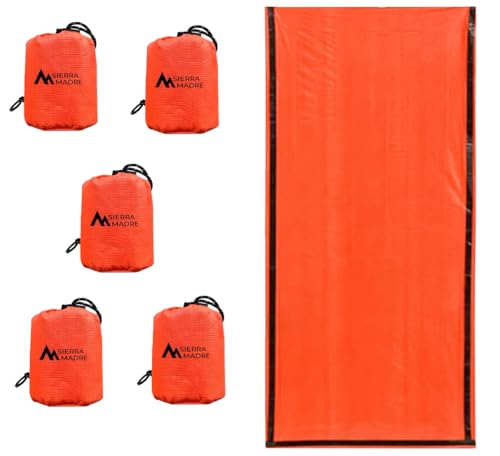
Sierra Madre Emergency Bivy Sack

Moosetreks Touring Road Bike Frame Bag

Sierra Designs Backcountry Bivy Bag

Ammo Can Man ACU Digital Bivy Cover

ROCKBROS Top Tube Bike Bag 1.3L

ROCKBROS Bike Handlebar Bag 2L

ROCKBROS Top Tube Bike Bag Waterproof
The Strengths Of Each Pick
The Sierra Madre Puffle 40 earns its place by being far more than a quilt. The 20D nylon shell wraps a synthetic fill that pulls double duty as a sleeping bag, poncho, underquilt for hammock campers, and a flat blanket for the picnic table at the trailhead. On a bike, that versatility matters: one piece of gear covers evening camp, midday rest stops, and that surprise cold front rolling in at 8,000 feet.
Riders running summer routes through the Rockies or shoulder-season trips into the Cascades will appreciate how quickly the Puffle adapts. It packs small enough to wedge behind a Moosetreks frame bag and light enough that you forget it’s there. For bikepackers who hate packing redundancy, this is the piece that replaces three.
What Stands Out
- Five configurations from a single piece, cutting redundancy in your sleep kit
- 20D nylon shell with a waterproof coating, so a sudden shower at camp won’t soak through
- Synthetic fill stays functional when damp, unlike down, which matters on a multi-day wet route
- Packs small enough to slip behind a full frame bag without eating into cargo space
- Works as a poncho for cooking in the rain, freeing your hands
Trade-Offs To Consider
- Synthetic fill is heavier than a down quilt of the same warmth rating
- Not a true shelter, so you’ll still need a bivy or tarp for serious weather
Feature Snapshot
Made For
Riders who want one adaptable piece that handles most weather and camp scenarios without packing a separate blanket, poncho, and sleep system.
A Better Fit Elsewhere
Cold-weather purists chasing the lowest weight will find the Sierra Designs Backcountry Bivy Bag a more shelter-focused option.
The Sierra Madre Emergency Bivy is built around the same NASA-grade polyethylene insulation that made Mylar famous, and that material choice shapes everything about how this sack behaves in the field. It reflects roughly 90% of body heat back at you, which is a wild number until you crawl inside one on a cold night and realize your breath isn’t even fogging quite as hard. The trade-off is breathability, and we’ll get to that.
For bikepackers building a bug-out layer or a backup shelter that lives in the bottom of a handlebar bag, this is the kind of gear that pays for itself once. It weighs almost nothing and packs to the size of a water bottle. Riders who mostly bike warm-season routes may keep it as insurance for the day the weather turns hostile.
Real Benefits
- Reflects 90% of radiated body heat, extending survival time in cold snaps
- Tear-resistant Mylar construction handles brushy campsites and rocky ground
- Packs down small enough to live in a frame bag as permanent backup
- Blocks wind and rain completely, even in sustained Pacific Northwest drizzle
Worth Noting
- Mylar does not breathe well, so condensation builds up fast on humid nights
- Crinkly texture and loud fabric make this a poor choice for stealthy camping
- Best treated as emergency insurance rather than a primary sleep system
Right Fit For
Riders building a safety kit for remote routes who want a featherweight emergency shelter that fits in any bag.
Look Elsewhere When
You need a breathable shelter to sleep in nightly, in which case the Sierra Designs Backcountry Bivy Bag will serve you far better.
None of the bivy picks above matter if you can’t carry your sleep system somewhere, and the Moosetreks frame bag is the platform that makes a serious bikepacking sleep kit possible. It’s a full triangle bag in three sizes (6.5L, 12L, 14L), built from ripstop nylon laminated with thermoplastic polyurethane for water resistance. The removable internal divider turns the bag into two compartments, which solves the wet/dry problem most riders hit on day one.
Compared to the smaller top-tube and handlebar bags later in this list, the Moosetreks is in a different category. It’s the bag that swallows a quilt, a bivy, and a sleeping pad for a multi-week tour. Riders running tour bikes or hardtails will appreciate how low the load sits, which improves handling on steep climbs more than you’d expect.
Positive Takeaways
- Three sizes fit most touring and fat bike frames when measured properly
- Ripstop nylon with TPU lamination sheds road spray and brief rain
- Two zippered compartments with a removable divider for organized packing
- Strong velcro straps keep the bag stable on technical descents
Practical Considerations
- The large size reportedly runs big, so measure your triangle twice before ordering
- Velcro straps collect debris and need occasional cleaning to grip well
Quick Facts
Best Suited To
Touring riders who need to carry a full sleep system in the frame triangle on multi-day routes.
Consider Something Else When
You only need quick-grab access to snacks and a phone, where the ROCKBROS Top Tube Bike Bag handles the job in a smaller footprint.
The Sierra Designs Backcountry Bivy is the closest thing on this list to a purpose-built bikepacking shelter, and the engineering is in the fabrics. The top is a 20D nylon ripstop with a 10,400mm waterproof rating and 18,300 g/day moisture vapor transmission, which is a serious step up from the basic emergency Mylar in Pick 2. In plain English: rain stays out and your body moisture moves out, so you don’t wake up in a damp bag.
It’s designed to wrap the Backcountry Bed sleeping quilt and a 2.5-inch inflatable pad inside, which means the whole sleep system packs as one tidy unit. Riders tackling shoulder-season Pacific Northwest routes or wet alpine terrain will benefit most. For arid summer trips, the breathability advantage matters less and you might save weight elsewhere.
Useful Highlights
- 20D ripstop top with 10,400mm waterproof rating handles heavy rain
- High moisture vapor transmission rate reduces condensation on humid nights
- 30D ripstop bottom with FR-treated fabric resists ground abrasion
- Sized to fit the Backcountry Bed plus an inflatable pad
Small Caveats
- Premium specs come with premium weight compared to emergency Mylar
- Tight fit with a quilt and pad inside, so layering choices are limited
Specification Snapshot
Whose Shelf It Belongs On
Riders facing real wet weather on a regular basis who want a breathable shelter instead of a one-time emergency layer.
Skip It When
You’re after a featherweight backup that lives in a handlebar bag, since the Sierra Madre Emergency Bivy Sack fills that role at a fraction of the size.
The Ammo Can Man ACU Digital Bivy Cover leans hard into durability over weight savings, and that’s a deliberate trade. The ACU digital print comes from the U.S. military’s Modular Sleep System lineage, so the pattern is genuinely low-visibility in mixed terrain. The 3-layer construction is built to take abuse from rocky ground, dragged gear, and long-term field storage without falling apart.
This isn’t the bivy a gram-counting racer will love. Bikepackers who spend real time in rough country, hunters crossing public land, or anyone who treats gear roughly will appreciate how it shrugs off punishment. Compared to the Sierra Designs Backcountry Bivy, this one is heavier but more forgiving in storage and handling.
What Makes Sense
- 3-layer construction resists tearing on brushy and rocky sites
- ACU digital camouflage pattern breaks up silhouette in mixed terrain
- Designed as an outer shell over a sleeping bag, doubling as ground cover
- Holds up to long storage in a pack without delamination issues
Factors To Consider
- Heavier than minimalist bivy options in this list
- Camouflage pattern is purely functional, not a fashion statement
Built With In Mind
Riders who treat gear roughly and want a bivy cover that survives years of real use on rugged trips.
Another Choice May Suit
Weight-conscious bikepackers will do better with the Sierra Designs Backcountry Bivy Bag, which trims grams while keeping weather performance.
Top tube bags aren’t shelters, but they’re the kind of accessory that decides whether a bivy system actually works in practice. The ROCKBROS Top Tube Bag holds 1.3 liters at roughly 8.86 x 4.25 x 2.17 inches, which sounds small until you realize that’s a phone, a snack, a multitool, and a patch kit all within reach without stopping. The three-point elastic cord system mounts in a way that feels more secure than older hook-and-loop designs.
On a bikepacking rig where you don’t want to swing a leg off the bike every time you need a gel, this bag earns its keep. Riders running shorter day routes or supplementing a Moosetreks frame bag will find the two work together cleanly. The honest read is that this bag is small on purpose, and trying to overstuff it is the main thing that goes wrong.
A Strong Showing
- Three-point elastic system stays put over rough terrain
- 1.3L capacity fits phone, snacks, and tools without bulk
- Lightweight build that doesn’t noticeably affect handling
- Easy on and off for riders swapping bikes or charging indoors
Things To Weigh
- Elastic cords may need replacing over years of sun and tension
- Small capacity means overpacking becomes a real failure mode
The Details
Perfect Match For
Riders who want grab-and-go access to small essentials on long rides without adding a backpack.
Reach For A Different Pick When
You need a quick-grab shoulder bag that moves between bikes, where the ROCKBROS Bike Handlebar Bag handles that scenario better.
The ROCKBROS Bike Handlebar Bag covers a problem the bivy picks above don’t touch: stuff you need during the ride. At 2 liters, it holds a phone, keys, wallet, sunglasses, and a small camera, which is the daily-carry kit for most riders. The standout feature is the four mounting positions, so the same bag goes on the handlebar, the frame, or the seat post depending on what the bike allows.
For bikepackers running mixed fleets from a road bike to a folder, the mounting system is the real story. You buy one bag and it migrates between machines. Compared to the smaller ROCKBROS Top Tube Bag earlier in this list, the handlebar bag trades cockpit tidiness for capacity and easier phone access while riding.
The Practical Payoff
- 2L capacity swallows daily essentials and small cameras
- Four mounting positions fit road, mountain, gravel, and folder bikes
- Side mesh pocket adds quick access for a snack or bottle
- Shoulder strap converts it to a small carry-off bag at camp
Honest Caveats
- Handlebar placement can affect handling on technical singletrack
- 2L is generous for daily use but cramped for any sleep system role
Who Should Grab It
Riders running multiple bikes who want one bag that mounts in different positions depending on the frame.
Swap It Out When
You need a low-profile option that doesn’t change steering feel, where the ROCKBROS Top Tube Bike Bag 1.3L handles the job more discreetly.
The second ROCKBROS top tube bag on this list solves a different problem than the first. Where the 1.3L bag uses elastic cords, this one uses a knob and high-strength binding rope with a buckle lock, so mounting is a one-pull release instead of working three separate cords. On rides where you’re attaching and detaching the bag at every stop, that matters more than it sounds.
The 2.36-inch narrow body is the other thoughtful detail. On smaller road frames or bikes with tight clearances, your knees won’t hit it during pedaling, which is a complaint that comes up often with wider aftermarket bags. Riders running road or mountain bikes will get a clean fit; folding bikes are explicitly called out as a poor match.
The Value In It
- Buckle-lock knob lets you remove the bag in seconds at every stop
- 2.36-inch narrow body keeps knees clear on road and MTB frames
- Lightweight build that won’t noticeably change bike handling
- Works on road, gravel, and mountain setups without frame-specific adapters
Worth Bearing In Mind
- Not compatible with folding bikes, per the manufacturer guidance
- Buckle hardware may need occasional checks on rough terrain
Who Will Love This
Riders who attach and detach a top tube bag frequently and want a quick-release mount that doesn’t fight them every time.
Where A Sibling Pick Shines
Multi-bike riders needing handlebar or frame mounting will find the ROCKBROS Bike Handlebar Bag a more flexible option.
What Matters Most Before Choosing Bivies For Bikepacking
Waterproofing And Breathability Trade-Offs
The first real decision is how much weather you actually face. Mylar emergency bivies reflect heat well but trap moisture, which is fine for one cold night and miserable for a week. Waterproof-breathable shells (technical fabrics rated for hydrostatic head, meaning the water pressure a fabric withstands before leaking, plus moisture vapor transmission rate, which measures how much sweat vapor passes through) cost more weight but solve the condensation problem. Match the shelter to your climate, not to a worst-case fantasy.
Weight And Pack Size On The Bike
Bikepackers have roughly one frame bag of cargo space for the whole shelter system. A 700-gram bivy plus a 500-gram quilt plus a 400-gram pad fills the triangle fast, and once you’re over budget, food and water get squeezed. Riders chasing mileage goals will save weight on the pad, since inflatable pads compress smaller than foam and roll to fit odd spaces.
Bag System Fit
The bivy means nothing if you can’t carry it. Measure your frame triangle before ordering a frame bag and pick a size that actually fits without interfering with bottles or heel clearance. Top tube and handlebar bags handle quick-access items, while the frame bag swallows the sleep system. Pair them based on the route, not the catalog.
Reading Real-World Use Conditions
Pay attention to where each shelter shines. Emergency Mylar bivies are insurance, not nightly shelters. Breathable waterproof bivies handle wet climates. Camouflage-pattern covers suit rugged terrain but carry extra weight. Build the kit around your route, not the other way around.
Key Considerations Across These Picks
Wrong Turns To Avoid
The most common mistake is buying an emergency Mylar bivy thinking it will serve as a daily shelter. It will, briefly, and then condensation will soak your sleeping bag on night two. Measure your frame triangle before ordering a frame bag, and skip the largest size if you’re between sizes, since most sources flag it as running big. Overstuffing a small top tube bag is the other classic trap; elastic cords stretch and seams stress when the bag is fighting a phone, a pump, and a jacket.
Why Top Tier Costs More
The jump from emergency Mylar to a breathable waterproof shell reflects real engineering: higher hydrostatic head ratings cost more to produce, and breathable laminates add layers and material weight. Premium fabric deniers (the thread thickness, where higher numbers mean tougher but heavier) on the bottom of a bivy also matter for abrasion resistance on rocky ground. When you sleep out three nights a week in real weather, that upgrade pays back fast. For one emergency a year, the cheaper Mylar is the honest call.
Frequently Asked Questions
What Is A Bivy And Why Use One For Bikepacking?
A bivy is a single-person shelter, basically a waterproof shell that wraps your sleeping bag. For bikepacking, it saves weight and pack space compared to a tent, which matters when you’re carrying everything on a bike frame.
Are Bivies Comfortable For Multi-Day Trips?
Yes, with a proper sleeping pad inside. The pad is doing the insulation and comfort work, while the bivy handles weather protection. Skipping the pad turns any bivy into a miserable night on hard ground.
How Do I Choose Between A Bivy And A Tent?
Bivies win for weight savings and pack size; tents win for sitting room, condensation management, and protection from insects. Riders doing fair-weather routes with low mileage goals often pick tents, while distance-focused bikepackers default to bivies.
Can I Use An Emergency Mylar Bivy As My Main Shelter?
You can, but expect condensation issues and a noisy, crinkly night. Mylar works best as backup insurance layered over a breathable bivy in real emergencies.
How Should I Store A Bivy Between Trips?
Keep it loosely folded or hung in a dry place, away from direct sunlight, which degrades waterproof coatings. Make sure it’s fully dry and free of dirt before storage to prevent mildew and fabric breakdown.
Wrap Up
The right bivy kit depends on your climate, your mileage goals, and how much weather you actually face. Wet-route riders will lean into the Sierra Designs Backcountry Bivy Bag. Emergency-first riders will keep a Mylar bivy as backup. Everyone else will get more use out of the adaptable Sierra Madre Puffle 40 Camping Quilt and a well-sized frame bag.