
Bikepacking tents live at the crossroads of cycling and camping, and the right shelter changes the whole trip. A sub-par shell leaks, weighs too much, or simply won’t fit your handlebar bag, and suddenly a dream tour turns into a soggy grind. The picks below cover solo riders, pairs, ultralight purists, and people who just want a dependable tent that packs small enough to strap to a bike. You’ll see true bikepacking shells alongside a couple of home bike storage sheds for riders who need somewhere dry to keep their machines between trips. Skim the table, then dive into the full reviews for setup details, weight notes, and honest trade-offs.
A Quick View Of The Lineup

ALPS Mountaineering Lynx 1 Backpacking Tent

ATEPA Voyage 1-2 Backpacking Tent

BISINNA 2/4 Person Camping Tent

Forceatt 2-Person Waterproof Backpacking Tent

Naturehike Mongar 2-Person Backpacking Tent

MARMOT Crane Creek 2P/3P Backpacking Tent
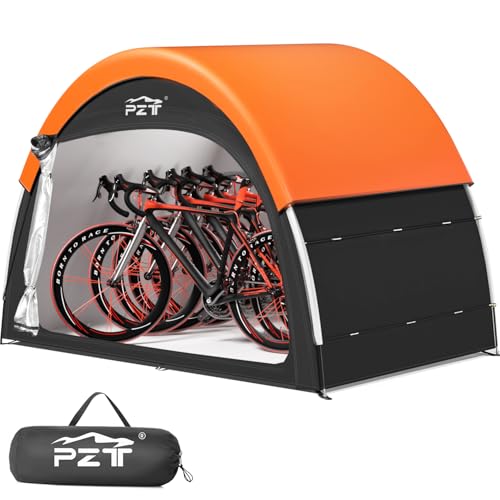
PZT Upgraded Bike Tent Storage Shed 4-5 Bikes

Snugpak Ionosphere 1 Person Tent

PZT Upgraded Bike Tent Storage Shed 2-3 Bikes
PZT Upgraded Bike Tent Storage Shed 6-10 Bikes
More Details On Our Top Picks
The Lynx 1 sits at the friendly end of the solo backpacking spectrum, and most first-time bikepackers will appreciate how forgiving the geometry feels. ALPS uses a freestanding design (a frame that stands on its own without needing stakes) with aluminum poles that clip in quickly, so you can pitch in fading light after a long day on the saddle. Mesh walls dominate the upper half, which means humid summer nights breathe far better than fully fabric-bodied shelters.
Where this tent earns its solo-tour reputation is the vestibule and door hardware. Extra-large #8 zippers are noticeably chunkier than the tiny pulls you find on cheaper tents, which matters when your fingers are cold or you’re wearing gloves. Compared with the ATEPA Voyage that follows, this one trades ultralight credentials for a roomier feel and a more familiar pole architecture that beginners tend to master on the first try.
Practical Advantages
- Freestanding aluminum frame pitches fast after a long ride.
- Mostly mesh walls keep condensation manageable in warm weather.
- Oversized #8 zippers on door and vestibule are glove-friendly.
- Light enough for handlebar or frame-bag strapping on shorter tours.
- Accessible price point for riders new to bikepacking.
Honest Caveats
- Not the lightest option in this roundup, so ounce-counters may push back.
- Mesh-heavy build is a poor match for shoulder-season cold snaps.
- Footprint sold separately, which adds cost for gravel-site campers.
Who It Suits Best
Solo riders stepping into bikepacking for the first time, weekend tourers, and anyone who values fast setup over absolute minimum weight.
Skip It When
The Snugpak Ionosphere is a smarter match for riders counting every gram or packing into a tiny seat-pack.
The Voyage reads like a bikepacking tent through and through, with a 20D SilNylon shell (a silicone-coated nylon that balances low weight and respectable strength) tuned for riders who count grams but still want a four-season rating. Where the ALPS Lynx above leans toward trail-shelter simplicity, the Voyage pushes into a true 4000mm waterproof rating and adds an expandable vestibule. That extra covered porch is a quiet luxury when you’re storing a loaded bike and a pair of panniers.
You’ll notice the difference most on multi-day routes where weather flips hourly. The freestanding architecture still pitches quickly, but the materials demand a gentler touch than heavier polyester tents. For most riders running classic loop tours or high-mileage credit-card trips, the weight-to-shelter ratio lands in the sweet spot the cheaper options can’t quite match.
What Pays Off
- 20D SilNylon shell keeps packed weight honest.
- 4000mm waterproof rating handles sustained rain without fuss.
- Expandable vestibule swallows a loaded bike and panniers.
- Freestanding geometry survives uneven gravel and tundra pitches.
- Rated for four-season use, expanding shoulder-season options.
Points To Keep In Mind
- Thinner fabrics need careful handling around abrasive cargo cages.
- Setup feels fiddly on the first outing until you learn the clip order.
Made For
Weight-conscious tourers riding multi-day routes in mixed weather, especially riders carrying full bikepacking bags.
Look Elsewhere When
The BISINNA 2/4 is a friendlier budget choice for riders who prioritize cost savings over ultralight fabric weight.
The BISINNA finds its place on the budget end of the list, and the design leans toward car-camping-friendly dimensions that work fine on a bike if you’re not chasing ultralight grams. The 190T polyester build (a midweight woven fabric that balances weight and durability) is paired with 7001 aluminum poles, which is a respectable spec at this tier. Many casual riders will recognize the classic 2/4-person layout from weekend festival and state-park use.
Compared with the ATEPA Voyage’s ultralight fabric, the BISINNA trades weight for a sturdier feel in wind, which can matter on exposed ridge pitches. For bikepackers on shorter overnighters who don’t mind a slightly bulkier load, the cost savings are real and the materials aren’t bargain-bin.
Positive Takeaways
- 190T polyester fly holds up well to abrasion on rough trails.
- 7001 aluminum poles handle gusty conditions without drama.
- Generous 2/4-person capacity for changing trip sizes.
- Welcoming price for entry-level campers and students.
Trade-Offs
- Packed size is bulkier than dedicated bikepacking shells.
- Heavier carry weight over multi-day routes.
- Seam-sealing care matters more than with taped factory seams.
Right Fit For
Budget-first shoppers, casual riders running car-supported overnights, and anyone stepping into backpacking on a tight budget.
A Better Fit Elsewhere
The Naturehike Mongar is the smarter match for bikepackers who want a noticeably lighter pack without jumping to premium pricing.
Forceatt delivers a refreshingly livable two-person layout, and the dual vestibules are the standout feature on shared tours. With two D-shaped doors and matching covered porches, two riders don’t have to crawl over each other on midnight bathroom runs. The aluminum pole structure is straightforward, and setup tends to go quickly once you’ve practiced the clip pattern.
Where this tent sits in the lineup is the friendly mid-weight category. The MARMOT Crane Creek later in this list brings a more refined finish and lighter pack-down, but the Forceatt holds its own for two-rider trips on a tighter budget. In most weather, the dual vestibule layout makes the practical difference.
Notable Upsides
- Two D-shaped doors keep riders on separate sleep schedules.
- Matching vestibules shelter packs and shoes.
- Aluminum poles strike a useful weight balance.
- Compatible with three-to-four-season riding in mild regions.
Soft Spots
- Two-person configuration is tight for two tall riders.
- Not the lightest pick for bikepacking-focused tours.
Best Suited To
Riding pairs tackling multi-day tours who appreciate the privacy of separate doors and shared covered storage.
Consider Something Else When
The MARMOT Crane Creek is a stronger match for riders who prioritize brand reputation and lighter overall pack weight.
The Mongar is the smallest packed tent on this list, and that’s not marketing language, it’s the headline. At around 4.7 lbs and packing down to roughly 15.7 by 5.1 inches, this shelter slips into frame bags and large feed bags where bulkier tents won’t go. The 210T polyester construction with a double-layer design handles three-season duty in most regions, and Naturehike bundles a footprint in the package.
Compared with the BISINNA earlier, the Mongar commits to the lightweight mission. Where it diverges from the ATEPA Voyage’s premium four-season spec is the weather rating, which leans fair-weather. For bikepackers running long tours in mild conditions, the size-to-shelter trade lands beautifully.
Where It Excels
- Around 4.7 lbs total carry weight including accessories.
- Pack-down fits standard handlebar rolls.
- Footprint included, saving an extra purchase.
- Double-layer design handles condensation in cool nights.
Things To Weigh
- Three-season build is not for snow or shoulder cold snaps.
- Smaller floor plan feels tight with two adults and gear.
Who Should Grab It
Bikepackers running credit-card tours or long mixed-terrain rides where every cubic inch of frame space matters.
Where Another Pick Suits Better
The Snugpak Ionosphere fits solo minimalist riders better when pack volume trumps internal floor space.
The Crane Creek has long been a mainstay in the backpacking world, and that reputation translates into thoughtful details you don’t always find at this tier. The seam-taped polyester fly (every stitched edge is sealed with waterproof tape) keeps rain out without the DIY sealing step cheaper tents often demand, and the propped vents let you tune condensation without unzipping the door. Around 42 square feet of floor space gives the 3P version a comfortable family-tent feel.
Where this tent diverges from the Forceatt earlier is in the brand pedigree and the materials polish. MARMOT has been refining backpacking shelters for decades, and you feel it in the small hardware touches. For riders who value longevity over absolute minimum weight, the Crane Creek pays back the difference in years of reliable trips.
Good Reasons To Consider
- Factory seam-taped fly resists water without extra DIY work.
- Adjustable vents help regulate interior humidity.
- Around 42 sq ft floor plan fits two adults and gear.
- Long-standing brand with proven long-term durability.
Worth Noting
- Heavier than ultralight picks like the Mongar.
- Higher cost than budget-friendly options in this list.
Perfect Match For
Comfort-focused backpackers and bikepackers who value a brand-trusted build over the absolute lowest pack weight.
Swap It Out When
The Naturehike Mongar fits riders chasing lower carry weight and smaller pack volume more naturally.
Switching gears from camping to home base, this PZT bike tent fills a gap riders increasingly run into: where to keep four or five bikes dry without dedicating a garage bay. The roughly 79 by 59 by 67-inch footprint handles standard bikes or four electric bicycles, and the rain cover upgrade addresses the most common complaint about earlier outdoor bike tents. Owners commonly report that the additional rain flap on top solves tearing problems seen on simpler tarp-style covers.
Compared with the smaller 2-3 bike version further down the list, this shed buys meaningful breathing room for growing collections. For most suburban households, it doubles as lawn equipment or pool gear storage during the off-season.
The Practical Payoff
- Holds 4-5 standard bikes or 4 electric bicycles.
- Rain cover upgrade reduces top-fabric tearing in storms.
- Doubles as lawn equipment or pool gear storage.
- Outdoor placement frees up valuable garage floor space.
Some Limits To Know
- Fabric cover requires retensioning after heavy wind events.
- Anchoring matters on exposed driveways and rooftops.
Who Will Love This
Multi-rider households without garage space, and riders who treat bike storage as part of the gear ecosystem.
Another Choice May Suit
The PZT 2-3 Bike Storage Tent is the smarter fit for one or two-bike households that don’t need the larger footprint.
The Ionosphere is a tight, low-profile shelter that punches well above its packed size, and the 94 by 35 by 28-inch sleep area reflects that minimalist intent. Anodized aluminum poles (aluminum treated to resist rust and wear) snap together with pressfit connectors, and the 210T ripstop polyester with a 5000mm PU coating shrugs off heavy rain. Sealed seams and alloy Y-stakes come in the kit, along with a basic repair sleeve.
Where this tent diverges from the ALPS Lynx earlier is the single-pole tunnel architecture (a low, tube-shaped design that sheds wind well) rather than the freestanding dome. For a rider who lives out of a seat pack and frame bag, that trade-off translates directly to ride comfort on long tours.
Points In Its Favor
- Ultra-compact packed size slips into seat packs.
- 5000mm PU coating and taped seams for serious rain.
- Single-pole design pitches quickly once practiced.
- Alloy Y-stakes and repair kit included in the package.
A Few Limitations
- Low-profile ceiling isn’t comfortable for sitting upright.
- Single-pole geometry needs precise staking in wind.
Built With In Mind
Minimalist solo riders, long-distance credit-card tourers, and anyone prioritizing pack volume over interior height.
Not Your Match When
The ALPS Mountaineering Lynx is a stronger pick for solo riders who prefer sitting height and full mesh ventilation.
This is the small-footprint sibling in the PZT lineup, and the 210D Oxford fabric (a heavyweight woven polyester known for abrasion resistance) with PU4000 waterproofing steps up the durability story. The internal stitching gets heat-sealed tape treatment, which is a meaningful upgrade over unstitched generic covers. Owners commonly note that the small window and storage pocket add genuine daily-use value rather than being decorative.
Where it diverges from the larger 4-5 bike shed earlier is straightforward: this one prioritizes a tighter footprint for one to three bikes. For small-space households or motorcycle storage, that discipline pays off.
Useful Highlights
- 210D Oxford fabric resists abrasion and UV exposure.
- PU4000 waterproofing handles storm cycles without leaking.
- Heat-sealed seams at internal stitch points.
- Small window and storage pocket for everyday use.
- Fits 2-3 standard bikes or motorcycles comfortably.
Where It May Fall Short
- Smaller capacity won’t suit multi-bike families.
- Anchoring hardware may need upgrading in windy regions.
Whose Shelf It Belongs On
Apartment dwellers, small-household riders, and anyone storing one motorcycle or a couple of bikes outdoors.
Reach For A Different Pick When
The PZT 6-10 Bike Storage Tent handles big households and multi-rider families that need true overflow capacity.
The largest PZT shed on the list measures roughly 79 by 97 by 67 inches, and that floor plan translates to 8-10 standard bikes or 5-7 electric bicycles. The upgraded rain cover addresses top-fabric tearing, which was the historical weak spot for outdoor bike tents. Heat-sealed seam treatment and the included rain flap create a tighter weather envelope than older tarp-style bike covers.
Where this shed earns its keep is multi-rider families and shop-style bike storage. Compared with the 4-5 bike version earlier, the upgrade is mostly capacity rather than materials, so you’re paying for square footage. For most suburban homes with three or more cyclists, that footprint earns its keep.
The Good Stuff
- 8-10 standard bikes or 5-7 e-bikes under one cover.
- Upgraded rain flap addresses top-fabric tearing.
- Heat-sealed internal seams block water ingress.
- Doubles as overflow storage for lawn and garden gear.
Practical Considerations
- Large footprint demands a flat, well-drained site.
- Assembly is a two-person job on first setup.
Who Should Grab It
Multi-rider families, cycling clubs needing overflow shelter, and households storing lawn equipment alongside bikes.
Not Your Match When
The PZT 2-3 Bike Storage Tent fits tighter driveways and one-or-two-bike households far more gracefully.
What Matters When Choosing a Bikepacking Shelter
A bikepacking tent isn’t just a small backpacking tent, and the difference shows up the moment you try to strap it to a frame. Packed size matters as much as packed weight, because bulky tents don’t fit handlebar rolls, frame bags, or seat packs no matter how light they are. Riders running full bikepacking setups typically want something under 5 lbs that compresses small enough for a 6-liter drybag or a fork-mounted roll.
Footprint shape matters too, and this is where a lot of newcomers overbuy on floor space. Bikepackers usually pitch on narrow tent pads, rocky soil, or grass tufts that don’t accommodate large rectangular footprints. Tighter, more vertical designs like the Snugpak Ionosphere often pitch where wider tents simply won’t fit.
Weather rating is the next filter. A 3-season tent handles most spring-through-fall tours, but high-altitude riders and shoulder-season travelers need the four-season protection of options like the ATEPA Voyage. The trade-off is weight and pack size, so match the rating to your actual routes rather than buying for hypothetical trips.
Ventilation matters more than most specs suggest, because a wet tent is the bikepacking equivalent of a flat tire. Mesh-heavy designs like the ALPS Lynx breathe well but let wind chill through, while fully clad shells block views and trap condensation. The Mongar’s double-layer approach and the MARMOT Crane Creek’s propped vents both solve this in different ways.
Picking Through The Practical Realities
Where The Extra Cash Lands In Premium Sheds
Higher-tier bikepacking tents buy three meaningful upgrades: lighter fabrics, better waterproof coatings, and seam-taped construction from the factory. A 4000mm-rated fly like the ATEPA Voyage or the Snugpak’s 5000mm coating holds up under sustained rain that cheaper 2000mm fabrics eventually soak through. Taped seams save the DIY sealing step, which matters when you’re pitching at dusk and don’t want to fuss with seam sealer.
Common Buying Mistakes Worth Skipping
The most common slip-up is buying a “2-person” tent for two adults when the manufacturer means “2 small adults with no packs.” Real-world floor dimensions matter more than the capacity label, and reading the actual measurements prevents disappointment. The other trap is overlooking packed size, because a tent that’s light but bulky often ends up strapped awkwardly to a rack instead of fitting the bike’s intended storage layout. Match the tent to the bike’s packing system, not the other way around.
Frequently Asked Questions
What size tent do I need for bikepacking?
Solo riders fit comfortably in 1P shelters like the Snugpak Ionosphere or the ALPS Lynx, while pairs typically need 2P tents with vestibules sized for loaded bags, similar to the Naturehike Mongar or the Forceatt 2P.
How important is packed size versus packed weight?
Both matter, but packed size often wins because bikepacking bags have hard volume limits. A tent that fits a 6-liter handlebar roll is more useful than one that’s lighter but bulges awkwardly across the front end.
Can a regular backpacking tent work for bikepacking?
It can, especially compact ones such as the MARMOT Crane Creek, but traditional tents often pack into bulky shapes that don’t fit frame bags or fork mounts. Purpose-built bikepacking tents trade features for better pack-down.
Do I need a 4-season tent for bikepacking?
Most riders don’t, since 3-season designs like the BISINNA or the ALPS Lynx handle spring-through-fall conditions. Four-season shelters like the ATEPA Voyage earn their keep for shoulder-season cold snaps, alpine routes, and winter shoulder-month tours.
How should I store my bikepacking tent between trips?
Always dry the tent fully before storage to avoid mildew and seam-coating breakdown. The PZT bike storage sheds handle at-home bike storage between trips, but the tent itself wants a cool, dry closet rather than a damp garage corner.
Wrap Up
The right bikepacking tent comes down to matching packed size, weather rating, and capacity to your actual routes rather than buying for hypothetical trips. Solo riders chasing ounces gravitate toward the Snugpak Ionosphere or the ALPS Lynx, while pairs running mixed weather lean toward the ATEPA Voyage or the MARMOT Crane Creek. Riders building out home base benefit from the bike storage sheds that round out this list. Pick the one that matches your routes, and your bike will thank you every morning of the tour.