
Towing a camper behind your bike opens up a different kind of travel, but it only works when every hitch, pin, and strap does its job quietly in the background. Many riders discover that mismatch between trailer and tow rig is what causes wobble, rattle, or sketchy stops more than weight does.
The list below pulls together hitches, couplers, anti-rattle stabilizers, and a few handlebar and grip upgrades that pair naturally with bike-camper-touring. Each item earns its place for a specific reason, and the guide that follows explains what really matters before you commit.
A Snapshot Of The Selections

B&W Biker Bar for Harley Touring MC2301

CURT 28278 Trailer Coupler Pin 3/8-Inch

Schwinn Flat Coupler for Bike Trailers
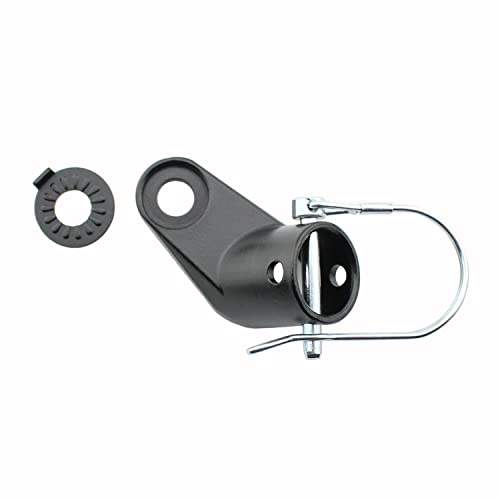
ODIER Bike Trailer Hitch Coupler 12.2mm

ONAGAD Tie Down Strap Rings 10-Pack

DEEAGLE Hitch Tightener Anti-Rattle Stabilizer

GEN-Y Hitch Dual-Ball Mount 5-Inch Drop

GEN-Y Hitch 10-Inch Drop 5-Position Mount

PNW Components Loam MTB Bike Grips

CURT 13609 Class 3 Hitch for Santa Fe and Sorento
Inside Each Recommended Option
Loading a Harley onto a bike camper trailer the usual way means wrestling with ratchet straps, soft ties, and chocks that scratch paint. The B&W Biker Bar tosses that whole routine and replaces it with a crossbar that bolts to the trailer deck and lets the bike ride on its own wheels.
Riders using Harley Davidson Touring, FL, XL, or XR frames find the bar accepts the front wheel without needing someone to hold the bike steady. Compared to the GEN-Y hitches later in this list, this isn’t a tow-side upgrade; it lives on the trailer itself, which makes it a different kind of buy.
Key Advantages
- One-person loading setup replaces wrap-around straps
- Powder-coated steel avoids the chrome scuffs common with bolt-on chocks
- Fits Touring, FL, XL, and XR frames without modification
- Front-wheel capture keeps the bike planted on rough pavement
- Lowers setup time before each trip
Things To Consider
- Harley-specific, so non-Harley owners see no benefit
- Adds fixed weight to the trailer deck, which matters on smaller tow rigs
Who It Suits Best
Touring Harley owners tired of strap-related scratches and who want one-person loading on every ride.
Where Another Pick Suits Better
Dirt bike haulers should look at the ONAGAD Tie Down Strap Rings, which match fork and handlebar geometry far more naturally.
A safety pin sounds like a small detail until the day a coupler latch drifts open at speed. The CURT 28278 is the kind of unflashy part you install once and forget about, which is exactly why seasoned tourers keep one in the toolbox.
Its 3/8-inch diameter and 2-3/4-inch length fit a wide spread of couplers, pintle hooks, and jack wheels, which makes it useful beyond just bike-trailer duty. The zinc plating helps shrug off the road salt that wrecks cheap hardware by mid-season.
The Good Stuff
- Solid steel core handles coupler latch loads without bending
- Zinc finish slows surface rust in wet climates
- Multi-purpose sizing works on jack wheels and pintle mounts
- Cheap insurance against an unhitched trailer
Worth Noting
- No clip or hairpin included, so a keeper wire often gets added separately
- Generic sizing means it may sit slightly loose in non-standard receivers
Made For
Riders who want a low-cost, universal safety pin to back up their main coupler latch on every trip.
Consider Something Else When
Anyone already running a GEN-Y multi-position drop hitch will find that system’s locking pins cover similar ground without an extra part.
If your camper setup includes a child or cargo trailer from Schwinn or InStep, the flat coupler is the missing link that holds the whole arrangement together. It slips over the rear axle and locks into place with a plate and pin.
Where the ODIER coupler later in this list leans quick-release and shared-rider friendly, this Schwinn piece is the more traditional bolt-on option. For parents who tow one trailer behind one bike, that simpler approach usually fits the bill.
What Stands Out
- Universal flat design spans a wide range of rear-axle widths
- Lock washer, plate, and pin arrive in the box for a complete install
- Pairs natively with Schwinn and InStep trailer frames
- Black finish hides scuffs from gravel and curbs
Trade Offs
- Not a quick-release, so swapping bikes takes a few minutes
- Limited to flat-axle bikes; thru-axle setups may need an adapter
Best Suited To
Parents or cargo haulers running a single dedicated tow bike with a Schwinn or InStep trailer.
Not Your Match When
Two-adult households sharing trailer duty will find the ODIER quick-release coupler more practical.
The ODIER coupler earns its spot by solving a frustration most riders hit once: bolting hardware on and off every time you swap the tow bike. The 12.2mm sleeve drops onto a quick-release axle in about a minute.
Two-adult households benefit most, since the coupler stays on the trailer and both bikes can take turns pulling. Compared to the Schwinn flat coupler, this one trades pure bolt-on simplicity for shared-rider convenience.
What Earns Its Place
- Quick-release install avoids tools when swapping tow bikes
- Allows two riders to take turns without re-mounting hardware
- Works with most Schwinn and InStep child or pet trailers
Honest Caveats
- Only fits quick-release axles in the right diameter range
- Plastic components can wear faster than all-metal couplers
Feature Snapshot
Right Fit For
Two-adult families sharing one trailer between bikes with quick-release axles.
Skip It When
Single-bike households using a thru-axle bike should stay with the Schwinn flat coupler or look at axle-matching alternatives.
Wrapping a ratchet strap around dirt bike handlebars is one of those hacks that gets you home but ruins the levers. The ONAGAD strap rings thread onto existing tie-down points, giving straps a clean D-ring to clip into.
The 10-pack covers a full dirt bike and leaves spares for the trailer corners. It is a different class of accessory than the couplers above, but it shows up in nearly every dirt-bike camper rig.
Where It Helps
- 1000 lb per-ring rating handles dirt bike loads with margin
- Keeps straps off handlebars, levers, and painted surfaces
- 10-pack covers bike and trailer tie points in one buy
Room For Improvement
- Requires existing threaded tie points; bare setups need anchors first
- Small parts can get lost in a truck bed without a storage pouch
Perfect Match For
Dirt bike owners who want a clean, repeatable tie-down setup on every trailer run.
Look Elsewhere When
Harley Touring riders should head back to the B&W Biker Bar, which solves loading without tie-down rings at all.
That buzzing rattle from an under-used hitch receiver drives people mad within the first mile. The DEEAGLE tightener clamps down with a powder-coated plate and rubber-coated U-bolts to silence the wobble.
It fits 1.25-inch and 2-inch receivers, which matters because most bike camper trailers use a 1.25-inch while trucks run 2-inch. Two units come in the pack, so you can quiet both ends at once.
Noteworthy Benefits
- 0.28-inch powder-coated plate resists corrosion in road-salt zones
- Rubber-coated U-bolts grip without scratching the receiver
- Covers both common receiver sizes in one pack
Points To Note
- Adds a step when removing the ball mount for cargo use
- Tightening requires a wrench, not just hand pressure
Who Will Love This
Riders tired of the buzz from an empty bike rack or accessory hitch on long highway runs.
A Better Fit Elsewhere
Anyone towing with a multi-position GEN-Y mount already gets a tighter factory fit and may not need a stabilizer.
Mid-rise tow rigs and bike camper trailers usually land in the same height range, which is exactly where a 5-inch drop hitch shines. The GEN-Y dual-ball mount carries 16,000 lb of towing capacity and ships with both 2-inch and 2 5/16-inch balls already mounted.
Three adjustable positions help match trailers whose coupler heights vary by season or load. The stacked tube design accepts accessories at the same time, which is rare in this category.
The Upside
- Dual-ball setup covers trailers with different coupler diameters
- Heavy-duty steel core and sand-blasted prep under the silver-vein powder coat
- Stacked tube design lets you stack accessories alongside the ball
Softer Spots
- Heavier than single-ball mounts, which is heavier on smaller tow vehicles
- 5-inch drop is the wrong fit for lifted trucks, which need the 10-inch version
Technical Highlights
Best Suited To
Stock-height SUVs and trucks pulling mid-weight bike camper trailers with mixed coupler sizes.
Swap It Out When
Lifted-truck owners should pick the GEN-Y 10-inch drop hitch, which adds the rise they actually need.
Lifted trucks live in a different height bracket, so the 5-inch drop above leaves the trailer angled skyward. This GEN-Y Mega-Duty hitch solves that with a 10-inch drop and five adjustable positions, plus a pintle lock and two locking pins for a true all-in-one package.
The 16,000 lb towing capacity mirrors its smaller sibling, but the real story is reach. Owners running 6-inch lifts get level towing without stacking blocks or risers.
Strong Points
- Five-position adjustability covers lift heights up to about 6 inches
- Includes pintle lock and locking pins for mixed coupler types
- Heavy-duty steel build matches the smaller GEN-Y in capacity
A Few Limitations
- Overkill for stock-height tow vehicles, where the 5-inch model fits better
- Bulkier stowed position reduces departure angle on uneven ground
Built With In Mind
Lifted-truck owners who tow bike camper trailers without resorting to riser plates.
Reach For A Different Pick When
Stock-height SUV owners get everything they need from the GEN-Y 5-inch drop mount without the extra weight.
A bike camper rig only works if your hands can stay on the bars for hours at a stretch. The PNW Loam grips use a 25A “Happy Camper” rubber compound that stays tacky without going gummy in the rain.
Dual-pattern texture mixes finger traction zones with palm pads, which sounds subtle until you finish a long descent and notice your fingers aren’t cramped. The vibe here is closer to a comfort upgrade than a towing component.
A Few Strong Suits
- 25A rubber compound balances tackiness and durability
- Finger traction zones reduce hand fatigue on long rides
- Performs reliably in wet conditions, which matters for touring
Some Limits To Know
- Tacky compound attracts dust and grit on dry trails
- Trail-specific feel may feel oversized on narrow road bike bars
Whose Shelf It Belongs On
Long-distance mountain bikers pulling small camper trailers on multi-day trips where hand comfort matters.
Where A Sibling Pick Shines
Road-focused touring cyclists get more comfort from a bar tape upgrade than from MTB grips like these.
Most bike camper trailer owners already own the tow rig before they ever buy the trailer. The CURT 13609 is built specifically for Hyundai Santa Fe and Kia Sorento owners who want a clean factory-style install.
The 2-inch receiver opens up bike racks, cargo carriers, and ball mounts from the rest of this list. Rated at 2,000 lb gross and 200 lb tongue weight, it is built for light to mid-weight bike camper duty.
The Practical Payoff
- Vehicle-specific fit avoids the universal-fit compromises common in this category
- Standard 2-inch receiver accepts the GEN-Y mounts above
- Class 3 rating supports common bike camper trailer weights
Practical Considerations
- Limited to Santa Fe and Sorento frames, so other SUV owners are excluded
- 2,000 lb gross cap is lower than the GEN-Y hitches it pairs with
Feature Card
Who Should Grab It
Santa Fe or Sorento owners looking for a clean, vehicle-specific hitch to start a bike camper setup.
Where Another Pick Suits Better
Heavier tow rigs that need 16,000 lb capacity should bypass this and look at the GEN-Y Mega-Duty mounts instead.
Matching The Right Parts To Your Rig
A bike camper trailer only behaves as well as the weakest link in its tow chain, so the right accessories start with your actual setup rather than a feature list. Match the hitch, coupler, and load accessories to your specific tow vehicle, your typical cargo, and the roads you plan to ride before chasing the heaviest option on the shelf.
Hitch Class And Vehicle Compatibility
Most bike camper trailers fall into light to mid-duty territory, which means a Class 3 hitch with a 2-inch receiver handles the load comfortably for crossovers and mid-size SUVs. Lifted trucks often need an adjustable drop mount, which is why the GEN-Y options above come in two drop sizes. Owners with confirmed vehicle fitments, like the CURT 13609 for Santa Fe and Sorento, get a cleaner install than universal-fit alternatives.
Coupler Type And Trailer Match
Schwinn and InStep trailers use a flat-coupler system that wraps around the rear axle, which is why both couplers above focus on that geometry. Riders running thru-axle bikes or quick-release axles need different couplers altogether, and the ODIER piece covers that quick-release case. Bikes with non-standard dropouts may need adapters or a dedicated bracket.
Load Management Across Long Trips
Tongue weight (the downward force on the hitch) and anti-rattle stability matter more than raw towing capacity for most bike camper setups. Stabilizers like the DEEAGLE tightener keep accessories from buzzing, while proper tie-down rings keep dirt bikes planted on rough pavement. Long-distance riders benefit most from grips that reduce hand fatigue, since they end up holding the bars for hours on end.
Key Considerations Across These Picks
Common Shopping Slip Ups
The most frequent error is buying a hitch or coupler before confirming your tow vehicle’s receiver size, since 1.25-inch and 2-inch receivers need different hardware. Another common miss is underestimating tongue weight, which causes sway long before raw towing capacity becomes an issue. Match accessories to your real load first, then upgrade.
What The Higher Tier Buys
Stepping up to the GEN-Y Mega-Duty line or the CURT vehicle-specific hitch adds heavier steel, more adjustability, and cleaner fit over generic universal pieces. You pay more for tighter tolerances and longer service life under heavier or more frequent use. Casual weekend riders usually do not need that tier, but full-time travelers feel the upgrade quickly.
Frequently Asked Questions
What size hitch do most bike camper trailers use?
Most modern bike camper trailers use a 2-inch receiver because it accepts the widest range of accessories and ball mounts. Some smaller setups still use 1.25-inch receivers, which need different couplers and tighter anti-rattle hardware.
Can a bike camper trailer share a tow vehicle with a bike rack?
In many cases yes, since stacked-tube designs like the GEN-Y mounts accept accessories at the same time as the ball mount. Riders using a Class 3 hitch with a 2-inch receiver generally have the most flexibility for shared setups.
How much tongue weight do bike camper trailers usually need?
Light bike camper setups typically sit between 100 and 200 lb of tongue weight, which is why the CURT 13609 and similar Class 3 hitches cover the category comfortably. Heavier or multi-bike trailers can climb past that, which is where higher-capacity mounts earn their place.
Do dirt bike camper rigs need special tie-downs?
Yes, dirt bikes benefit from dedicated strap rings or fork holders because wrapping straps around handlebars damages levers and grips. The ONAGAD strap rings solve that by giving ratchet straps a clean tie point without touching painted or rubber components.
Is anti-rattle hardware worth adding to a hitch?
For most bike camper setups it is, since the buzz from an empty receiver gets old quickly on long highway runs. The DEEAGLE tightener is a low-cost way to silence that rattle and protect the receiver finish at the same time.
Closing Remarks
The right bike camper trailer setup comes down to matching each piece to your tow vehicle, your load, and the routes you ride most. Start with a hitch and coupler that fit your rig, then add stabilizers, tie-downs, and comfort upgrades as your trips grow longer. For more guides, tips, and reviews, explore the rest of our site.