
Cold-weather camping punishes the wrong bag. You wake up at 3 a.m. with a stiff neck and a chill that follows you home. The right below zero sleeping bag locks heat against your body, shrugs off frost, and lets you actually rest at 10°F or below.
This roundup covers nine options built for genuinely frigid nights, from ultralight backpacking shells to roomy canvas rectangles. You will find mummy cuts for trail efficiency, wide rectangles for car camping, and a few hybrids in between. Each pick below names what it does well, what it sacrifices, and the kind of camper it suits.
Your Options, Compared

Ultralight Down Sleeping Bag with Pillow 15°F 32°F 46°F

Teton Sports Outfitter XXL Sleeping Bag

TETON Sports Deer Hunter Sleeping Bag

Teton Celsius XXL Sleeping Bag

QEZER Down Sleeping Bag 600FP Ultralight
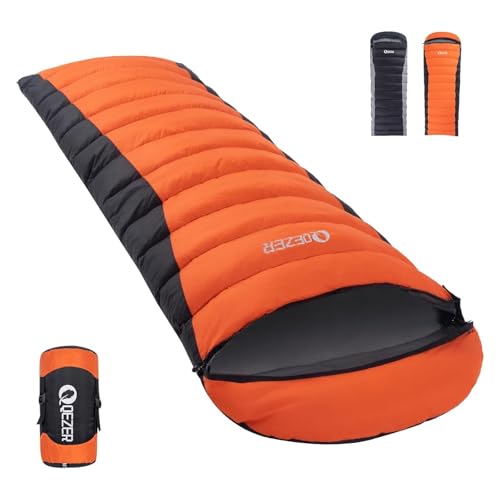
QEZER Down Sleeping Bag 600FP Cold Warm

SYWSKW Down Sleeping Bag with Pillow 0°F Wide
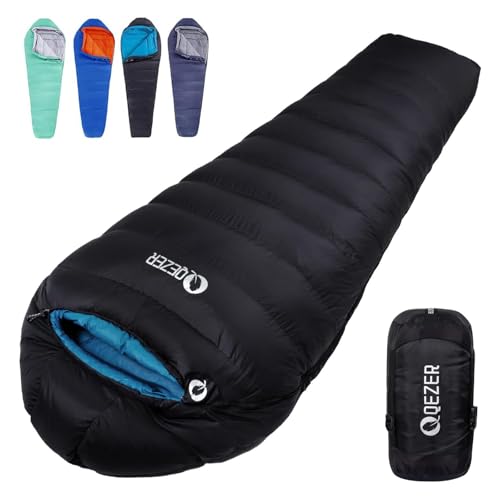
QEZER Down Mummy Sleeping Bag 600FP

QEZER Down Sleeping Bag 620FP Backpacking
More Details On Our Top Picks
The first pick is a versatile ultralight shell built around 680 fill power duck down, the number that tells you how much loft a given ounce of down produces. Higher numbers trap more air per gram, which translates to warmer bags at lighter weights. This one comes in a triple-temperature rating system (15°F, 32°F, and 46°F), letting you match the bag to the season without buying a second piece of gear.
Compared to the roomier TETON canvas bags later, this is a svelte trail companion. The integrated pillow saves weight in your pack and means one less item to forget at home. Backpackers heading into shoulder-season weather will appreciate the temperature range, while car campers may want something with more internal volume.
Practical Pluses
- Three temperature ratings cover cool summer nights down to genuine frost.
- 680 fill power gives strong warmth-to-weight ratio for long trail days.
- Built-in pillow removes one item from your packing list.
- Duck down insulation compresses small for tight backpack space.
- Suitable across youth and adult body sizes for shared family trips.
Things To Consider
- Down insulation loses loft when wet, so storing it uncompressed on dry trips preserves long-term warmth.
- The mummy-style fit may feel snug for broad-shouldered campers used to the Outfitter XXL.
Key Specs
Right Fit For
Backpackers and three-season campers who want one bag that flexes across shoulder-season weather and lighter winter trips.
Look Elsewhere When
You camp in genuinely frigid static conditions, where the TETON Sports Deer Hunter Sleeping Bag offers more insulation depth.
Where the SYWSKW pack favors trail efficiency, the Teton Outfitter trades weight for room. This XXL rectangle gives restless sleepers space to roll, stretch, and shift without fighting fabric. Synthetic fiber fill handles moisture better than down, which is a real advantage on wet shoulder-season nights.
The mummy-style hood cinches around the head to lock in warmth where you need it most. Campers used to tight-fitting ultralight bags will find the difference immediate the first night.
Useful Strengths
- XXL cut fits broad shoulders and tall frames comfortably.
- Synthetic insulation resists moisture better than down.
- Hood cinches tight for added head warmth.
Trade Offs
- Bulks larger in a compression sack, a real burden on long hikes.
- Heavier than the SYWSKW down option above for the same temperature rating.
Who It Suits Best
Car campers and base-camp sleepers who want space to move without cold spots.
Skip It When
You carry your shelter on your back for miles, where the QEZER 600FP ultralight bag keeps pack weight down.
The Deer Hunter takes the canvas concept and leans into it. A poly-cotton canvas shell shrugs off abrasion from barn floors, truck beds, and rocky base camps in ways a nylon bag cannot. It is built for the long haul rather than the long trail.
Synthetic fiber fill rated for below-freezing nights handles the cold where down would suffer in damp conditions. Hunters and static winter campers get a bag that prioritizes toughness over packability.
Reasons It Performs
- Tough poly-cotton canvas shell resists abrasion in rough environments.
- Below-freezing synthetic fill handles damp, frosty conditions.
- Mummy-style hood seals in warmth around the head and ears.
Honest Caveats
- Canvas adds noticeable weight, a poor match for backpackers.
- Larger packed size means you will need real cargo space, not a stuff sack.
Quick Facts
Made For
Hunters, ice fishers, and base-camp winter campers who need a bag that takes abuse and keeps performing.
Where Another Pick Suits Better
Backpackers covering real miles should consider the QEZER 600FP mummy bag instead, which packs far smaller.
The Celsius XXL trades canvas for taffeta and adds a soft poly-flannel lining against the skin. That lining is the kind of detail that matters on cold nights when you slide in half-asleep and want immediate warmth, not a chill.
Draft tubes along the zipper and double-layer construction block cold air from sneaking through seams, the small detail that separates a tolerable night from a warm one. Two side zippers let you vent your feet without unzipping the whole bag.
Practical Advantages
- Poly-flannel lining feels soft and warm right away.
- Double-layer construction and draft tubes reduce cold spots.
- Two-side zippers allow foot venting without full unzipping.
- Compression sack included for easier transport.
Points To Note
- Heavier and bulkier than the down bags, with more to manage in transport.
- Synthetic fill needs careful storage between trips to keep loft intact.
Feature Snapshot
Best Suited To
Family campers and car-based cold-weather trips where comfort and room beat ultralight performance.
Consider Something Else When
You need trail-ready weight savings, where the SYWSKW ultralight pillow bag above cuts pounds from your pack.
The QEZER ultralight sits in the middle of the trail-friendly options: lighter than the canvas and flannel-lined picks, more compact than the XXL rectangles. The 600 fill power duck down keeps the loft reasonable for the weight, and the pack size shrinks to roughly the dimensions of a small water bottle for tight pack compartments.
The double zipper design blocks cold air along the closure, and added chest insulation targets the spot where heat escapes fastest. For long-distance hikers, those grams saved per mile matter.
The Upside
- Packs down small for tight backpack compartments.
- Light enough for multi-day treks where ounces matter.
- Chest insulation targets heat loss where it happens fastest.
- Double zipper design reduces cold air intrusion.
Worth Noting
- Down loses loft when wet, so a reliable waterproof pack liner is wise for wet climates.
- Nylon shell is thinner than the TETON canvas options and demands gentler handling around rocks.
Who Will Love This
Thru-hikers and trekkers carrying their shelter for days who want warmth without pack weight.
Not Your Match When
You camp mostly from a car or cabin and value the Teton Celsius XXL’s roomy flannel-lined comfort more than weight savings.
This QEZER model covers the bridge between cool-weather and genuinely cold trips. The 600 fill power is the same family as the trail pick above, and the comfort-to-limit temperature range targets backpackers who wander between seasons rather than committing to deep winter.
Velcro tabs at the shoulders and a drawcord on the hood help seal in warmth once you are settled, the kind of adjustment that matters when temperatures drop after midnight.
Bright Spots
- Handles both cold and milder weather conditions.
- Shoulder Velcro and hood drawcord create adjustable warmth sealing.
- Familiar 600FP down gives predictable loft and packability.
Potential Drawbacks
- Limit temperature lands warmer than the SYWSKW 15°F option above, so it suits fewer deep-winter trips.
- Down fill requires extra drying time after damp trips to keep loft.
The Right Fit
Three-season backpackers who need one bag that flexes from cool alpine evenings to shoulder-season frost.
A Better Fit Elsewhere
Deep-winter campers facing single-digit nights should look at the SYWSKW 0°F wide bag for additional headroom.
The wider SYWSKW sibling trades compact packability for shoulder room. At 86.6 inches long and 33.5 inches wide, it accommodates tall campers and broad-shouldered sleepers who find standard mummy bags claustrophobic. The 680 fill power matches the SYWSKW pick at the top of this list, and you still get a pillow integrated into the head area.
Total weight lands around 2.4 to 3 pounds depending on the temperature rating you choose, so the trade-off shows up in your pack more than on your body. The compression size shrinks to roughly a loaf of bread, which is reasonable for the warmth provided.
A Few Strong Suits
- Wide cut suits broad shoulders and tall frames.
- Multiple temperature ratings (0°F, 5°F, 15°F) for varied winter conditions.
- Integrated pillow saves pack space and setup time.
Points To Keep In Mind
- Heavier and bulkier than the standard-cut SYWSKW above.
- Wide mummy shape means a larger footprint in a shared tent.
Technical Sheet
Perfect Match For
Tall campers and broad-shouldered sleepers who find standard mummy bags restrictive on cold nights.
Reach For A Different Pick When
You want the lightest possible pack weight, where the QEZER 600FP mummy sleeping bag below cuts additional ounces.
The classic mummy cut returns in the QEZER 600FP. Mummy bags taper from broad shoulders to narrow feet, which minimizes the air space your body has to heat. That efficiency is the whole point on cold nights, when every cubic foot of dead air costs warmth.
The Velcro tab closure at the shoulders and an adjustable hood cord let you dial in a tight seal once the temperature drops. Compared to the wide SYWSKW above, this one accepts snug quarters for better thermal efficiency.
What It Does Well
- Tight mummy cut minimizes dead air space.
- 600FP down gives reliable loft at a manageable price.
- Adjustable hood and shoulder Velcro for a customizable seal.
A Few Limitations
- Snug cut feels restrictive for restless sleepers used to rectangles.
- Down fill requires dry storage between trips to maintain loft.
Built With In Mind
Backpackers prioritizing thermal efficiency and pack size over internal space for cold-weather trips.
Swap It Out When
You want a more spacious bag for restless nights, where the SYWSKW wide-cut 0°F option gives room to move.
The 620FP model rounds out the QEZER family at a slightly higher fill power than the 600FP picks above. That bump means marginally more loft per ounce, useful when you want trail-friendly weight without dropping into the warmest temperature ratings. It slots between the ultralight 600FP and the heavier winter-rated bags in this list.
Backpackers who run shoulder seasons in the mountains will find the balance lands in a useful spot. Cold-weather car campers, however, may prefer the roomier TETON XXL options for nights around the truck.
The Value In It
- 620 fill power improves on loft per ounce.
- Sits between trail weight and winter-rated warmth.
- Familiar QEZER design for predictable packability.
Things To Weigh
- Marginal fill-power gain over the 600FP versions, with similar pack size.
- Down still requires careful storage to keep loft intact.
Spec Overview
Whose Shelf It Belongs On
Backpackers who want a slight edge over standard ultralight options without committing to deep-winter bags.
Where A Sibling Pick Shines
Deep-winter campers get more headroom from the SYWSKW 0°F wide bag with its higher temperature rating.
Choosing The Right Below Zero Sleeping Bag For Cold Nights
A sleeping bag’s temperature rating tells you roughly when you will feel cold, but the experience depends on more than that single number. Understanding a few core attributes helps you match a bag to your actual conditions.
Insulation Type And Fill Power
Down and synthetic insulation behave very differently. Down (specifically duck or goose down) traps air with high efficiency, which means a 600 to 680 fill power down bag packs smaller and weighs less for the same warmth. Synthetic fill handles moisture better and costs less, though it weighs more and packs larger. Cold-weather backpackers usually prefer down; wet-climate campers and hunters often lean synthetic.
Temperature Ratings Explained
Manufacturers list comfort, limit, and extreme ratings. The comfort rating is the lowest air temperature at which an average sleeper feels comfortable. The limit rating is where a warm sleeper might still feel cool. Below the extreme rating, the bag becomes a survival tool rather than a comfortable sleep system. Match the comfort rating to your expected conditions, not the limit number.
Shape And Fit
Mummy bags taper for thermal efficiency and packability. Rectangles offer room to move but carry more dead air. Hybrid cuts try to balance both. Tall and broad-shouldered sleepers should look for length and shoulder measurements (often around 86 inches and 33 inches respectively in the wider options above) before trusting any rating.
Shell Material And Care
Nylon shells are light and packable but demand gentle handling. Poly-cotton canvas shells resist abrasion and rough use but weigh more. Down bags lose loft when stored compressed for long periods, so storing them loose in a dry place preserves warmth over years of trips.
Smart Choices For Below Zero Sleeping Bag Shoppers
Where Shoppers Go Wrong
Two common traps catch first-time cold-weather shoppers. The first is trusting the extreme rating as a comfort number. You will not sleep well at the extreme rating; you will survive. The second is buying a bag rated for the lowest temperature you might face once and using it for every night of the trip. Milder evenings will cook you in a deep-winter bag, so a layered approach often works better than one extreme piece.
Where The Extra Money Goes
Higher-tier bags earn their cost through better fill power (more warmth per ounce), tighter baffle construction (no cold bridges between fill chambers), and tougher face fabrics. The SYWSKW 680FP picks above and the QEZER 620FP land in this tier, trading weight savings for genuine warmth per gram. For weekend cold trips, the savings may not justify the cost. For multi-day winter routes, the weight and warmth difference shows up quickly in how you feel at 4 a.m.
Frequently Asked Questions
How cold can a 0°F sleeping bag really handle?
A 0°F comfort rating means most sleepers stay warm at 0°F air temperature when wearing base layers and using a proper sleeping pad. Lower than that, you will likely feel cold without additional insulation layers above or below you.
Is down or synthetic insulation better for below zero temperatures?
Down insulation offers a better warmth-to-weight ratio and packs smaller. Synthetic fill handles moisture better and costs less. For dry cold-weather trips, down is generally preferred. For wet conditions or hunters sitting in blinds, synthetic tends to perform more reliably.
Can I use a below zero sleeping bag in summer?
Yes, but you may sweat through mild nights. Most cold-weather bags ventilate through zipper and hood adjustments, so opening the foot box or unzipping the side helps. A summer-specific bag is lighter and more comfortable, though.
How important is the sleeping pad?
Critical. A sleeping pad provides insulation from the ground, and cold ground will sap body heat faster than cold air. A bag rated for 0°F performs much worse when paired with a thin summer pad, since the ground steals heat underneath you.
How do I store a down sleeping bag between trips?
Store it loose in a large breathable storage sack, never compressed in the stuff sack for long periods. Compression over time damages down loft, which reduces warmth. Hang it in a closet or keep it in a king-sized pillowcase for the best long-term results.
Wrap Up
Choosing a below zero sleeping bag comes down to matching temperature rating, insulation type, and shape to your actual trips. Backpackers running multi-day routes get the most from lightweight down picks like the QEZER 600FP and SYWSKW 680FP models. Static campers, hunters, and family travelers will appreciate the TETON XXL options for their warmth and room. The right bag lets you sleep through the cold nights that make winter camping worth doing in the first place.