
Your first tent purchase shouldn’t feel like a guessing game. Whether you’re gearing up for a backyard campout with the kids or your first car-camping weekend at a developed site, the right shelter takes the stress out of sleeping outdoors. We’ve narrowed eight beginner-friendly options across solo backpacking, family car camping, and kid-focused play, each picked for a specific kind of first-timer.
The Essentials At A Glance

Coleman Kids Wonder Lake Tent with Rainfly (2-Person)

ALPS Mountaineering Lynx 1 Backpacking Tent
CORE Instant Cabin Multi-Room Pop Up Tent

DANCHEL OUTDOOR B5PRO Canvas Bell Tent with Stove Jack
CORE 9 Person Instant Cabin Tent 14′ x 9′

DANCHEL OUTDOOR B2A No Center Pole Bell Tent

CORE 4 Person Instant Cabin Tent Camping Set
More Details On Our Top Picks
The Wonder Lake is the kind of tent that turns a Saturday into a memory. Built as a 2-person shelter for kids, it pitches in about ten minutes with a conventional pole layout that mirrors a real adult tent, just scaled down.
Where it earns its keep is the glow-in-the-dark ceiling fabric, which charges up under a flashlight and softly lights the interior after lights-out. For backyard sleepovers or living-room forts on a rainy afternoon, it offers a low-stakes way to get young campers excited about the outdoors. Compared to the ALPS Mountaineering Lynx 1 that we’ll cover next, this one trades serious backcountry specs for pure kid appeal.
The Practical Payoff
- Glow-in-the-dark ceiling adds novelty value that helps hesitant kids embrace the dark
- Welded corners and inverted seams keep seams from leaking during light rain
- Includes a fitted rainfly for an extra layer of weather coverage
- Frame is rated to handle 35+ mph wind gusts, surprisingly rugged for the size
- 7 x 4 ft. footprint fits comfortably in most suburban backyards
Things To Consider
- 3 ft. center height means adults will be crawling, not standing
- Polyester fabric tends to trap condensation in humid overnight conditions
Feature Snapshot
Made For
Families with young kids easing into outdoor sleepovers or parents hosting indoor fort play on a rainy weekend.
Look Elsewhere When
Adults planning real backcountry trips should skip this and consider the ALPS Mountaineering Lynx 1 instead.
The Lynx 1 is a freestanding solo shelter, meaning the pole structure stands on its own once clipped in, even before you stake it down. That’s a beginner-friendly feature because it lets you reposition the tent to find the flattest ground without starting over.
Aluminum poles (a light, corrosion-resistant metal favored for backpacking gear) clip quickly to the tent body, and extra-large #8 zippers on both the door and vestibule feel reassuringly solid in cold or gloved hands. The mostly mesh walls trade a bit of warmth for ventilation, which matters in summer shoulder seasons. Compared to the Coleman Wonder Lake, this is a genuine backcountry tool rather than a play tent.
Advantages To Know
- Freestanding design makes campsite repositioning painless
- Mostly mesh walls boost airflow on humid nights
- Aluminum poles keep packed weight low without sacrificing strength
- Vestibule creates dry storage for boots and a backpack
Trade Offs
- Mesh-heavy walls let in cold drafts on shoulder-season nights
- Single-wall design demands careful site selection to avoid pooling water
Feature Card
Right Fit For
Solo hikers tackling their first multi-day backpacking route who want a shelter that prioritizes weight over plush comfort.
Consider Something Else When
Families car camping should turn to the CORE Instant Cabin Multi-Room Pop Up Tent for more space and zero-fuss pitching.
The CORE Instant Cabin uses pre-attached poles, so the structure unfolds rather than assembles. Unfold, extend, secure, and you’re camping, which is genuinely a different experience from a traditional tent on a tired first night.
Where this shelter stands out is the multi-room divider layout, letting parents and kids claim separate sleeping zones inside one cabin-style frame. Built-in storage pockets keep headlamps and small essentials from disappearing into the gear pile. If the Lynx 1 was about minimalism, this one is about family logistics.
Practical Advantages
- Pre-attached poles mean setup happens in minutes, not an hour
- Multi-room configuration gives kids and adults their own space
- Storage pockets corral small items that usually vanish overnight
- Cabin-style walls maximize usable standing room inside
Honest Caveats
- Bulkier packed size demands a full-size vehicle for transport
- Pre-attached pole design limits repair options in the field
Who It Suits Best
Families with younger kids on developed campgrounds who value fast setup over ultralight packing.
A Better Fit Elsewhere
Solo travelers and couples should consider the CORE 4 Person Instant Cabin Tent Camping Set for a more compact footprint.
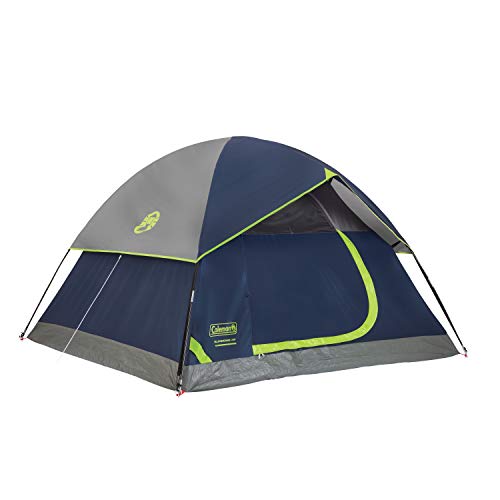
The Sundome has been a fixture of entry-level camping for years, and that longevity speaks to how it solves the beginner problem. Coleman’s WeatherTec system layers rain protection features (welded floors, inverted seams, and a fitted rainfly) to keep water from finding its way inside during unexpected showers.
Setup uses snag-free continuous pole sleeves, so the fabric slides smoothly onto the poles instead of catching at each fitting. Compared to the CORE multi-room cabin earlier, this is a simpler, smaller dome shape that pitches quickly and packs down compactly.
Features That Help
- WeatherTec system focuses specifically on keeping seams and floors dry
- Continuous pole sleeves speed setup compared to clip-on designs
- Compact packed size fits neatly in a sedan trunk
Points To Note
- Dome geometry limits standing room inside
- Single door design can feel awkward for two campers sharing the space
- Polyester fabric commonly needs a fresh waterproofing treatment after a few seasons
Technical Sheet
Perfect Match For
First-time campers who want a familiar, easy-to-source shelter that handles the basics without complications.
Skip It When
You need standing room for changing clothes. The CORE 9 Person Instant Cabin Tent 14′ x 9′ offers a 78-inch center ceiling, dramatically more headroom.
The B5PRO is a different beast from the rest of this list. Built around 300GSM (grams per square meter, a measure of fabric weight and density) cotton canvas, it’s a year-round shelter rather than a fair-weather shelter, weighing roughly 83 lbs in its 16.4 ft configuration.
Where it earns its premium status is the integrated stove jack, a reinforced opening that lets you safely pipe a wood stove flue through the wall for cold-weather camping. With about 211 sq ft of floor space and a 9.8 ft center height, it comfortably fits two queen beds. Compared to the polyester CORE cabin, this is canvas-built, glamping-oriented, and built for true four-season use.
A Strong Showing
- 300GSM cotton canvas breathes better than polyester in temperature swings
- Stove jack enables safe cold-weather and winter camping
- 211 sq ft floor space easily accommodates a family sleeping setup
- 9.8 ft center height allows most adults to stand fully upright
Worth Bearing In Mind
- 83 lb packed weight demands a vehicle and ideally two people to set up
- Cotton canvas requires thorough drying after wet trips to avoid mildew
- Significantly heavier and bulkier than any backpacking option on this list
Quick Facts
Best Suited To
Glampers, couples, or small families investing in a long-term shelter for year-round, site-based camping.
Not Your Match When
You’re after something you can carry into a trail campsite. The ALPS Mountaineering Lynx 1 is purpose-built for backpacking.
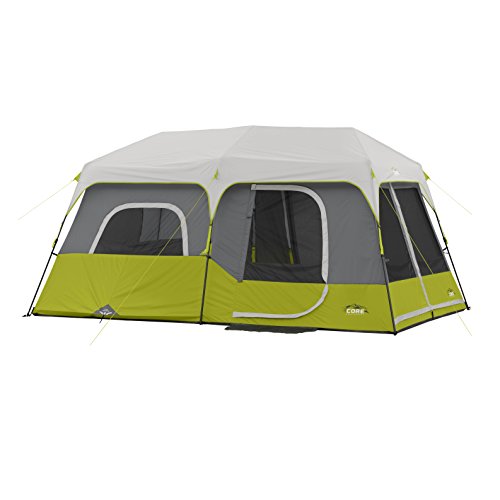
The CORE 9 Person is the family-reunion-sized option on this list. Pre-attached poles lock into place for setup in roughly two minutes, and the cabin-style frame stands 6.5 ft (78 inches) at its peak, enough for most adults to stand upright and change clothes inside.
Weather protection comes from H20 Block Technology (a waterproof coating combined with sealed seams), a 1200mm-rated fabric (meaning the fabric resists water pressure up to a 1200mm hydrostatic head, a standard measure of waterproofness), a fully taped rainfly, and zip-close windows. Two queen-size air beds fit side by side. Compared to the Sundome’s dome geometry, this gives up nothing in headroom.
Real-World Strengths
- Two-minute setup eliminates the most common beginner frustration
- 78-inch center height lets adults walk around upright
- 1200mm fabric plus taped rainfly handles sustained rain
- 14 x 9 ft floor fits two queen air mattresses with gear space left over
Potential Drawbacks
- Large footprint requires an open campsite pad
- Wind performance trails lower-profile dome designs in exposed sites
Feature Overview
Whose Shelf It Belongs On
Large families or friend groups car camping at developed sites where space and quick setup matter more than packed size.
Swap It Out When
Your group is smaller. The CORE 4 Person Instant Cabin Tent Camping Set is right for couples and small families.
The B2A sidesteps the classic bell-tent compromise. Where traditional bell tents use a single tall center pole that eats up floor space, this model uses a two-side inner support pole system to open up roughly 30% more flexible layout.
The shell is 300D oxford (a denier-counted nylon weave; higher denier means thicker and more durable) with a silver coating for sun blocking and water resistance, and at around 50 lbs it’s significantly lighter than the canvas B5PRO. It comfortably fits a king bed or two queens. Where the B5PRO leans cold-weather canvas, the B2A leans warm-weather glamping with maximum usable floor space.
Strong Points
- No center pole maximizes usable interior floor space
- 300D oxford with silver coating resists sun and rain
- At half the weight of the B5PRO, it’s easier to transport and pitch
- Fits a king bed, two queens, or eight sleeping bags
Things To Weigh Up
- Oxford fabric won’t insulate like the B5PRO’s cotton canvas in cold weather
- Still a 50 lb packed weight for transport
Who Should Grab It
Glampers prioritizing open floor plans and warm-weather comfort over four-season insulation.
Another Choice May Suit
Year-round campers should pick the DANCHEL OUTDOOR B5PRO Canvas Bell Tent with Stove Jack instead.
This bundle strips camping down to one box. The tent itself is an 8 x 7 ft instant cabin with pre-attached poles that lock into place in about a minute. A queen-size air bed fits inside, and the 54-inch center height accommodates two campers comfortably with gear.
What sells the bundle, though, is everything that comes with it: a folding outdoor table and two padded quad chairs, all packed into a single carry bag. For a family whose camping gear currently consists of blankets and a flashlight, this set delivers the basics without shopping across five listings. Compared to the larger CORE 9 Person, it’s a more compact family-friendly footprint.
Notable Gains
- All-in-one kit eliminates the “what else do we need” question for first-timers
- Single carry bag simplifies logistics for new gear owners
- One-minute setup removes the friction that ends first camping attempts early
Possible Compromises
- Bundled chairs and table are functional, not premium
- Accessories take up packed space that some minimalists would rather skip
Built With In Mind
New family campers who want a turnkey setup for their first state-park weekend.
Reach For A Different Pick When
You already own camp chairs and just need the shelter. The Coleman Sundome is a simpler, lower-cost alternative.
Picking The Right Beginner Tent For Your First Trip
Capacity And Footprint
The most common beginner mistake is buying a tent sized for sleeping capacity rather than living capacity. A 2-person tent technically fits two sleeping bags, but two adults will be touching shoulders all night with no room for a backpack or boots inside. For most couples or small families, a 4-person cabin tent hits the sweet spot between footprint and livability. If you camp with a dog, plan on going one size up to account for the extra occupant.
Weight And Pack-Down Size
If your vehicle stays in the driveway and your campsite is a short walk from the car, packed weight barely matters. If you ever plan to hike even a quarter-mile to a site, weight becomes the deciding factor. Ultralight backpacking tents like the ALPS Lynx 1 trade plush features for low carry weight, while canvas bell tents reward car-based campers with far more comfort.
Weather Protection Specifics
A tent’s waterproof rating matters more than its fabric feel. A 1200mm hydrostatic head (the water-column height a fabric resists before leaking) handles sustained rain; lighter fabrics handle drizzle. Also pay attention to seams: welded or taped seams and inverted seam construction prevent the most common leak points. A fitted rainfly adds another weather layer for shoulder-season trips.
Setup Style And Skill Level
Pre-attached pole designs and instant cabins win for true beginners. They trade repairability and compact packed size for a setup measured in minutes rather than an hour. Traditional pole-and-sleeve tents pack smaller and offer more field-repair options, but expect a learning curve the first few times.
Where Shoppers Go Wrong
Buying By Sleep Count Alone
Two-person tents fit two sleeping bags and little else. New campers consistently underestimate how much space backpacks, boots, and a dog actually take up inside the shelter. When in doubt, size up one capacity tier.
Confusing “Waterproof” With “Water-Resistant”
Cheap tents often list “water-resistant” fabric that handles a brief sprinkle but leaks in steady rain. Look for a specific hydrostatic head rating (1000mm or higher is a reasonable threshold), taped seams, and a fitted rainfly for actual wet-weather protection.
Overlooking Setup Time
First-time campers often underestimate how demoralizing a 45-minute tent pitch becomes after a long travel day. Pre-attached instant-cabin designs pay for themselves in reduced friction, especially with kids losing patience around minute twenty.
When Paying More Pays Off
Why The Higher Tier Buys
Premium tents shift the budget from fabric weight and pole count toward materials and design. Cotton canvas breathes, insulates, and lasts decades with care, while budget polyester tents typically need replacing after a handful of seasons. Higher-end tents also invest in better zippers, reinforced stress points, and field-repair-friendly pole systems that budget options skip.
The Upgrade Payoff
The upgrade is genuinely worth it if you camp more than three weekends a year or venture into shoulder-season weather. For one annual summer trip at a developed site, a mid-range tent handles everything you need without the premium. If you ever add cold-weather or winter camping to your plans, the investment in a canvas bell tent with a stove jack pays back in comfort for years.
Frequently Asked Questions
What Size Tent Do I Need As A Beginner?
For solo campers, a 1- or 2-person shelter works for trips without much gear. For couples, a 4-person tent hits the comfort sweet spot. Families should plan on at least a 6-person cabin to fit sleeping bags plus gear without constant shuffling.
How Important Is A Rainfly On A Beginner Tent?
A rainfly (the secondary waterproof cover that fits over the tent body) is essential rather than optional. Even tents marketed as waterproof benefit from the extra weather layer a fitted rainfly provides, especially in sustained downpours or shoulder-season conditions where condensation builds up overnight.
Can Beginner Tents Handle Wind?
Most entry-level tents handle moderate winds in the 20 to 35 mph range when properly staked and guyed (anchored with extra tension lines called guy lines). Dome and cabin-style designs with low profiles handle wind better than tall wall tents. For consistently windy sites, look for reinforced pole structures and multiple guy-out points.
Are Instant Pop-Up Tents Worth It?
For first-time campers, instant pop-up tents are often the smartest purchase. Setup happens in minutes, which removes the most common point of frustration. The trade-off is bulkier packed size, so they fit car camping far better than backpacking.
How Do I Store My Tent To Make It Last?
Always dry your tent fully before packing it away, even if that means hanging it in a garage for a day after a wet trip. Storing a damp tent leads to mildew, weakened fabric, and that familiar musty smell on the next trip. Loose storage in a breathable bag beats a tight compression sack for long-term tent health.
Wrap Up
The right beginner tent matches your specific camping style rather than chasing the biggest or fanciest option. Solo backpackers get the most from a lightweight freestanding shelter, families thrive with an instant cabin, and weekend glampers find a long-term home in a canvas bell tent. Start with where you’ll actually camp most, and the rest of the decision falls into place.