
Your first ride on a board with a motor feels strange. Your feet want to step off. The throttle feels twitchy. Most newcomers stall at this stage, not because the gear is dangerous, but because they picked something built for someone with months of practice. The picks below lean toward friendly platforms with predictable handling, manageable decks, and forgiving wheels. Think of this as a starting lineup for riders still finding their balance, not a speed contest.
The Leading Options At A Glance
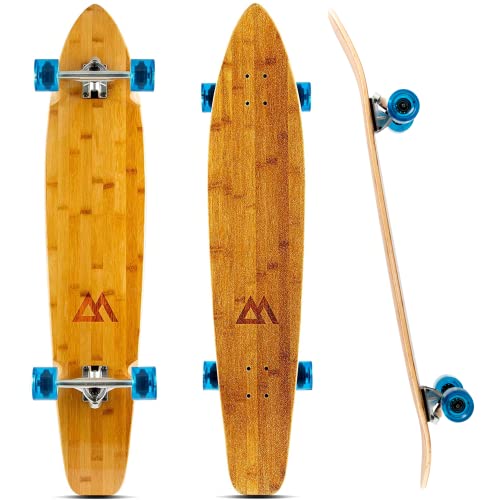
Magneto 44 inch Kicktail Cruiser Longboard Skateboard

seething 42 Inch Longboard Complete Cruiser Pintail

LIEAGLE Self-Balancing Scooter with Bluetooth Speaker

sefulim 31 x 8 Inch Complete Skateboard Double Kick Deck

Loaded Boards Omakase Bamboo Longboard Complete
The Picks, Examined More Closely
The Magneto 44 inch Kicktail Cruiser Longboard Skateboard leans into relaxed cruising rather than aggressive carving. Its bamboo and hard maple deck gives you a softer flex underfoot, so small cracks and sidewalk seams don’t rattle your ankles on a first ride. Compared to the pintail shape coming up later, this one trades pure stability for a kicktail you can actually use to pivot and steer out of trouble.
For learners, the deck’s 44 inch length leaves plenty of room to find your stance without feeling pinched. The brand builds this for adults, teens, and kids, which tells you the geometry isn’t tuned for one narrow rider profile. You can expect a forgiving ride on flat pavement, parking lots, and smooth neighborhood streets. It’s the kind of board that forgives the wobbles of week one.
Positive Takeaways
- Bamboo flex softens rough pavement, so brand-new riders don’t feel every pebble through their feet.
- The kicktail makes quick turns and curb hops easier, helping you steer out of tight spots.
- Wide deck gives roomier foot placement, which matters when balancing feels shaky.
- Suitable sizing range covers teens and adults alike, so households can share the board.
Worth Noting
- The cruiser profile isn’t optimized for downhill speed runs, so riders chasing speed will outgrow it.
- Owners commonly report that bamboo decks need regular checks at the mount points after wet rides.
Key Specs
Made For
Teens and adults stepping onto a board for the first time who want a forgiving platform that handles neighborhood cruising.
Look Elsewhere When
The seething 42 Inch Longboard Complete Cruiser Pintail suits riders who want a stiffer pintail carving feel over a kicktail shape.
The seething 42 Inch Longboard Complete Cruiser Pintail takes the classic surfboard-inspired shape and tucks it into a maple deck that doesn’t fight you. Where the Magneto’s bamboo leans soft, this one runs nine layers of Canadian maple, which gives you a stiffer platform for more confident carves. The pintail nose and tail make the board track straight, so balance practice feels less like wrestling.
Daily commuters carrying a backpack will appreciate the length, which fits both feet without crowding. Unlike the Magneto’s kicktail, the pintail keeps the front and back equally stable, which helps when you’re just learning the pushing motion. The maple build also holds up better to scrapes than softer bamboo when you inevitably kiss a curb. It’s a sensible middle ground between fun and function.
Advantages To Know
- Nine-layer maple deck gives a stiffer, more predictable platform for practicing carves.
- Pintail shape tracks straight, helping beginners learn balance without fighting the tail.
- Maple resists scrapes better than softer woods, which matters during inevitable curb contact.
- 42 inch length suits a wide range of rider heights, from teens to taller adults.
- Versatile enough for cruising, free-style, and downhill at modest speeds.
Trade Offs
- Stiffer maple flex means more vibration than the Magneto’s bamboo, so rough pavement comes through.
- No kicktail means curb hops take more practice, which can frustrate newer riders.
Who It Suits Best
Riders who want one board for cruising, carving, and short commutes without swapping setups.
Reach For A Different Pick When
The Loaded Boards Omakase Bamboo Longboard Complete fits riders wanting premium bamboo flex and a shorter deck over this pintail.
The LIEAGLE Self-Balancing Scooter with Bluetooth Speaker and LED Hub Lights sits in a different category than the longboards above. It balances for you through motor response, which means riders don’t need to learn foot placement or pushing technique. For someone whose main fear is stepping onto a wobbly deck, the self-balancing format lowers that barrier dramatically. It’s a different kind of entry point.
LED headlights and hub lights make low-light rides easier on the eyes and more visible to others. The built-in Bluetooth speaker adds a casual entertainment layer that younger riders tend to appreciate. The trade-off shows up in skill transfer: time on a hoverboard-style platform doesn’t directly teach traditional skateboard balance, so moving to a longboard later still requires adjustment. For pure ease-of-entry, it’s a different animal.
The Practical Payoff
- Self-balancing motors remove the hardest part of learning, which is staying upright without help.
- LED headlights and hub lights improve visibility during evening rides.
- Bluetooth speaker adds a casual riding soundtrack without needing a separate device.
- 6.5 inch wheel size handles sidewalks and light cracks without drama.
Points To Keep In Mind
- Skills learned here don’t transfer cleanly to traditional skateboards, so switching later means starting over.
- Owners commonly report that battery range drops noticeably after a year of regular use.
Quick Facts
Perfect Match For
Riders who want motorized balance assistance over the manual skill-building of a traditional skateboard.
Skip It When
The sefulim 31 x 8 Inch Complete Skateboard Double Kick Deck fits riders who actually want to learn traditional board control from day one.
The sefulim 31 x 8 Inch Complete Skateboard Double Kick Deck is the shortest board here, and that shorter wheelbase changes how it rides. Where the Magneto and seething longboards stretch past 40 inches for straight-line stability, this 31 inch deck snaps around quicker. That makes it a more natural fit for trick practice than for long cruises.
The 7-layer Canadian maple deck delivers the standard street-skate feel, which is stiff under the feet and predictable when popping the tail. Compared to the LIEAGLE self-balancing platform, this one expects you to find your own balance, so the learning curve is real. Aluminum trucks and shock pads help absorb the small impacts that come with learning to ollie. Beginners chasing trick skills will find this format more honest than a cruiser longboard.
Positive Points
- Short wheelbase makes the board responsive, which helps when learning turns and basic tricks.
- 7-layer maple deck resists torsion well, important for popping the kicktail without cracking.
- Double-kick shape on both ends enables switch riding as skills progress.
- Compact size is easier to carry on public transit or into classrooms.
A Few Limitations
- Shorter deck gives less foot room, so taller adults may feel cramped.
- Standard street wheels transmit more vibration than cruiser wheels, so rough pavement feels harsher.
- The compact shape is less stable at speed than a longer cruiser deck.
Best Suited To
Teens and younger riders focused on learning real skateboard skills and basic tricks.
Consider Something Else When
The Magneto 44 inch Kicktail Cruiser Longboard Skateboard fits riders wanting a longer, more stable platform for cruising and commuting.
The Loaded Boards Omakase Bamboo Longboard Complete represents the upgrade choice in this lineup. Loaded built the Omakase around a short deck that stays wide, which keeps the platform stable even though it’s compact. Originally developed as a platform for the Unlimited e-skate system, the Omakase plays nicely with motorized setups when riders eventually want to add power.
For riders who know they’ll keep riding past the beginner stage, the Omakase makes a longer-term case. The bamboo build delivers a more refined flex pattern than entry-level maple decks, so carving feels smoother over time. Compared to the seething pintail, this one trades length for width, which feels different underfoot. It’s a premium option aimed at beginners willing to invest once.
Where It Helps
- Compact deck with wide platform keeps stability high without the longboard length penalty.
- Bamboo flex delivers smoother carves, which helps as riders push into more dynamic riding.
- Designed to integrate with e-skate systems, so upgrading to motorized doesn’t require a new deck.
- Loaded’s construction quality tends to hold up better than entry-level boards over years of use.
Honest Caveats
- Premium construction comes at a higher entry cost than the other beginner options here.
- The compact shape may feel small under the feet for taller riders coming off longboards.
Feature Snapshot
Whose Shelf It Belongs On
Riders confident they’ll keep riding and want one board that grows with their ability.
A Better Fit Elsewhere
The seething 42 Inch Longboard Complete Cruiser Pintail fits riders on tighter budgets who still want a versatile maple platform.
Matching Beginner Electric Skateboards To Your Real Riding
Deck length shapes how a board feels more than almost anything else, because longer decks give you more foot room and more straight-line stability while shorter decks turn quicker. For first-timers, a longer deck usually feels safer because wobbles have more board to settle on. Wheels matter too: larger, softer wheels roll over rough surfaces more easily, while smaller hard wheels pop tricks better but transmit more vibration. Trucks influence turning: tighter trucks turn slowly and predictably, which suits learners, while loose trucks turn fast but feel twitchy to newcomers.
Riders planning to commute on smooth pavement can lean toward bamboo or maple cruisers with mid-soft wheels. Riders chasing trick progression benefit from a shorter double-kick deck with standard street wheels. Riders who aren’t sure yet should default to something forgiving: a mid-length cruiser with a kicktail covers most early scenarios. Weight matters for portability, so anyone carrying a board onto public transit should check the deck weight and overall feel before committing.
Build quality separates boards that last from boards that delaminate. Seven-layer maple is the common standard for street decks. Bamboo composites flex more and absorb vibration, which feels nicer on rough ground. Quality construction shows up in the mount points, where trucks attach to the deck, so inspecting that area pays off. Bearings affect roll speed: smoother bearings make pushing easier, which matters when the rider hasn’t yet learned to push efficiently.
Key Trade-offs To Weigh Across These Picks
Traps First Timers Fall Into
Picking a board based on looks instead of geometry leaves many newcomers frustrated. A deck that’s beautiful but wrong for your height or stance hurts to ride, and you’ll abandon it within weeks. Another common slip is choosing tiny hard wheels for cruising, which shakes your teeth loose on rough sidewalks. Check the wheel size and duro (hardness) rating before anything else.
What The Higher Tier Buys
Spending more on the Loaded Omakase over entry-level longboards buys you better flex tuning, tighter tolerances, and a deck designed to integrate with motorized add-ons later. For riders who know they’ll keep riding, that upgrade often pays back in years of use rather than months. Beginners planning to ride a few times and move on should default to friendlier picks.
Frequently Asked Questions
What deck length works best for absolute beginners?
Longer decks between 40 and 44 inches give you the most foot room and straight-line stability, which helps when you’re still learning balance. Shorter decks turn faster but feel cramped under taller riders. Most learners find the comfort sweet spot in the 40 to 44 inch range.
Are bamboo decks better than maple for new riders?
Bamboo flexes more, which absorbs vibration from rough pavement and feels smoother on long rides. Maple is stiffer and gives more predictable pop for tricks. For cruising and commuting, bamboo tends to feel friendlier. For trick learning, maple stays the standard.
Can a beginner use a self-balancing scooter to learn skateboarding?
A self-balancing scooter teaches motor-assisted balance, which doesn’t translate directly to foot-controlled skateboard balance. Riders who want traditional skateboard skills should start on a regular deck. Self-balancing platforms work better as a separate experience rather than a stepping stone.
How much should a first board cost?
Entry-level completes cover most beginner needs without straining budgets. Spending more buys you better materials and longer-lasting components, but premium builds matter most to riders who’ll keep riding for years. Beginners should match spend to commitment level.
Do I need to wear protective gear?
Helmets protect against head injuries from falls, which happen during any learning phase regardless of skill. Wrist guards help with the most common beginner injury, which is bracing a fall with your hands. Protective gear isn’t optional equipment for new riders.
Final Verdict
The right beginner board depends on what kind of riding you actually want. Cruisers and commuters get the most from the Magneto or seething longboards. Trick-focused newcomers benefit from the sefulim double-kick deck. Riders wanting a long-term platform should look at the Loaded Omakase. The LIEAGLE self-balancing option fits those who want motorized balance over traditional skill-building. Pick the format that matches your real riding plans, not the one that looks coolest at first glance.