
Working a hive without the right protection turns a peaceful afternoon into a defensive mess of stings. Whether you’re managing a single backyard colony or running a small commercial operation, the suit you choose sets the tone for every inspection. This roundup looks at full-body suits, ventilated jackets, and glove pairings that fit real apiary work, not just product-page promises.
The Main Contenders

FOREST BEEKEEPING SUPPLY Kids Full Body Bee Suit

3-Layer Ventilated Beekeeper Suit Kit
Ultra-Ventilated Polycotton Beekeeping Suit

Goatskin Leather Beekeeper’s Glove (XS)

3 Layer Ventilated Beekeeping Suit

Professional Cotton Beekeeping Suit

Forest Beekeeping Cotton Jacket
3-Layer Ultra Ventilated Sting Proof Bee Suit

3 Layer Ventilated Sting Proof Bee Jacket

Bees & Co K74 Cotton Beekeeper Jacket
A Deeper Look At The Lineup
Getting kids involved in the hive early means outfitting them in gear that actually fits. The FOREST BEEKEEPING SUPPLY Kids Full Body Bee Suit is built in scaled-down proportions with cotton twill that aims to balance softness against stings. Compared to the adult suits further down this list, the sizing here is the standout difference: a child can move, crouch, and lift frames without the fabric bunching at the wrists or dragging at the ankles.
For parents introducing a young helper to a single backyard colony, this is a sensible starting point. In our view, it works best for short, supervised inspections where a parent is doing the heavy lifting.
Where It Delivers
- Cotton twill weave offers a familiar fabric feel against young skin
- Built-in veil eliminates one extra piece to remember on hive day
- Full-body coverage matches adult protective logic, just sized down
- Soft enough for kids who are new to wearing workwear
Points To Keep In Mind
- Cotton twill runs warmer than the ventilated mesh options for adults
- Sting resistance on kids’ gear is never a substitute for calm, slow handling
- Sizing varies; measuring a child before ordering avoids returns
Who Will Love This
Parents who want one entry-level suit for a child tagging along on backyard inspections.
Look Elsewhere When
An older teen or adult helper should step up to the 3 Layer Ventilated Beekeeping Suit further down for longer sessions.
First-year beekeepers often want one box that solves the whole outfit problem. This kit arrives with the suit, a detachable fencing veil (a stiff mesh hood that holds its shape away from the face), and gloves, so you can head to the hive without shopping for accessories. The 3-layer construction (three stacked mesh layers that hold a buffer of air between you and the fabric surface) is the meaningful upgrade over a basic single-layer cotton suit.
You may find the lighter feel a genuine relief on a 90-degree day, especially if you’ve only ever worn a heavy canvas suit. For someone keeping two or three hives in a suburban yard, it’s a low-fuss starting point.
The Case For It
- All-in-one kit cuts out the guesswork for newcomers
- Three-layer mesh keeps air moving during longer inspections
- Detachable veil is easier to wash and replace than a sewn-in hood
- Unisex fit covers a wide range of body types
Trade-Offs To Consider
- Mesh fabric catches on burr comb (the irregular wax bridges bees build between frames) more than smooth cotton
- Storage is bulkier than a folding jacket
Feature Snapshot
Right Fit For
A first-year hobbyist managing one or two hives in warm weather who wants a complete starter kit.
Swap It Out When
You start running more than a handful of colonies, in which case the Forest Beekeeping Cotton Jacket offers lighter coverage for quick checks.
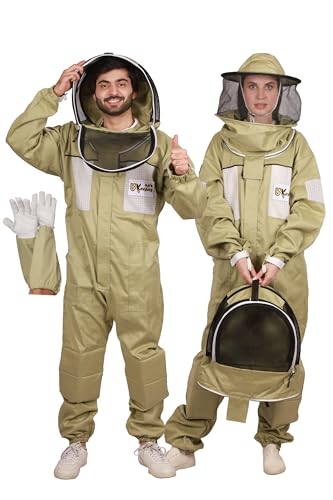
Heat is the silent reason people quit beekeeping in midsummer. The Ultra-Ventilated Polycotton Beekeeping Suit tackles that problem head-on with 280 gsm (grams per square meter, a fabric weight measure where higher numbers mean thicker material) polycotton and dedicated mesh panels at the chest, back, and arms. Those panels are the real story: they sit exactly where sweat pools during a long inspection.
For southern climates, this suit changes the math on whether a 2 p.m. hive check is even bearable. It comes with gloves and two veils, which gives you a backup when one is in the wash.
The Good Stuff
- Targeted ventilation panels line up with the body’s hot zones
- Polycotton blend balances breathability with structure
- Two veils included means a clean one is always ready
- Cut for both hobby and professional apiarists
Honest Caveats
- Olive color shows pollen dust and propolis (tree-resin sealant bees collect) more than white options
- Ventilated panels, by design, offer slightly less sting resistance than solid panels
Made For
Beekeepers in hot, humid regions who need real airflow during long summer sessions.
Reach For A Different Pick When
You mostly work in cooler months; the Professional Cotton Beekeeping Suit delivers a denser feel that suits shoulder seasons.
Hands take the most punishment during a hive inspection, and clumsy gloves turn delicate frame work into a wrestling match. These goatskin gloves pair a soft leather palm with a long canvas sleeve and an elastic cuff, which keeps the gap between glove and suit sealed. The XS sizing makes them a useful pick for smaller hands, including older kids transitioning out of starter gear.
In a real apiary, goatskin breaks in faster than cowhide and keeps finger sensitivity closer to bare hands. You can feel comb weight and queen cells without fumbling.
Notable Upsides
- Soft goatskin preserves finger dexterity for queen marking and frame handling
- Long canvas sleeve bridges the gap between glove and suit cuff
- Elastic cuff keeps bees from crawling up the wrist
Less Ideal Details
- Leather requires air-drying after sweat to avoid stiffness
- XS sizing is narrow; measure your hand before ordering
Best Suited To
Beekeepers with smaller hands who need fine motor control during frame inspections and queen work.
Consider Something Else When
You want an all-in-one kit; the 3-Layer Ventilated Beekeeper Suit Kit bundles a basic glove with the suit itself.
Durability separates a suit you wear for a season from a suit you wear for a decade. The 3 Layer Ventilated Beekeeping Suit is anchored by YKK brass zippers (YKK is the dominant Japanese zipper manufacturer, and brass hardware resists corrosion far better than plated alternatives), which is the kind of detail that matters when you’re yanking the suit on and off twice a week. The three-layer construction promotes steady airflow through the body and arms, while a round veil (a soft, dome-shaped hood favored for its wide peripheral vision) keeps your sightline open.
Assuming you run a busy schedule of inspections, the upgrade from a plastic zipper suit shows up fast. This is the pick for people who treat beekeeping as a routine, not a hobby they dabble in.
Strong Points
- YKK brass zippers hold up to repeated pulls without splitting
- Round veil offers a wider field of view than a fencing style
- Three-layer mesh keeps the inside cooler than single-layer suits
- Gloves included for a complete setup
Where It Is Less Suited
- Heavier build than the USKEEPERS ultra-ventilated option
- Brass zippers add slight weight to the front closure
Technical Reference
Who Should Grab It
Working beekeepers who open hives weekly and need a suit that survives the schedule.
A Better Fit Elsewhere
For lighter summer-only use, the 3-Layer Ultra Ventilated Sting Proof Bee Suit trades some structure for airflow.
Sometimes the most useful suit is the one that does the basics without fanfare. The Professional Cotton Beekeeping Suit uses 100% cotton, a fabric that breathes gently and quiets the rustle you get from synthetic blends. Heavy-duty YKK brass zippers round out a build aimed at hobbyists and commercial keepers alike.
For shoulder-season inspections in spring and fall, cotton hits a sweet spot. It’s warm enough for cool mornings without tipping into the heat-trap problem of pure synthetics.
Bright Spots
- 100% cotton is comfortable against bare arms and necks
- YKK brass zippers outlive plastic alternatives
- Universal sizing works for both hobby and commercial use
- Gloves included with the suit
A Few Limitations
- Cotton dries slowly after a sweaty inspection or a sudden rain shower
- Lacks the dedicated mesh panels of ventilated competitors
Whose Shelf It Belongs On
Year-round hobbyists in mild climates who don’t need extreme summer ventilation.
Not Your Match When
You work hives mostly in 90°F+ heat; the Ultra-Ventilated Polycotton Beekeeping Suit handles those days better.
Jacket-style protection suits beekeepers who pop into the hive for short, focused tasks. The Forest Beekeeping Cotton Jacket skips the leg coverage in favor of lighter wear, pairing 100% cotton with a fencing veil and gloves. For a 15-minute inspection or a quick sugar feed, a full suit can feel like overkill.
Where the full-body suits earlier in this list handle multi-hour sessions, this jacket wins on agility. You can drive a truck, walk a fence line, or crouch to check a bottom board without fabric bunching around your knees.
Positive Points
- Cotton build keeps the jacket quiet and breathable
- Fencing veil holds its shape away from the face for clear vision
- Gloves included for a complete setup
- Faster to put on than a full suit for short visits
What To Weigh
- No leg coverage, so pants choice matters on defensive colonies
- Less sting protection than full-body ventilated suits
Key Attributes
Perfect Match For
Experienced beekeepers running short, routine checks who value speed over full coverage.
Where A Sibling Pick Shines
For new beekeepers still learning to read colony mood, the 3-Layer Ventilated Beekeeper Suit Kit offers more forgiveness.
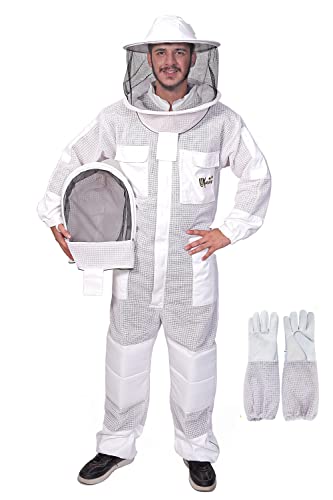
The Premium tier shows up in details, and this suit leans into them. Three layers of polycotton mesh (a polyester-cotton blend that wicks moisture better than pure cotton) create a raised buffer that holds air between you and the outer fabric, while a pair of detachable veils covers both round and fencing preferences. The full kit also includes gloves, so opening the box on day one is enough to head to the apiary.
If you’ve been managing bees for a few seasons and the summer heat is the only thing slowing you down, this suit pays for itself in stamina saved. The honest read is that this is the most comfort-forward full-body option in the roundup.
Standout Benefits
- Three-layer mesh significantly reduces heat buildup
- Two veil styles let you swap based on the task
- Gloves included for a full starter package
- Designed under professional beekeeper supervision
Small Caveats
- Premium tier costs more than entry suits
- White fabric shows grass stains and propolis visibly
Built With In Mind
Multi-year beekeepers running long summer inspections where heat tolerance is the limiting factor.
Skip It When
You only inspect hives a few times per season; the Professional Cotton Beekeeping Suit is the more sensible fit.
Jackets usually mean compromises, but this one closes the gap on full-suit protection while keeping the lighter feel. The 3 Layer Ventilated Sting Proof Bee Jacket pairs the same three-layer mesh construction as the matching suit with YKK antique brass zippers up front, and throws in goatskin gloves with ventilated long cuffs. Those goatskin cuffs matter: they extend the sting barrier past the wrist and up the forearm.
You may find the jacket’s shorter cut easier to wear during quick hive splits, and the included veil options mean you can choose between round and fencing styles based on the day.
What Stands Out
- YKK brass zippers at the front opening for long-term durability
- Goatskin gloves with long ventilated cuffs bridge the arm gap
- Two veils included for style flexibility
- Three-layer mesh keeps the torso cool during shoulder-season work
Practical Considerations
- No leg coverage, so pair it with thick pants for defensive colonies
- Brass zippers add small weight to the front closure
The Right Fit
Beekeepers who want a feature-loaded jacket for warm-weather inspections without going to a full suit.
Another Choice May Suit
For maximum sting protection during honey harvesting, the 3 Layer Ventilated Beekeeping Suit covers the legs too.
Stripped-back design has a quiet appeal for beekeepers who don’t need bells and whistles. The Bees & Co K74 Cotton Beekeeper Jacket uses 260 gsm natural cotton with double-stitched pockets, heavy-duty plastic zippers, and a collapsible fencing veil. The fabric weight places it between a T-shirt and a heavy canvas, which makes it the most comfortable cool-weather pick in this roundup.
For a coastal or northern climate where summer days stay mild, this jacket earns its place. In our view, it’s the right answer for short inspections in 60 to 75°F weather.
The Helpful Details
- 260 gsm cotton balances weight and breathability for mild days
- Collapsible fencing veil packs down for transport
- Double-stitched pockets handle hive tool and brush
- Elastic waist and wrist cuffs with thumb holds keep fabric in place
Room For Improvement
- Plastic zippers wear faster than brass alternatives
- No leg coverage limits use during defensive hive work
Feature Card
Who It Suits Best
Beekeepers in mild climates who run short inspections during cool mornings and shoulder seasons.
Not Your Match When
You face hot, humid summers; the 3-Layer Ultra Ventilated Sting Proof Bee Suit handles heat more gracefully.