
Moving a nucleus colony from one yard to another, or introducing bees to a fresh hive box, requires gear that keeps the colony contained, ventilated, and stable. Hobbyists starting out, sideliners scaling up, and educators running short demos all need a slightly different setup, and the right match depends on frame count, climate, and how often the colonies move. The picks below cover transport bags, screened-bottom cedar kits, polystyrene insulated boxes, and a queen excluder that doubles as a flexible hive tool.
A Fast Comparison Of The Options

BeeCastle 2 Pieces Bee Hive Nuc Mesh Transport Bag

MayBee 10 Frame Screened Bottom Board Beehive Kit
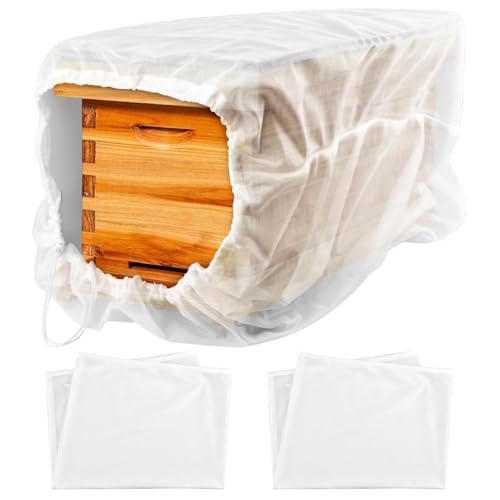
Ranjaner 2 PCS Bee Mesh Transport Bag with Drawstring

BeeCastle 5 Frame Bee Hive Nuc Box with Beeswax Coating

MayBee 8 Frame Screened Bottom Board Beehive Kit

Foxhound Bee Company 8 Frame Plastic Queen Excluder 4 Pack

MayBee 10 Frame Beehive Kit with 2 Deep & 1 Medium Boxes

Superior Bee Polystyrene R8 Insulated Deep Box

Superior Bee Polystyrene R8 Insulated Beehive Kit
A Closer Look At Each Pick
Short moves between yards are where most nuc transport frustrations begin, and a breathable wrap solves the worst of it. The BeeCastle two-pack uses a lightweight polyester mesh that lets air pass through while keeping stray bees from drifting into the cab.
For hobbyists running a single pickup truck or hatchback, the drawstring closure is the quiet hero. It cinches down over a standard five-frame nuc quickly, holds the box tight against bumps, and doesn’t require any tape or extra straps. Worth noting though, the mesh is best treated as a secondary seal, not a full replacement for a screened lid or strapped-down cover on highway trips.
Well-Handled Touches
- Lightweight polyester fiber keeps the bag easy to fold and store
- Adjustable sliding drawstring locks onto most standard nuc box sizes
- Open mesh weave promotes airflow during warm-weather hauls
- Two-bag value lets you cover spare equipment or a second hive
Things To Weigh Up
- Mesh openings can stretch over time if snagged on rough hive edges
- Drawstring may need a half-knot on oversize boxes for a tight fit
- Best paired with a secured lid rather than used as a standalone seal
Who Should Grab It
New beekeepers making short, local moves with a single five-frame nuc box.
Skip It When
You haul hives on long highway stretches; the MayBee 10 Frame Screened Bottom Board Beehive Kit suits a stationary setup better.
Starting a brand-new colony requires a hive that arrives ready to assemble and ready for bees, and this MayBee kit checks both boxes. The thick cedar body is dipped inside and out with beeswax, so there’s no extra sealing step before the colony moves in.
Pre-drilled holes and pre-cut dovetail joints (interlocking corner cuts that snap together without nails or screws) keep the build simple for first-timers. Compare that to bare-wood kits that demand a separate coat of weatherproofing. In most backyard setups, the screened bottom board pulls double duty, venting summer heat while letting debris fall away from the cluster.
Reasons It Performs
- Beeswax dipping on all surfaces adds weather resistance from day one
- Pre-cut dovetails and drilled holes shorten assembly time significantly
- Screened bottom board supports airflow in hot summer conditions
- Complete kit includes frames and wax-coated foundations
Trade-Offs To Consider
- One deep and one medium box may fill up quickly with strong colonies
- Cedar, while durable, benefits from annual inspection of joints
Feature Snapshot
Right Fit For
First-year beekeepers setting up a standard 10-frame Langstroth (the rectangular hive body style used most widely in North America) hive for a single colony.
A Better Fit Elsewhere
Those managing multiple colonies or expecting rapid expansion should look at the MayBee 10 Frame Beehive Kit with 2 Deep & 1 Medium Boxes instead.
When nuc boxes pile up for an apiary swap or a long-distance colony relocation, a backup set of transport bags prevents delays. The Ranjaner two-pack brings a tighter mesh weave than most starter bags, and that small change in hole size matters on windy drives.
Beekeepers who split hives in spring will find these doubles as storage for small gear when not in transit. You may find the bags less forgiving on bulky eight-frame nucs, though, where the drawstring has to stretch further to cinch. For most standard five-frame transport, they hold bees securely and keep the cab calmer.
Benefits That Matter
- Tighter mesh keeps smaller bee castes contained during transit
- Drawstring closure seals without tools or tape
- Doubles as a storage bag for hive tools and small accessories
- Breathable weave prevents heat buildup on warm days
Points To Note
- Bag sizing runs a bit small for wider 8-frame nuc boxes
- Lightweight mesh can catch on splinters during repeated use
Built With In Mind
Beekeepers who relocate colonies weekly or run seasonal migration routes.
Swap It Out When
You mostly keep colonies stationary and need a full hive instead; the BeeCastle 5 Frame Bee Hive Nuc Box fits a permanent setup better.
A five-frame nuc is the standard small colony size, and BeeCastle coats the entire box inside and out in beeswax for a ready-to-use finish. Compared to the larger MayBee 10-frame kit, this is a more focused starter that doesn’t overwhelm a brand-new keeper.
Pre-cut dovetail joints and pre-drilled screw holes make the assembly forgiving on a kitchen table. In most suburban yards with a single hive or two, the smaller footprint fits where a full 10-frame setup would crowd the space. The wax coating cuts down the prep work, but it does benefit from a re-coat after the first full season of weather exposure.
Good Reasons To Consider
- Full beeswax dip protects wood and skips the painting step
- Pre-cut dovetails provide tight, gap-resistant corners
- Five-frame footprint fits small backyards and urban apiaries
- Includes frames and waxed foundations to start immediately
A Few Limitations
- Limited expansion room for fast-growing colonies mid-season
- Beeswax finish may need refreshing after the first winter
Quick Facts
Whose Shelf It Belongs On
Urban beekeepers splitting small colonies or starting a single hive in a compact yard.
Where Another Pick Suits Better
Sideliners managing multiple hives should consider the MayBee 8 Frame Screened Bottom Board Beehive Kit for larger capacity.
The eight-frame Langstroth sits in a sweet spot between the compact five-frame nuc and the full ten-frame production hive. MayBee’s take includes the same beeswax-dipped cedar and pre-cut joints as its ten-frame sibling, just in a slightly trimmer body.
Beekeepers who lift hives often find the lighter eight-frame boxes easier on the back, and the screened bottom board still delivers the same airflow. Depending on your honey-flow expectations, the single medium super (the shallow upper box where bees store surplus honey) may cap out early. In most mid-scale setups, starting with this kit and adding boxes later is the practical play.
Noteworthy Benefits
- Lighter 8-frame boxes reduce strain during inspections
- Heavy beeswax coating adds water resistance in wet climates
- Pre-drilled hardware holes speed up first-time assembly
- Screened bottom board vents summer heat effectively
Some Limits To Know
- Single medium box may need supplementing in heavy nectar flows
- 8-frame sizing is less common in some regions, so used gear trades can be harder
Best Suited To
Sideliners running a handful of hives who want lighter equipment without losing production capacity.
Consider Something Else When
You run a cold-climate yard where insulation matters more than box weight; the Superior Bee Polystyrene R8 Insulated Deep Box handles that scenario better.
A queen excluder is a slotted grid placed between the brood box (the lower section where the queen lays eggs) and the honey supers. The slot size lets workers pass but blocks the larger queen, keeping eggs out of the harvest frames. Foxhound’s plastic grid takes that job and adds a flexible twist.
The plastic construction trims cleanly with scissors or a utility knife, which makes the four-pack useful for beekeepers running a mix of five-frame nucs and full-size Langstroth boxes. Compare that to rigid metal excluders that can’t be resized. For most standard eight-frame hives, the slotted pattern does the job without modification.
Features That Help
- Cuttable plastic adapts to non-standard and 5-frame nuc configurations
- Four-pack offers spare material for custom modifications
- Lightweight plastic reduces hive weight when stacked
- Easier to clean than metal grids with propolis buildup (propolis is the sticky resin bees collect from tree buds to seal gaps)
Honest Caveats
- Plastic can warp slightly in extreme heat if unsupported
- Sharp scissors or a fine blade give the cleanest cuts
Technical Reference
Perfect Match For
Beekeepers who manage mixed hive configurations and want one adaptable excluder format.
Reach For A Different Pick When
You only run standard 10-frame hives and don’t need to cut down material; the MayBee 10 Frame Screened Bottom Board Beehive Kit gives a fuller starter setup.
When a single deep box won’t carry a growing colony through its first season, stacking another deep box keeps the brood chamber open. MayBee packages two deep boxes and a medium super together, so the queen has room to lay while workers fill the upper box with surplus honey.
The same beeswax-dipped cedar and pre-cut dovetails show up here as in the smaller kits, and the screened bottom board handles summer ventilation. Beekeepers in regions with strong nectar flows will appreciate the extra storage without needing a second purchase. Worth noting though, three stacked boxes plus frames get heavy, so a hive stand at working height is worth budgeting for.
Where It Helps
- Two deep brood boxes accommodate strong, expanding colonies
- Medium super provides early-season honey storage
- Screened bottom board ready for hot-weather ventilation
- Complete with frames and wax-coated foundations
Things To Consider
- Stacked weight is substantial, plan for an ergonomic stand
- Cedar wood benefits from periodic joint inspection in wet climates
Made For
Sideliners planning honey production from established or fast-growing colonies.
Not Your Match When
You’re in a cold climate where insulation matters more than box count; the Superior Bee Polystyrene R8 Insulated Deep Box delivers better thermal performance.
Wood has been the default hive material for generations, but polystyrene brings a different thermal profile to the table. The Superior Bee R8 deep box uses two inches of high-density foam (an R8 rating is a measure of insulation effectiveness; higher means slower heat loss) to keep colony temperatures steadier through cold snaps and hot afternoons alike.
The pre-painted white exterior shrugs off UV and rain, so there’s no annual repaint cycle like cedar demands. In most northern climates, bees in well-insulated boxes spend less energy on cluster heating and more on foraging. The trade-off is material handling; polystyrene scuffs and can chip at corners if dropped.
What Earns Its Place
- Two-inch walls with R8 insulation reduce temperature swings
- Pre-painted exterior cuts out seasonal maintenance
- Langstroth-compatible sizing drops into standard frame setups
- High-density foam resists normal hive-tool impacts
Points To Keep In Mind
- Polystyrene corners can scuff or chip on rough handling
- Different thermal profile means existing winter wrapping routines may need adjustment
Key Product Details
Who It Suits Best
Northern beekeepers focused on overwintering success and reduced seasonal maintenance.
Where A Sibling Pick Shines
You need a full multi-box starter kit with frames included; the Superior Bee Polystyrene R8 Insulated Beehive Kit bundles everything in one box.
For beekeepers ready to commit to a polystyrene setup from the start, this kit bundles the insulated hive body with twenty deep frames and ten medium frames, all fitted with wax-coated foundations. Compared to piecing components together from multiple listings, the all-in-one packaging simplifies setup day considerably.
The thermal efficiency shows up most during shoulder seasons, when bees would otherwise burn calories keeping the cluster warm. In most yards, that translates into earlier spring buildup and stronger fall populations. Depending on how rough the apiary traffic is, the lightweight foam boxes do ask for a careful set-down habit.
The Helpful Details
- 30 frames included (20 deep, 10 medium) with wax-coated foundations
- R8-rated insulation reduces colony energy spent on temperature control
- Complete kit removes the need to source frames separately
- High-density foam construction keeps box weight manageable
Where It Is Less Suited
- Foam construction is less forgiving than wood on hard drops
- Specialized repair is harder than patching a wooden box
Whose Shelf It Belongs On
Committed hobbyists or sideliners upgrading from wood hives to insulated systems in cold or variable climates.
Look Elsewhere When
You’re still testing the waters and prefer a lower-cost start; the MayBee 10 Frame Screened Bottom Board Beehive Kit is a more forgiving first purchase.
Picking The Right Setup For Your Apiary
Choosing a nuc setup starts with answering a few honest questions about how the colony will actually live. Frame count sets the foundation: five frames suit small urban yards and spring splits, eight frames balance lift weight against capacity, and ten frames give the most expansion room for honey-heavy flows. Wood remains familiar, but polystyrene brings thermal benefits that matter most in regions with long winters or sharp overnight temperature drops.
Ventilation deserves attention too. Screened bottom boards, like those on the MayBee kits, pull double duty by venting summer heat and letting debris fall away from the cluster, but they do cool the hive faster in late winter, so wrapping or entrance reducers may be needed in colder zones. If colonies move frequently, breathable transport bags earn their space in the toolbox alongside the hive itself.
Finally, think about expansion pace. A single-box kit covers one season for a slow starter, but fast-growing colonies chew through space and need extra supers within months. Buying the smallest setup now often means another purchase mid-season, so matching box count to realistic colony ambition saves both money and trips to the supplier.
Key Considerations Across These Picks
Common Buying Slip Ups
The most frequent mistake is choosing a frame size that doesn’t match existing equipment in the apiary. A ten-frame hive body won’t accept eight-frame frames without serious modification, and vice versa. Another trap is skipping insulation entirely in cold climates, then watching overwintered colonies struggle despite healthy fall populations. Finally, overlooking transport accessories like mesh bags leaves new beekeepers improvising on moving day.
What The Higher Tier Buys
Stepping up from a basic wood kit to an insulated polystyrene setup costs more upfront, but the thermal efficiency shows up in overwintering survival rates and spring buildup speed. Pre-painted exteriors also remove the annual repaint that cedar boxes demand. For sideliners running multiple hives, the labor savings on maintenance alone can offset the price difference within a couple of seasons.
Frequently Asked Questions
What size nuc box do most beginners start with?
A five-frame nuc is the most common starting point for new beekeepers, since it matches the typical package size sold by breeders and gives a small colony room to establish without overwhelming an empty box.
Can polystyrene hives really replace traditional wood?
In most climates, yes. High-density polystyrene with an R8 insulation rating holds temperature more steadily than standard wood, though beekeepers used to wooden hives should expect a brief adjustment period for winter wrapping routines.
How often do screened bottom boards need cleaning?
Screened bottoms benefit from a seasonal clearing of accumulated debris, typically once in spring and again in late summer, depending on mite treatment schedules and hive activity.
Do transport bags really contain bees during a drive?
Breathable mesh bags contain most bees when cinched properly, though they work best paired with a screened lid and secured hive body rather than as a standalone seal on long highway trips.
What does wax coating on a hive actually do?
A beeswax or wax-based dip adds a moisture-resistant layer to the wood and reduces the prep work before installation, though the coating may need refreshing after the first full year of weather exposure.
Wrap Up
The right nuc setup depends on climate, colony ambition, and how often the gear moves between yards. New keepers do well with a wax-dipped wood kit and a transport bag on standby, while cold-climate sideliners benefit from stepping into insulated polystyrene. Match the frame count to your existing equipment and growth plans, and the rest of the season runs smoother from the first inspection forward.