
Yards near the tree line, campsites along salmon streams, and backcountry trails through thick brush all share one risk: a sudden wildlife encounter that turns a peaceful afternoon sideways. Some tools are built to keep curious deer and raccoons out of your tomato beds without a fence. Others exist to put distance between you and a charging grizzly, fast. Knowing which category you actually need is half the battle, and the right hardware makes the rest fall into place.
The Essentials At A Glance
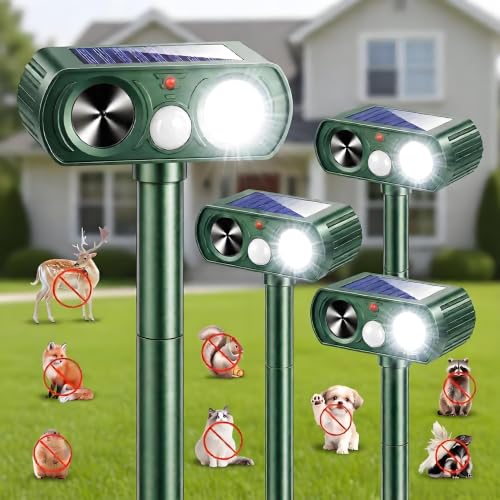
Thcritter Ultrasonic Animal Repellent with LED Strobe

ZLieatmp 4-Pack Solar Ultrasonic Animal Repeller

ZLieatmp Upgraded 4-Pack Solar Animal Repellent

Thcritter Advanced Solar Ultrasonic Animal Repellent (4-Pack)

Griz Guard 260GG Bear Deterrent 40 ft Fog

SABRE Frontiersman 7.9 oz Bear Spray

Counter Assault Bear Spray 44ft Range 10.2 oz
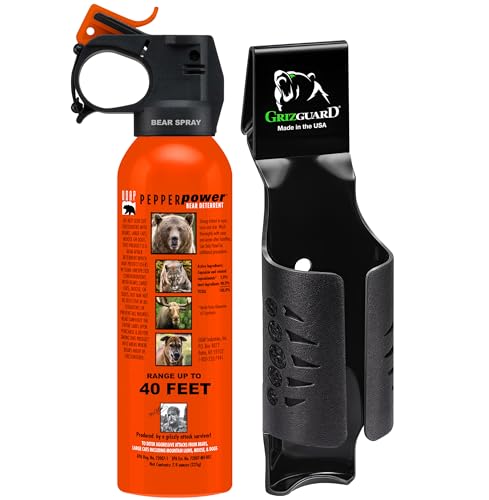
UDAP Pepper Power Magnum Bear Spray 7.9 oz

Thcritter Advanced Solar Ultrasonic Animal Repellent
More Details On Our Top Picks
For a single flower bed or a small vegetable patch, a solar stake that wakes up only when something moves tends to work quietly in the background. The unit pairs a PIR motion sensor (PIR, or passive infrared, detects body heat and movement within a set arc) with an ultrasonic speaker that emits sound above human hearing range, then layers in a bright white LED flash for a visual deterrent.
Compared to the four-pack options later in the list, this is the right scale for one problem area rather than a whole property. Setup is a matter of switching it on under the head and letting the top-mounted panel charge for a couple of sunny days before expecting full output.
The Helpful Details
- Solar charging cuts out battery swaps for most of the year.
- IP66 waterproof rating handles rain, snow, and summer storms without fuss.
- ABS housing (a tough, impact-resistant plastic) shrugs off UV exposure and casual bumps from a lawnmower.
- Combined ultrasonic and strobe gives curious deer two reasons to leave at once.
- 15-second activation window conserves power between triggers.
Worth Noting
- Single-unit coverage means larger yards benefit from a multi-pack like the ZLieatmp 4-Pack below.
- Performance depends on direct sunlight during the initial two-day charge cycle, which can frustrate shaded installs.
Made For
Homeowners with one trouble spot, like a small garden or bird feeder zone, who want set-and-forget protection without wiring.
Consider Something Else When
Your property spans a wide footprint and needs layered coverage, in which case the Thcritter 4-Pack later in this list spreads the same technology across more ground.
Most yards don’t fail because one stake is missing, they fail because a single device can only cover so much arc. The four-unit setup here changes that math, letting you build a perimeter around garden paths, fence openings, and flower beds with overlapping coverage.
The speaker design aims for broader ultrasonic output than narrower single-driver units, and a high-sensitivity PIR sensor watches the area. Aim each unit at the path animals actually use, keep the front clear of tall plants, and the system tends to handle deer, raccoons, and rabbits without much babysitting.
Practical Advantages
- Four units create overlapping detection zones around a typical suburban lot.
- Solar panels keep the array running through summer without manual charging.
- Broad ultrasonic dispersal covers entry points rather than just one corner.
- Works against a mixed list of critters rather than a single species.
Trade Offs
- Four stakes means four spots to keep clear of overgrowth and sprinklers.
- Detection range varies with terrain, and dense brush can shorten the effective reach.
Feature Snapshot
Right Fit For
Property owners with half an acre or more who want a perimeter-style defense without running wire or buying separate single stakes.
Look Elsewhere When
You need only one focused spot, in which case the single-unit Thcritter stake from earlier in this list is more efficient.
When the goal is to keep cats out of a sand box or squirrels off a bird feeder, speed matters more than brute force. The “upgraded” framing here refers to a tighter motion-detection response, with a PIR sensor that picks up movement up to around 30 feet and fires an ultrasonic pulse almost immediately.
Four units stake into a garden, yard, or small orchard to build a barrier working around the clock. The trade-off is the same as the previous ZLieatmp 4-Pack: this is a deterrent system, not a fence, so expect some trial-and-error to find the right placement.
Standout Benefits
- Fast-trigger motion response catches animals at the edge of the zone.
- Multi-pack layout works well for protecting linear features like hedgerows or fence lines.
- Solar panel design eliminates the battery ladder.
- Suitable for protecting bird feeders without trapping smaller songbirds.
Honest Caveats
- Positioning matters more than the spec sheet suggests, and steep angles shorten the effective range.
- Effectiveness against determined or habituated animals can drop over time, requiring occasional repositioning.
Who Should Grab It
Gardeners with active bird feeders, raised beds, or small orchards who need fast, humane intervention the moment an animal enters the zone.
A Better Fit Elsewhere
You want a single high-coverage stake rather than four, in which case the Thcritter 2026 single-unit model further down handles one zone with a wider 150° arc.
The headline detail here is a 110-degree detection arc paired with a 25 to 33 foot trigger range, which is wider than many competing stakes that stop around 90 degrees. The wider cone means each unit covers more ground, so four stakes can fence off a large yard without leaving gaps.
Setup mirrors other Thcritter products: switch on under the head, give the solar panel a couple of sunny days to top up, and stake into a spot with the clearest sightline to where animals approach. Owners commonly report that squirrels and raccoons avoid the area within a few days.
What Earns Its Place
- 110° detection arc covers more ground per stake than narrow units.
- Synchronous alarm sound layered with ultrasonic adds a second deterrent channel.
- Targets a long list of small to mid-size critters rather than a single species.
- Four-pack layout suits properties with multiple entry corridors.
Points To Keep In Mind
- Solar charging slows down under heavy tree cover, which can matter in wooded lots.
- Effectiveness tapers against larger or more determined animals like mature raccoons.
Best Suited To
Property owners with multiple garden zones, side yards, or fence gaps who want fewer blind spots than a single stake provides.
Skip It When
You only need to protect a narrow strip like a single garden row, where the single-unit Thcritter stake from earlier is more cost-effective.
Once you cross out of ultrasonic yard stakes and into real bear country, the tool changes shape. The Griz Guard 260GG is a 9.2-ounce fog-pattern pepper spray, designed by a grizzly attack survivor at UDAP Industries and made in Montana.
Where this can stands out is the 40-foot fog deployment, which forms a wider, denser cloud than narrower stream sprays. The trade-off is clear: this is a real-world safety tool meant for hikers, hunters, and campers in grizzly, black, or brown bear habitat. It is not a yard device, and you carry it the way you’d carry a critical piece of safety gear.
Everyday Wins
- 40-foot fog pattern covers a broad area in a short burst.
- 2.0% capsaicin content delivers the irritant strength that wildlife agencies look for.
- Holster included for belt or pack strap carry.
- Suitable for bears, mountain lions, coyotes, and moose where legal.
A Few Limitations
- Heavier 9.2 oz fill adds bulk compared to smaller 7.9 oz options.
- Single-shot deployment means you have one chance; practice the draw before relying on it.
- Has a shelf life and needs replacement on a multi-year rotation.
Key Attributes
Whose Shelf It Belongs On
Backpackers, outfitters, and hunters in true grizzly or brown bear country who want a fog pattern and the longest reach in this roundup.
Reach For A Different Pick When
You want a lighter day-hike option, in which case the SABRE Frontiersman 7.9 oz below is easier to carry without the fog-pattern bulk.
For day hikers and weekend campers who don’t need a nine-ounce can, the SABRE Frontiersman hits a middle weight at 7.9 ounces with a 30-foot reach. The 2.0% major capsaicinoids formula lands at the strength most wildlife agencies recommend, and the quick-draw holster clips onto a belt or pack strap without bouncing around.
Compared to the heavier Griz Guard 260GG above, this can sacrifices some pattern width and reach for portability. For most day-trip scenarios in moderate bear habitat, the lighter carry is the bigger win.
Where It Helps
- 30-foot range is enough for most defensive scenarios on the trail.
- 2.0% major capsaicinoids matches typical agency strength guidance.
- Quick-draw holster is simple to attach and operate one-handed.
- Lighter 7.9 oz weight is easier on long day hikes.
Softer Spots
- 30-foot reach is shorter than the 40 ft and 44 ft options in this roundup.
- Single-use deployment, so accidental discharge ends a trip.
Perfect Match For
Day hikers and casual campers in moderate bear habitat who want a manageable size without giving up the standard 2.0% strength.
Swap It Out When
You need maximum reach for open terrain or a wide fog pattern for close encounters, where the Counter Assault 44 ft can further down is the better fit.
The headline here is reach: 44 feet, which is the longest in this roundup, and a 10.2-ounce can that carries enough payload for multi-day backcountry trips. A 2% capsaicin formula targets grizzly, black, and brown bears, with the holster included for belt carry.
That reach comes with size. This is the bulkiest can in the lineup, and it pulls more weight on a hip belt than the SABRE 7.9 oz. In return, you get the widest safety margin against a charging animal and extra volume for the second burst if needed.
Well-Handled Touches
- 44-foot reach is the longest in this roundup.
- 2% capsaicin formula targets grizzly, black, and brown bears.
- Holster included and designed for one-handed deployment.
- Larger 10.2 oz capacity suits multi-day backcountry trips.
Possible Compromises
- Bulkiest can in the lineup, so it doesn’t disappear on a slim daypack.
- Requires planning for TSA-compliant transport on airline trips into bear country.
Quick Facts
Built With In Mind
Multi-day backpackers, outfitters, and field guides who need maximum reach and can carry the extra bulk on a hip belt or pack strap.
Where A Sibling Pick Shines
You want a lighter can for fast day hikes, in which case the SABRE Frontiersman 7.9 oz above is the easier carry.
UDAP’s Pepper Power Magnum shares the same Montana-based design story as the Griz Guard 260GG further up, but lands in a more compact 7.9-ounce can with a 30-foot fog barrier. The holster ships in the box, and the fog pattern is built to give you a defensive cloud rather than a precise stream.
This is the right can for fishers, hikers, and anyone moving through mixed terrain where stream-pattern precision is less useful than a wider billowing cloud. The 30-foot reach matches the SABRE Frontiersman, but the fog profile behaves differently in the air.
What Stands Out
- 30-foot fog barrier creates a wide defensive cloud.
- Holster ships in the box, ready to clip on day one.
- Compact 7.9 oz can fits a day pack without dominating space.
- Made in the USA with a design story tied to real bear encounter experience.
Details To Watch
- 30-foot reach is shorter than the 40 ft and 44 ft options in this list.
- Fog pattern trades pinpoint accuracy for coverage, which takes practice to deploy well.
Who Will Love This
Anglers, day-trip hikers, and anyone moving through varied terrain who prefers a compact can with a wide fog profile over a longer-reaching stream.
Another Choice May Suit
You want the longest reach available, in which case the Counter Assault 44 ft can earlier in this list adds a meaningful safety margin.
Where this Thcritter unit differs from earlier Thcritter stakes is a 150-degree detection arc, the widest single-stake cone in the roundup, paired with the same IP66 waterproof housing. The wider arc means one stake can cover the front approach to a yard where three narrower units would otherwise be needed.
Installation is one step: charge the solar panel for two full sunny days, then drive the stake about 9 to 10 inches into the ground. Once sited, the PIR sensor takes over and triggers ultrasonic pulses plus LED flashes whenever movement shows up in the 25 to 30 foot range.
A Favorable Mix
- 150° arc gives one stake the coverage of two narrower units.
- Humane, non-toxic deterrent is safe around children and pets.
- IP66 housing handles rain, snow, and temperature swings year-round.
- Tool-free installation makes repositioning easy as the season changes.
Small Caveats
- Two-day initial solar charge means a slow start in low-light seasons.
- Effectiveness is more about conditioning animals over time than instant results.
Feature Snapshot
The Right Fit
Family-friendly households with one open yard space and no interest in running multiple stakes, who want a single device covering a wide arc.
Not Your Match When
You have a wide property with multiple approach paths, in which case the Thcritter 4-Pack earlier in this list spreads coverage across zones instead.
What Matters Most Before Choosing Bear Repellents
Match The Tool To The Animal And Setting
Start by separating “yard nuisance” from “backcountry safety.” Ultrasonic solar stakes handle deer, raccoons, squirrels, and similar mid-size visitors around gardens and bird feeders. Pepper spray cans are built for actual bear encounters on trails, in camp, or in remote backcountry. Mixing these up is the most common shopping mistake, so decide your threat profile first.
Range, Pattern, And Payload On Spray Cans
For bear spray, range is the single most important number. A 30-foot can works in tight woods, but open terrain or thick brush often benefits from 40 to 44 feet of stand-off. Pattern matters too: fog deployments create a wide cloud and suit close encounters, while stream patterns are more directional. Can size ties to trip length; multi-day backcountry trips usually want 9.2 to 10.2 ounces, while day hikes are fine at 7.9 ounces.
Detection Arc And Coverage On Ultrasonic Stakes
PIR sensors (passive infrared, the same kind found in outdoor security lights) trigger only on movement, so the cone shape and trigger distance decide what you actually protect. A 90° arc with 25 feet of reach covers a small flower bed; a 150° arc with 30 feet of reach covers most front yards. Multi-packs matter when you have multiple entry points rather than one zone.
Power, Weatherproofing, And Maintenance
Solar-powered stakes need direct sun for a multi-day initial charge, then run largely on their own. IP66 ratings cover rain, snow, and temperature swings, but shaded installs under heavy canopy may need repositioning. Pepper sprays have a fixed shelf life and need replacement on a multi-year rotation, plus airline rules apply if you fly into bear country.
Key Considerations Across These Picks
Common Shopping Slip Ups
The biggest trap is buying an ultrasonic stake expecting it to stop a grizzly, or buying a bear-spray can expecting it to keep deer out of the hostas. Each tool does one job well and a different job poorly. Another frequent miss is buying a single stake to cover a wide property, then wondering why the far end of the yard still gets visited. Detection arcs add up across a property, and overlapping coverage matters more than per-unit specs.
Where The Extra Money Goes
Higher-tier cans like the Counter Assault 44 ft and Griz Guard 260GG add meaningful reach and payload, which translates directly to safety margin. On the yard side, upgraded 4-packs cost more but spread that reach across the property, reducing the dead zones a single stake always leaves. If your trips are short and your yard is small, the basic options deliver enough. The upgrade is worth it when range, capacity, or coverage would otherwise fall short of the scenario.
Frequently Asked Questions
Do ultrasonic animal repellents actually work on bears?
Ultrasonic stakes are designed for small to mid-size yard visitors like deer, raccoons, and squirrels. They are not a reliable tool against an adult grizzly, and backcountry safety in true bear country still calls for pepper spray.
How far can bear spray reach?
The cans in this roundup range from 30 to 44 feet, depending on the model. A longer reach adds a useful safety margin on open terrain and in scenarios where a charging bear covers ground quickly.
Where should I place a solar ultrasonic stake?
Aim the motion sensor at the path animals actually use, with the front of the device clear of tall plants and direct sunlight on the panel. A two-day initial charge in full sun sets up reliable operation.
How long does a can of bear spray last before it expires?
Manufacturers typically print a replacement date on the can, and the standard is to rotate cans every few years. Heat, cold, and a damaged holster mount can shorten usable life, so check the date before each season.
Is bear spray legal everywhere?
Rules vary by state, province, and country, with some jurisdictions restricting size, pattern, or shipping. Always confirm local regulations before traveling, especially across borders.
Bottom Line
The right tool depends entirely on the setting. For garden and yard defense, solar ultrasonic stakes like the Thcritter single-unit and Thcritter 4-Pack handle most nuisance wildlife without much fuss. For backcountry travel in real bear habitat, a proper pepper spray, whether the compact SABRE Frontiersman, the heavy-duty Counter Assault 44 ft, or the wide-fog Griz Guard 260GG, is the kind of gear you want on your belt and never have to use. Pick the category first, then match the spec to your terrain.