
Choosing the right gas grill comes down to how you actually cook. Weekend family dinners, weeknight burgers, big gatherings, or just feeding two on the patio all push you toward different footprints, burner counts, and extras. The picks below cover the full spread, from a portable workhorse to full backyard stations with griddles and side burners, so you can match a grill to the way you cook instead of forcing your cooking into a grill that doesn’t fit.
The Choices Worth Comparing

Weber Q 2800N+ Portable Propane Grill (Midnight Black)

Monument Grills 35633 Propane Grill with Cover Bundle

Monument Grills Mesa200S 2-Burner Propane Grill
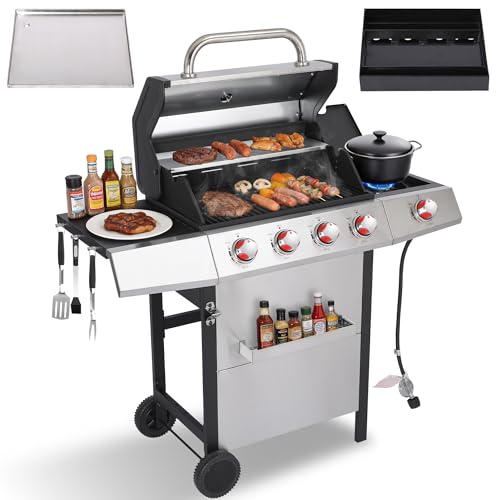
LMNOCHM 4-Burner Gas and Charcoal Combo Grill

La Bolata 4-Burner Propane BBQ Grill with Side Burner

La Bolata 3-Burner Propane Grill with Cast Iron Grate

LMNOCHM 4-Burner Propane Grill and Griddle Combo

LMNOCHM 6-Burner Propane Grill and Griddle Combo

LMNOCHM 3-Burner Propane Grill with Side Burner, 39,000 BTU
More On The Choices That Made The List
The Weber Q 2800N+ is the kind of grill that earns its space in a small setup or a car trunk. The Plus burner design adjusts across a wide temperature window, so you can run a low-and-slow bake or push toward high-heat searing on the same cooking surface. Porcelain-enameled cast-iron grates hold and release heat evenly, which matters when you want grill marks without babysitting the food.
You get real grilling in a body that doesn’t demand a permanent spot on the patio. For tailgates, condo balconies, or a backup grill that lives in the garage, it covers the bases without much fuss. The trade-off is capacity. This is a grill for two to four people, not a backyard party.
What Makes Sense
- Wide temperature range supports both low roasting and hot searing on one surface
- Cast-iron grates deliver strong heat retention and clear sear marks
- Portable footprint suits tailgates, RVs, and tight patios
- Optional griddle insert (sold separately) adds breakfast and smash-burger flexibility
Points To Keep In Mind
- Limited primary cooking area restricts batch cooking for larger groups
- Add-ons like the griddle raise the total cost once you start customizing
Key Specs
Right Fit For
Couples, small households, and anyone who wants a portable grill that still feels substantial in hand.
Consider Something Else When
Cooks hosting eight or more people should look at the Monument Grills 35633 for its much larger primary cooking area.
The Monument Grills 35633 is built for cooks who treat the grill like a full outdoor kitchen. Four main burners handle different foods at different temperatures at the same time, while a dedicated sear burner and a side burner cover the high-heat and sauce jobs. 304 stainless steel burners hold up to repeated firing, and the overall cooking area leaves room for a full spread of burgers, vegetables, and warming space.
The included cover extends the practical life of the grill by shielding it from weather when not in use. Compared to the Weber Q 2800N+, this is a stationary backyard piece, not a travel companion. If you cook for groups more than once a month, the extra space becomes the main reason to pick it.
Positive Points
- Large primary area plus warming rack feed a crowd without juggling batches
- 304 stainless steel main burners resist corrosion over seasons of use
- Separate side and sear burners add genuine cooking flexibility
- Bundle cover protects the grill between cookouts
Trade-Offs To Consider
- Bigger footprint demands a permanent spot with clearance
- Higher BTU output means a heavier propane draw per cook
- More burners mean more routine cleaning after each session
Who Should Grab It
Home cooks hosting family gatherings and neighborhood cookouts who want space and power in one package.
Skip It When
Apartment dwellers with strict patio limits will find the Monument Grills Mesa200S a more manageable size.
Compact doesn’t have to mean flimsy. The Monument Grills Mesa200S brings 304 stainless steel burners, a clearview lid for monitoring food without lifting, and a knob-control layout that stays out of the way. Two foldable shelves drop flat when you’re done, which helps in tight storage situations like apartment balconies and small garage corners.
For two-to-four-person dinners, the cooking area covers the basics. The Mesa200S is the kind of grill you set up in five minutes and tuck away just as fast. It’s not the pick for a holiday party, but for daily cooking on a small patio, it punches above its size.
Real Benefits
- Foldable shelves save space in storage and during use
- Clearview lid cuts down on heat loss from peeking
- Stainless steel construction helps resist rust in coastal or humid climates
- Lightweight enough to reposition without dismantling
Worth Noting
- Two burners limit simultaneous cooking styles
- Smaller total cooking area than four-burner siblings in this list
Feature Snapshot
Best Suited To
Urban grillers with balcony space who still want real cooking capability rather than a tiny portable.
Look Elsewhere When
The Weber Q 2800N+ suits someone who wants even more portability and doesn’t need the foldable shelf setup.
The LMNOCHM 4-Burner Gas and Charcoal Combo Grill is built for cookers who refuse to choose between fuel types. A modular setup lets you swap between propane gas, charcoal trays, and a stainless steel griddle pan depending on what the meal calls for. Pancakes and smash burgers on the griddle, charcoal smoke for ribs, or fast gas heat for weeknight chicken, all on the same frame.
The trade-off is a learning curve. You manage multiple cooking surfaces and fuel types, so cleanup takes a bit more planning than a single-fuel grill. For someone who enjoys the variety, that flexibility is the whole point.
What Helps Most
- Three cooking modes in one frame cover breakfast through dinner
- Interchangeable trays let you switch fuel types mid-cookout
- Stainless steel griddle handles pancakes, eggs, and smash burgers
- Cast iron grates add proper searing to the gas side
Honest Caveats
- Switching fuel modules takes practice and adds setup time
- Charcoal trays require ash disposal after each use
- More components mean more spots to clean between sessions
Whose Shelf It Belongs On
Cooks who want one grill that handles gas convenience, charcoal flavor, and griddle cooking without owning three separate units.
Where Another Pick Suits Better
Anyone focused on straightforward gas-only cooking will find the La Bolata 4-Burner Propane BBQ Grill simpler to live with.
The La Bolata 4-Burner brings a reversible cast iron griddle plate into a four-burner propane setup, so you can slide it to the left or right depending on the cook. A cast iron wire grate handles the standard grilling work, while the stainless steel warming rack keeps finished food at serving temperature. A side burner rounds out the cookout, letting you handle sauces or vegetables without leaving the grill.
This is a flexible mid-size option that fits a family cookout without dominating the yard. Compared to the LMNOCHM 4-Burner Gas and Charcoal Combo, you lose the charcoal option but gain a simpler, gas-only workflow.
Bright Spots
- Reversible griddle plate moves left or right to suit the meal
- Four burners give enough zone control for full family dinners
- Side burner frees a burner on the main grate for sides
- Warming rack keeps cooked food ready while finishing the rest
Points To Note
- Cast iron grates and griddle need regular oiling to prevent surface rust
- Four-burner footprint still requires reasonable patio clearance
Feature Card
Who It Suits Best
Families who want griddle versatility without buying a separate flat-top unit.
Not Your Match When
Cooks wanting charcoal flavor alongside gas should consider the LMNOCHM Gas and Charcoal Combo instead.
Three burners and a solid cast iron grate make the La Bolata 3-Burner a straightforward workhorse. The grates hold heat for proper searing, while foldable side tables drop the footprint when the cookout is over. An easy-clean system helps with post-meal maintenance, which is the part most people skip when cleanup gets tedious.
For weeknight cooking, this covers most of what a household actually needs without the bulk of a four or six-burner setup. Compared to the LMNOCHM 3-Burner with Side Burner, you give up the extra burner for sauces but keep a slightly lower price footprint.
Useful Highlights
- Cast iron grate delivers reliable sear marks
- Foldable side tables save space in smaller yards
- Easy-clean system shortens post-cookout scrubbing
- Three burners handle direct and indirect cooking at once
Small Caveats
- No side burner means sauces use a main grate zone
- Cast iron requires routine oiling for long-term care
Quick Facts
Made For
Households grilling two to three nights a week who want reliable heat without extra burner bulk.
Swap It Out When
Someone wanting a dedicated side burner for sauces should consider the LMNOCHM 3-Burner with Side Burner at 39,000 BTU.
The LMNOCHM 4-Burner Propane Grill and Griddle Combo leans into flexibility. Two grill grates and a dual-sided reversible griddle slide into a modular layout, so you can rearrange the cooking surface mid-cook based on what’s heading to the table. A side burner adds sauce and side dish capacity without crowding the main grates.
Compared to the La Bolata 4-Burner Propane BBQ Grill, this setup trades a simpler wire grate for a fully modular system. If you cook varied meals, the ability to swap surfaces is the reason to choose it.
Everyday Advantages
- Modular grate and griddle layout adapts to the menu
- Dual-sided griddle handles flat-top and griddle work in one plate
- Side burner keeps the main surface free for grilling
- Four main burners support multi-zone cooking
A Few Limitations
- Modular components take time to swap and clean individually
- Larger footprint than a fixed-grate equivalent
Who Will Love This
Home cooks who regularly switch between grilled meats, pancakes, and veggies and want a single surface that adapts.
Reach For A Different Pick When
Someone wanting simpler maintenance should consider the Monument Grills Mesa200S for its lower part count.
The 6-Burner Propane Grill and Griddle Combo is the largest, most capable option in this lineup. Six burners put out serious heat and let you run multiple temperature zones at once, while the same modular griddle and grate setup from the 4-burner sibling carries over. A side burner adds sauce and side capacity without eating into the main surface.
This is the pick for serious entertaining. Compared to the Monument Grills 35633, you trade a fixed cooking surface for a modular one, gaining griddle flexibility at the cost of a slightly more involved cleanup. For cooks who actually use the capacity, that’s an easy trade.
What Pays Off
- Six burners handle large groups without juggling zones
- Modular griddle and grate setup adapts to varied menus
- High BTU output delivers fast heat recovery during heavy cooking
- Side burner extends meal capacity beyond the main surface
Where It May Fall Short
- Requires substantial patio space and clearances
- More burners and modules mean longer post-cookout cleaning
- Higher propane consumption per session than smaller units
Perfect Match For
Entertainers who cook for ten or more people regularly and want one grill that handles every course.
A Better Fit Elsewhere
Households cooking for two to four will get more usable space from the La Bolata 4-Burner Propane BBQ Grill.
The LMNOCHM 3-Burner with Side Burner focuses on strong output in a manageable package. Piezo ignition fires the grill with a press and twist, stainless steel burners cover the main cooking surface, and a separate side burner handles sauces and sides. Heavy-duty cast iron grates hold heat for proper searing across three independent zones.
This is the kind of grill that disappears into your routine. The side burner in particular makes a real difference for cooks who don’t want to keep running inside for a pot. Compared to the La Bolata 3-Burner, you trade the foldable tables for an extra burner and higher total output.
The Helpful Details
- Side burner handles sauces without using main grate space
- Cast iron grates deliver consistent sear marks
- Piezo ignition lights reliably without an external source
- Independently controlled burners support varied cooking styles at once
Things To Weigh
- No griddle option out of the box
- Cast iron needs regular oiling to prevent surface issues
Technical Highlights
The Right Fit
Home cooks who prioritize a side burner for everyday meal prep over modular cooking surfaces.
Where A Sibling Pick Shines
Cooks wanting griddle versatility in a similar size should look at the LMNOCHM 4-Burner Grill and Griddle Combo.
Factors To Consider When Choosing Bbq Gas Grills
Burner Count and Cooking Zones
Burner count shapes how many foods you can cook at different temperatures at once. Two-burner grills handle a simple main-and-side setup, while four to six burners let you run direct heat, indirect heat, and a warm zone simultaneously. If you typically cook one protein and a vegetable, fewer burners will keep you comfortable. For multi-course cookouts, more zones mean less juggling and fewer cold spots on the plate.
Cooking Surface Area
Total cooking area, often listed as primary plus warming rack, sets the realistic upper limit on how much food you can put down at once. A 250-square-inch primary area fits roughly six to eight burgers, while 700-plus square inches supports a full spread for a large family. Match the area to the largest typical cookout you host, not the largest one you can imagine, because most weeknight meals fit comfortably on smaller surfaces.
Build Materials and Long-Term Care
Stainless steel components, especially 304 stainless on burners, hold up better to repeated heating and weather exposure. Cast iron grates deliver stronger heat retention but need routine oiling to prevent rust. Porcelain-enameled cast iron splits the difference, seasoning more easily than bare cast iron while keeping solid heat retention. Whichever you choose, a cover extends the practical lifespan of any outdoor grill, especially in wet or coastal climates.
Extras That Actually Get Used
Side burners, griddles, warming racks, and sear stations each add real capability, but only if you’ll use them. A side burner makes sense for cooks who simmer sauces or boil sides while grilling. A griddle plate matters for households that cook pancakes, smash burgers, or vegetables on a flat surface. Modular grates and reversible griddles are worth the extra cost only when you regularly switch between styles. Match the extras to the meals you actually cook, not the ones you imagine cooking.
Key Considerations Across These Picks
Where Shoppers Go Wrong
A common trap is sizing up to the biggest grill in the budget, then realizing the patio can’t accommodate it safely. Measure your space first, including clearance from siding and overhangs, before picking a burner count. Another mistake is buying based on BTU totals alone. Higher BTU numbers mean more heat output, but without proper burner design and grate quality, that heat doesn’t translate to better cooking. Look for balance between output, cooking area, and grate material.
Where The Extra Money Goes
Stepping up from a basic three-burner to a four or six-burner combo grill adds stainless steel construction, modular cooking surfaces, and dedicated side burners. The upgrade pays off when you cook for groups or want a single grill that handles grilling, griddling, and saucing at once. If your cooking stays simple, the mid-tier options in this list deliver the same core experience without the added complexity or footprint.
Frequently Asked Questions
How many BTU do I really need for a home grill?
Total BTU matters less than how the heat reaches the food. For most households, 30,000 to 50,000 BTU across three or four burners delivers solid heat without wasting fuel. Focus on burner quality and grate material alongside the BTU number.
What is the benefit of a side burner on a gas grill?
A side burner gives you a dedicated heat source for sauces, sides, and small pots without using main grate space. It keeps your grill running smoothly when a recipe calls for both grilled and simmered elements at the same time.
Should I choose cast iron or stainless steel grates?
Cast iron holds heat better for searing, but it needs regular oiling. Stainless steel heats up faster and resists rust with less maintenance, though it doesn’t sear quite as aggressively. Both work well for everyday cooking.
How do I protect my gas grill from weather?
A fitted cover, routine cleaning of grease and ash, and storing the grill under an eave or shelter all extend its lifespan. In coastal or humid areas, stainless steel construction and consistent cover use pay off quickly.
What’s the difference between a griddle plate and a regular grate?
A griddle plate provides a flat surface for pancakes, smash burgers, eggs, and vegetables that would fall through standard grates. A regular grate leaves open space between bars for smoke and flame contact. Combo grills with both let you choose per meal.
Closing Remarks
The right gas grill depends on the meals you cook and the space you have. Compact options like the Weber Q 2800N+ and Monument Grills Mesa200S fit smaller patios and routine dinners. Mid-size four-burner picks give families the room and versatility for typical weekend cookouts. Larger six-burner combos handle serious entertaining when group cooking is the norm. Match the grill to the way you cook, and the rest takes care of itself.