
Cordless garden tools have quietly reshaped the way home growers work their beds. Without fuel, pull cords, or extension reels stretching across the lawn, a battery tiller slips into the tight spaces where a rototiller would never fit. If your raised beds need turning before spring planting, or the soil along the fence line has gone concrete-hard over winter, the picks below cover a real spread of designs, from full-width cultivators to handheld mini tillers you can steer with one hand.
The Choices Worth Comparing
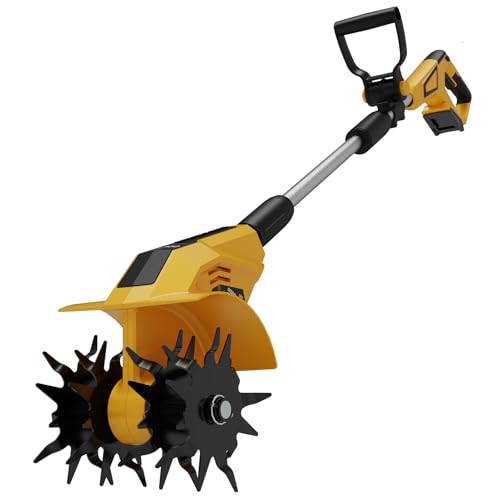
QESOO Brushless Cordless Tiller Cultivator Compatible with Dewalt 20V Max Battery

Lmozim Cordless Tiller Cultivator 21V Brushless 48 Steel Tines

IncwBo 12″ 8.5 AMP Small Electric Corded Garden Tiller
IncwBo 12″ 10.5-AMP Electric Roto Tiller Cultivator Corded

IncwBo 12″ 15-AMP Electric Roto Tiller Cultivator Corded

WTFOVOV 21V Cordless Mini Garden Tiller 8.0Ah Batteries

WTFOVOV 21V Cordless Mini Garden Tiller 4.0Ah Batteries

reffmov 21V Cordless Tiller Cultivator 6000mAh 400RPM

WTFOVOV 21V 2-in-1 Mini Garden Tiller Cultivator 2×1.5Ah
WTFOVOV 21V 2-in-1 Mini Garden Tiller Cultivator 8.0Ah Batteries
A Closer Look At Each Pick
If your shed already has Dewalt 20V Max batteries on the charger for your drill or leaf blower, this tiller slides right into that system without forcing a new investment. The tool-only format keeps the cost lean, since you already own the power source. The brushless motor delivers steady output for breaking up soft-to-medium garden soil without the wear issues brushed motors can develop over time.
Compared with the all-in-one cordless picks later in this list, you skip the bundled batteries here, which is a real win if your workshop already runs on Dewalt. You will need a charged pack to start, so keeping a spare battery around prevents mid-bed downtime. This is a body-only tiller, so anyone without a Dewalt 20V pack should look at the fully bundled options below.
Everyday Wins
- Brushless motor (a brushless motor uses electronic commutation instead of carbon brushes, so it runs cooler and typically lasts longer) for longer service life
- Works with existing Dewalt 20V Max batteries you may already own
- Tool-only purchase keeps upfront cost lower
- Light enough to steer between tight raised beds without dragging
Honest Caveats
- Batteries and charger are not included
- Not affiliated with or endorsed by the Dewalt brand
Who Will Love This
Anyone with a Dewalt 20V Max battery collection who wants a tiller that shares the same charger ecosystem.
Skip It When
The IncwBo 15-AMP corded model is a better match for you if you need continuous power for tougher, unbroken soil patches without swapping batteries.
Forty-eight steel tines spread across a 9.5-inch tilling path make this one of the wider cordless options on the list. You cover a single bed pass in fewer sweeps, which adds up across a whole weekend of bed prep. Two batteries ship in the box, so a swap keeps you moving when the first pack runs low.
You trade raw cordless torque for surface area here. The 400RPM tine rotation breaks up loose topsoil nicely, but packed clay can bog the motor if you push too deep. Compared with the QESOO body-only tiller above, you get full kit coverage out of the box, batteries included.
Features That Help
- Wide 9.5-inch tilling path covers more ground per pass
- Brushless motor extends runtime and reduces wear
- Two batteries included for uninterrupted sessions
- Steel tines handle routine soil and weed turning
Points To Note
- Battery and charger claims vary, so check the included spec sheet
- Wider body can feel bulky in narrow raised beds
- Best suited to soft-to-medium soil rather than hard-packed ground
Feature Snapshot
Built With In Mind
Mid-size backyard gardeners with soft-to-medium soil who want broader coverage than a handheld mini tiller offers.
Reach For A Different Pick When
The WTFOVOV 21V mini tiller with dual 4.0Ah batteries is a better fit if you primarily work narrow raised beds and want a lighter, more compact tool.
The IncwBo 12-inch corded tiller trades battery freedom for unlimited runtime. As long as an outdoor outlet or extension cord reaches, you keep working without charging breaks. The 8.5-amp motor is the gentlest of the three IncwBo corded models, sized for light bed maintenance rather than ground-breaking.
Compared with the larger 15-AMP IncwBo later in the list, this one suits gardeners who already have a tidy outlet nearby and small beds that do not need deep power. You avoid the cost of batteries entirely, which lowers the upfront spend noticeably.
Where It Excels
- Continuous power without battery management
- Lower upfront cost than battery-driven equivalents
- Lightweight design for short cultivation sessions
- Compact enough to store in a small garden shed
Things To Consider
- Requires an outdoor outlet and weather-safe extension cord
- Lower amp rating limits use in hard-packed ground
- Cord can drag across planted rows if you are not careful
Perfect Match For
Small-space gardeners with a nearby outlet who mostly cultivate already-turned soil between plantings.
A Better Fit Elsewhere
The WTFOVOV 2-in-1 mini tiller with 2×1.5Ah batteries makes more sense if you want full cordless reach around large yards without dragging a cord.
Step up from the 8.5-AMP sibling and the extra current shows up as faster tine rotation through denser topsoil. The 12-inch tilling width stays the same across the three IncwBo corded models, so what changes is how aggressively the tines cut, not how wide each pass lands.
For most home gardeners with established beds, this middle tier hits a sweet spot of power without the bulk of larger rear-tine units. Cord management is still on you, so a heavy-duty outdoor extension cord keeps voltage drop from hurting performance.
The Value In It
- 10.5-amp motor handles moderately compacted soil
- Same wide 12-inch tilling path as stronger siblings
- No batteries to replace or charge over time
- Mid-tier cost between the light and heavy IncwBo models
Trade Offs
- Still tethered to an extension cord
- Not ideal for first-time breakthrough of virgin ground
- Storage footprint is larger than handheld mini tillers
Right Fit For
Home gardeners with established beds in need of seasonal refresh who have a sturdy outdoor outlet within reach.
Look Elsewhere When
The Lmozim 21V cordless tiller is a stronger match if you want to roam freely around the yard without managing a cord across planted rows.
At 15 amps, this is the strongest corded tiller in the lineup and the right tool when soil has gone hard over winter. You push into unbroken ground with enough torque to actually break it up rather than skate across the top. The replaceable steel tines also mean wear parts can be swapped instead of replacing the whole machine.
Power at this level assumes a proper outdoor circuit and a heavy-gauge extension cord. Standard household cords can drop voltage and choke performance. If you are coming from the 8.5-AMP IncwBo, the difference shows up most on the first pass of the season.
Advantages To Know
- 15-amp motor breaks up compacted and clay-heavy soil
- Replaceable steel tines extend the working life
- Continuous power for long cultivation sessions
- Rust-resistant tine finish for outdoor storage
A Few Limitations
- Requires a heavy-duty outdoor-rated extension cord
- Heavier than the lower-amp IncwBo models
- Corded design limits reach across large properties
Feature Snapshot
Whose Shelf It Belongs On
Gardeners with tough, compacted soil or larger vegetable plots who already have a reliable outdoor power setup.
Not Your Match When
The WTFOVOV 21V cordless tiller with dual 4.0Ah batteries is a smarter grab if you garden far from any outdoor outlet or rent a space without one.
Two 4.0Ah batteries in the box translate to roughly twice the working time of a single-pack tiller. That matters most when you have several raised beds to refresh in one session. Swapping packs keeps the tines turning without dragging a cord across the yard or pausing for a charge.
Compared with the smaller WTFOVOV option below, this 8.0Ah kit costs a little more but stretches each session further. The 235RPM motor runs quieter than the corded IncwBo models, which your neighbors will appreciate on early weekend mornings.
Noteworthy Benefits
- Dual 4.0Ah batteries deliver extended runtime
- Quiet cordless operation suits noise-sensitive areas
- No fuel mixing or engine maintenance
- Lightweight body reduces arm fatigue on long jobs
Worth Bearing In Mind
- Battery cells lose capacity over years of regular use
- Limited torque for breaking fresh ground
- Replacement batteries can add to long-term cost
Best Suited To
Raised bed gardeners who want quiet weekend sessions and enough runtime to finish multiple beds in one go.
Swap It Out When
The IncwBo 10.5-AMP corded tiller is a stronger fit if you primarily need to break harder soil rather than refresh existing beds.
This kit gives you two batteries and the tiller at a friendlier upfront cost than the 8.0Ah version above. Each pack is smaller, so you charge more often, but two of them still cover a modest bed without major pauses. Newcomers to battery-powered gardening get everything they need in one box.
If you only tend a small herb patch or a couple of flower beds, the smaller cells are enough. For heavier weekend work, stepping up to the larger WTFOVOV kit makes more sense.
Positive Takeaways
- Two batteries included at entry-level pricing
- Lower upfront cost than the higher-capacity WTFOVOV kit
- Cordless freedom for tight garden corners
- Quieter than corded or gas alternatives
Things To Consider
- Smaller 2.0Ah cells mean more frequent recharging
- Less runtime per charge than the 8.0Ah sibling
- Not built for first-pass ground breaking
Feature Snapshot
Perfect Match For
First-time tiller owners and small-space gardeners who want a low-cost cordless kit without extras.
Reach For A Different Pick When
The reffmov 21V 400RPM cordless tiller suits you better if faster tine rotation matters more than saving on upfront cost.
The 400RPM tine speed here is the highest in the cordless group, so the tines slice through soil and weeds faster than the 235RPM siblings. A 9.5-inch tilling width and 7-inch depth put it in the same working class as the Lmozim, but the faster rotation changes how it feels in denser soil.
Where this tiller separates itself is in raw cutting pace, not in raw power. Soft-to-medium beds turn quickly, while hard-packed clay can still stall a cordless motor. A 6000mAh pack gives solid runtime, though actual working time depends on load.
A Few Strong Suits
- Fast 400RPM tine rotation cuts soil and weeds quickly
- Wide 9.5-inch tilling path covers beds faster
- 7-inch depth reaches typical vegetable root zones
- Cordless design works far from any outlet
Points To Keep In Mind
- Higher RPM can feel aggressive on delicate seedlings nearby
- Battery drains faster under heavy load
- Body weight is higher than smaller handheld picks
Right Fit For
Gardeners who want faster tine action and broader coverage without dragging a cord across the lawn.
Consider Something Else When
The WTFOVOV 2-in-1 handheld tiller with extension rod is a better match if you need precise control around tight, planted corners.
This is the most versatile shape in the lineup, working as a handheld tool for close cultivation or with the included extension rod for upright operation. That means less bending over raised beds, which your back will appreciate. The 4-inch tilling width is narrow, but for tight spaces, narrow is exactly what you need.
You are not breaking new ground with this one. The 235RPM motor and small tines handle cultivation between plantings, weeding, and refreshing soil in established beds. Two small 1.5Ah batteries ship with the kit, which keeps the cost low for a starter tool.
What It Does Well
- Handheld and long-handle modes in one tool
- Lightweight enough for one-handed steering
- Ideal for tight raised bed and flower bed work
- Lower cost entry into cordless tilling
Where It May Fall Short
- 1.5Ah batteries require frequent recharging
- Narrow 4-inch path is slow on large plots
- Not built for first-time soil breakthrough
Who Should Grab It
Raised bed and flower bed gardeners who want a light, flexible tool for precise cultivation rather than full-row tilling.
Where Another Pick Suits Better
The Lmozim 21V tiller with 48 steel tines is a stronger fit if you want wider coverage and more aggressive soil turning on bigger beds.
This is the same flexible 2-in-1 frame as the smaller-battery sibling above, but with two 4.0Ah packs for serious runtime. You can work through several raised beds before reaching for a charger. The extension rod still saves your back, and the handheld mode still handles close cultivation around perennials.
You pay a bit more than the 1.5Ah version, but for anyone who actually uses a tiller every weekend, the larger cells pay back quickly in fewer charge cycles. The 4-inch tilling path still favors precision over raw coverage, which is the trade-off you accept for the compact shape.
Real Benefits
- Dual 4.0Ah batteries for extended cordless runtime
- Switchable handheld and long-handle operation
- Comfortable upright posture with extension rod attached
- Quieter than corded or gas-driven alternatives
Possible Compromises
- 4-inch width slows you down on open plots
- Higher cost than the 1.5Ah version of the same frame
- Limited torque for compacted ground
Feature Snapshot
Made For
Raised bed gardeners who want the flexible handheld-plus-rod design with enough runtime to handle multiple beds per session.
A Better Fit Elsewhere
The reffmov 21V 400RPM cordless tiller is a better match if you mainly work open ground and need faster tine rotation rather than the 2-in-1 frame.
What To Weigh Before Choosing a Battery Tiller
Battery-powered tillers split into two main shapes: full-width cultivators for open rows and handheld mini tillers for tight raised beds. The full-width cordless options, like the Lmozim and reffmov picks, deliver a 9.5-inch tilling path that covers ground faster but requires more space to swing around. Handheld mini tillers, like the WTFOVOV 2-in-1 models, give up width for precision and comfort.
Power source matters more than raw motor speed for most home gardeners. Corded tillers offer unlimited runtime but tie you to an outlet and an extension cord that can drag through planted rows. Cordless tillers free you to roam, though battery capacity dictates how long each session runs. Two-battery kits stretch your working time noticeably and let you swap rather than wait.
Battery platform ownership is a real consideration. If your garage already runs on Dewalt 20V Max batteries, the QESOO body-only tiller lets you reuse those packs. Otherwise, look at amp-hour ratings. Higher Ah means longer runtime, and two packs in the box means you can keep working while the first charges.
Soil type is the honest reality check. Cordless mini tillers handle already-worked soil beautifully but stall in hard-packed clay. For first-time ground breaking or compacted beds, a higher-amp corded model like the IncwBo 15-AMP delivers the torque to actually break ground rather than skate across the top.
Key Considerations Across These Picks
Common Shopping Slip Ups
A frequent mistake is picking a cordless mini tiller to break new ground. These tools shine at maintaining already-worked beds, but their lower torque stalls on hard-packed soil. Match the tool to the soil, not the marketing.
Another trap is underestimating extension cord requirements for corded tillers. Light-duty household cords drop voltage under load and choke the motor. A heavy-gauge outdoor-rated cord keeps performance consistent and protects the tool’s motor over time.
What The Higher Tier Buys
Stepping up to a higher-amp corded tiller, like the 15-AMP IncwBo, buys genuine ground-breaking torque. That matters for first-season beds or soil that has compacted over winter. The trade-off is heavier weight and a stronger power demand on your outlet circuit.
In the cordless tier, paying more typically buys larger battery capacity rather than more power. The WTFOVOV 8.0Ah kit and the reffmov high-RPM model both extend what you can finish per session. For most home growers, runtime is the upgrade that pays back fastest.
Frequently Asked Questions
How long does a battery tiller run on a single charge?
Runtime varies with battery capacity and soil density, but most cordless tillers in this lineup run between 20 and 45 minutes per pack under typical garden use. Two-battery kits effectively double your working time by letting you swap while the other charges.
Can a battery tiller break new ground?
Cordless mini tillers handle cultivation of already-worked soil but generally stall on hard-packed or clay-heavy ground. For first-time ground breaking, a higher-amp corded model like the IncwBo 15-AMP delivers the torque needed to actually break the surface.
Are battery tillers powerful enough for vegetable gardens?
For raised beds and small-to-medium vegetable plots, yes. The Lmozim and reffmov cordless picks cover full rows in fewer passes, while the WTFOVOV 2-in-1 designs handle precise work around established plants.
How wide should the tilling path be?
For open rows, a 9-inch or wider path covers ground faster. For raised beds and tight corners, a 4-inch path offers the precision to work around plants without damaging roots. Choose based on the smallest space you regularly work in.
Do battery tillers need much maintenance?
Cordless tillers need very little: keep tines clean after use, store batteries at moderate temperatures, and charge them before long storage. Corded models add the need to inspect cords for damage before each session, but engine maintenance is absent either way.
Closing Remarks
The right battery tiller depends less on specs on paper and more on the size of your beds and the soil you work with. Cordless mini tillers earn their place in raised bed gardens where agility and quiet operation matter most, while corded models still hold the edge for breaking compacted ground. Match the tool to the soil, and the rest of the season gets easier.