
You head out for a long weekend with lanterns, a phone, a camera, maybe a small cooler. The car turns off, the sun drops, and suddenly every device you brought has about the same battery life as a candle in the wind. Picking the right portable power changes that whole weekend. Capacity, chemistry, port layout, and how a unit charges all matter more than the number on the spec sheet, and the gap between a 268Wh compact and a 2764Wh expansion pack is the difference between charging a phone and running a camp kitchen.
Your Options, Compared

Jackery Battery Pack 2000 Plus 2042Wh LiFePO4 Expansion
BLUETTI Handsfree 1 Portable Power Station 268Wh 300W

BLUETTI Elite 200 V2 Portable Power Station 2073.6Wh 2600W

BLUETTI B300K Expansion Battery 2764.8Wh LiFePO4
Enphase IQ PowerPack 1500 Wh Portable Power Station

ZeroKor 300W Solar Generator With Foldable 40W Panel

BLUETTI Solar Generator Handsfree 2 512Wh 700W LFP

SOARAISE Solar Power Bank 48000mAh With 4 Cables
SOARAISE Solar Power Bank 48000mAh Wireless Battery Pack

Solar Power Bank 48000mAh Built-in 4 Cables Wireless
The Strengths Of Each Pick
Most battery packs on the market stop somewhere around the 1kWh mark. The Jackery Battery Pack 2000 Plus lives in a different weight class entirely, packing a 2042.8Wh LiFePO4 (lithium iron phosphate, a chemistry prized for long cycle life and thermal stability) cell bank into a unit designed to expand the existing Explorer 2000 Plus platform. For families running a car-camp setup with a portable fridge, lights, and laptops, that single unit can carry a long weekend without a wall outlet.
Where it gets interesting is the scaling. Stack up to five expansion packs against one Explorer 2000 Plus, and you approach 12kWh of total capacity, which starts to feel more like a small off-grid system than a camping accessory. The LiFePO4 chemistry also tends to age gracefully across many cycles, so the pack holds usable capacity long after cheaper NMC (nickel manganese cobalt) chemistries would have started sagging. Campers who treat their trips like a second home will appreciate the headroom, even if it means a heavier load in the trunk.
Where It Helps
- 2042.8Wh capacity covers a weekend fridge, lights, and devices without recharging.
- Scales up to roughly 12kWh when chained with the Explorer 2000 Plus, useful for basecamp setups.
- LiFePO4 cells support long cycle life, so the pack stays useful across many seasons.
- Expansion is modular, letting you start smaller and grow capacity later.
Points To Keep In Mind
- Requires the matching Jackery Explorer 2000 Plus, so it is not a standalone purchase for first-time shoppers.
- Weight and bulk make it awkward for tent campers carrying gear any distance from the car.
Best Suited To
Existing Jackery owners building out a car-camp or cabin backup system who already own the Explorer 2000 Plus base unit.
Skip It When
The BLUETTI Elite 200 V2 Portable Power Station makes more sense for shoppers who need a single self-contained unit with strong AC output.
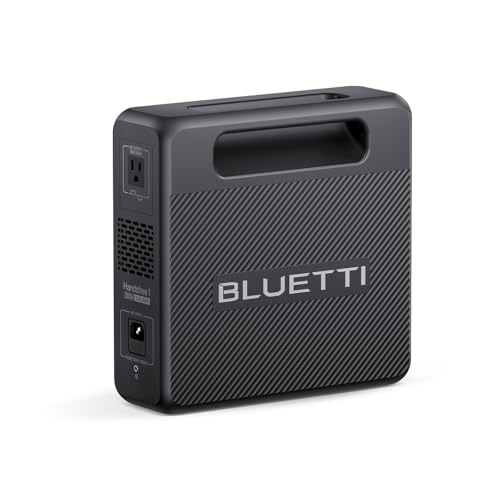
There is a particular kind of camper who treats every gram like a personal insult. For them, the BLUETTI Handsfree 1 is a near-perfect answer. At only 3.8 inches thick, it slides behind a car seat, tucks into a tent vestibule, or rides next to a drone case without forcing you to repack your whole kit. The 268Wh LFP cell delivers enough juice to top up phones, headlamps, and a camera multiple times over a long weekend.
Side-facing ports keep cables out of the way, which sounds small until you try changing a phone while the pack is wedged against a cooler. The trade-off is the 300W AC ceiling, which is fine for charging electronics but will not run a hair dryer or a full-size cooler compressor. Think of it as a power brick shaped like a paperback, not a generator. Photographers and ultralight hikers will find the footprint refreshing; anyone planning to run kitchen gear should look up the list.
The Helpful Details
- 3.8-inch thin profile slides into tight car and pack spaces.
- Side-mounted ports keep cables from snagging on nearby gear.
- LFP chemistry offers solid cycle life for a pack this small.
- Light enough to move between car, tent, and picnic table without thinking.
Small Caveats
- 300W output will not run high-draw appliances like a space heater.
- 268Wh is best for personal electronics rather than group cooking setups.
Made For
Solo campers and content creators who want a featherweight LFP pack for phones, cameras, and small drones.
Look Elsewhere When
The BLUETTI Solar Generator Handsfree 2 is the better fit if you want a bundled solar panel and more headroom at 512Wh.
Campers who also care about blackouts and road trips tend to want one unit that does both jobs. The BLUETTI Elite 200 V2 swings for that fence with 2073.6Wh of capacity and a 2600W continuous AC output, the kind of headroom that lets a microwave, coffee maker, or hair dryer run without tripping the unit. Power-lifting mode pushes higher peaks for short bursts, which is the kind of detail you only appreciate the first time a compressor kicks on.
Up to nine devices can run at once across the AC, USB, and DC banks, which keeps the campsite cable situation under control. Compared to the Jackery Battery Pack 2000 Plus earlier in this list, the Elite 200 V2 is a single self-contained box, no expansion base required. For RV travelers and homeowners crossing over from camping to emergency prep, the trade is worth it. The honest read is that the unit is heavy and loud under load, so it is more driveway-adjacent than backpack-friendly.
Positive Takeaways
- 2600W continuous output handles kitchen and workshop tools most packs cannot touch.
- 2073.6Wh capacity bridges a weekend blackout without a recharge.
- Power-lifting mode covers short compressor and motor surges.
- Nine simultaneous outputs reduce the need for power strips at the campsite.
Honest Caveats
- Acoustic output rises under heavy load, so quiet campsites will notice.
- The size and weight favor a vehicle trip over a walk-in site.
Who It Suits Best
RVers, tailgaters, and homeowners who want one station to cover both camping weekends and short outages.
A Better Fit Elsewhere
The Enphase IQ PowerPack 1500 is worth a look if UL 9540A safety certification and grid-interactive features matter more than raw wattage.
For shoppers who already run a BLUETTI power station, the B300K expansion is the long-haul play. The 2764.8Wh LiFePO4 pack is built around newer cells that hold capacity across at least 4,000 cycles to 80%, which is roughly a 15% jump over the prior generation in real-world longevity. Heat tolerance is also better, so the pack takes a warm truck cab or a sun-baked tent without throttling performance.
Backward and forward compatibility with AC200L, AC200MAX, AC300, AC500, and AC200PL hosts gives it unusual flexibility, since the same battery can move between stations as your setup evolves. Campers who treat their rig like a small cabin will appreciate the depth; weekend-only users may never push the unit hard enough to notice. It is also worth noting that this is an add-on, not a standalone power station, so budget for a host unit if you do not already own one.
A Few Strong Suits
- 2764.8Wh LiFePO4 cell bank delivers deep reserves for long off-grid stays.
- 4,000-cycle rating at 80% capacity suggests long service life under regular use.
- Improved high-temperature performance compared to older BLUETTI packs.
- Works across a wide range of current and future BLUETTI hosts.
Worth Bearing In Mind
- Requires a compatible BLUETTI host station, so it is not a standalone product.
- Weight makes it a vehicle-only accessory for most campers.
Right Fit For
Existing BLUETTI owners extending a working station into multi-day off-grid capacity without swapping systems.
Swap It Out When
The Jackery Battery Pack 2000 Plus 2042Wh LiFePO4 Expansion is the right answer for committed Jackery households.
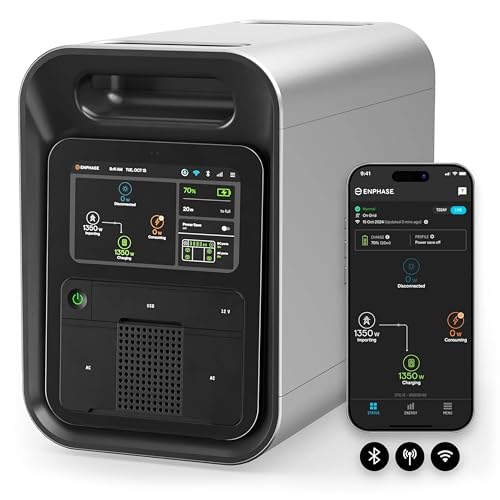
Enphase built its name in home solar, and the IQ PowerPack 1500 carries that engineering pedigree into the campsite. The unit pairs a 1500Wh LFP battery with IQ8 microinverters, the same inverter family the company ships in rooftop systems, and backs it with UL 9540A thermal-runaway certification plus UL 2743 outdoor use. For shoppers who care about the safety paperwork as much as the watt-hours, that combination is unusual in this category.
Eleven ports cover four AC outlets, four USB-A, two USB-C, and a 12V DC car port, so the pack handles everything from a laptop to a camp fridge in one go. Grid-to-backup switching under 10ms keeps computers and routers happy during a power blip at home, which is a feature the BLUETTI Elite 200 V2 earlier in this list does not match. You pay for the certification lineage, but you also get a station that plays nicely in a hybrid camping and home-backup role.
Notable Gains
- UL 9540A and UL 2743 certifications support indoor and outdoor placement.
- Sub-10ms grid-to-backup switching protects sensitive electronics at home.
- Eleven ports cover a wide range of devices without extra adapters.
- IQ8 microinverter pedigree ties it into Enphase’s wider solar ecosystem.
Practical Considerations
- 1500Wh sits below the 2kWh class, so heavy multi-day loads may need a recharge.
- Brand ecosystem is most rewarding for shoppers already using Enphase gear.
Key Specs
Who Should Grab It
Homeowners and hybrid campers who want a certified station that doubles as a brief blackout buffer and a campsite hub.
Reach For A Different Pick When
The BLUETTI Elite 200 V2 is the better match for shoppers chasing higher continuous output over safety certification.
First-time campers often walk away from the portable power aisle confused. The ZeroKor bundle solves that by packaging a 300W station with a 40W foldable panel, plus a separate 100W power pack, into one box. The 280Wh lithium-ion cell bank charges phones, tablets, and small accessories comfortably, while the included panel lets a beginner learn solar charging without buying extra parts.
Two pure sine wave AC outlets, a DC car port, and a row of USB-A and QC3.0 ports cover the basics, and the BMS (battery management system, the onboard circuitry that guards against overcurrent, overvoltage, and overheating) gives reasonable electrical safety for casual users. Compared to the BLUETTI Handsfree 1 covered earlier, capacity is similar but the package is more complete for someone starting from scratch. The honest read is that 300W total output is a real ceiling; it will not run a kettle, and ZeroKor recommends recharging any stored unit every couple of weeks to keep cells healthy.
What Works In Its Favor
- Starter bundle includes panel, station, and AC power pack in one purchase.
- Pure sine wave AC outputs protect sensitive electronics like laptops.
- Built-in BMS guards against common electrical faults during charging and use.
- Compact enough for a first car-camp or a backyard blackout kit.
Where It May Fall Short
- 300W station output will not run most kitchen appliances.
- Lithium-ion cell benefits from a periodic top-up when stored long-term.
Perfect Match For
First-time campers and casual weekenders who want one boxed kit to learn portable power without extra shopping.
Another Choice May Suit
The BLUETTI Solar Generator Handsfree 2 is a stronger fit for shoppers who want LFP chemistry and a 100W panel in a single box.
The Handsfree 2 takes everything the smaller Handsfree 1 introduced and stretches it into a more useful middle ground. The 512Wh LFP pack runs 700W through its AC inverter, enough for camera battery chargers, a laptop, and a small cooler fan at the same time, and the bundled 100W monocrystalline panel recharges the unit from zero to 80% in roughly four hours of decent sun. At 4.1 inches thick, it still earns the “thinnest” claim in its class.
Side ports, similar to the Handsfree 1, keep cables tucked, and the LFP chemistry suggests a long service life under regular cycling. Campers who want a single box that handles weekend trips and an occasional home outage will find the capacity sweet. For shoppers who need to run a microwave or a full-size cooler, the BLUETTI Elite 200 V2 earlier in this list is a better match. Most weekend users will not need that jump.
Practical Advantages
- 512Wh LFP capacity handles a full weekend of personal electronics with margin.
- 100W panel is included, no separate solar shopping required.
- Solar recharge from 0 to 80% in around 4.1 hours under good light.
- 4.1-inch profile slips into narrow car and pack spaces.
Possible Compromises
- 700W continuous output still cannot run high-draw kitchen gear.
- Bundled panel is efficient, yet a 200W+ panel would speed up recharges in winter.
Quick Facts
Whose Shelf It Belongs On
Weekend campers and van-lifers who want an LFP station with a panel included and no extra research.
Where A Sibling Pick Shines
The Enphase IQ PowerPack 1500 is the stronger call for shoppers who want UL safety certification alongside portable power.
Not every camping trip needs a power station the size of a milk crate. For phone-first travelers, the SOARAISE Solar Power Bank condenses 48000mAh of lithium-polymer capacity and four integrated charging cables into a backpack-friendly brick. The four built-in leads cover common device types, so there is no more digging for a forgotten Lightning or USB-C cable at the bottom of a duffel.
Four solar panels fold out from the body to grab direct sunlight, which is more of a slow trickle than a real refill on a 48000mAh cell, but it adds emergency top-up value on long trail days. Compared to the bigger stations earlier in this list, the obvious trade is output: this is a power bank, not an AC generator, and it will not run a laptop or a cooler. For day hikes and ultralight overnights where the goal is keeping a phone alive for navigation and photos, it earns its space.
The Case For It
- 48000mAh cell bank tops up a phone multiple times per charge.
- Four integrated cables remove the need to pack extras.
- Folding solar panel adds an emergency top-up option in daylight.
- Form factor slips into a daypack or a car glove box.
Worth Noting
- Solar panel is a slow top-up, not a fast recharge, so plan wall charging for full refills.
Built With In Mind
Hikers and phone-first travelers who want backup power for navigation and photos without carrying a power station.
Not Your Match When
The BLUETTI Handsfree 1 is the right call for shoppers who need a slim station with AC output for laptops or small appliances.
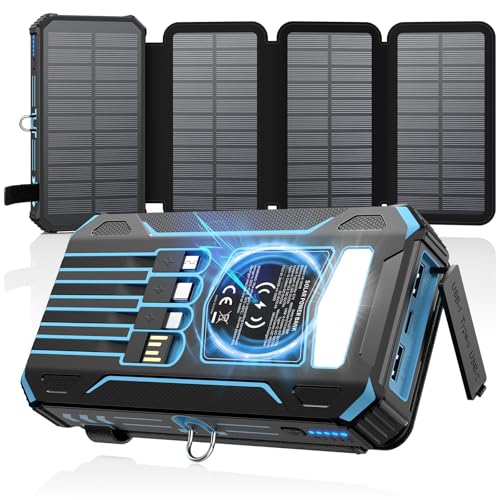
This SOARAISE variant focuses on the cable-light crowd. The 48000mAh lithium-polymer cell stays the same, the four integrated cables stay put, and the addition of Qi (the wireless charging standard used by most modern phones) wireless pad on top turns the pack into a campsite coaster for a phone. Drop the device on the lid and it tops up while you eat, plan a route, or mess with the tent.
The four folding solar panels still serve as a daylight trickle charger, and the unit is small enough for a hiking pack. Campers with newer phones that support wireless charging will appreciate the convenience, especially when juggling multiple devices at a picnic table. It is still a power bank, so AC loads are out of the question, and shoppers who want a small AC station should jump back to the BLUETTI Handsfree 1 covered earlier in this list.
Strong Points
- Qi wireless top-up removes a cable from a phone-first kit.
- 48000mAh cell bank covers multiple phone charges per cycle.
- Four integrated cables plus a wireless pad cover most device combos.
- Foldable solar panels add an emergency daytime refill option.
Things To Weigh
- Wireless charging is slower than a cable, so quick top-ups still need a lead.
The Right Fit
Campers who prefer to drop a phone on a pad rather than fumble with cables in low light.
Consider Something Else When
The ZeroKor 300W Solar Generator With Foldable 40W Panel makes more sense for first-time campers wanting an AC outlet.
Rounding out the list is another pocketable 48000mAh solar bank that combines four integrated cables with a wireless charging pad. The lithium-polymer cell carries the same capacity as the previous SOARAISE entries, and the foldable four-panel solar array offers a slow daylight top-up on trail days. It is essentially a sister product aimed at shoppers who want a slightly different feature mix or visual style.
Real-world value comes down to how often you camp with multiple devices that benefit from cables plus wireless in the same kit. The trade-off stays the same as the other power banks: useful for phone and small electronics, not a substitute for a true portable power station like the BLUETTI Handsfree 1 earlier. For day hikers, geocachers, and casual campers, that is exactly enough.
Noteworthy Benefits
- 48000mAh cell bank carries multiple device charges per cycle.
- Built-in cable set plus wireless pad covers most small electronics.
- Foldable solar panels add slow emergency top-ups in sunlight.
- Compact body fits a hiking pack without complaint.
Trade-Offs To Consider
- Solar refill is slow on a 48000mAh cell, so plan wall charging for full top-ups.
Feature Snapshot
Best Suited To
Trail hikers and day-trippers who want a single brick that covers phones, earbuds, and small accessories.
Where Another Pick Suits Better
The BLUETTI Handsfree 1 is a stronger pick for shoppers who want true AC output in a similarly portable shape.
Choosing Battery Packs For Camping Without Overbuying
Capacity is the headline number, but the more honest question is what you actually plan to run. A phone, a headlamp, and a small fan for a weekend fall in the 100 to 300Wh range, while a portable fridge, lights, and a laptop climb toward 1kWh. Most campers overshoot by 50% and end up hauling weight they never use, so a quick load list before you shop saves real effort at the trailhead.
Match The Chemistry To The Trip
LFP packs like the BLUETTI Handsfree 1 and the Enphase IQ PowerPack 1500 trade a little energy density for a much longer cycle life, which matters if you camp weekly. NMC and lithium-polymer cells in smaller power banks keep weight low for a phone-only trip, but they tend to age faster in storage. Pick the chemistry that matches how often you will cycle the pack, not just how light it feels on day one.
Think About Charging, Not Just Output
A 2000Wh pack is only useful if you can refill it. Solar input wattage, AC charge speed, and the ability to charge from a car all change how the pack behaves on a multi-day trip. Campers who rely on a small foldable panel should expect a slow refill, while owners of a 100W or larger panel can treat the sun as a real second battery. The faster the pack recharges, the more useful it becomes when weather rolls in.
Port Layout And Real-World Use
The port mix is where most buyers either succeed or regret. A 300W station is useless if it has only one AC outlet and your partner needs the other one, and a power bank with only USB-C leaves your older devices stranded. Match the ports to your actual devices, count the cables, and add one extra for the item you forget. Power banks with built-in cables, like the SOARAISE models in this list, quietly solve that problem for phone-first kits.
What To Watch Before You Buy
Common Slip Ups When Picking A Pack
The most common mistake is choosing capacity for the best-case scenario rather than the realistic one. A 2kWh pack sounds great until you remember that you mostly charge a phone and run a couple of lights, in which case a 300Wh station will do the same job at a fraction of the weight. The second slip is ignoring recharge time; a pack that takes two days to refill from solar is half a pack for half your trip.
Where The Extra Money Goes In Higher-Tier Models
Higher-tier models like the BLUETTI Elite 200 V2 and the Enphase IQ PowerPack 1500 earn their cost through longer cycle life, better safety certifications, and stronger AC output. You pay for chemistry, inverter quality, and the kind of build that survives a hard trip. The upgrade is worth it for campers who use a station every month, or who rely on it as part of a home backup plan. For occasional weekend use, a mid-tier LFP pack delivers most of the practical benefit at a friendlier weight and footprint.
Frequently Asked Questions
How Big Should A Camping Battery Pack Be?
A 200 to 500Wh pack covers most weekend phone, headlamp, and laptop top-ups, while 1kWh or more makes sense for portable fridges and longer trips. Match capacity to your realistic device list, not your worst-case day.
Is LFP Better Than Regular Lithium For Camping?
LFP (lithium iron phosphate) lasts more charge cycles and handles heat better, which suits frequent campers and warm climates. Standard lithium-ion and lithium-polymer cells stay lighter, so they fit phone-only kits where weight matters more than lifespan.
Can You Run A Portable Fridge On A Battery Pack?
Yes, a portable fridge runs on most 300W and larger stations, though smaller power banks with USB-only outputs cannot handle the AC load. Check the fridge’s wattage against the station’s continuous output before relying on it overnight.
How Long Does A Solar Panel Take To Refill A Pack?
A 100W panel typically refills a 500Wh pack in about four to six hours of strong sun, while a 40W panel takes a full day or more. Bigger panels and clear skies shorten the wait, cloudy weather stretches it out.
Are Solar Power Banks Worth It For Camping?
Solar power banks are useful for emergency top-ups and short day hikes, but their built-in panels are slow on larger cells. For real off-grid refills, a separate foldable panel paired with a power station works much better.
Wrap Up
The right battery pack depends on what you carry and how often you camp, and the gap between a 268Wh pocket unit and a 2000Wh basecamp station is bigger than the spec sheet suggests. Start with a real device list, then match capacity, chemistry, and port layout to that list, and the rest of the choice gets easier. Pick the unit that fits your trips, not the one that looks the most impressive on paper.