
Your lawn tractor has one job that matters most on a Saturday morning: fire up and mow. When the battery goes weak, the whole day stalls. Choosing a replacement isn’t just about fit, it’s about matching chemistry, cranking power, and lifespan to how you actually use your mower. This guide walks through seven solid options spanning lithium iron phosphate (LiFePO4) upgrades, classic AGM (Absorbent Glass Mat) lead-acid batteries, and platform-specific replacements for popular cordless systems, so you can match the right battery to your yard, your climate, and your engine.
The Main Contenders
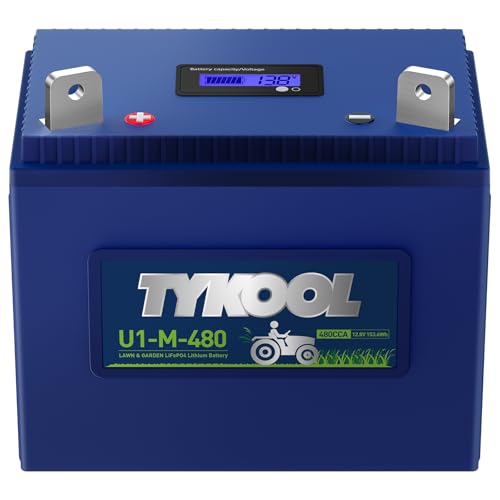
TYKOOL 480CCA Lithium LiFePO4 Lawn Mower Battery

Reoben 7.5Ah 56V EGO Replacement Battery & Charger Kit
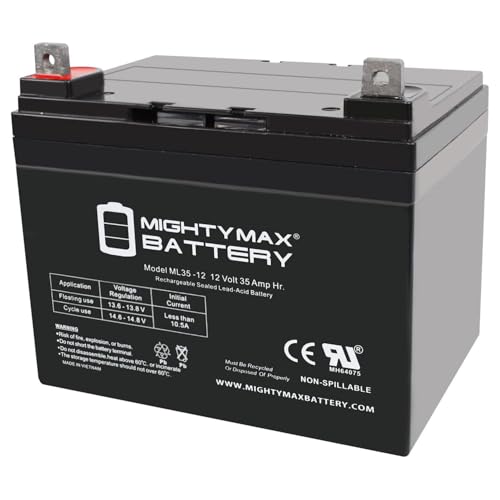
Mighty Max 12V 35Ah SLA Battery for John Deere Riding Mowers

UPLUS U1 12V 330CCA AGM Riding Lawn Mower Battery

BRS U1 12V 300CCA AGM Group U1 Battery

POWTREE 2-Pack 40V 7000mAh Ryobi Replacement Batteries

Renegade AGM Battery for Cub Cadet 725-17335
More On The Choices That Made The List
Lithium chemistry (specifically LiFePO4, a lithium iron phosphate formulation known for thermal stability and long cycle life) has quietly become the most interesting option for ride-on owners who want to stop babysitting their battery. The TYKOOL 480CCA Group U1 packs 480 cold cranking amps into a compact case that drops into the same tray as a stock U1 lead-acid unit, fitting popular John Deere, Cub Cadet, Craftsman, and Troy-Bilt tractors. Unlike the SLA (sealed lead-acid) batteries reviewed later in this list, this one is roughly a third of the weight, which translates to easier lifting and a slightly lighter front end on slopes.
For homeowners in cold climates, the 480A CCA rating is the headline number. Higher CCA means more available cranking power at low temperatures, so a 25-degree spring morning is less likely to end with a weak click and a jump pack. The 12Ah capacity (amp-hours, a measure of how much current a battery can deliver over time) supports accessories like headlights and electric PTO clutches without dropping voltage mid-mow, and owners commonly report noticeably stronger starts compared to old lead-acid cells.
Reasons It Performs
- 480 cold cranking amps handle cold-weather starts that leave lead-acid batteries gasping.
- LiFePO4 chemistry typically delivers thousands of charge cycles, so seasonal use adds up over years rather than months.
- About one-third the weight of a comparable lead-acid U1, which makes installation easier on the back.
- Sealed construction means no acid spills, no corrosion on the tray, and no water-topping routine.
- Wide compatibility list covers the most common residential tractor brands in one part number.
Things To Consider
- Some older tractors built around lead-acid voltage profiles may need a charging check before upgrading.
- LiFePO4 carries a higher upfront cost than the AGM (Absorbent Glass Mat, a sealed lead-acid design using fiberglass matting to hold electrolyte) options reviewed below.
- Cold-weather performance is strong, but very long storage below freezing can still sap capacity over a winter.
Feature Snapshot
Who Will Love This
Ride-on owners in cold or changeable climates who want a set-it-and-forget-it upgrade and don’t mind paying more for longer service life.
Swap It Out When
Budget-focused shoppers should look at the Mighty Max 12V 35Ah, which delivers solid cranking power at a lower entry cost.
The Reoben 7.5Ah 56V kit is built for a different category entirely: cordless 56-volt platforms made by EGO. If you run an EGO mower, leaf blower, or chainsaw and you’ve noticed the original packs losing punch, this replacement slides into the same charger ecosystem and works across the BA2800, BA1400, BA2800T, BA1400T, and BA4200T battery family. The included charger compatibility (CH2100, CH7000, CH2800D, CH5500) means you can keep using your existing dock.
The 7.5Ah upgrade over stock 5Ah packs is the real story here. Larger amp-hours stretch runtime for mid-size lawns where a single charge used to leave you halfway done, and the higher capacity also tends to deliver stronger sustained torque under load, which matters when grass gets tall or damp. Owners with multiple EGO tools often rotate this pack between machines to keep working without waiting on a charge.
Useful Strengths
- Higher 7.5Ah capacity than many factory EGO packs for longer mowing sessions.
- Broad tool compatibility across EGO mowers, blowers, and chainsaws in the 56V lineup.
- Charger kit included means one purchase covers pack and dock in a single box.
- Lithium-ion cells hold charge well during off-season storage in a garage.
Trade Offs
- Only fits EGO 56V tools, so it’s a system-specific pick rather than a universal replacement.
- Third-party cells won’t always match OEM (original equipment manufacturer) firmware behavior on smart chargers.
- Heavier than smaller 2.5Ah packs, which adds wrist fatigue during extended handheld use.
Perfect Match For
Existing EGO 56V owners who want more runtime per charge and a backup pack to rotate during longer yard sessions.
Look Elsewhere When
Ryobi 40V users should skip ahead to the POWTREE 2-Pack, which targets their platform directly.
The Mighty Max 12V 35Ah is the classic SLA (sealed lead-acid, a maintenance-free battery type where the electrolyte is suspended in gel or absorbed in mats) replacement for John Deere riding mowers in the 108 family and similar compact tractors. With a 35Ah capacity rating, it’s the largest sealed lead-acid in this roundup by a wide margin, which translates into plenty of reserve power for headlights, hour meters, and electric blade engagement without dipping below the voltage your starter needs.
What’s nice about this battery for budget-focused owners is the combination of a 7.76 by 5.12 by 7.01 inch footprint that fits where many OEM John Deere batteries sit, plus a spill-proof AGM-style construction. No water top-offs, no acid drips on the garage floor. The listing ships the battery and terminal screws only, so plan on reusing your existing hardware or grabbing new bolts if the old ones are corroded.
The Value In It
- 35Ah capacity gives ample reserve for accessory-heavy tractor setups.
- Sealed AGM-style construction keeps the garage clean and the install simple.
- Compact dimensions fit John Deere 108-series and similar compact riding mower trays.
- Lower entry price than lithium options for budget-minded shoppers.
Softer Spots
- Heavier than lithium alternatives at the same voltage, which matters for hood-lift tractors.
- No wire harness or mounting accessories in the box, so reuse or source separately.
- Shorter cycle life than LiFePO4, typically a few seasons under regular use.
Best Suited To
Owners of older John Deere 108-series tractors who want a straightforward, wallet-friendly replacement and aren’t chasing long-term cycle counts.
Consider Something Else When
Cold-climate riders chasing maximum cranking amps should consider the TYKOOL 480CCA at pick one.
Where the Mighty Max targets a specific John Deere model, the UPLUS U1 swings wide. This Group U1 AGM battery lists compatibility with John Deere, Cub Cadet, Husqvarna, Craftsman, Toro, Ariens, Poulan Pro, and Troy-Bilt, which covers the bulk of residential tractors on suburban driveways. The 330A CCA rating sits comfortably in the middle of the roundup, enough for most spring starts without overpaying for extreme cold-weather cranking.
Maintenance-free ownership is the big lifestyle pitch here. There’s no distilled water to top off, no acid level to check before each mowing season, and the sealed case won’t corrode the hold-down bracket. At 7.68 by 4.92 by 6.93 inches, it’s a clean Group U1 fit, and the terminal layout (positive on the left, negative on the right when facing the front) matches most OEM tractor wiring.
Bright Spots
- Maintenance-free AGM construction means no seasonal water top-ups.
- Brand-agnostic compatibility covers most popular residential tractor lines.
- Sealed case resists vibration damage on rough or hilly terrain.
- Reasonable mid-range price for a sealed AGM with broad fitment.
Points To Keep In Mind
- 330 CCA is solid but not class-leading for very cold northern winters.
- Heavier than lithium at roughly 15 pounds, which adds up on small tractors.
- Lower amp-hour capacity than the Mighty Max, so accessory loads drain it faster.
Feature Snapshot
Made For
Homeowners with multiple tractor brands in the family or those switching between machines who want one part number on the shelf.
Where Another Pick Suits Better
EGO cordless mower owners will find the Reoben 7.5Ah kit at pick two a much closer fit.
The BRS U1 is the most “set it and forget it” AGM on the list, advertised as arriving fully charged and ready to install. That convenience factor matters for anyone whose old battery died mid-mow and just wants the swap done before the next weekend. The 300 CCA and 375 CA (cranking amps, measured at a less demanding 32°F reference than CCA) ratings suggest the cell is tuned more for cold-climate cranking bursts than deep accessory loads.
Beyond mowers, the BRS U1 also fits UTVs, ATVs, and small generators, which makes it appealing for rural properties running mixed small-engine equipment. Vibration resistance is the underrated detail here: rough trails and bumpy pasture paths wear out standard batteries faster, and AGM construction handles that punishment better than flooded cells.
Well-Handled Touches
- Arrives fully charged for immediate installation and first start.
- Sealed AGM design holds up against vibration on rough terrain and trails.
- Cold-weather ready with 300 CCA for confident cold starts.
- Multi-use fitment covers mowers, UTVs, ATVs, and small generators.
Minor Gripes
- 300 CCA trails the UPLUS and TYKOOL options for extreme cold performance.
- Heavier than lithium packs at the same 12V rating.
- Capacity not as high as the Mighty Max, so heavy accessory use drains it quicker.
The Right Fit
Rural property owners who run a mix of mowers, UTVs, and small generators from one battery shelf.
Not Your Match When
Ryobi 40V cordless mower shoppers should pivot to the POWTREE 2-Pack, which targets their specific platform.
If you’ve gone cordless with a Ryobi 40V mower, runtime is the bottleneck. The POWTREE 2-Pack answers that problem with two 7000mAh lithium-ion packs, which roughly translates to more cutting time per charge than the stock 4Ah or 5Ah packs that ship with most RY40200 and RY40400 mowers. Having two packs in the box also lets you rotate: one in the mower, one on the charger, so a half-acre yard doesn’t turn into a charging-cycle waiting game.
Compatibility is broad within the Ryobi 40V family, covering the OP4026A, OP4015, OP40602, OP40261, OP40401, OP40601, OP4050A, and related model numbers, and the same packs work with OP400, OP400A, OP403, OP404, and OP404A chargers. That makes the kit a useful spare set for households running a string trimmer, blower, or chainsaw on the same 40V platform.
Benefits That Matter
- Two-pack format doubles effective runtime for larger yards.
- 7000mAh capacity exceeds many factory Ryobi 40V packs for longer mowing sessions.
- Wide compatibility across the Ryobi 40V tool and charger lineup.
- Lithium-ion cells hold charge during off-season garage storage.
Room For Improvement
- Only fits Ryobi 40V tools, so it’s a system-specific purchase.
- Third-party cells may not trigger the same fuel-gauge accuracy as OEM packs.
- Charging two large packs sequentially takes patience if you only own one charger.
Whose Shelf It Belongs On
Ryobi 40V owners with mid-size to large lawns who want continuous runtime without buying a second OEM battery.
A Better Fit Elsewhere
EGO 56V cordless tool owners will get more mileage from the Reoben kit at pick two.
The Renegade battery is the most model-specific pick in this lineup, designed as a direct replacement for Cub Cadet part number 725-17335 (also cross-referenced as 725P17335). At 12V and 12Ah in a compact 5 7/8 by 3 3/8 by 4 1/4 inch case, it’s a small-format AGM that slides into the tight battery compartments of specific Cub Cadet riding mowers and zero-turn units. Owners of the matching models get a factory-style fit without modification.
The 300 CCA output and impact-resistant case suggest a battery engineered for the vibration and bumps common in residential mowing. Because the dimensions are locked to OEM specs, you don’t need to shim, modify, or rework the tray. Owners commonly appreciate that it arrives ready to drop in and connect.
Positive Takeaways
- OEM-matched dimensions for Cub Cadet 725-17335 compartments.
- Impact-resistant case holds up against vibration and rough terrain.
- Sealed AGM construction is maintenance-free from day one.
- 300 CCA delivers reliable cold-weather starting.
Practical Considerations
- Limited compatibility: only fits specific Cub Cadet models using the 725-17335 form factor.
- Lower 12Ah capacity than larger U1 batteries, so accessory loads drain it faster.
- Higher per-amp-hour cost due to the small, specialized form factor.
Feature Snapshot
Who Should Grab It
Cub Cadet owners with a model using the 725-17335 battery who want a no-modification replacement that drops in cleanly.
Reach For A Different Pick When
Multi-brand households with different tractor brands should look at the UPLUS U1 at pick four for broader fitment.
What To Weigh Before Choosing Battery For Lawn Tractor
The first decision is chemistry. LiFePO4 batteries like the TYKOOL at pick one cost more up front but last years longer and weigh much less than SLA (sealed lead-acid) alternatives. AGM batteries such as the UPLUS, BRS, Mighty Max, and Renegade models sit in the middle: sealed, maintenance-free, heavier than lithium, and shorter-lived, but easier on the budget.
Cold cranking amps (CCA) matter most in northern climates. Anything above 300 CCA handles typical spring starts; 400+ is safer for sub-freezing mornings. Group size (U1 versus smaller Cub Cadet-specific cases) determines whether the battery physically fits your tray, so measure the old battery before ordering. For cordless platforms, capacity in amp-hours (Ah) or milliamp-hours (mAh) drives runtime, and buying a two-pack like the POWTREE often costs less per cell than a single OEM spare.
Key Considerations Across These Picks
Mistakes Worth Dodging
The most common slip is choosing a battery by CCA alone. Capacity and terminal layout matter just as much for accessory-heavy tractors. Another trap is assuming a “fits all” U1 will drop into a smaller Cub Cadet compartment, since some compact models use a shorter case like the Renegade’s. Always match the OEM part number before trusting a cross-reference list.
When Paying More Pays Off
Spending more on LiFePO4 chemistry earns its keep through multi-season cycle life and weight savings, which matters for anyone lifting the battery in and out for winter storage. Premium AGM pricing also brings stronger vibration resistance, useful on rough acreage or hilly lots where cheaper cells crack plates faster.