
You head out to a quiet campsite, plug in the coffee maker, and watch the battery bar sit at 100% before sunset. That’s the dream a solid camping power bank delivers, replacing the scavenger hunt for an outlet at the RV park. After comparing the spec sheets, expansion options, and charging behavior of nine popular portable options, this roundup narrows the field by use case, runtime needs, and pack weight. The list includes high-capacity home backup units, mid-size weekend power stations, and slim solar banks for backpackers.
The Leading Options At A Glance

BLUETTI Elite 200 V2 Portable Power Station 2073.6Wh

EF ECOFLOW Delta 3 Portable Power Station 1024Wh

GENDOME 288Wh LiFePO4 Battery Pack for Starlink Mini

BLUETTI AC200L Portable Power Station 2048Wh LiFePO4

GENDOME 288Wh 90000mAh StarLink Mini Power Station

SOARAISE Solar Power Bank 48000mAh with 4 Cables
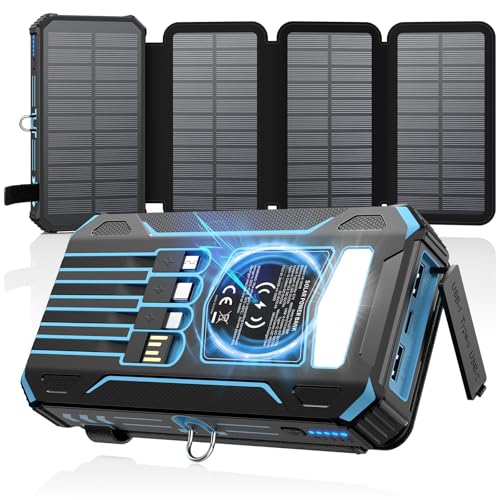
SOARAISE Solar Power Bank 48000mAh Wireless Battery Pack

SOARAISE 48000mAh Solar Power Bank with 4 Cables

EF ECOFLOW River 3 Plus Extra Battery EB600
What Each Pick Brings To The Table
For crews running a full campsite kitchen or a tailgate setup, the BLUETTI Elite 200 V2 sits in a category of its own. Its 2073.6Wh capacity translates into multi-day runtime for fridges, lights, and small cooking appliances, far beyond what a weekend power station like the EF ECOFLOW Delta 3 delivers.
Continuous 2600W AC output handles high-draw devices without flinching, and expansion batteries extend total storage for longer trips. You trade portability for capability here, since the unit weighs more than mid-size stations, so vehicle-based setups suit it best.
Benefits That Matter
- 2073.6Wh capacity runs a 50W portable fridge for roughly 30+ hours between charges
- 2600W continuous output supports power tools, microwaves, and coffee makers
- Multiple output ports charge phones, laptops, and AC gear at the same time
- LiFePO4 (lithium iron phosphate) cell chemistry holds up to thousands of charge cycles
Things To Weigh Up
- Heavier than mid-size stations, so backpackers will want a smaller option
- Full recharge times stretch longer than the EF ECOFLOW Delta 3’s quick-charge cycle
Who It Suits Best
Group campers, RV owners, and anyone running a small fridge plus lighting for a long weekend.
Skip It When
Backpackers should consider the SOARAISE 48000mAh Solar Power Bank instead, since the BLUETTI’s weight rules out trail use.
The EF ECOFLOW Delta 3 hits a sweet spot between capacity and weight that most weekend campers will appreciate. At 1024Wh with 1800W output, it covers phones, laptops, lights, a small cooler, and even a travel kettle, all in a portable form factor.
Where it really pulls ahead is recharge speed, hitting meaningful levels quickly when you stop at a campground with AC power. Expansion to 5kWh with extra battery packs means it grows with your trip length, a flexibility the GENDOME Starlink Mini units do not offer.
Practical Advantages
- 1024Wh capacity suits two to three days of moderate device use
- 1800W continuous output handles most small kitchen appliances
- Expandable to 5kWh using EcoFlow’s battery ecosystem for longer trips
- Quick AC recharge cuts downtime between stops
Honest Caveats
- Not designed for high-draw appliances like hair dryers on full power
- Sold separately from expansion batteries, raising total cost for the full system
Right Fit For
Weekend car campers and overlanders who want a balance of capacity, port variety, and quick top-ups between stops.
Not Your Match When
You should reach for the BLUETTI Elite 200 V2 instead if running a fridge and microwave together is part of your routine.
The StarGrid unit solves one specific problem beautifully: keeping a Starlink Mini dish online in the field. With 288Wh of LiFePO4 capacity, it powers the dish for up to 8 hours of runtime, enough for a workday of remote work from a remote site.
Unlike the SOARAISE solar banks that prioritize phone charging, this unit integrates a built-in stand, so the dish sits at the correct angle without rigging a separate tripod. Owners should expect solar and car charging support, but it is purpose-built rather than general-purpose.
Real Benefits
- 288Wh capacity extends Starlink Mini runtime to roughly 8 hours per charge
- LiFePO4 chemistry lasts through many charge cycles
- Integrated stand eliminates the need for a separate tripod setup
Points To Note
- Narrow use case: optimized for Starlink Mini rather than general household devices
- Limited output ports compared with full power stations like the Delta 3
Who Should Grab It
Digital nomads and remote-work campers who depend on Starlink Mini connectivity at off-grid sites.
Another Choice May Suit
You should look at the EF ECOFLOW Delta 3 if you need broader device support beyond just keeping a dish online.
The BLUETTI AC200L sits in a similar class to the Elite 200 V2, but trades a bit of capacity for stronger expandability. With a 2048Wh base and 2400W of continuous AC output, it covers a full campsite setup including small cooking gear and a cooler.
Modular expansion using BLUETTI’s B-series batteries scales the system to over 8kWh, which beats the EF ECOFLOW Delta 3’s 5kWh ceiling. For long basecamps where you want one rig that grows, this versatility is hard to match.
Notable Gains
- 2048Wh base capacity covers a full weekend for most moderate-use families
- 2400W output runs microwaves, kettles, and power tools without tripping
- Expansion to 8192Wh through modular battery packs for long-term off-grid living
- LiFePO4 cell chemistry supports thousands of cycles for frequent campers
Trade-Offs
- Expansion batteries add significant cost and storage space
- Heavier than smaller units, so it suits vehicle-based trips rather than backpacking
Best Suited To
Long-stay basecampers, RV owners, and anyone building a system that scales over time.
Where Another Pick Suits Better
You may want the EF ECOFLOW Delta 3 if portability matters more than maximum capacity.
Key Specs
This GENDOME kit is the more complete take on the StarGrid concept, bundling a custom-fit carrying case alongside the 288Wh battery. Where the previous GENDOME unit focuses on the battery itself, this version targets the full travel setup.
The included DC cable and DC-to-USB-C cable cover most charging scenarios without buying extras, and the custom case protects the dish plus battery during transit. It is purpose-built, so the trade-off is limited flexibility outside Starlink Mini use.
Well-Handled Touches
- 288Wh / 90000mAh capacity delivers up to 8 hours of Starlink Mini runtime
- Custom carry case keeps dish and battery organized in transit
- LiFePO4 chemistry ensures long service life across many trips
Room For Improvement
- Specialized for Starlink Mini, with limited utility for other high-draw devices
- Capacity falls well short of the BLUETTI AC200L for campsite-level power
Made For
Remote-work travelers who need a self-contained Starlink Mini kit ready to deploy at any campsite.
Consider Something Else When
You should consider the GENDOME 288Wh unit (item 3) if you already own a protective case and want to save on the bundled accessories.
For backpackers and casual campers who only need to keep phones and small devices alive, the SOARAISE 48000mAh solar bank delivers a lot of convenience in a small package. Four built-in cables cover most phone and tablet connectors, and a wireless charging pad sits on top for compatible devices.
Capacity here is modest compared with the BLUETTI Elite 200 V2, but the trade-off is weight and cost, both dramatically lower. You sacrifice the ability to run appliances, yet gain a tool that fits in a daypack.
A Few Highlights
- 48000mAh capacity charges a phone multiple times per trip
- Four built-in cables reduce the need to pack extras
- Wireless charging pad on top works with Qi-compatible phones
- Lightweight enough for backpacking and day hiking
Softer Spots
- Solar charging is slow, so plan to top up at outlets when available
- Cannot power AC appliances like a portable fridge or kettle
Perfect Match For
Backpackers and day hikers who want to keep phones, headlamps, and small electronics topped up.
Look Elsewhere When
You should reach for the BLUETTI AC200L if running any AC appliance is part of your trip plan.
Key Specs
This SOARAISE variant follows the same playbook as the previous pick, with a 48000mAh lithium-polymer core, four foldable solar panels, and a wireless charging surface. The form factor leans toward users who expect to spend days off-grid relying on the sun for trickle charging.
Versus the GENDOME StarLink Mini units, this is a general-purpose option for any camper, not a specialty solution. It will not replace a power station, yet it covers the basics for ultralight trips.
Everyday Perks
- 48000mAh capacity supports multiple phone and small-device recharges
- Four high-efficiency solar panels fold out for direct sun charging
- Wireless charging pad simplifies phone top-ups in camp
Practical Considerations
- Solar input is slow, so wall charging is the practical main route
- Bulkier than a plain power bank of similar capacity
Whose Shelf It Belongs On
Multi-day hikers and minimalist campers who want solar backup alongside standard charging.
A Better Fit Elsewhere
You should consider the SOARAISE 48000mAh with 4 cables (item 6) if wireless charging matters less than the lowest-possible cost.
The third SOARAISE entry in this roundup brings the same 48000mAh capacity with all four cable types integrated, removing the need to pack extras. It is essentially a sibling to the other two SOARAISE units, differentiated mostly by branding and minor feature emphasis.
For group trips where everyone carries a different phone type, the built-in cable approach saves real hassle. The unit still relies on slow solar input, so realistic owners should plan to charge via wall outlet before leaving home.
Noteworthy Benefits
- All four major cable types built in, so no extra accessories needed
- Wireless pad supports cable-free phone top-ups
- Compatible with most modern phones and small USB-C devices
Worth Noting
- Solar charging speeds are slow and depend heavily on direct sunlight
- Cannot power any AC appliance
Built With In Mind
Group campers and family trips where multiple device types need charging at once.
Reach For A Different Pick When
You should grab the EF ECOFLOW Delta 3 if any of your devices need AC power or fast recharging.
The EF ECOFLOW River 3 Plus Extra Battery EB600 is not a standalone power station, it is an add-on that slots into the River 3 Plus ecosystem. Once stacked, total capacity climbs to 858Wh, useful for camping trips that outgrew the original unit.
Owners commonly appreciate the simple pogo-pin connection, which avoids extra cables and screws. For someone who already runs an EcoFlow setup, this is the logical next step. For anyone else, the BLUETTI AC200L offers more out of the box.
The Good Stuff
- 572Wh of extra storage brings the River 3 Plus system to 858Wh total
- Pogo-pin connection stacks the unit without extra cables or screws
- Can be used independently for light loads on shorter trips
A Few Limitations
- Requires the River 3 Plus base unit to function in stacked mode
- Less useful for shoppers who do not already own the matching EcoFlow station
The Right Fit
Current EcoFlow River 3 Plus owners looking to extend runtime for longer trips.
Where A Sibling Pick Shines
You should start with the EF ECOFLOW Delta 3 if you are buying a complete new system rather than expanding an existing one.
Key Specs
Matching Capacity To Your Camp Style
A camping power bank earns its keep when its capacity matches your real draw. The 288Wh Starlink Mini packs handle a single dish for a workday, while the 1024Wh Delta 3 covers a long weekend of mixed device use. The 2048Wh and 2073.6Wh units run fridges and small cooking gear, which is overkill for backpackers but ideal for RV basecamps.
Runtime And Recharge Behavior
Look at two numbers, capacity in Wh and output in W, and divide the first by the second to estimate load. A 100W fridge on the BLUETTI Elite 200 V2 runs roughly 20 hours. Recharge speed matters as much as capacity when you are back at a campground with AC, and the Delta 3’s fast-charge cycle is a real advantage on shorter trips.
Portability Versus Output
Weight grows fast with capacity, so honest packing decisions start with vehicle size. The SOARAISE solar banks fit a backpack, the GENDOME kits ride in a duffel, and the BLUETTI heavyweights stay in the trunk. Higher continuous output (2600W on the Elite 200 V2) handles appliances a 1800W station cannot.
Expansion And Long-Term Value
Modular systems like the BLUETTI AC200L and the EcoFlow Delta 3 grow with your needs, spreading cost over years. Owners who camp only occasionally should weigh whether expansion is genuinely needed, since a single well-sized unit often does the job for less.
Common Ground Worth Knowing
Mistakes Worth Dodging
Sizing by mAh alone leads to under-spec’d picks, since voltage differs across banks. A 48000mAh lithium-polymer pack stores far less usable energy than a 1024Wh station. Buyers also forget to check port types before packing, and showing up with no AC outlet for a kettle is a familiar trip-ruiner.
What The Higher Tier Buys
The premium tier earns its price through LiFePO4 chemistry, high continuous output, and expansion options. If your trips are short and your device list is light, a budget SOARAISE bank is the practical call. For multi-day basecamps running real appliances, the higher output and larger capacity of the BLUETTI units justify the step up.
Frequently Asked Questions
How Long Will A 1000Wh Power Station Run A Camping Fridge?
A typical 50W camping fridge draws about 1200Wh per day, so a 1000Wh station covers roughly 18 to 20 hours. For a full day plus overnight runtime, a 1500Wh or larger unit like the BLUETTI AC200L is a safer pick.
Are Solar Panels Reliable For Recharging Battery Banks While Camping?
Solar trickle charging works for phones and small power banks, but for larger stations, panel output rarely matches AC charging speed. For most campers, solar supplements rather than replaces wall recharging between campground stops.
Is LiFePO4 Better Than Standard Lithium-Ion For Camping Use?
LiFePO4 (lithium iron phosphate) cells typically last several times longer in charge cycles, which matters for frequent campers. The trade-off is usually slightly higher cost and weight compared to standard lithium-ion packs.
Can I Take A Portable Power Station On A Plane?
Power stations above 100Wh are generally not allowed in carry-on or checked luggage. The SOARAISE 48000mAh bank sits right around airline limits for personal batteries, but larger units like the BLUETTI Elite 200 V2 must travel by ground or ship.
Do I Need A Pure Sine Wave Inverter For Sensitive Electronics?
Phones, laptops, and modern electronics work fine on most quality power station outputs. If you plan to run medical devices or specialty audio gear, verify the station specifies pure sine wave output before relying on it in the field.
Closing Remarks
The right pick comes down to your trip length, your device list, and how much weight you want to carry. Backpackers get the most from a SOARAISE solar bank, weekend campers thrive with the EF ECOFLOW Delta 3, and long-stay basecamps benefit most from a BLUETTI expandable unit. Match the station to the trip, and the rest of the camping power puzzle tends to fall into place.