
Battery backpack blowers turn a brutal cleanup into a quick sweep, especially when your driveway collects a season’s worth of leaves and your shoulders would rather not pay for it. The cordless category has matured into serious yard equipment, with brushless motors (motors that use electronic controllers rather than carbon brushes, lasting longer and running more efficiently) and backpack harnesses that finally feel like a real tool. This guide rounds up ten picks spanning cordless leaf blowers, gas-powered backpack models, and a few backpack sprayers that share the same battery-backpack form factor worth knowing about.
Your Options, Compared
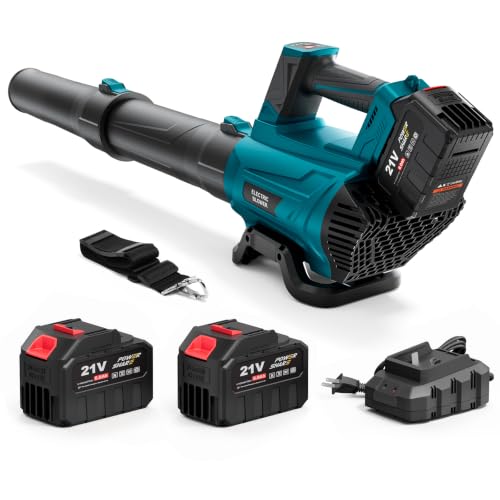
RAXONE 650 CFM Cordless Leaf Blower with 2 Batteries

Makita XBU02PT1 36V Brushless Blower Kit

EGO 530 CFM Cordless Blower (Renewed)

EARTHCRAFT 2.6 Gal Backpack Sprayer for DeWalt 20V

EARTHCRAFT 4.2 Gal Backpack Sprayer for DeWalt 20V

EARTHCRAFT 5.3 Gal Backpack Sprayer with Mixing System

VEVOR 63CC Gas Backpack Leaf Blower 1110 CFM

DEKOPRO 650 CFM Cordless Leaf Blower with 2 Batteries

VEVOR 52CC Gas Backpack Leaf Blower 480 CFM

VEVOR 26CC Gas Handheld Leaf Blower 425 CFM
More Details On Our Top Picks
The RAXONE 650 CFM lands at the top of the cordless category for a reason: it pairs a serious 280 MPH top-end wind speed (a measure of how fast air exits the nozzle, with higher numbers meaning leaves move quicker) with two 6.0Ah batteries in the box, so you can swap and keep working without waiting on a charge. The five adjustable speed levels matter most when you move from a delicate flower bed to a leaf-choked driveway, and the turbo boost gives you a quick burst when wet leaves refuse to budge. Compared to the handheld EGO you’ll see later, this one leans into sustained yard work rather than quick spot clearing.
For homeowners with a half-acre lot or larger, the runtime math starts to make sense. Two batteries effectively double your uptime, and owners commonly report the unit feels balanced enough to run with the included harness for a full Saturday sweep. The trade-off sits in the weight: two batteries add heft, so this is less ideal for anyone who wants a featherweight grab-and-go tool.
What Pays Off
- Two 6.0Ah batteries in the kit mean uninterrupted cleanup on larger properties.
- Turbo boost mode handles stubborn wet leaves that stall lower-tier cordless blowers.
- Five speed settings protect delicate plants when you’re working near flower beds.
- Brushless motor design extends runtime per charge and lengthens motor life.
Worth Noting
- Twin batteries make the rig heavier than single-battery handheld alternatives.
- Cordless runtime still trails gas, so a full-acre cleanup may require a charging break.
Whose Yard It Belongs On
Homeowners with mid-to-large suburban lots who want cordless convenience without sacrificing serious airflow.
Reach For A Different Pick When
Step down to the DEKOPRO 650 CFM Cordless Leaf Blower if you want a lighter rig for quick patio sweeps and don’t need the twin-battery endurance.
The Makita XBU02PT1 brings contractor-grade thinking to the cordless category, running two 18V LXT batteries in series for 36V of total output, a configuration that mimics the voltage of older corded tools without the cord. Four 5.0Ah batteries ship in the kit, which is enough to keep a working day moving without a charger nearby. The brushless motor keeps noise and vibration lower than the gas units you’ll see in this roundup, a real comfort on a long-haul Saturday.
The catch is the upfront cost and the fact that the strongest payoff comes if you’re already inside the Makita 18V ecosystem. For pros and dedicated homeowners with multiple Makita tools, the batteries cross over. For someone buying their first cordless outdoor tool, the kit pricing may feel steeper than it needs to be.
Good Reasons To Consider
- Four batteries in the box virtually eliminate downtime for daily users.
- Brushless motor extends runtime and reduces wear compared to brushed alternatives.
- Quieter than the VEVOR gas models, helpful in noise-sensitive neighborhoods.
- Cross-compatible with the wider Makita 18V LXT battery family.
Trade Offs
- Higher upfront cost than most cordless kits because four batteries ship together.
- Heavier than a single-battery handheld when both packs are loaded.
Key Specs
The Right Fit
Contractors, landscapers, and homeowners already invested in the Makita 18V platform who need reliable daily performance.
A Better Fit Elsewhere
Consider the VEVOR 63CC Gas Backpack Leaf Blower if you need maximum airflow for snow clearing and don’t mind gas maintenance.
This renewed EGO Power+ blower targets shoppers who want the brand’s reputation at a lower tier than a brand-new unit. The 530 CFM airflow and 110 MPH top speed put it in a useful range, and the variable-speed trigger with a turbo button lets you match output to the mess. Battery and charger ship separately, which keeps the listing price lower but means factoring in the cost of an EGO 56V pack if you don’t already own one.
The “renewed” label is worth understanding: these are inspected units, often with cosmetic blemishes but full functional performance. For an EGO owner expanding their tool stable, that’s a comfortable trade. For a first-time cordless shopper, it adds a layer of uncertainty that a fresh-in-box unit avoids.
What Helps Most
- Lower entry cost for shoppers who want EGO-grade engineering.
- Variable-speed trigger and turbo boost handle both delicate and heavy debris.
- Compatible with the existing EGO 56V battery ecosystem.
Points To Keep In Mind
- Battery and charger are not included, so total ownership cost climbs quickly.
- Renewed status means cosmetic wear and a less predictable unboxing experience.
Built With In Mind
Existing EGO 56V owners who want a second blower without paying new-unit pricing for the tool body.
Swap It Out When
Pick the RAXONE 650 CFM Cordless Leaf Blower instead if you need batteries included and prefer the certainty of a fresh unit.
Stepping away from blowers, the EARTHCRAFT 2.6-gallon backpack sprayer rounds out this list because backpack-form power tools share the same DNA: a battery-powered motor on a wearable frame, made for sustained yard work. This unit mounts to a DeWalt 20V battery (sold separately), so it slips into a tool shed already stocked with DeWalt 20V/20V Max packs. The 2.6-gallon tank suits smaller lawns, flower beds, and spot treatments, where hauling a four-gallon tank would be overkill.
The built-in agitation system (a mechanism that keeps liquid fertilizer or weed control mixed inside the tank so it doesn’t settle) helps when you’re spraying solutions that would otherwise separate in the tank. Low-voltage protection on the battery side is a thoughtful touch, preventing the kind of deep discharge that shortens battery life. Owners commonly note that the padded straps make a meaningful difference over a full tank.
Strengths Worth Knowing
- Compact 2.6-gallon tank keeps the loaded weight manageable for smaller frames.
- Built-in agitation prevents settling of mixed solutions during longer spray sessions.
- Low-voltage cutoff protects your DeWalt battery from harmful deep discharge.
- Padded harness reduces shoulder fatigue over a full property pass.
Small Caveats
- DeWalt 20V battery not included, so factor that into your total budget.
- Smaller tank means more frequent refills on larger properties.
Made For
DeWalt 20V owners with small-to-medium lawns who want cordless spraying without hauling a heavy four-gallon rig.
Look Elsewhere When
Move up to the EARTHCRAFT 5.3 Gal Backpack Sprayer with Mixing System if your property regularly needs full-gallon refills, since the larger tank cuts down on trips to the spigot.
The 4.2-gallon EARTHCRAFT hits the middle of the lineup, sitting between the compact 2.6-gallon and the larger 5.3-gallon sibling. That middle ground matters: it holds enough solution to cover a typical quarter-to-half-acre lawn without the bulk of the bigger tank. The DeWalt 20V battery compatibility keeps charging simple for anyone already running that platform, and the low-voltage protection is the kind of detail that quietly saves a battery over years of use.
The built-in mixing system keeps herbicides and fertilizers properly suspended during application, so the last gallon out of the tank sprays at the same strength as the first. For anyone spraying larger areas, that consistency matters more than the spec sheet suggests. The honest read is that this tank size suits the most homeowners, even if it isn’t the headline pick in any single category.
What Works In Its Favor
- 4.2-gallon capacity suits most quarter-acre and half-acre properties.
- Built-in mixing system keeps solutions consistent from first to last gallon.
- DeWalt 20V compatibility simplifies charging for existing ecosystem owners.
Honest Caveats
- Heavier loaded weight than the 2.6-gallon version when the tank is full.
- Still requires a separate DeWalt 20V battery purchase.
Key Specs
Best Suited To
DeWalt 20V owners with mid-sized lawns who want a balance between refill frequency and loaded weight.
Where A Sibling Pick Shines
Reach for the EARTHCRAFT 2.6 Gal Backpack Sprayer if you’d rather save weight on your back and don’t mind refilling twice as often.
The 5.3-gallon EARTHCRAFT is the largest tank in the lineup and the most feature-dense of the sprayers. Six spray nozzles ship in the box, covering fan-spray, cone, and stream patterns, so you can switch from broadcast coverage to targeted weed control without buying extras. The mixing system agitates the tank continuously, a quiet but meaningful upgrade for anyone spraying wettable powders or concentrated liquids. DeWalt 20V battery compatibility keeps the charging story simple.
This unit makes the most sense on larger properties where refills would otherwise eat into your weekend. The loaded weight climbs past 40 pounds when the tank is full, which is real, so the harness design matters more than at lower capacities. Owners commonly note that the wide padded straps earn their keep at this size.
Where It Excels
- 5.3-gallon tank minimizes refill stops on larger lawns and gardens.
- Six included nozzles cover fan, cone, and stream spray patterns.
- Continuous agitation keeps mixed solutions properly blended.
- DeWalt 20V compatibility fits established tool ecosystems.
Possible Compromises
- Loaded weight exceeds 40 pounds when the tank is filled, which adds fatigue.
- Bulkier frame is less comfortable for shorter users.
Who Should Grab It
Homeowners with larger lawns, food gardens, or multi-acre properties who need maximum runtime between refills.
Skip It When
Step down to the EARTHCRAFT 2.6 Gal Backpack Sprayer if your property is under a quarter-acre, since the extra capacity becomes dead weight.
The VEVOR 63CC is the airflow king of this roundup, with 1110 CFM and a 220 MPH top speed that puts every cordless option to shame. That raw output matters when you’re pushing through heavy fall leaf drops, wet grass clippings, or even light snow on a driveway. The 1.89L fuel tank keeps runtime measured in long sessions rather than battery cycles. The backpack frame uses high-strength nylon with a thick back cushion to absorb vibration, and the shock-absorption setup helps over a long afternoon.
The trade-off is the gas-engine reality: mixing fuel, pull-starting, exhaust, and noise. For rural property owners with big yards and a tolerance for gas maintenance, that’s a fair exchange. The honest read is that this isn’t the unit for suburban homeowners with noise-sensitive neighbors.
Strong Points
- 1110 CFM airflow clears heavy debris faster than any cordless unit in this roundup.
- 1.89L fuel tank supports extended sessions without refueling.
- Shock-absorption harness helps during longer use.
- High-strength nylon construction holds up to regular outdoor exposure.
Factors To Consider
- Gas engine requires fuel mixing, pull-starting, and routine spark-plug attention.
- Noise level makes it a poor fit for noise-restricted neighborhoods.
Key Specs
Who It Suits Best
Rural property owners with big yards, leaf-heavy trees, or light snow duty who need maximum airflow and don’t mind gas maintenance.
Consider Something Else When
Pick the RAXONE 650 CFM Cordless Leaf Blower instead if you live in a noise-restricted area or want zero fuel mixing.
The DEKOPRO 650 CFM simplifies cordless cleanup down to two speed modes and two 4.0Ah batteries in the kit. That stripped-down approach actually suits casual homeowners who don’t want to think about turbo modes and five-stage triggers. The airflow matches the RAXONE’s headline number, which means the leaf-moving power feels familiar even if the control scheme doesn’t. The lightweight frame helps when you’re carrying it up porch steps or holding it one-handed for detail work.
Where DEKOPRO cuts back is in high-end refinements: no turbo mode, fewer speed options, and smaller batteries than the RAXONE kit. For a quick Sunday sweep on a quarter-acre lot, those compromises are easy to live with. For multi-acre properties or stubborn wet debris, you’ll feel the difference compared to the higher-tier cordless units.
The Good Stuff
- Two batteries keep runtime reasonable for casual homeowners.
- Lightweight frame is easier to carry and maneuver than heavier kits.
- Two-speed control keeps the interface simple for first-time users.
- 650 CFM handles typical leaf piles and patio debris comfortably.
A Few Limitations
- Only two speed settings offer less precision than the RAXONE’s five-stage trigger.
- No turbo mode means stubborn wet debris takes more passes.
Perfect Match For
Casual homeowners with smaller lots who want a simple, lightweight cordless blower without paying for premium features they won’t use.
Not Your Match When
Upgrade to the RAXONE 650 CFM Cordless Leaf Blower if you regularly face wet leaves or want finer speed control.
The VEVOR 52CC sits one tier below the 63CC powerhouse, dropping to a 1.37L fuel tank and a more modest 480 CFM airflow at 175 MPH. That’s still a meaningful step up from any cordless option, and the 2-stroke engine’s claimed fuel efficiency keeps refuel stops reasonable. The backpack ergonomics carry over from the larger VEVOR, with shock-absorbing straps and a thick back cushion that make a difference on a full property pass.
For homeowners who want gas power without the bulk of the 63CC unit, this lands in a useful middle ground. The trade-off is meaningful: nearly half the airflow of the bigger VEVOR means slower clearing on heavy leaf drops. For typical residential cleanup, the 52CC usually handles the job without complaint.
Useful Touches
- 52CC 2-stroke engine balances power and fuel consumption for residential use.
- 1.37L tank supports solid runtime without constant refueling.
- Shock-absorbing backpack frame reduces vibration during longer sessions.
Things To Weigh
- 480 CFM trails the 63CC VEVOR significantly on heavy debris.
- Still requires fuel mixing and pull-starting like all gas units.
Right Fit For
Homeowners who want gas power for typical residential leaf cleanup without the weight and noise of the 63CC top-tier unit.
Another Choice May Suit
Pick the VEVOR 63CC Gas Backpack Leaf Blower if your property regularly piles up heavy wet leaves that demand maximum airflow.
Closing out the list is a handheld gas unit that earns its place in a backpack roundup because sometimes a backpack blower is overkill. The VEVOR 26CC delivers 425 CFM at 156 MPH from a 2-stroke engine that runs at 7000 RPM, which is enough to handle driveway sweep-ups, patio cleanup, and the occasional snow patch. The vacuum conversion kit, including the collection bag and suction tube, lets the same tool mulch leaves as well as blow them, a useful dual mode for tight spaces where raking makes more sense than blowing.
The honest read is that this is a different tool than a backpack rig, even though it sits in the same family. It suits quick jobs and small properties where pulling on a backpack feels like more than the task needs. For large yards or sustained cleanup, the backpack units above make more sense.
Bright Spots
- Handheld form factor handles quick spot-clearing jobs without a backpack harness.
- Vacuum conversion kit adds leaf-mulching capability for tight areas.
- 26CC engine runs lighter on fuel than the larger VEVOR backpack models.
Some Limits To Know
- 425 CFM trails the backpack VEVORs significantly on sustained cleanup.
- Single-handed operation causes more arm fatigue over extended sessions.
Who Will Love This
Homeowners with small yards, driveways, or patios who want a handheld tool that doubles as a vacuum without committing to a backpack rig.
Consider Something Else When
Move up to the VEVOR 52CC Gas Backpack Leaf Blower if you regularly tackle larger yards where handheld operation would tire your arm out.
What To Weigh Before Choosing Your Next Yard Tool
The right battery backpack blower depends less on specs and more on your property, your noise tolerance, and your existing tool ecosystem. Start with property size: anything over half an acre benefits from a backpack rig, while smaller lots work fine with a handheld or compact cordless unit.
Airflow numbers (CFM, cubic feet per minute) tell you how much air moves through the nozzle, while MPH tells you how fast it moves. Both matter, and the right balance depends on your debris. Heavy wet leaves want high CFM; light dry debris responds to high MPH. Cordless blowers typically trade some airflow for the convenience of zero fuel mixing and quieter operation. Gas units trade noise and maintenance for raw airflow that cordless can’t yet match.
Battery platform matters more than people expect. A DeWalt 20V battery already in your tool shed turns an otherwise expensive tool into an incremental one. The same logic applies to Makita 18V, EGO 56V, and any other established cordless platform. Buying into a new battery ecosystem is a real long-term cost, so factor it in before falling for a headline airflow number.
Weight and harness design separate tolerable tools from the ones you’ll actually use. A 25-pound backpack blower feels different than a 15-pound one, and the difference compounds over a full property pass. Padded straps, chest straps, and shock-absorbing frames all reduce the cost of ownership over your shoulders.
Smart Considerations Before You Click
Pitfalls Shoppers Hit
The most common mistake is comparing only the headline CFM number without checking whether batteries and chargers are included. A “lower priced” cordless unit that ships without a battery can cost more than a kit once you add the missing pieces. Always check the listing carefully for what’s in the box.
Another trap is assuming all 56V or 20V batteries are interchangeable across ecosystems. EGO 56V batteries work in EGO tools. Makita 18V batteries work in Makita tools. They don’t cross over. Buying a tool from a brand you don’t already own means buying into a new battery platform.
Where The Extra Money Goes
Higher-tier blowers earn their keep through brushless efficiency, longer runtime per battery, and better vibration damping in the harness. The Makita kit’s four-battery setup is genuinely valuable for daily users because downtime becomes battery swap time. Premium construction materials and shock-absorbing frames add up across years of use, especially for anyone who cleans up weekly rather than seasonally.
Frequently Asked Questions
How long do cordless blower batteries typically last per charge?
Most cordless backpack blowers deliver between 20 and 45 minutes of runtime per battery at moderate speed, depending on the battery capacity and how hard you push the trigger. Carrying two batteries, like the kits from RAXONE and DEKOPRO, effectively doubles that window.
Are backpack blowers worth it compared to handheld models?
Backpack blowers earn their keep on properties over half an acre or when cleanup sessions run longer than 20 minutes. The harness shifts weight off your arm and onto your core, which dramatically reduces fatigue. For smaller properties or quick jobs, a handheld unit like the VEVOR 26CC handles the work without the harness commitment.
Can you use a leaf blower on light snow?
Yes, with caveats. Gas backpack blowers like the VEVOR 63CC handle light snow on driveways and walkways effectively, especially dry snow under two inches. Cordless units can move light dustings but lack the airflow for heavier accumulation.
Do backpack sprayers belong in the same conversation as backpack blowers?
They share the battery-backpack form factor but solve different problems. Sprayers apply liquids; blowers move air. Including both in this roundup helps shoppers who want one wearable, battery-powered tool for multiple yard tasks.
How loud are gas backpack blowers compared to cordless models?
Gas backpack blowers typically run between 95 and 105 decibels at the operator’s ear, loud enough to warrant hearing protection. Cordless models run closer to 70 to 80 decibels, closer to a vacuum cleaner than a chainsaw.
The Takeaway
The right backpack rig depends on whether you prioritize raw airflow, cordless convenience, or ecosystem fit. Cordless units have closed the gap with gas on most residential jobs, and gas still rules for heavy-duty commercial use. Pick the platform that matches your existing tools, then choose the model that matches your property size. Your shoulders and your weekend will thank you.