
A dead riding mower battery always seems to strike at the worst possible moment, right when the grass has shot up after a rainy week. Choosing the right replacement means matching group size, terminal layout, and cold-cranking output to your specific tractor, then thinking ahead about climate, duty cycle, and how long you want the next battery to last before repeating the swap.
Your Options, Compared

WEIZE Lawn Garden AGM Battery 12V 300CCA Group U1

WEIZE Lawn Garden AGM Battery 12V 200CCA Group U1

EnerSys Genesis NP4-12 Sealed Lead Acid 12V 4Ah
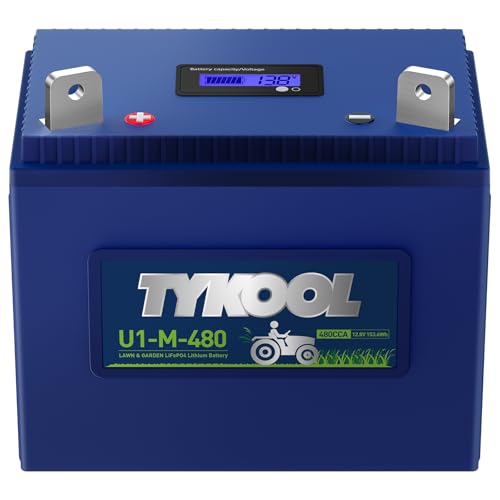
TYKOOL 480CCA Group U1 Lithium LiFePO4 Battery

WEIZE Lawn Garden AGM Battery 12V 350CCA Group U1
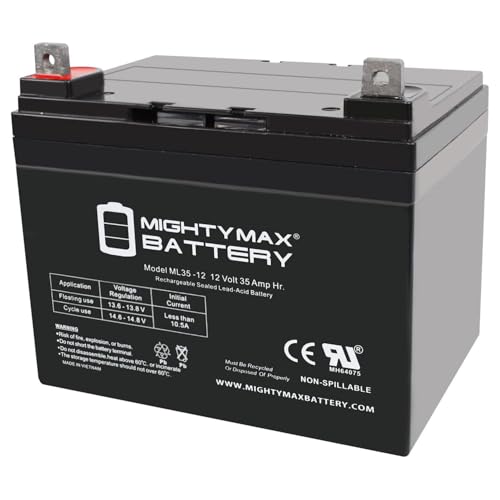
Mighty Max 12V 35Ah Battery Replaces John Deere 108

BRS U1 AGM Battery 12V 300CCA Group U1

Replacement AGM Battery for Cub Cadet 725-17335
The Picks, Examined More Closely
The WEIZE 12V 300CCA Group U1 battery fits the mold for most standard lawn tractors, delivering sealed lead-acid (SLA) construction in an absorbed glass mat (AGM) format that resists spills and tolerates a wide range of mounting positions. At roughly 7.68 inches long, 5.12 inches wide, and 6.22 inches tall, it drops into the same tray your tractor already has, with square-hole nut-and-bolt terminals and a left-side positive post that matches common John Deere, Toro, Cub Cadet, and Craftsman wiring layouts.
Compared to the lower-output WEIZE 200CCA option coming up next, this unit gives you more headroom on cold mornings, which matters in northern climates where winter storage still drops the cranking output. For homeowners running a typical 42-inch deck tractor through spring and summer, the 300CCA rating lands in that comfortable middle zone where starts feel immediate without paying for cranking amps you will never use.
What Helps Most
- AGM (absorbed glass mat) construction keeps the electrolyte suspended in fiberglass, so the case stays sealed and maintenance-free across years of seasonal use.
- Square-hole nut-and-bolt terminals grip securely with standard wrench hardware, reducing the chance of a loose connection after bumpy rides across uneven terrain.
- 300 cold cranking amps cover most residential riding mowers, including mid-range Briggs and Kohler powerplants used in popular deck sizes.
- Group U1 sizing matches the OEM (original equipment manufacturer) battery trays on John Deere, Toro, Cub Cadet, and Craftsman tractors, so the swap usually needs no bracket modification.
Points To Keep In Mind
- At roughly 18.68 pounds, the unit sits in the middle of the AGM weight class, which may matter for smaller compact tractors with weight-sensitive handling.
- Hazardous-materials shipping rules apply, so delivery can take longer than standard ground orders, especially for rural addresses.
Who Should Grab It
Homeowners with a standard riding mower in a region that sees occasional spring frosts benefit most from this mid-tier AGM option.
Look Elsewhere When
The TYKOOL 480CCA lithium pick makes more sense for those who mow weekly through long, demanding cutting seasons and want longer cycle life.
The WEIZE 12V 200CCA Group U1 AGM battery shares the same physical footprint as its higher-output sibling above, which means the same 7.68 x 5.12 x 6.22-inch case slides into the same factory tray. The difference shows up at the cranking stage: 200 cold cranking amps instead of 300, paired with the same sealed AGM internals and nut-and-bolt terminals on a left-positive configuration.
This is the battery to choose when your tractor lives in a garage in a temperate zone and rarely sees temperatures that punish a starter. For weekend mowing on a flat half-acre lot, 200CCA provides plenty of snap to turn over a single-cylinder or twin-cylinder Briggs engine. Where it starts to lose out is the first freezing morning after a long winter layup, where every bit of cranking headroom counts.
Standout Benefits
- Lower-output rating reduces upfront cost while still delivering sealed AGM spill resistance.
- Identical Group U1 dimensions simplify the swap from an older OEM battery without spacer tricks.
- Standard nut-and-bolt terminals accept common automotive-style connectors, simplifying the install with basic hand tools.
- 30-day return window offers a safety net for those new to AGM upgrades.
Trade-Offs To Consider
- 200CCA may leave thin margins on cold mornings in regions where winter temperatures regularly drop below freezing.
- Heavier than expected at around 21.5 pounds, since the case uses similar materials despite the lower cranking rating.
Made For
Garage-stored riding mowers in mild climates where the tractor starts in 60°F weather most of the year.
Consider Something Else When
WEIZE Lawn Garden AGM Battery 12V 300CCA Group U1 fits better for owners in four-season climates who face real winter cold starts.
The EnerSys Genesis NP4-12 takes a different path than the other picks on this list. At 3.54 x 2.76 x 4.21 inches and 3.75 pounds, it is far smaller than the full-size U1 cases that dominate the lawn tractor category. This is a 12V 4Ah (amp-hour) sealed lead-acid battery with 0.187 fast-on connectors, designed for compact equipment rather than full-size riding mower cranking duty.
For most riding mower replacements, this unit functions as a support or accessory battery rather than a primary starter. Its actual strength shows up in backup power for safety circuits, lighting kits, or smaller electric ride-on toys used by younger operators. If your tractor needs a starter battery in Group U1 sizing, the WEIZE or Mighty Max options above offer more appropriate capacity.
Why It Works Well
- Compact footprint fits tight enclosures where a full-size U1 battery simply will not seat.
- Fast-on spade connectors speed up wiring on accessory circuits and small motor applications.
- SLA construction handles vibration and shock better than flooded alternatives in rough use.
Things To Weigh
- 4Ah capacity falls well below what most riding mower starters demand, so it serves better as an auxiliary power source than a primary cranking battery.
Right Fit For
Owners needing a compact SLA unit for accessory power, lighting, or electric ride-on toys rather than full-size tractor cranking.
Skip It When
WEIZE Lawn Garden AGM Battery 12V 350CCA Group U1 is the better fit for full-power tractor starter duty in larger riding mower engines.
The TYKOOL 480CCA Group U1 Lithium LiFePO4 (lithium iron phosphate) battery changes the chemistry conversation for riding mower replacements. Lithium iron phosphate cells deliver higher cranking output from a lighter case than comparable AGM units, and the manufacturer rates this model at 480 cold cranking amps, well above the WEIZE and BRS AGM options in this roundup. It is built to fit ride-on lawn tractors and mowers from John Deere, Cub Cadet, Craftsman, Troy-Bilt, and similar brands.
Where the WEIZE 300CCA and 350CCA units above lean on traditional AGM chemistry for proven reliability, the TYKOOL trades a higher sticker for cranking headroom, lower weight, and a longer cycle-life story that suits owners who cut grass weekly through long seasons. If your tractor sits unused for months at a time, lithium holds its charge much better than SLA chemistry, which slowly loses voltage during storage.
Where It Helps
- 480CCA delivers confident cold starts even when temperatures dip well below freezing.
- Lithium iron phosphate chemistry weighs less than AGM equivalents, easing installation and reducing overall tractor weight.
- Low self-discharge rate means the battery holds charge through long winter storage without a tender.
- Higher cycle count compared to SLA, which translates to longer replacement intervals for frequent mowing schedules.
A Few Limitations
- Lithium chemistry typically costs more upfront than comparable AGM units in the same group size.
- Some older tractors with voltage-regulated charging systems may need a compatible charger, which is worth confirming before the swap.
Key Specs
Best Suited To
Active property owners who cut weekly through long seasons and want a long-life battery that holds charge over winter.
A Better Fit Elsewhere
BRS U1 AGM Battery 12V 300CCA Group U1 works better for those who want familiar AGM chemistry at a lower entry cost.
The WEIZE 12V 350CCA Group U1 AGM battery sits at the top of the brand’s traditional lead-acid lineup, delivering 50 more cold cranking amps than the 300CCA option earlier in this list. The case dimensions match the rest of the WEIZE family at 7.68 x 5.12 x 6.22 inches, with the same square-hole nut-and-bolt terminals and left-side positive post that drop into John Deere, Toro, Cub Cadet, and Craftsman trays.
For most owners, the practical jump from the 300CCA to the 350CCA version shows up on the first freezing morning after storage, where the extra cranking amps can mean the difference between a single turn of the key and a long, grinding session that drains the battery before the engine catches. In milder climates, that extra output may go unused.
Useful Touches
- 350CCA delivers confident starts in colder regions where winter temperatures regularly drop below freezing.
- Same Group U1 case geometry as the rest of the WEIZE lineup, simplifying the swap for owners familiar with the brand.
- AGM sealed construction means no water top-ups during the service life.
- Nut-and-bolt terminals accept standard automotive hardware for secure fit under rough mowing.
Honest Caveats
- At around 21.45 pounds, this is one of the heavier AGM units in the U1 group, which may affect smaller compact tractors.
- Hazardous-materials shipping restrictions can extend delivery windows compared to non-regulated items.
Whose Shelf It Belongs On
Owners in cold-weather regions running larger Briggs or Kohler V-twin engines benefit from the higher cranking output.
Reach For A Different Pick When
TYKOOL 480CCA Group U1 Lithium LiFePO4 Battery suits owners who want lithium chemistry with even more cranking headroom and lower weight.
The Mighty Max ML35-12 brings a different size class to the roundup, with a 12V 35Ah SLA (sealed lead-acid) AGM battery that targets John Deere lawn tractor replacements, including the legacy riding mower 108. At 7.76 x 5.12 x 7.01 inches, it carries a taller case than the Group U1 units above, which matters when matching the OEM bracket on older John Deere models.
Amp-hour capacity separates this pick from the rest of the list. Where the WEIZE and BRS units focus on cranking amps for short, high-current starter bursts, the 35Ah rating here describes total energy storage, which translates to longer accessory runtime. For tractors with added lighting kits, electric PTO clutches, or sprayer pumps that draw current between starts, that reserve capacity adds genuine practical value.
Positive Takeaways
- 35Ah capacity provides meaningful energy reserve for tractors running lighting kits or accessory pumps between cranking events.
- AGM sealed construction handles vibration across rough mowing terrain.
- Direct replacement fit for legacy John Deere riding mower 108 models with compatible bracket spacing.
- Wide operating temperature range suits seasonal mowing in both summer heat and shoulder-season cold.
Small Caveats
- Taller case profile may not fit every Group U1 tray, so measuring the existing battery well is important before ordering.
- Listing typically includes battery and screws only, so reusing the existing wire harness and hold-down bracket is necessary.
Who Will Love This
Owners of legacy John Deere lawn tractors, especially the riding mower 108 model, with added electrical accessories.
Another Choice May Suit
WEIZE Lawn Garden AGM Battery 12V 300CCA Group U1 fits standard U1 battery trays more cleanly on modern tractors without legacy sizing concerns.
The BRS U1 AGM battery delivers 12V with 300 cold cranking amps and 375 cranking amps (CA), packaged in a sealed AGM case built for vibration resistance across rough terrain. Designed for lawn tractors, mowers, generators, UTVs (utility task vehicles), and ATVs (all-terrain vehicles), it shares the same Group U1 form factor as the WEIZE 300CCA option earlier in this list, which makes the two direct competitors in the same output class.
The BRS differentiator is the rugged case design that resists vibration across bumpy mowing, hauling, or trail use. Where standard AGM batteries tolerate moderate vibration, the BRS build targets owners running tractors across uneven acreage or paired with light utility work. It arrives fully charged, which removes the typical first-install step of topping off before the first start.
What Earns Its Place
- Sealed AGM design eliminates spills even when the case is mounted at an angle on uneven terrain.
- Vibration-resistant construction suits tractors used on rough acreage or light utility work beyond simple mowing.
- Arrives fully charged, simplifying first-time installation with no pre-charge step required.
- 300CCA rating covers most residential riding mower engines, with crossover fit for UTV and ATV applications.
Where It Is Less Suited
- 300CCA may leave thin margins for owners in regions with extreme winter cold where higher output helps.
Key Specs
Who Should Grab It
Owners with rough-terrain acreage or those who use the same battery form factor for UTV and ATV applications.
Swap It Out When
TYKOOL 480CCA Group U1 Lithium LiFePO4 Battery suits owners who prioritize lighter weight and higher cranking output over AGM familiarity.
The Renegade replacement battery targets a specific Cub Cadet OEM part number, the 725-17335 (also listed as 725P17335), in a 12V 12Ah sealed AGM format. Compact at 5 7/8 x 3 3/8 x 4 1/4 inches, it fits the smaller battery compartment used in select Cub Cadet riding mower models where a full-size Group U1 case would never seat.
This is a specialty pick with a narrow audience. For Cub Cadet owners whose OEM battery has the 725-17335 part number stamped on the label, the Renegade unit offers a direct-fit path that avoids the bracket modifications required when adapting a Group U1 case into the smaller compartment. Owners of standard riding mowers should look elsewhere on the roundup.
Real Benefits
- Direct OEM fit for Cub Cadet part numbers 725-17335 and 725P17335 simplifies the swap.
- 300 cold cranking amps provide solid starting power for the smaller engines used in matching Cub Cadet models.
- Impact-resistant case and cover construction handles vibration across rough mowing.
- Sealed AGM format keeps the install maintenance-free across years of seasonal use.
Worth Bearing In Mind
- Compact form factor only fits specific Cub Cadet models, so it is not a universal Group U1 replacement.
- Lower 12Ah rating compared to larger batteries limits reserve capacity for accessory-heavy setups.
Perfect Match For
Cub Cadet riding mower owners with OEM part number 725-17335 who need a direct-fit sealed replacement.
Where A Sibling Pick Shines
WEIZE Lawn Garden AGM Battery 12V 300CCA Group U1 fits standard riding mower battery trays on most other brands and models.
What Matters Most Before Choosing Batteries For Riding Mowers
Group U1 sizing is the first checkpoint. BCI (Battery Council International) Group U1 describes the case footprint, terminal position, and post height shared across most riding mowers from John Deere, Toro, Cub Cadet, Craftsman, and Troy-Bilt. Measure the existing battery well before ordering, especially the height clearance under the hood, since taller cases like the Mighty Max ML35-12 fit some legacy trays but not others.
CCA ratings matter more than marketing hype. Cold cranking amps (CCA) measure the current a battery can deliver at 0°F for 30 seconds while holding above a minimum voltage. For four-season climates with winter storage, 300CCA or higher gives comfortable cold-start margin. Mild-climate owners mowing out of a heated garage can run 200CCA without issue.
Terminal orientation prevents wiring frustration. Most Group U1 batteries place the positive post on the left side with square-hole nut-and-bolt terminals, but verifying the layout against the existing harness saves a return trip. AGM (absorbed glass mat) construction seals the electrolyte in fiberglass mats, eliminating spill risk and water top-ups.
Chemistry trade-offs guide the final call. AGM (sealed lead-acid with absorbed glass mat) batteries cost less upfront and work with standard chargers. LiFePO4 (lithium iron phosphate) batteries weigh less, hold charge longer in storage, and offer higher cycle counts, but cost more. For heavy weekly mowing, lithium pays back over time. For occasional weekend use, AGM remains the practical choice.
Key Considerations Across These Picks
Common Shopping Slip Ups
The most frequent mistake is ordering by CCA without checking the physical case size, which leads to a battery that does not seat in the tray. A second common error is assuming all Group U1 batteries share the same terminal orientation, when some OEM layouts reverse the positive post. Measure twice, including the height under any hood lip, before checking out.
What Separates Premium From Basic
Higher-priced options like the TYKOOL lithium unit invest the extra cost in chemistry upgrades that deliver lighter construction, longer cycle life, and better storage tolerance. For occasional weekend mowers, AGM delivers all the cranking power needed at a friendlier price. For heavy weekly cutting across long seasons, the lithium upgrade pays back in fewer replacements over time.
Frequently Asked Questions
What size battery does a riding mower take?
Most riding mowers use BCI Group U1 batteries, with case dimensions around 7.68 x 5.12 x 6.22 inches. Some legacy John Deere models use taller cases like the Mighty Max ML35-12, and select Cub Cadet models use a smaller OEM form factor, so measuring the existing battery is always wise before ordering.
How many CCA does a riding mower battery need?
A 200 to 300 cold cranking amp (CCA) battery covers most residential riding mower engines. In regions where winter temperatures regularly drop below freezing, 300CCA or more provides comfortable starting margin after long storage.
Are AGM batteries better than flooded lead-acid for riding mowers?
AGM (absorbed glass mat) batteries seal the electrolyte in fiberglass mats, which eliminates spill risk, removes the need for water top-ups, and improves vibration resistance. For most riding mower owners, AGM is the practical upgrade over older flooded designs.
Can you put a lithium battery in a riding mower?
Lithium LiFePO4 (lithium iron phosphate) batteries like the TYKOOL 480CCA unit fit Group U1 cases and deliver more cranking power at a lower weight. Confirming charger compatibility and verifying the tractor’s voltage regulator before the swap keeps the upgrade smooth.
How long does a riding mower battery last?
Typical AGM riding mower batteries last three to five years with seasonal use and a winter tender. Lithium options often stretch longer thanks to higher cycle counts and lower self-discharge, especially when the tractor sits unused for weeks at a time.
Closing Remarks
The right battery for your riding mower comes down to group size, terminal layout, climate, and how often you actually turn the key. Match those four to the pick above that suits your brand and your weather, and the next cut should start on the first turn.