
Nothing derails a Saturday faster than a riding mower that clicks instead of cranks. A fresh, properly sized battery turns a frustrating chore into a one-pull-and-go job, and the right group-size match keeps the charging system happy all season. You probably swap your battery every few years, so the upgrade only matters when you need it.
A Fast Comparison Of The Options

WEIZE Lawn Garden AGM Battery 12V 300CCA Group U1

WEIZE Lawn Garden AGM Battery 12V 200CCA Group U1
TYKOOL 480CCA Group U1 Lithium LiFePO4 Lawn Mower Battery

WEIZE Lawn Garden AGM Battery 12V 350CCA Group U1
Mighty Max 12V 35Ah SLA Battery for John Deere Riding Mower

UPLUS U1 Riding Lawn Mower Battery 12V 330CCA

Autocessking Lawn Garden AGM Battery Group U1 320CCA

BRS U1 AGM Battery 12V 300CCA
More On The Choices That Made The List
Start your season with a battery that fits the BCI Group U1 slot used across most riding mowers, and the swap feels almost invisible. The WEIZE AGM unit delivers 300 cold cranking amps (the surge of power the starter needs on a chilly morning) at a weight that most homeowners can carry from the garage to the mower without a second thought.
The square-hole nut-and-bolt terminals match the cables already on your John Deere, Cub Cadet, Toro, or Craftsman, so you spend less time hunting adapters and more time mowing. In most suburban yards the 12V output holds enough reserve for a long cutting session with headlights on.
Useful Highlights
- 300 CCA delivers confident starts in spring and fall weather
- AGM (absorbed glass mat) sealed design means no acid spills on the garage floor
- Standard Group U1 footprint drops into most factory battery trays without modification
- Compatible with major brands, reducing the chance of a wrong-part trip back to the store
Trade Offs To Consider
- CCA trails the higher-rated WEIZE 350 by a noticeable margin in deep cold
- Marked as a hazardous-goods shipment, so delivery can take an extra day or two
Feature Snapshot
Who It Suits Best
Homeowners with a mid-sized riding mower who want a straightforward Group U1 drop-in that fires up without ceremony.
Consider Something Else When
If you live where late-winter mornings drop well below freezing, the TYKOOL 480CCA lithium option offers more cranking headroom.
Not every riding mower demands a high-output cell. If you own a smaller garden tractor used mostly in mild weather, the 200-CCA WEIZE AGM fits the bill without stretching the wallet.
The 12V output and standard Group U1 footprint keep the swap identical to the 300-CCA sibling, which simplifies your bench setup. For weekend mowing in a temperate climate, the lower CCA is rarely felt.
The Upside
- Lower entry price for light-duty replacement
- AGM sealed construction, no watering or venting to fuss with
- Same Group U1 dimensions as the higher-CCA WEIZE models, so it shares tray brackets
Points To Keep In Mind
- 200 CCA may feel weak on the first cold snap of the year
- Not the right fit for larger V-twin engines that pull hard on the starter
Right Fit For
Shoppers with a compact riding mower in a warmer climate who want a budget-friendly AGM replacement.
Reach For A Different Pick When
If your mower has a larger engine, step up to the WEIZE 350CCA version for more confident cranking.
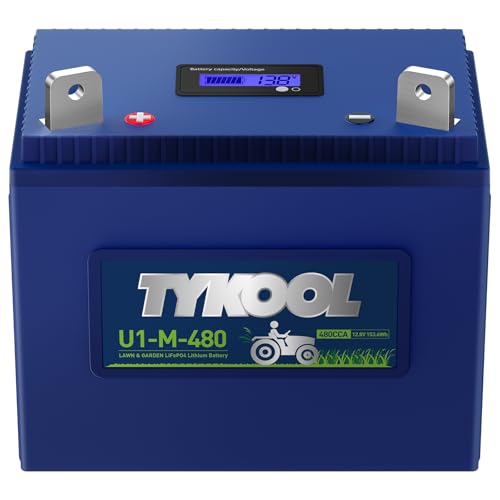
Lithium iron phosphate (LiFePO4) batteries changed the conversation for cold-weather starters, and the TYKOOL 480CCA brings that chemistry to the riding mower bay. The 480 cold cranking amps out-pull every lead-acid option in this roundup, so the engine turns over fast even when the oil is thick from a cold night.
Because LiFePO4 weighs less than a comparable lead-acid cell, you may notice the mower feels slightly lighter on the front axle during transport. The chemistry also holds its voltage during the off-season, so you can park the tractor in November and still hear a quick crank in April.
Where It Excels
- Highest CCA in the lineup, ideal for northern climates
- Lighter than lead-acid, easier to lift and install
- Holds voltage through long storage periods without a maintainer
- Long cycle life for riders who mow weekly all season
Things To Consider
- Higher upfront cost than AGM equivalents
- Requires a charger compatible with lithium chemistry if you ever top it off
Key Specs
Made For
Riders in cold climates or anyone tired of replacing lead-acid batteries every couple of seasons.
Skip It When
A tighter budget and a mild climate point you toward the WEIZE 300CCA, which costs less and still does the job.
The 350-CCA WEIZE sits in the sweet spot for riders with larger single-cylinders or entry-level twin-cylinder engines that pull harder on the starter. You get the same sealed AGM construction as the 300-CCA sibling but with a useful reserve when temperatures dip into the 30s.
Compared with the 200-CCA unit reviewed earlier, the 350 feels noticeably more eager to turn over after the mower has sat through a wet week. For a standard suburban lot, it’s more battery than you need, but extra headroom never hurts.
Notable Upsides
- 350 CCA gives confident cranking in cool weather without stepping up to lithium
- Sealed AGM means you can mount it at an angle inside the tray
- Square-hole nut-and-bolt terminals match factory cables
- Works across John Deere, Toro, Cub Cadet, and Craftsman riders
Room For Improvement
- Heavier than the 300-CCA model, which matters when lifting over a fender
- Subject to hazardous-shipping rules, so returns aren’t always simple
Feature Rundown
Who Will Love This
Owners of mid-range garden tractors with bigger starters or anyone mowing early in the season.
Look Elsewhere When
If your priorities are minimal weight and maximum cycle life, the TYKOOL lithium option beats lead-acid on both fronts.
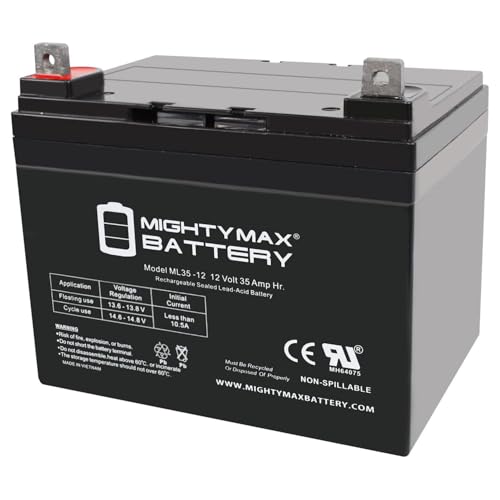
The Mighty Max ML35-12 has been a familiar sight in John Deere 108 battery bays for years. The 35Ah capacity (a measure of how much energy the battery can deliver over time) gives it longer reserve than smaller Group U1 cells, which helps if you occasionally forget to flip the key all the way off.
The sealed lead-acid construction resists spills if the mower tips on a hill, and it ships with the mounting screws included. Listing only includes the battery and screws, so plan on reusing your existing cables.
Positive Takeaways
- 35Ah gives plenty of reserve for headlights and accessories
- SLA/AGM sealed design tolerates a wide range of operating temperatures
- Long-running replacement option with a long track record in the category
Honest Caveats
- Heavier and bulkier than standard U1 cells, so measure your tray first
- No wire harness or mounting accessories in the box
Best Suited To
Owners of older John Deere riding mowers seeking a familiar, capacity-rich replacement.
A Better Fit Elsewhere
If your tractor uses a standard Group U1 footprint and you want lower weight, the UPLUS U1 330CCA fits with less fuss.
The UPLUS U1 is a maintenance-free AGM cell aimed squarely at the broad mid-market of riding mower owners. Its 330 CCA gives a bit more headroom than the 300-CCA WEIZE, and the 25Ah capacity keeps the voltage steady during accessory use.
Compatibility with John Deere, Cub Cadet, Husqvarna, Craftsman, Toro, Ariens, Poulan Pro, and Troy-Bilt covers a wider brand list than most rivals, which makes it easy to recommend if you’re not sure of the exact model.
What It Does Well
- Maintenance-free sealed AGM, no water top-ups ever
- Wide brand compatibility reduces the risk of an incorrect fit
- Left-positive terminal layout fits the most common U1 wiring
- Solid 330 CCA output for moderate cold-weather starting
Small Caveats
- Slightly less CCA than the 350-CCA WEIZE option for the toughest cold mornings
- Capacity of 25Ah is on the lower end for heavy accessory loads
Quick Facts
Whose Shelf It Belongs On
Shops and homeowners who service multiple mower brands and want one battery that fits the majority of trays.
Swap It Out When
Cold-weather users who want maximum cranking power should consider the TYKOOL 480CCA lithium option instead.
The Autocessking U1-320CCA takes a slightly different approach to the standard footprint, with a wider case that some larger mower bays accept more securely. The 320 CCA rating lands in the middle of the lead-acid pack, comfortably powering most single and small twin-cylinder engines.
For riders who deal with rough terrain and vibration, the AGM sealed design keeps the internals stable where a flooded battery might lose contact. In your view, the extra width is a feature, not a flaw, as long as your battery tray has the room.
Everyday Perks
- 320 CCA balances starting power and battery life for typical mowing
- Sealed AGM tolerates vibration on uneven terrain
- Compatible with John Deere, Toro, Cub Cadet, and Craftsman riders
- Maintenance-free operation with no acid to check
Areas To Watch
- Wider dimensions may not fit trays designed for the slimmer Group U1 profile
- Hazardous-materials shipping can slow delivery to a remote address
Perfect Match For
Riders with larger battery trays and rough mowing conditions who want a vibration-stable AGM cell.
Not Your Match When
Tight factory trays are a better fit for the standard-width WEIZE 300CCA or UPLUS U1 models.
The BRS U1 closes the list with a versatile 300-CCA AGM cell that isn’t picky about its host. Listed compatibility stretches beyond riding mowers to UTVs, ATVs, and small generators, which makes it a handy spare for the garage shelf.
Vibration resistance is the quiet selling point here: owners running rough trails or older tractors report fewer internal connection issues with sealed AGM than with flooded cells. Arrives fully charged, which removes one step from your Saturday morning.
Well-Handled Touches
- Vibration-resistant design for trail riding or uneven lawns
- Works in mowers, UTVs, ATVs, and generators
- Sealed maintenance-free AGM construction
- Ships ready to install with no initial charging step
Where It Is Less Suited
- CCA matches the entry-level WEIZE 300 rather than the 350-class leaders
- Marketing focus on multi-use may feel like overkill for a single-mower owner
Built With In Mind
Property owners with mixed vehicles who appreciate one battery that handles both mower and trail toy duties.
Another Choice May Suit
If you only need a riding mower battery and want more CCA for the same footprint, the WEIZE 350CCA is the closer match.
How To Match A Battery To Your Riding Mower
Group size comes first. Most riding mowers use BCI Group U1, which standardizes the case dimensions so the battery drops into the factory tray. Mismatched group sizes force cable modifications and mounting headaches, so check the owner’s manual before you order.
CCA (cold cranking amps) is the next filter. A small single-cylinder engine on a flat suburban lot starts happily at 200 CCA, while a twin-cylinder with a heavy flywheel wants 300 or higher. CCA also matters more in cold climates, where engine oil thickens and the starter struggles.
Chemistry choice shapes long-term ownership. AGM lead-acid batteries are sealed, leak-resistant, and budget-friendly, which suits typical weekend mowing. Lithium LiFePO4 costs more but delivers lighter weight, higher CCA per pound, and a longer cycle life for those who mow frequently. Either works in a Group U1 slot, but lithium requires a compatible charger if you ever top it off outside the mower.
Terminal orientation (positive on the left versus right) matters for cable reach, and a reversed polarity forces you to stretch or reroute the stock cables. Weight affects handling: lifting a 21-pound cell over a fender feels different from a 13-pound lithium unit.
Key Considerations Across These Picks
Common Shopping Slip Ups
The most frequent mistake is matching by price rather than by CCA. A weak 200-CCA battery in a larger engine clicks instead of cranks, and the “savings” disappear when you buy a second one. The opposite trap is paying for premium CCA you never use; a 480-CCA lithium cell on a small engine is overkill. Measure the case dimensions before checkout, and confirm the terminal orientation matches your existing cables.
What The Higher Tier Buys
Stepping up from a budget AGM to a premium lithium option buys lighter weight, longer cycle life, and stronger cold-weather performance. The premium also buys chemistry stability: lithium holds its charge through months of storage, so spring startups feel less like a gamble. For daily or commercial mowing, the upgrade pays back in fewer replacements and faster cranking; for occasional weekend use, a mid-tier AGM often delivers enough.
Frequently Asked Questions
How long do batteries for riding lawn mowers typically last?
Most AGM and SLA batteries in this category last around three to five seasons with proper storage, while lithium options can stretch considerably longer with similar care.
Can I use a higher-CCA battery than the original?
Yes, as long as the group size and terminal layout match. Higher CCA simply delivers more starting energy than the original, which helps in cold weather.
Do lithium mower batteries need a special charger?
A lithium battery charges well from the mower’s stock alternator, but any external maintainer should be rated for LiFePO4 chemistry to avoid damage.
What’s the difference between CCA and Ah?
CCA measures the surge of power for starting in cold weather, while Ah (amp-hours) measures total energy capacity for running accessories over time.
How should I store a riding mower battery over winter?
A clean, fully charged battery stored above freezing holds its charge best, and a maintenance tender helps during long storage periods.
Wrap Up
The right battery comes down to matching group size, CCA, and chemistry to your mower and your climate. Once those three line up, a fresh cell turns a frustrating spring startup into a quick turn of the key. Pick the option that fits your engine and storage habits, and you’ll spend your Saturdays mowing instead of troubleshooting.